 Project Intent
The Little Rock Port Authority is seeking Requests for Qualifications (RFQ) from an artist to create an original piece of artwork to celebrate the upcoming 60th anniversary of the establishment of the Little Rock Port Authority.
Artists working in a variety of media are encouraged to apply as long as their works fit in the parameters of this RFQ. The artwork is envisioned to be a painting, approximately 4’ x 6’ that will be displayed in the offices of the Little Rock Port Authority. The size may be modified for artistic purposes. It is also anticipated that the Little Rock Port Authority will produce approximately 150 smaller prints of the work to be signed and numbered by the artist to give out as a part of the anniversary celebration.
A $5,000 commission will be given to the artist chosen to create the work.
About the Little Rock Port Authority
The Little Rock Port Authority (LRPA) was created in 1959 to oversee the Port and provide intermodal transportation services connecting U.S. markets and the deep-water ports of the Gulf of Mexico. The Port of Little Rock is located approximately seven miles east of downtown along the banks of the Arkansas River. All modes of transportation converge at the Port: water, rail, and motor freight, offering convenient intermodal shipping solutions. More than 40 businesses are active within the Port’s 3,000-acre industrial park. The Port is part of the 448-mile McClellan-Kerr Arkansas River Navigation System, which runs from the Mississippi River northwest to 15 miles east of Tulsa.
Mission Statement – “The mission of the Port of Little Rock is to drive economic development by providing a world-class transportation hub that connects Arkansas to the global economy”.
Vision Statement – “Little Rock Port Authority’s vision is to be America’s leading inland river port advancing Arkansas’ economic growth and job creation”.
Criteria for Selection
- An initial proposal that reflects Project Intent as described in this document.
- A body of work reflecting artistic excellence.
- Experience working in public settings and public process
- Previous experience with meeting time schedules and budget parameters
- References provided as part of this application which will be contacted prior to final selection.
- The Little Rock Port Authority is committed to reflecting the diversity and cultural richness of the City of Little Rock in our selection process.
Eligibility
The project is open to all artists, regardless of race, color, religion, national origin, gender, age, military status, sexual orientation, marital status or physical or mental disability.
Time Line
The Little Rock Port Authority reserves the right to change the project time line.
October 2018 Request for Qualifications (RFQ) due and accepted
November 2018 Selection Committee meets to review RFQs and choose finalists
November 2018 Finalists interviewed if appropriate; artist selected
December 2018 Contract agreement prepared and submitted for Port Authority Board approval
January 2019 Notice to Proceed issued
May 2019 Project completed and installed
How to Apply
Artists interested in this project shall prepare and submit the following as a part of the requests for qualifications:
- Proposed Artwork Concept: This proposal shall include conceptual design drawings or sketches sufficient to communicate the artist concept.
- Letter of Interest, no more than one page in length, which explains your interest in the competition. your name and contact information.
- Artist’s Statement, no more than 200 words in length, describing your work.
- Current Resume. If submitting as a team, an individual resume should be submitted for each team member.
- A list of at least three professional references familiar with your work and working methods. The list must include complete addresses and telephone numbers.
- Work samples on CD or DVD of your work. Artists applying as a team should submit work samples of each individual artist’s work.
Submittal:
To be considered, four copies of the proposal shall be received by the date and time set and noted herein. It shall be packaged in such a manner that the sealed, envelope clearly reflects the project name and the applicant’s name and address. All materials submitted become the property of the Little Rock Port Authority and will not be returned unless a self-addressed and stamped envelope, with sufficient postage, is provided. The Little Rock Port Authority will make every effort to protect submitted materials; however, it will not be responsible for any loss or damage. Submit proposals to:
Bryan Day
Little Rock Port Authority
10600 Industrial Harbor Drive
Little Rock, AR 72206
501-490-1468
The Little Rock Port Authority reserves the right to reject any and all applications.
All Proposals must be submitted by October 31, 2018 at noon.
For additional information, please contact Bryan Day at 501-490-1468.

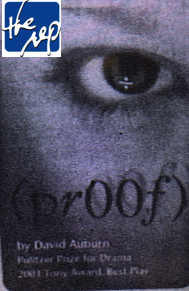 Fourteen years after graduating from Little Rock Hall High School, David Auburn received the 2001 Pulitzer Prize in Drama for his play Proof. In September 2002, Arkansas Repertory Theatre produced Proof while the original Broadway run was in its final months.
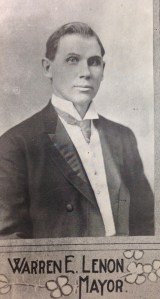 In April 1903, Warren E. Lenon took the oath of office and became Little Rock Mayor. He had previously served a decade on the City Council. A native of Iowa, Mr. Lenon was a banker and real estate developer.
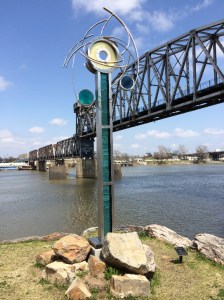 On October 19, 2012, the first winner of the Sculpture at the River Market public monument sculpture competition was dedicated.
 On October 18, 1820, Territorial Governor James Miller signed legislation designating Little Rock as the new capital for Arkansas. This was a mere 10 months after the first permanent settlement was established in Little Rock.
 For the two years leading up to the November 1871 election for Little Rock mayor, the political scene had been chaotic. A. K. Hartman, who represented one faction of the Republican Party, was so disliked by the LR City Council that they repeatedly tried to have him removed from office.

