
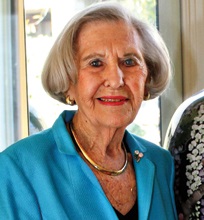
Arkansas Heritage Month – Jeane Hamilton

Photo taken for SOIREE

Photo taken for SOIREE

Happy Mother’s Day.  Today as part of Arkansas Heritage Month, we salute Jeane Hamilton — the “mother” of the Arkansas Arts Center.  In 2007, she was awarded the Arkansas Arts Council’s Lifetime Achievement Governor’s Arts Award.

Arriving in Little Rock a young wife in 1952, she immediately set about to become involved in her new community as she and her husband James set up a household.  In the mid-1950s, the Junior League of Little Rock tapped her to chair the initiative to create a new art museum for Little Rock.  The two decades old Museum of Fine Arts was threadbare through years of neglect and unfocused programming and collecting.

Hamilton, along with Junior League President Carrie Remmel Dickinson and Vice President Martha McHaney, approached Winthrop Rockefeller (then a relatively new resident) to lead the fundraising effort for the new museum.  He agreed on a few conditions: one was that a base amount had to be raised in Little Rock first, and second that the museum would be for the entire State of Arkansas and not just Little Rock.

Hamilton and her colleagues set about to raise the funds. They raised $645,000 at the same time Little Rock’s business climate was stymied by the aftereffects of the Central High crisis.

Now a lifetime honorary member of the Arkansas Arts Center Board, Hamilton has spent much of her life working on Arkansas Arts Center projects since that visit in 1959.  She has served on the Board, chaired committees, chaired special events, served hot dogs, helped kids paint and danced the night away at countless fundraisers.  She was on the committee which hired Townsend Wolfe as executive director and chief curator.  Jeane has led art tours for the Arts Center to a number of countries over the years.

When she is not at the Arts Center, she is often seen at the Rep, the Symphony or any number of other cultural institutions.  While she enjoys seeing old friends at these events, she also loves to see a room full of strangers – because that means that new people have become engaged in the cultural life of Little Rock.
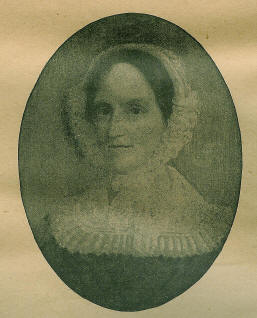
Mother’s Day Little Rock Look Back: Eliza Cunningham, Founding Mother of Little Rock

Eliza CunninghamEliza Wilson Bertrand Cunningham was the First Lady of Little Rock.  She literally was the first lady and the founding mother.

She became the first permanent female resident when she joined her husband Matthew Cunningham in Little Rock.  She gave birth to Chester Ashley Cunningham, the first baby born in Little Rock, as well as several other children with Cunningham.  When he became the first Mayor of Little Rock, she was the first First Lady of Little Rock. They hosted the first Little Rock Council meeting at their house on what is now the block downtown bounded by Third, Main, Fourth and Louisiana Streets.  Her son Charles P. Bertrand, from her first husband, later served as Mayor of Little Rock, making her the only woman to be married to a Mayor and be mother of a Mayor.

Born in Scotland in December 1788, she emigrated with her parents to the United States as a young girl.  In 1804 or 1805, she married a French businessman, Pierre Bertrand in New York City.  She lived in New York City, while he traveled to his various business ventures.  He never returned from a trip to his coffee plantation in Santo Domingo and was presumed to have died in 1808 or 1809.  She and Bertrand had three children, Charles Pierre, Arabella and Jane. (Jane may have died in childhood, because records and lore only indicated Charles and Arabella coming to Little Rock with their mother.)

Eliza married Dr. Matthew Cunningham in New York City.  He later moved to Saint Louis and settled in Little Rock in early 1820.  Eliza and her two children came to Little Rock in September 1820.  In 1822, she gave birth to Chester Ashley Cunningham, the first documented baby born in Little Rock.  (There are unsubstantiated reports that at least one slave child may have been born prior to Chester.)  She and Matthew also had Robert, Henrietta, Sarah and Matilda.  The latter married Peter Hanger, after whom the Hanger Hill neighborhood is named.

Dr. Cunningham died in June 1851.  Eliza died in September 1856. They and Chester (who died in December 1856) are buried in the Hanger family plot at Mount Holly Cemetery.

Little Rock Look Back: Longtime CALS trustee Rabbi Ira Sanders

SandersIraE_fOn May 6, 1894, Ira Eugene Sanders was born in Missouri.  After receiving an undergraduate degree and rabbinate degree in Cincinnati, he was ordained a rabbi in 1919.  He served congregations in Pennyslvania and New York before coming to Little Rock in September 1926.

Shortly after arriving to lead the B’nai Israel congregation, Rabbi Sanders became active in the Little Rock community.  Among his projects were the Little Rock Community Fund, Little Rock School of Social Work (which he founded), Central Council of Social Agencies, and University of Arkansas Extension Department. During the Great Depression, he helped organize the Pulaski County Public Welfare Commission.  Other areas of involvement over his career included the Arkansas Human Betterment League, Urban League of Greater Little Rock and Arkansas Lighthouse for the Blind.  On November 3, 1930, Rabbi Sanders debated Clarence Darrow about the existence of God in front of a packed house at Little Rock High School.

For his many involvements, he received an honorary Doctor of Humanities degree in 1951 from the University of Arkansas.  Three years later he received an honorary Doctor of Divinity degree from Hebrew Union College’s Jewish Institute of Religion.

A lifelong supporter of a Jewish state, he participated in nineteen bond drives for the state of Israel.  In August 1963, he retired as the leader of B’nai Israel after over 35 years. He would remain as Rabbi Emeritus until his deal in 1985.

In January 1978, Rabbi Sanders tendered his resignation from the Central Arkansas Library board of directors.  The City Board of Directors passed resolution 5873 which noted that he had served for 51 years on the Library Board. He was first appointed in 1926.  He served during 19 different Mayoral administrations from Charles Moyer’s first term through Donald Mehlburger’s.

On April 8, 1985, Rabbi Ira Eugene Sanders died of natural causes.  He is buried in the City’s Oakland Jewish Cemetery.  The Central Arkansas Library System honors his memory with an annual distinguished lecture series.

Little Rock Look Back: Jesse Brown

Map showing boundaries of original City of Little Rock

Map showing boundaries of original City of Little Rock

This is Teacher Appreciation Week.  In keeping with that, today highlights one of Little Rock’s first mayors, who was also a teacher.

Jesse Brown was Little Rock’s sixth mayor. He was also Little Rock’s first teacher. In the 1820s and 1830s he operated Little Rock’s first school.

On March 10, 1823, he founded the coeducational Little Rock Academy. One of his early pupils was C. P. Bertrand, stepson of Little Rock’s first physician, Dr. Matthew Cunningham.  Cunningham, Brown and Bertrand would each serve as Little Rock mayor prior to the Civil War.

By 1826, Brown had added a second employee.  In his advertisement in the Arkansas Gazette for March 7, 1826, he says: “Jesse Brown, principal of the Little Rock Academy, returns thanks for patronage during the past year and solicits its continuance.” His terms for spelling, reading, writing, and arithmetic were $24 per annum. (This is the equivalent of $556 in 2016–a bargain for private school!)  These branches, with geography, grammar, elocution, history, chronology, bookkeeping, and ”Italian method,” were taught for $36. Subscriptions less than a year were $1 per month extra. French was also offered.

In 1829, Brown started offering night classes. He continued to expand his offerings throughout the 1830s.  However, by 1837, he was forced to remind customers who were in arrears to pay up because he “could not live upon the wind.”

Brown served as mayor from January 1838 until January 1841.  He was out of Little Rock recovering from illness from April to November of 1839, but was subsequently elected to a third one-year term commencing in January 1840.

Arkansas Heritage Month – Cinco de Mayo with Diego Rivera

portrait-of-two-womenToday is Cinco de Mayo. This Mexican holiday seems a good day to return again to the art of Diego Rivera.  He is one of the Culture Vulture favorite artists, so any excuse to discuss him and his relationship with the Rockefeller family is greatly appreciated.

One of Rivera’s masterpieces is 1914’s Portrait of Two Women which is part of the permanent collection of the Arkansas Arts Center. The official name is Dos Mujeres.  It is a portrait of Angelina Beloff and Maria Dolores Bastian.  The former was Rivera’s first wife.

This oil on canvas stands six and a half feet tall and five and a half feet wide.

Influenced by cubists such as Picasso, Rivera adopted fracturing of form, use of multiple perspective points, and flattening of the picture plane.  Yet his take on this style of painting is distinctive.  He uses brighter colors and a larger scale than many early cubist pictures. Rivera also features highly textured surfaces executed in a variety of techniques.

The painting was a gift to the Arkansas Arts Center by Abby Rockefeller Mauzé, sister of Arkansas Governor Winthrop Rockefeller.  At the 1963 opening of the Arkansas Arts Center, James Rorimer, the director of the Metropolitan Museum of Art, remarked several times to Arts Center trustee Jeane Hamilton that the Met should have that piece. Jeane politely smiled as she remarked, “But we have it.”

Of all her brothers, Abby was closest to Winthrop. The other brothers, at best ignored, and at worst, antagonized the two.  Given the complicated relationship of Rivera with members of the Rockefeller family, it is not surprising that if Abby were to have purchased this piece, she would donate it to a facility with close ties to Winthrop.  (Though the Rockefeller brothers had Rivera’s mural at Rockefeller Center destroyed, he maintained a cordial relationship with Abby Aldrich Rockefeller — well as cordial as an anti-social Communist could be with the doyenne of capitalist NYC Society.)

The Arkansas Arts Center has several other works of art in their collection with ties to Mexico. Some are by Mexican artists. Others are inspired by Mexico. They have several by Elsie Fruend depicting scenes in Mexico.

Arkansas Heritage Month – Sibelius’ FINLANDIA rings out at Robinson Auditorium

finlandia_kansi_300This fall, when the newly renovated Robinson Center Music Hall reopens, the Arkansas Symphony Orchestra will play the first notes in the new space.

The first notes in the original space were Jean Sibelius’ Finlandia.  The piece was commissioned in 1899 as part of a three day arts festival to celebrate the Finnish press.  At the time, Tsarist Russia was cracking down on the press in Finland, so this festival was planned as a way to show solidarity. The selection was one of seven composed to be played against tableaus of scenes of Finnish history.  The pieces were played in a new music hall.

Given the political nature of the music, subsequent performances of it were often given fake names to avoid Russian censorship in the ensuing years.

Because of the fact it had been played at the opening of a new facility, Finlandia was chosen to be played at the opening of the Joseph Taylor Robinson Memorial Auditorium in February 1940.  It would be played by the Arkansas State Symphony Orchestra (a forerunner, though not directly connected, to the current Arkansas Symphony Orchestra).

In the weeks leading up to the opening of Robinson, the Russians invaded Finland sparking the “Winter War.” Against overwhelming odds the Finnish people fought back though the Russians had far more soldiers and military weaponry.  However, by February 1, the Russians started breaking through lines on several fronts, and it became apparent that they would likely best the Finns.

With Finland dominating the front pages of newspapers, the performance of Finlandia took on additional significance for the audience at Robinson’s first performance on February 16, 1940. Press accounts indicate that the selection was very warmly received by the audience.

Though not noticed at the time, there was another reason that Finlandia was an apt selection to open the building.  The location of Robinson Auditorium had been chosen by Arkansas Gazette editor J.N. Heiskell. It was no one else’s first choice as the site for the building. As other options fell away, Heiskell kept trumpeting the northeast corner of Markham and Broadway.  So it was appropriate that the first piece of music be a selection that celebrated newspapers and the people who published them.

Arkansas Heritage Month – LR Mayor John E. Knight

May is Arkansas Heritage Month. This year’s theme is “Arkansas Arts: Celebrating Our Creative Culture.”

Did you know that a former Little Rock mayor was a published songwriter?

John Elliott KJno E Knight signight (1816-1901) published a song entitled “I A Near to Thee” in 1858. He wrote the lyrics while Benjamin Scull wrote the music.  The song was dedicated to Mary Woodruff, a daughter of Arkansas Gazette publisher William Woodruff.


As an attorney and newspaper editor, John E. Knight collected documents about the settlement of Little Rock. Those papers are now part of a collection at the Arkansas History Commission.  The majority of these papers are from William Russell to Chester Ashley, pertaining to pre-emption claims in and around Little Rock. Other material concerns the 1819-1822 dispute related to the the New Madrid Certificate and pre-emption claims of James Bryant, Stephen F. Austin, and William M. O’Hara.