Little Rock Look Back: George Washington

The Washington Inaugural Bible

Washington1George Washington was born on February 22, 1732, in Westmoreland, Virginia. He is one of only two American Presidents to not have any authority over the land now known as Little Rock. Washington never ventured west of the Mississippi River, so never visited Arkansas.

As the first President and Father of his Country, he has many things named after him. In Little Rock, Washington Street is named in his honor.

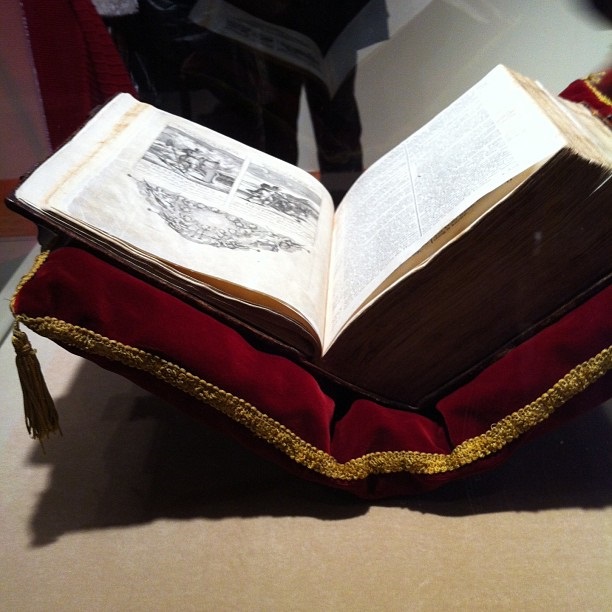
In 2013, two Little Rock museums highlighted George Washington artifacts. Historic Arkansas Museum displayed the Washington family Bible for several months. At the start of that time, they also showcased the Bible on which Washington swore his first oath as President (the inaugural inaugural?).

A few months later, the Clinton Presidential Center featured Washington’s personal annotated copy of the 1789 “Acts Passed at a Congress of the United States of America.” This artifact had been purchased by the Mount Vernon Ladies Association in 2012.
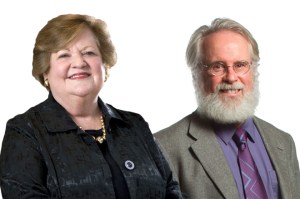
Montine McNulty and Bill Worthen to be added to Arkansas Tourism Hall of Fame

montine-mcnulty-bill-worthen-composite-tourism-hall-of-fameMontine McNulty, executive director of the Arkansas Hospitality Association, and Bill Worthen, director of Historic Arkansas Museum, will be inducted to the Arkansas Tourism Hall of Fame. They will be honored during a luncheon Monday, March 14, 2016, at noon during the 42nd Annual Governor’s Conference on Tourism. The conference will be held in Springdale at the Northwest Arkansas Convention Center March 13-15, 2016.

The Hall of Fame honor is presented annually to an individual or individuals who have been actively involved in tourism for many years and who have made substantial contributions to the betterment of the industry as a whole.

Through her leadership for the leisure and tourism industry, McNulty has played an essential role in promoting tourism-related legislation over the past 25 years, including the passage of the 2% Tourism Tax and the 1/8th Cent Conservation Tax. A member of numerous boards and associations, she has worked to ensure the voice of the tourism industry is heard among members of the Arkansas General Assembly.

For more than four decades, Worthen has served the State of Arkansas as director of Historic Arkansas Museum, shepherding the museum through significant expansions of facilities, programs, collections, publications, exhibits, research, partnerships, community development and tourism. Worthen’s leadership and advocacy have contributed to the revitalization of downtown Little Rock and helped put both Little Rock and Arkansas as a whole on the map as a travel destination.

For information on the Hall of Fame Awards, contact Kristine Puckett at 501-682-5240.

Black History Month Spotlight – Old State House Museum

OSH logoThe new Arkansas Civil Rights History Audio Tour was launched in November 2015. Produced by the City of Little Rock and the University of Arkansas at Little Rock allows the many places and stories of the City’s Civil Rights history to come to life an interactive tour.  This month, during Black History Month, the Culture Vulture looks at some of the stops on this tour which focus on African American history.

The 1836 Old State House, the oldest standing state capitol building west of the Mississippi River, was a center of political activity for many years. During the Civil War, Union and Confederate forces alternately occupied it. During Reconstruction, with many black men registering to vote, eight African Americans were delegates to the 1868 Constitutional Convention, held in this building.

The new constitution recognized the equality of all persons before the law, provided suffrage for freedmen, and required a system of free public education for blacks and whites (in separate schools.) By 1874, twenty black men were serving in the Arkansas General Assembly. In 1891, African American Senator George W. Bell and Representative John Grey Lucas gave inspiring speeches against the Separate Coach Law.

Now a museum, the Old State House exhibits include ones relating to African American history. “On the Stump: Arkansas Political History“ explains civil rights issues from statehood (1836) into the twentieth century. Its collections, which are searchable on-line, include quilts by black Arkansans, photographs by African American photographer Geleve Grice, and music by Louis Jordan. Portions of the Arkansas Slave Narratives, collected by the Works Progress Administration in the 1940s, are available on the web-site.

The app, funded by a generous grant from the Arkansas Humanities Council, was a collaboration among UALR’s Institute on Race and Ethnicity, the City of Little Rock, the Mayor’s Tourism Commission, and KUAR, UALR’s public radio station, with assistance from the Little Rock Convention and Visitors Bureau.

Black History Month Spotlight – Historic Arkansas Museum

hamlogoThe new Arkansas Civil Rights History Audio Tour was launched in November 2015. Produced by the City of Little Rock and the University of Arkansas at Little Rock allows the many places and stories of the City’s Civil Rights history to come to life an interactive tour.  This month, during Black History Month, the Culture Vulture looks at some of the stops on this tour which focus on African American history.

The Historic Arkansas Museum interprets early Arkansas history through Little Rock’s oldest buildings, a medicinal herb garden, and modern exhibits. “Giving Voice” is a permanent memorial to the 138 men, women and children enslaved by Nineteenth Century landowners where the museum now stands. An African American character representing the mid-1800s is regularly included in the living history presentations.

Changing exhibits in the museum’s seven galleries often include ones related to African American history and local artists with African American heritage. On-line exhibits and educational materials relate to this history. “We Walk in Two Worlds,” a permanent exhibit, tells the story of the Caddo, Osage, and Quapaw tribes who first lived in Arkansas. The Native American voice shapes the exhibit, which includes pottery, clothing, and weapons.

The app, funded by a generous grant from the Arkansas Humanities Council, was a collaboration among UALR’s Institute on Race and Ethnicity, the City of Little Rock, the Mayor’s Tourism Commission, and KUAR, UALR’s public radio station, with assistance from the Little Rock Convention and Visitors Bureau.

Black History Month Spotlight – Central High School National Historic Site

Little Rock 2011 036The new Arkansas Civil Rights History Audio Tour was launched in November 2015. Produced by the City of Little Rock and the University of Arkansas at Little Rock allows the many places and stories of the City’s Civil Rights history to come to life an interactive tour.  This month, during Black History Month, the Culture Vulture looks at some of the stops on this tour which focus on African American history.

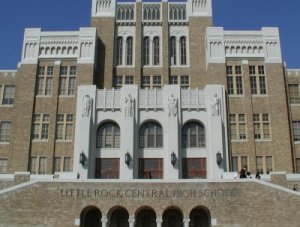
In September 1957, Central High School was at the center of international attention when Gov. Orval E. Faubus ordered the National Guard to prevent nine black students from attending. President Dwight D. Eisenhower later federalized the National Guard and sent in federal troops to escort the students to class. The school became a crucial battleground in the struggle for civil rights. Dramatic media images of the conflict seared themselves into public memory.

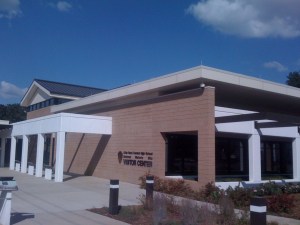
The Little Rock Central High School National Historic Site and Visitor Center opened in September 2007 to mark the fiftieth anniversary of the school’s desegregation. The interactive displays include interviews with the Little Rock Nine and historic video clips. The Center presents a broad view of civil and human rights struggles in the United States and around the world. Central High School is the only functioning high school in the United States to be located within the boundary of a national historic site.

The app, funded by a generous grant from the Arkansas Humanities Council, was a collaboration among UALR’s Institute on Race and Ethnicity, the City of Little Rock, the Mayor’s Tourism Commission, and KUAR, UALR’s public radio station, with assistance from the Little Rock Convention and Visitors Bureau.

Black History Month Spotlight – Central High School

centralentranceThe new Arkansas Civil Rights History Audio Tour was launched in November 2015. Produced by the City of Little Rock and the University of Arkansas at Little Rock allows the many places and stories of the City’s Civil Rights history to come to life an interactive tour.  This month, during Black History Month, the Culture Vulture looks at some of the stops on this tour which focus on African American history.

In September 1957 Little Rock’s Central High School made headlines around the world in a struggle over school desegregation. In its 1954 Brown v. Board of Education decision, the United States Supreme Court declared an end to segregated schools. Little Rock drew up a gradual plan for desegregation starting with Central High. The local branch of the National Association for the Advancement of Colored People opposed the plan on the grounds that it was too slow moving, but the federal courts upheld it. The night before the school was due to desegregate, Gov. Orval Faubus surrounded Central with National Guard soldiers. The next day, black students were denied entry.

Eventually, Faubus was persuaded to remove the soldiers. When nine black students attempted to desegregate the school, a white mob formed outside. The students were removed for their safety. Finally, President Dwight D. Eisenhower sent in federal troops to desegregate the school. Even then, the ordeal of the Little Rock Nine was not over. They suffered numerous attacks inside the school. At the end of the school year Ernest Green, the only senior in the group, became the first black student to graduate from Central in May 1958.

The app, funded by a generous grant from the Arkansas Humanities Council, was a collaboration among UALR’s Institute on Race and Ethnicity, the City of Little Rock, the Mayor’s Tourism Commission, and KUAR, UALR’s public radio station, with assistance from the Little Rock Convention and Visitors Bureau.

Black History Month Spotlight – Joseph Taylor Robinson Auditorium

IMG_7690The new Arkansas Civil Rights History Audio Tour was launched in November 2015. Produced by the City of Little Rock and the University of Arkansas at Little Rock allows the many places and stories of the City’s Civil Rights history to come to life an interactive tour.  This month, during Black History Month, the Culture Vulture looks at some of the stops on this tour which focus on African American history.

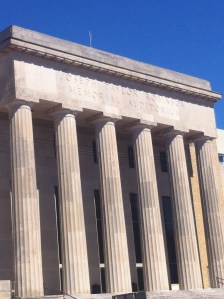
In March 1974, Little Rock hosted the second National Black Political Convention at the Joseph T. Robinson Auditorium and Camelot Hotel (now a Doubletree Hotel). The first convention was held in Gary, Indiana, in 1972, and garnered much publicity, producing a National Black Political Agenda that included demands for the election of a proportionate number of black representatives to Congress, community control of schools, and national health insurance. The Little Rock convention was co-convened by Congressman Charles Diggs of Detroit, Michigan; Mayor Richard Hatcher of Gary, Indiana; and poet Amiri Baraka. Plenary speakers included Atlanta Mayor Maynard Jackson and comedian and activist Dick Gregory. Jesse Jackson was also in town for the convention. The convention featured a moving testimonial and tribute to local civil rights leader Daisy Bates at Central High School.

For many years, the lower Exhibition Hall of Robinson Auditorium hosted many concerts, dances and sporting events, popular with black audiences. However, because the large concert hall upstairs had segregated seating, Duke Ellington declined to play there in 1961. Louis Armstrong played to the first integrated audience in 1966 after the 1964 Civil Rights Act ended segregation in public facilities and accommodations.

The app, funded by a generous grant from the Arkansas Humanities Council, was a collaboration among UALR’s Institute on Race and Ethnicity, the City of Little Rock, the Mayor’s Tourism Commission, and KUAR, UALR’s public radio station, with assistance from the Little Rock Convention and Visitors Bureau.