Little Rock Look Back: Robinson Auditorium opens in 1940

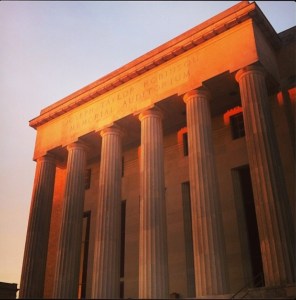
auditoriumduskOn February 16, 1940, after three years of planning and construction including several delays due to lack of funding, the Joseph Taylor Robinson Memorial Auditorium officially opened. It was a cold, rainy night, but those in attendance did not care.

Searchlights painting arcs in the sky greeted attendees. They were borrowed from the Arkansas National Guard. Newspaper accounts noted that only a few of the men who attended were in tuxedos, most were simply in suits. The work to get the building opened had been so harried, that it was discovered there was not an Arkansas Flag to fly in front of the building. Mayor Satterfield found one at the last minute courtesy of the Arkansas Department of the Spanish War Veterans.

The weather delayed arrivals, so the program started fifteen minutes late. Following a performance of Sibelius’ Finlandia by the fledgling Arkansas State Symphony Orchestra, Mayor J. V. Satterfield, Mrs. Joseph T. Robinson, Mrs. Grady Miller (the Senator’s sister-in-law and a member of the Auditorium Commission) and D. Hodson Lewis of the Chamber of Commerce participated in a brief ribbon cutting ceremony. Mrs Robinson cut the ribbon on her second attempt (once again proving that nothing connected with getting the building open was easy).

The ceremony was originally set to be outside of the building but was moved indoors due to the inclement weather. The ribbon cutting took place on the stage with the ribbon stretched out in front of the curtain. The opening remarks were broadcast on radio station KGHI.

Mr. Lewis, Mrs. Miller and Mayor Satterfield look on as Mrs. Robinson cuts the ribbon

Mr. Lewis, Mrs. Miller and Mayor Satterfield look on as Mrs. Robinson cuts the ribbon

Though he had previously discussed how he had voted against the auditorium in 1937 before entering public life, the mayor’s remarks that evening were appropriately gracious, statesmanlike and a testament to the effort he had invested to get it open upon becoming mayor. “We hope you have a very pleasant evening and hope further that it will be the first in a long series which you will enjoy in this, your auditorium.”

Tickets for the event, advertised as being tax exempt, were at four different pricing levels: $2.50, $2.00, $1.50 and $1.00.

The estimated attendance was 1700. Following the ribbon cutting, the main performance took place. The headliner for the grand opening was the San Francisco Opera Ballet accompanied by the new Arkansas State Symphony Orchestra (not related to the current Arkansas Symphony Orchestra). The featured soloist with the ballet was Zoe Dell Lantis who was billed as “The Most Photographed Miss at the San Francisco World’s Fair.”

At the same time that the gala was going on upstairs in the music hall, a high school basketball double-header was taking place in the downstairs convention hall. North Little Rock lost to Beebe in the first game, while the Little Rock High School Tigers upset Pine Bluff in the marquee game.
Free admission at Clinton Center today

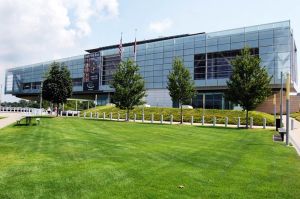
Clinton Library 3The Clinton Presidential Center is free today in honor of the George Washington Birthday Federal Holiday.  Also free are audio tours narrated by President Clinton.

This is a wonderful opportunity to see the final day of the temporary Coca-Cola exhibits.

Illustrations of an American Original is located in the Garden View Room and focuses the now-iconic images and advertising campaigns that have helped define the Coca-Cola brand.  An American Original at 100 is housed in the Temporary Gallery, bringing together historic bottle “firsts.” It features a 13-bottle chronology, including an original glass bottle produced in 1902, a replica of the prototype contour bottle created by the Root Glass Company in 1915, and a prototype of the aluminum bottle that debuted in 2008.
In addition to Illustrations of an American Original and An American Original at 100, the Center is also displaying a full-size antique Coca-Cola delivery truck produced in 1949 by the White Motor Company and a spectacular hanging installation comprised of more than 750 3D-printed, ribbon-shaped interpretations of the bottle’s classic shape.

Little Rock Look Back: Mayor John Wassell

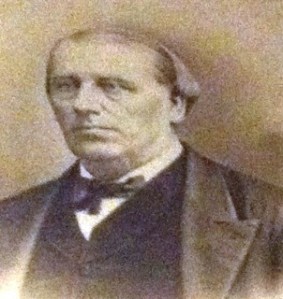
JWassellFuture Little Rock Mayor John Wassell was born on February 15, 1813 in Kidderminster, England.

In 1829, he came to the United States.  He learned carpentry and construction in Ohio and ended up in Little Rock.  One of his jobs was as the finishing contractor on the State Capitol building, now known as the Old State House.

He later gave up carpentry and became an attorney.  (It is said that he did so after becoming embroiled in a legal dispute arising from one of his construction jobs.) Wassell also served as a judge.

In 1868, he was appointed Mayor of Little Rock by President Andrew Johnson.  He is Little Rock’s only Mayor to have served through a military appointment.  Mayor Wassell died in January 1881 and is buried at Mount Holly Cemetery along with his wife and other family members.  One of his grandsons, Samuel M. Wassell also served as Mayor of Little Rock.

Final 2 Days of Coca Cola exhibit at Clinton Center

Coca-Cola-Bottle-History-v2-hiThe Clinton Presidential Center celebrates the art and history of the Coca-Cola Bottle’s 100-year anniversary during its upcoming temporary exhibit, Coca-Cola: An American Original. The exhibit closes on Monday, February 15.
The exhibit is divided into two sections and occupies both the Garden View room, located on the first floor, and the Temporary Gallery, located on the third floor.
Illustrations of an American Original will be located in the Garden View Room and will have as its focus the now-iconic images and advertising campaigns that have helped define the Coca-Cola brand. Illustrations will include three original paintings by Norman Rockwell, an American artist who created a total of six paintings that were ultimately used in finished Coca-Cola ads. The three others, known as the “Missing Rockwells,” have yet to be located. Additionally, Illustrations feature several images of Santa Claus, including the first Coca-Cola Santa painted by Fred Mizen that appeared in The Saturday Evening Post in December of 1930, as well as nine original Haddon Sundblom illustrations.
An American Original at 100 is housed in the Temporary Gallery, bringing together historic bottle “firsts.” It features a 13-bottle chronology, including an original glass bottle produced in 1902, a replica of the prototype contour bottle created by the Root Glass Company in 1915, and a prototype of the aluminum bottle that debuted in 2008.
Also, the exhibit showcases pop art by Andy Warhol—including videos, photographs, prints, and other original works—and folk art by Howard Finster, who incorporated the Coca-Cola bottle into dozens of his pieces over his prolific career. Another portion of this exhibit is dedicated to American presidents and their connection to the global brand. An American Original at 100 was recently on display at the High Museum of Art Atlanta.


In addition to Illustrations of an American Original and An American Original at 100, the Center is also displaying a full-size antique Coca-Cola delivery truck produced in 1949 by the White Motor Company and a spectacular hanging installation comprised of more than 750 3D-printed, ribbon-shaped interpretations of the bottle’s classic shape.
Coca-Cola: An American Original is the Center’s 42nd temporary exhibit. It will close on February 15, 2016.  Admission to temporary exhibits is included in the price of Library admission.

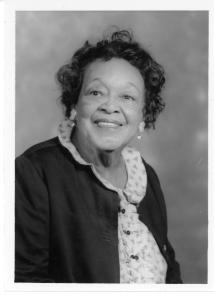
Black History Month Spotlight – Sue Cowan Williams Library

sue_cowan_williamsThe new Arkansas Civil Rights History Audio Tour was launched in November 2015. Produced by the City of Little Rock and the University of Arkansas at Little Rock allows the many places and stories of the City’s Civil Rights history to come to life an interactive tour.  This month, during Black History Month, the Culture Vulture looks at some of the stops on this tour which focus on African American history.

In 1945, Sue Cowan Williams successfully sued the Little Rock School District for equal pay for black and white teachers. The existing inequality in pay clearly did not meet the stipulation of “separate but equal” treatment of African Americans required by the law.

Williams was chair of the English Department at Dunbar High School. She had attended Spelman College in Atlanta, Talladega College in Alabama, and the University of Chicago. These impressive credentials made her an ideal standard bearer for the suit. Local lawyers, along with the NAACP’s Thurgood Marshall, successfully appealed Williams’ case to the Eighth Circuit Court of Appeals in St. Louis. In the meantime, however, Williams’ contract was not renewed at Dunbar.

After working several other jobs, she was eventually rehired in 1952. She remained at Dunbar until her retirement in 1974. Williams died in 1994. In 1997, the tenth library in the Central Arkansas Library System was dedicated as the Sue Cowan Williams Library in her honor.

The app, funded by a generous grant from the Arkansas Humanities Council, was a collaboration among UALR’s Institute on Race and Ethnicity, the City of Little Rock, the Mayor’s Tourism Commission, and KUAR, UALR’s public radio station, with assistance from the Little Rock Convention and Visitors Bureau.

LOVE JONES on screen tonight as part of MTCC After Dark

MTCC Love JonesJoin MTCC “After Dark” for a Valentine’s Day affair with a special screening of the 1997 New Line Cinema film Love Jones starring Larenz Tate and Nia Long.

Darius Lovehall (Tate) is a young black poet in Chicago who starts dating Nina Mosely (Long), a beautiful and talented photographer. While trying to figure out if they’ve got a “love thing” or are just “kicking it,” Nina attempts to test the strength of Darius’ feelings and sets a chain of romantic complications into motion.

Refreshments will be served. Admission is $10. Seating is limited and tickets must be purchased at Mosaic Templars Cultural Center.

MTCC is an agency of the Department of Arkansas Heritage.

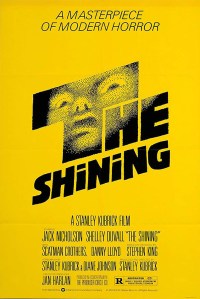
Heeeere’s THE SHINING – tonight at the CALS Ron Robinson Theater

RRT shiningStanley Kubrick’s 1980 thriller The Shining will be chilling the big screen tonight at the Ron Robinson Theatre at 7pm.

Based on the Stephen King novel, The Shining was directed by Kubrick from a screenplay he wrote with Diane Johnson.

Jack Nicholson is appropriately cerebral and scary as he alternates between wrestling with writer’s block and wielding an ax.  Shelley Duvall, Danny Lloyd, Scatman Crothers, Barry Nelson, Anne Jackson and Joe Turkel are also in the cast.  Set largely in a desolate hotel, the movie was a chore for the actors due to the incredibly long hours of shooting each day.  As a director, Kubrick was overly exacting.  But the result of the hard work comes through on the screen.

Though he was excruciatingly demanding on Duvall, Kubrick took cares to make it a pleasant filming experience for six-year-old Lloyd.  It was not until a decade later that Lloyd realized it had been a horror film, because Kubrick and others kept him out of the way during the more violent scenes.

See it all on the big screen tonight.