Little Rock Look Back: Adolphine Fletcher Terry

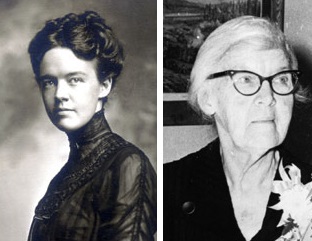
Photos from the collection of the Butler Center

Photos from the collection of the Butler Center

Adolphine Fletcher Terry was born on November 3, 1882 to former Little Rock Mayor John Gould Fletcher and his wife Adolphine Krause Fletcher.

Raised in Little Rock, in 1889 she moved into the Albert Pike House on East 7th Street, when her aunt transferred the title to her father. That house would be her primary residence the rest of her life.  Her sister Mary Fletcher Drennan never lived in Arkansas as an adult after marriage. Her brother John Gould Fletcher spent much of his adulthood in Europe before returning to Little Rock and establishing his own house, Johnswood.

At age 15, Adolphine attended Vassar. She later credited that experience as broadening her views on many issues.  After graduating at age 19, she returned to Little Rock.  Her parents both died prior to her 1910 wedding to David D. Terry, which took place at what was then known as the Pike-Fletcher House (and today is known as the Pike-Fletcher-Terry House).

She is perhaps best known today for establishing the Women’s Emergency Committee in 1958 and for her subsequent deeding of the family house to the City for use by the Arkansas Arts Center.  But her entire life was based on civic engagement.

She was instrumental in establishing the first juvenile court system in Arkansas and helped form the first school improvement association in the state. She was long an advocate for libraries, serving 40 years on the Little Rock public library board.  Through her leadership, the library opened its doors to African Americans in the early 1950s. Today a branch of the Central Arkansas Library System (the successor the Little Rock public library) is named after her.  Another branch is named after her Pulitzer Prize winning brother.

Adolphine formed the Little Rock chapter of the American Association of University Women, the Pulaski County tuberculosis association and the Community Chest.

In 1958, when the Little Rock public high schools were closed instead of allowing them to be desegregated again, she called Harry Ashmore the editor of the Gazette and exclaimed, “the men have failed us…it’s time to call out the women.”  With this, she formed the Women’s Emergency Committee to Open Our Schools. This group played a major role in getting the four high schools open the following year.

From 1933 to 1942, David Terry served in the U.S. Congress. During that time, Adolphine alternated her time between Washington DC and Little Rock. But she spent much time in Little Rock raising her five children.

After her husband’s death in 1963, she continued to remain active in civic affairs. In the 1960’s, she and her sister deeded the Pike-Fletcher-Terry House to the City of Little Rock for use by the Arkansas Arts Center upon both their deaths.  Following Adolphine Fletcher Terry’s death in 1976, Mary turned over the title to the City.

Adolphine Fletcher Terry is buried in Mount Holly Cemetery alongside her husband. Three of her children are also buried in that plot.  Her parents and brother are buried in a nearby plot.

Her son William Terry and his wife Betty continue to be active in Little Rock. Their daughters and their families also carry on Adolphine Fletcher Terry’s commitment to making Little Rock better.

Little Rock Look Back: J. N. Heiskell

At the age of 87, J. N. Heiskell in 1960.

At the age of 87, J. N. Heiskell in 1960.

John Netherland (J. N.) Heiskell served as editor of the Arkansas Gazette for more than seventy years.

He was born on November 2, 1872, in Rogersville, Tennessee, to Carrick White Heiskell and Eliza Ayre Netherland Heiskell. He entered the University of Tennessee at Knoxville before his eighteenth birthday and graduated in three years at the head of his class on June 7, 1893.

His early journalism career included jobs with newspapers in Knoxville and Memphis and with the Associated Press in Chicago and Louisville. On June 17, 1902, Heiskell’s family bought controlling interest in the Arkansas Gazette. Heiskell became the editor, and his brother, Fred, became managing editor.

Governor George Donaghey appointed Heiskell to succeed Jeff Davis in the United States Senate after Davis’s death in office. Heiskell served from January 6, 1913, until January 29, 1913, when a successor was elected.

On June 28, 1910, Heiskell married Wilhelmina Mann, daughter of the nationally prominent architect, George R. Mann. The couple had four children: Elizabeth, Louise, John N. Jr., and Carrick.

In 1907, he joined a successful effort to build the city’s first public library. He served on the library board from that year until his death and was issued the first library card.  He also served on the City’s Planning Commission for decades.

In 1912, he was instrumental in bringing John Nolen to Little Rock to devise a park plan. Heiskell was also largely responsible for the location of Robinson Auditorium. When City Council members had competing locations, he advocated for the corner of Markham and Broadway. And kept at it until the site was selected.

In the paper and in his own personal opinions, he crusaded on a variety of progressive causes.  Perhaps the most famous was the Gazette’s stance in the 1957 Central High desegregation crisis.  It was for this effort that the paper received two Pulitzer Prizes.

Although Heiskell stopped going to the office at age ninety-nine, he continued to take an active interest in the newspaper. He began by having a copy of the newspaper delivered to his home by messenger as soon as it came off the press each night. Eventually, he switched to having his secretary call him daily at his home and read the entire newspaper to him. He operated on the premise that “anyone who runs a newspaper needs to know what’s in it, even to the classified ads.”

A few weeks after turning 100, Heiskell died of congestive heart failure brought on by arteriosclerosis on December 28, 1972. He is buried in Little Rock’s Mount Holly Cemetery.  Interestingly, he is buried in the same cemetery as two of his most notable adversaries: Governor Jeff Davis, and segregationist Congressman Dale Alford.

Little Rock Look Back: Little Rock becomes a City

LR sealOn November 2, 1835, the Town of Little Rock became the City of Little Rock upon the signature of Territorial Governor William S. Fulton.  The Town of Little Rock had been established on November 7, 1831.

The new charter deemed that the election of officers (including a Mayor and eight aldermen) would be on November 10 at the Pulaski County Courthouse. To be eligible to serve, candidates had to be free white men who were aged 30 and above.

The charter established a constable and a court system, gave the City the ability to levy fees and fines, and provided the fact that the City would not have responsibility for maintaining county roads.

This transformation, cut short David Fulton’s term as Mayor of Little Rock by two months. James Pitcher would be elected the first Mayor of the City of Little Rock.

Final Night of Boo at the Zoo tonight!

2015 BooAttendees coming to the Little Rock Zoo’s annual Halloween festival will get to see the park in a whole new light this year with the addition of glowing decorations in theme of Halloween. Boo at the Zoo ends tonight after a frightfully fun filled month.

The Zoo comes alive at night with thousands of new holiday lights decorated throughout the park, including trees wrapped with Halloween-colored lights, pathways decorated with exciting visual displays, and spooky new attractions for the Haunted Train and Haunted House.

Boo at the Zoo also features all the fun that Arkansas families have come to expect, with trick-or-treat stations full of toys and candy to choose from, carnival rides and games, bounce house inflatables, Frankenstein’s Dance Party and the Thriller Dance performance, a nightly costume contest, live music every night, free s’mores with every ticket, free milk from Hiland Dairy, the Haunted Carousel ride, Haunted Train ride, a hay maze, face painting, glitter tattoos, kid’s area games, Haunted Bingo, and food trucks with food available for purchase each night.

Admission to Boo at the Zoo is $20 per person for wristband admission and includes all rides, attractions and six tickets for trick-or-treat stations and s’mores. Wristband admission does not include food or retail purchases or Haunted Bingo. General Admission is $10 and includes six tickets that may be used for trick-or-treat stations, s’mores, or for rides and attractions. Rides and attractions take between two and 10 tickets. Individual tickets for rides, attractions, treat stations and s’mores are also sold inside the Zoo for $.50 each and guests purchasing General Admission tickets also have the option to upgrade to a wristband if they chose. Admission passes can be purchased online starting now at www.LittleRockZoo.com/boo or at the Zoo’s front gate entrance.

Boo at the Zoo is sponsored by the Little Rock Convention and Visitors Bureau, Blue and You Arkansas Blue Cross Blue Shield Foundation, Acxiom, Ambetter of Arkansas, Coca-Cola, Cumulus Broadcasting with B98.5, Alice 107.7 and KOKY 102.1, Arkansas Federal Credit Union, Aristotle, Discount Trophy, New Age Distributing, The Wonder Place, TruService Credit Union, Kroger, Target, Wal-Mart, Home Depot and Premium Refreshment Services.


About Boo at the Zoo

Boo at the Zoo is Arkansas’s largest Halloween festival featuring trick-or-treating in a safe environment along with dozens of Halloween themed activities for the entire family. Now is its 24th year, Boo at the Zoo has become a staple for central Arkansas families. Boo at the Zoo is a nighttime event where the Little Rock Zoo reopens after normal operating hours to host ghosts and ghouls and everything that goes “bump” in the night in all corners of the Zoo. Costumes are not required to attend Boo at the Zoo but are encouraged. The event is known for popular attractions such as the Haunted Train where the Zoo’s miniature train is turned into a haunted nighttime attraction as well as the Haunted Carousel that is free to the public. To learn more visit www.LittleRockZoo.com/boo

The Little Rock Zoo is accredited by the Association of Zoos and Aquariums.

The Science of Dreams and Nightmares at Museum of Discovery’s Science after Dark tonight

MOD Dark DreamsEach month the Museum of Discovery hosts “Science after Dark” for adults aged 21 and up.  This month’s theme is “Science of Dreams and Nightmares.”

Here are some of the things you can expect:
-Activities/info about sleep paralysis and lucid dreaming
-Dream interpretation
-Creepy crawly animals (to inflict nightmares)
-Sensory deprivation
– Counting (or shooting) sheep (zombie sheep)
– Adult face painting (zombie/blood/warts)

Don’t forget to bring cash for refreshments from Stone’s Throw Brewing, Damgoode Pies and Juanita’s

The program runs from 6pm to 9pm. Cost is $5, FREE for museum members. (Go ahead and get a membership, it will more than pay for itself within a year!)

This will be the final Science after Dark of 2015.  But look for more events in 2016!

Balloon Glow & Mac-O-Lanterns in MacArthur Park tonight!

balloonglowWhat better way to spend All Hallow’s Eve Eve?

Make plans for a great evening in the beautiful and historic MacArthur Park!

Enjoy…
Hot Air Balloons
Pumpkin Carving and Painting
Food Trucks & Local Breweries
Live Music
FREE admission to the Arkansas Arts Center (open until 9 p.m.)

This will truly be fun for all ages!

Come hungry and feast on one of the many delicious options from our local food trucks! Guests ages 21 and over can experience several local craft beers!

Sign up to paint a pumpkin!

$5 tethered balloon rides for the kids

Schedule (subject to change)
6:00 Festival begins – Eat, drink and be merry. Watch some talented local artists create pumpkin masterpieces!

7:00 Balloon Glow

9:00 Event concludes

Saturday morning at 7:30, come back and send off the balloons in style…come bid them farewell and have a delicious breakfast with too!

Little Rock Look Back: Site selected for Robinson Auditorium

Potential rendering of new auditorium which appeared in October 30, 1937 ARKANSAS GAZETTE

Potential rendering of new auditorium which appeared in October 30, 1937 ARKANSAS GAZETTE

On October 29, 1937, the Little Rock City Council finally selected the site for the Municipal Auditorium.  It had been approved by voters in January of that year, but no site had been identified during the campaign.

During the early autumn, the City had engaged a consultant to evaluate several downtown locations as potential sites for the municipal auditorium.  One stipulation was that it had to be an entire city block.

The six sites were:

Broadway, Markham, Spring and Garland Streets; Center, Markham, Spring and Second Streets; Center, Eighth, Louisiana and Ninth Streets; Scott, Fourth, Cumberland and Capitol Streets; Scott, Tenth, Cumberland and Ninth Streets; and Third, State, Second and Gaines Streets


The top choice was the site bounded by Center, Markham, Spring and Second Streets.  It was felt that location’s proximity to public buildings made it ideal for a civic auditorium.  It was across the street from the former state capitol (then known as the Arkansas War Memorial) which was, at the time, housing state and federal offices.  The site was also adjacent to the county courthouse structures.

Half of the desired property was owned by the federal government.  Because it was being used for federal offices, it was uncertain as to the site’s availability.  Therefore a city committee recommended the site bounded by Center, Eighth, Louisiana and Ninth Streets be utilized as the auditorium location.

The City Council met on October 20 to make a decision. But were at a stalemate. They met again a few days later with still no resolution.

At an October 25 City Council meeting, Arkansas Gazette publisher (and chairman of the Planning Commission) J. N. Heiskell, advocated the site on Markham and Broadway Streets. The Council convened on October 29 to meet again.  The clock was ticking, a site had to be selected because ground had to be broken prior to January 1, 1938.


At the October 29th meeting, the discussion from previous meetings among the aldermen picked up where it had left off.  Again J. N. Heiskell spoke about the importance of employing city planning concepts in selecting the site.

“In the past, selection of a site for a public building has been merely a matter of who could sell the city some property.  I had hoped we were starting a new effort in starting selection of an auditorium site with the advice of Mr. Bartholomew.  Starting with the auditorium, we should be guided by competent advice and locate future buildings following a city plan.  Your vote today will determine the future of Little Rock so far as city building goes.”

After having engaged in discussions with various federal government agencies, Mayor Overman reported that the city could not obtain the recommended site.  It would not be possible for the federal government to relocate those agencies currently occupying half of that block within the time allowed.  The mayor also stated that he had been warned that if construction did not start by January 1, 1938, (which was just a few weeks away) then the money could be taken back and allocated to other projects.

Ultimately the City Council voted 16 to 1 with 1 absent to locate it at the corner of Markham and Broadway.  At last, Little Rock had a location for the new municipal auditorium!

Though it had not been anyone’s first choice (except Mr. Heiskell, who did not have a vote), in retrospect, the auditorium site finally chosen offered many advantages which were not identified during the marathon selection discussions.  The grade of the land sloped toward the Arkansas River from Markham Street down to Garland Street which allowed for a street level entrance to both the planned exhibition hall on a lower level and the music hall on an upper level.  Given the topography of the other sites under consideration, this was only possible at the chosen location.  By stacking the two major components the project did not take up an entire block, which had been the forecasted footprint.  Not using the entire block allowed for subsequent expansion of the complex’s footprint in the coming decades.  This would not have been possible at any of the other sites under consideration if the original structure had taken up the entire block.  In addition, both Markham and Broadway Streets are wider than normal city streets which allowed for better traffic flow and for easier access to a loading dock.

Interestingly, the Convention & Visitors Bureau, which oversees Robinson Center Music Hall, now has offices in the Cromwell Building. This building is located on the site which had been the first choice for the auditorium in 1937.