Veterans Day Sculpture Vulture, Kathleen Caricof’s Stars and Stripes sculpture in War Memorial Park

Veterans Day is a good day to visit Kathleen Caricof’s Stars and Stripes in the Sturgis Veterans Plaza at War Memorial Park.  This 36 by 40 feet stainless steel sculpture welcomes visitors to the park and was dedicated in 2008 in conjunction with the 60th anniversary of War Memorial Stadium.

There are five interlocked stars which represent the five branches of the military: Army, Navy, Air Force, Marines and Coast Guard – both the active duty and the reserve segments of each branch as well as their affiliated guard units.

The gleaming stainless steel is both light and durable to represent the strength and vitality of the men and women who protect the United States and have done so for centuries.

Caricof, a member of the National Sculptors Guild, was selected for the commission after a national competition by the War Memorial Stadium Commission.  She has several other pieces in Little Rock including several in Riverfront Park and the Vogel Schwartz Sculpture Garden.

On Veterans Day, visit the Little Rock museum which pays tribute to Arkansas’ veterans

With today being Veterans Day,  it is a good time to remember the museum in Little Rock dedicated to preserving Arkansas’ rich military history.  Though most City of Little Rock offices are closed today for the holiday, the MacArthur Museum of Arkansas Military History is open.


Located in the historic Arsenal Tower in MacArthur Park, the MacArthur Museum of Arkansas Military History honors the Arkansans who have served in the armed forces.  Exhibits feature artifacts, photographs, weapons, documents, uniforms and other military items that vividly portray Arkansas’s military history at home and abroad.

Exhibits include:
  • Undaunted Courage, Proven Loyalty: Japanese American Soldiers in World War II
  • From Turbulence to Tranquility: The Little Rock Arsenal
  • Capital In Crisis and Celebration: Little Rock and the Civil War
  • Alger Cadet Gun
  • Camden Expedition
  • David Owen Dodd
  • Through the Camera’s Eye: The Allison Collection of World War II Photographs
  • By the President in the Name of Congress: Arkansas’ Medal of Honor Recipients
  • Conflict and Crisis: The MacArthur- Truman Controversy
  • Duty, Honor and Country: General Douglas MacArthur
  • The Sun Never Sets on the Mighty Jeep: The Jeep During World War II
  • War and Remembrance: The 1911 United Confederate Veterans Reunion
  • First Call – American Posters of World War I

The MacArthur Museum of Arkansas Military History is a museum of the City of Little Rock.  It is led by executive director Stephan McAteer who works with the MacArthur Military History Museum Commission.

Hours of Operation
Monday – Saturday; 9:00 a.m. – 4:00 p.m.
Sunday; 1:00 p.m. – 4:00 p.m.

HAM kicks off 75th Anniversary Celebration with Candlelight Gala

HAM CandleThe biennial Candlelight Gala will usher Historic Arkansas Museum into its 75th Diamond Anniversary tonight.

The 20th Candlelight Gala will be a special night for friends, families and colleagues who value Arkansas heritage, history and the arts. Proceeds from the 20th Candlelight Gala will empower Historic Arkansas Museum to continue protecting and preserving our Arkansas heritage.

Historic Arkansas Museum is both a history and historic site museum. The museum’s mission is to communicate the early history of Arkansas and its creative legacy through preserving, interpreting, and presenting stories and collections for the education and enjoyment of the people who visit.

Founded in 1941 as the Arkansas Territorial Restoration, it was one of Arkansas’ first historic preservation efforts.  The museum of today has far exceeded what the founders could have envisioned.  It not only contains Little Rock’s oldest buildings but also some of its newest art.

Historic Arkansas Museum is led by longtime director Bill Worthen. It is an agency of the Department of Arkansas Heritage.

Little Rock Look Back: LR chosen for Clinton Library

ClintonCenterConstruction-48

Refuse littered the future site of the Clinton Presidential Center

On November 7, 1997, President Bill Clinton announced his intentions to locate his presidential library in Little Rock at the end of a warehouse district.

The Little Rock City Board met in a special meeting that day to rename part of Markham Street, which would lead to the site, as President Clinton Avenue.

While the announcement was met with excitement in many quarters, there were still some skeptics who had a hard time envisioning a presidential library and park in the middle of a wasteland worthy of a T. S. Eliot poem.

There would be many hurdles between the November 1997 announcement to the December 2001 groundbreaking. But for the moment, City of Little Rock leaders, celebrated the achievement.  Then Mayor Jim Dailey had appointed City Director Dean Kumpuris and City employee Bruce T. Moore to lead the City’s efforts.  Moore and Kumpuris worked with Skip Rutherford and others to narrow the potential sites.

In September 1997, the Clintons were in town for the 40th anniversary of the integration of Central High School.  They surprised Kumpuris and Moore with a decision for a Sunday afternoon visit to the warehouse district proposed site. Secret Service would not let the limousine drive in part of the property, so the Clintons, Moore, Kumpuris, and Rutherford walked up a path to the roof of the abandoned Arkansas Book Depository.  It was there that the Clintons could see the Little Rock skyline which would be visible from the library.

Of course by the time the library had opened in November 2004, the Little Rock skyline was different. Spurred on by the library, several new highrises had been constructed in downtown.

Happy 184 to Little Rock!

LR 184With the stroke of Territorial Governor John Pope’s pen, Little Rock was officially chartered as a town on November 7, 1831. This followed approval by the Arkansas legislature a few days earlier.

As a chartered, officially recognized municipality, the Town of Little Rock was authorized to create a government and to plan for a Mayor and Aldermen to be elected. That election would take place in January 1832 with the initial council meeting later that month.

There are several earlier and later days which could be used to mark Little Rock’s official birth (La Harpe sighting in 1722, first settler in 1812, permanent settlement in 1820, selection of trustees in 1825, chartered as a City in 1835, chartered as a City of First Class in 1875) — but it is November 7, 1831, which has been the officially recognized and accepted date.

In 1931, Little Rock celebrated her centennial with a series of events.  Likewise, in November 1981, Little Rock Mayor Charles Bussey signed and City Clerk Jane Czech attested Resolution 6,687 which recognized the Little Rock sesquicentennial.

Little Rock Look Back: Mayor W. H. Walters

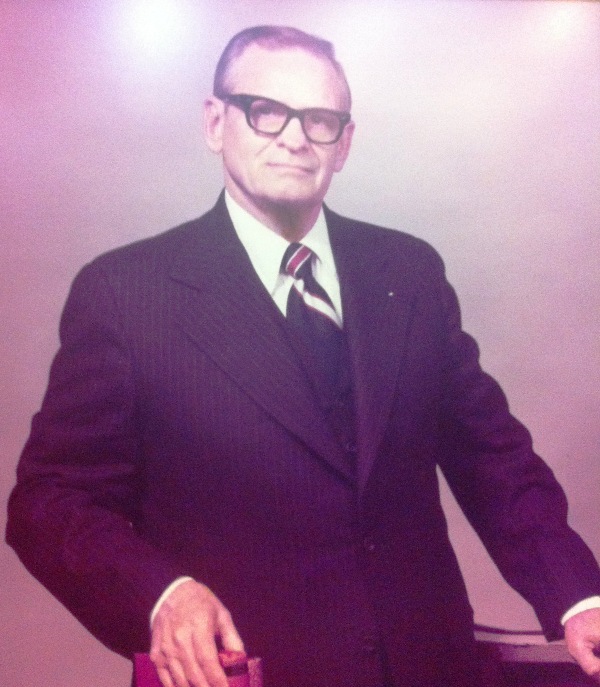
Mayor Walters' official portrait

On November 6, 1912, future Little Rock Mayor William H. Walters was born in Clearfield, Pennsylvania.

He ran for the City Board of Directors in 1970 and was unopposed.  Walters took office on January 1, 1971 and served one term on the City Board.  He chose not to run for a second term and left office on December 31, 1974.

In January 1973, he was selected by his colleagues to serve a two year term as Mayor of the City of Little Rock.

Throughout his life, Mayor Walters enjoyed traveling and visiting over 100 countries throughout the world. Mr. Walters had a keen interest in the circus and collected circus memorabilia from many countries.

He was employed by 3M Company. He was Superintendent and Acting Plant Manager beginning January 1, 1951 and 3M Plant Manager beginning February 1, 1972. He retired in 1977.

In addition to serving on the City Board, he had been active in the Little Rock Chamber of Commerce (he served as Chamber President in 1969), Kiwanis Club, Associated Industries of Arkansas and the YMCA among other activities.

Mayor Walters died on February 14, 2005 at the age of 94.

Sandwich in History at the Thomas M. Clifton house today

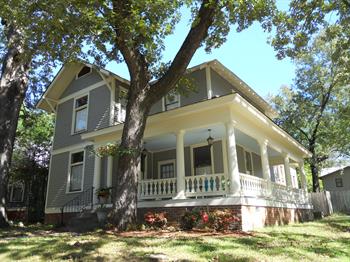
sandwich Thomas M Clifton HouseThe monthly architectural history program “Sandwiching in History” visits the Thomas M. Clifton House, located at 1423 South Summit Street. The program begins at noon today.  A historian with the Arkansas Historic Preservation Program delivers a brief lecture about the church before leading guests on a tour.

Located in the Central High School Neighborhood Historic District, this house was built about 1900 and features elements of the Craftsman and Colonial Revival styles. The first long-term occupant was Thomas M. Clifton, who worked in the Choctaw, Oklahoma & Gulf Railroad shops.

Sandwiching in History is a program of the Arkansas Historic Preservation Program, an agency of the Department of Arkansas Heritage.  The AHPP is responsible for identifying, evaluating, registering and preserving the state’s cultural resources. Other DAH agencies are the Arkansas Arts Council, the Delta Cultural Center in Helena, the Old State House Museum, the Mosaic Templars Cultural Center, the Arkansas Natural Heritage Commission and the Historic Arkansas Museum.