LR Cultural Touchstone: Jeannette Edris Rockefeller

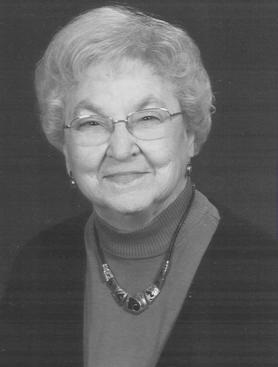
J RockefellerJeannette Edris Rockefeller only lived in Arkansas for about fifteen years. But her impact on the cultural life of Little Rock and all of Arkansas continues to be felt today.

Born and raised in Seattle, as a young mother she met Winthrop Rockefeller while both were in New York.  He moved to Arkansas in 1953; after their 1956 marriage, she joined him. They split their time between Little Rock and Petit Jean.

In 1959, she was asked to become involved in plans for a new art museum in Little Rock.  She became a tireless advocate and fundraiser for the new Arkansas Arts Center.   In 1960, she assumed the role of president of the Arkansas Arts Center Board of Trustees, a position she held until 1968.  During that time period she oversaw the planning, construction and opening of the building.  She also invited Townsend Wolfe, who she had met when he taught some classes at the Arts Center, to apply to become the museum’s first executive director.

From 1967 to 1971, she was First Lady of Arkansas.  In that capacity, she supervised renovation of the Governor’s Mansion and started the tradition of displaying art on the walls.

Shortly after her 1971 divorce from Rockefeller, she relocated to California.  She continued to be a supporter of the Arts Center.  One of the galleries in the Arts Center is named in her honor.  In addition, one of the sculptures on the lawn of the Arts Center, Standing Red, was dedicated in 1970 in recognition of her service on the Arts Center Board.

Little Rock Look Back: TR in LR

TheodoreRooseveltOn October 25, 1905, President Teddy Roosevelt, recently elected to a four year term in his own right, made an appearance in Little Rock.

He was greeted at the train station by Governor Jeff Davis and was the guest of honor in a parade up Main Street to City Park (now MacArthur Park) in where a public meeting was held featuring remarks by the President.  During this remarks, speaking to a largely Democratic crowd, the Republican Roosevelt noted: “The candidate is the candidate of a party; but if the president is worth his salt he is the president of the whole people.”

According to media reports at the time, Main Street from Markham to Tenth was a solid mass of cheering spectators for the parade.  This was the first time a sitting President had spent time in Little Rock away from a train station. The only other incumbent President to visit had been Benjamin Harrison.

He would make three more visits to Arkansas.  In 1910, he spoke at the Arkansas State Fair in Hot Springs.  In April and September 1912, he made several campaign stops in the state as he was running to reclaim the presidency, this time heading the Progressive (or Bull Moose) ticket.  Though Roosevelt’s successor, William Howard Taft, would visit briefly once in office and once after leaving office, it would not be until Roosevelt’s cousin Franklin Delano Roosevelt visited in 1936 that another sitting President spent much time in the state after TR’s 1905 visit.

LR Cultural Touchstone: Kathryn Donham Rice

Katy RiceKathryn Donham Rice was better known by her friends as Katy.  As a historian, she was an archivist and an author.

A native of Little Rock, she was a lifelong Methodist.  Her interest in Arkansas Methodist history led to her appointment as the Archivist of the Little Rock Conference of the United Methodist Church. In 1980, she authored A History of the First United Methodist Church in Little Rock, Arkansas 1831 – 1981 to commemorate the church’s sesquicentennial. She served as church historian for twenty-eight years, creating with her husband, James H. Rice, Jr., the History Hall where many Methodist historic photographs and artifacts are displayed. She was a board member of the Commission on Archives and History of the United Methodist Church and a charter member of the Arkansas United Methodist Historical Society.

In the 1970’s she was employed at the Old State House Museum, first as a guide, then as Registrar, a position for which she trained at the Smithsonian Institution, Washington, DC. In 1986 she was appointed to serve on the Arkansas Sesquicentennial Commission as head of the Religious Organizations Task Force. This group sponsored four regional workshops on church history-writing and church archives management during the year.

Katy was an active supporter of Hendrix College, her alma mater.  She volunteered as archivist in the Winfred Polk United Methodist Archives and the Bailey Library.  She also was active in the Aesthetic Club, where she served as President; the Arkansas Women’s History Institute; the Pulaski County Historical Society; and the Arkansas Historical Association.  She wrote two additional histories which were published: The History of Lakeside Country Club and The History of Belcher Lake Farms.

For several years she was a very active volunteer for the MacArthur Museum of Arkansas Military History.  She assisted with registrar duties, including processing many of the photographs in the Allison collection. For several hours every week, she could be found in the basement of the museum with her white archivist gloves on helping out.  She would also give tours of the museum once it opened.


Little Rock Look Back: President Taft Comes to Town

taftOne hundred and five years ago today (October 24, 1909), William Howard Taft became the third sitting president to visit Little Rock.  His visit is the shortest presidential visit to the city.  In this day of touchdowns at airports by politicians on the political stump, it is interesting to note that the shortest visit was made on a train.  It was a true “whistle stop” visit.

Taft’s train arrived at Union Station (then a new building which burned in 1920 and was replaced by the one standing there today) in Little Rock to a crowd of 15,000. President Taft stepped from the train, made brief remarks in a hoarse voice that few heard, stepped back onto the train and departed.

That same day he spoke in Texarkana and Arkadelphia.  He was on his way to Helena to speak at a ceremony.

4th Penguin Chick Born at Little Rock Zoo

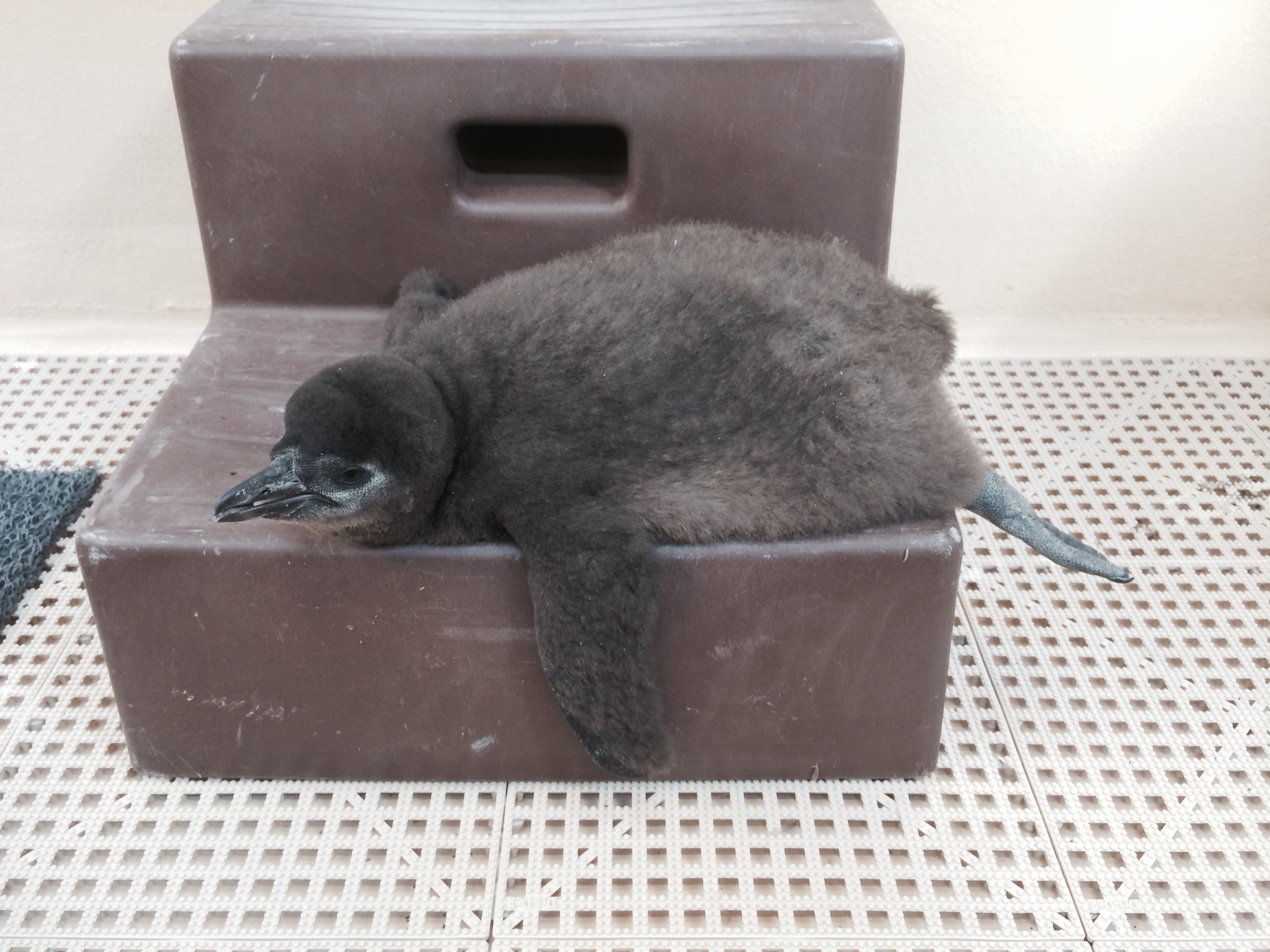
Fourth Penguin ChickThe Little Rock Zoo is proud to announce that its fourth African penguin chick successfully hatched on Sept. 11 and is doing well.

A unique story follows this penguin. Unlike the Zoo’s last three, this penguin chick was hatched by penguins Mary Beth and Roy and foster parented by penguins Skipper and Eze. Skipper and Eze are parents to the Zoo’s last three chicks.

The new penguin, a male, weighed only 2.3 ounces when born. He now weighs six pounds and is growing strong. Penguin chicks grow quickly when they are first hatched and if they are healthy.

The birth of this penguin is a significant achievement in conservation because of the genetic makeup of penguins Mary Beth and Roy. Mary Beth and Roy were recommended to breed by the Association of Zoos and Aquariums (AZA) Species Survival Plan (SSP). The SSP is a conservation program of AZA that aims to protect and conserve endangered and threatened species. The African penguin is an endangered species whose population has declined more than 95 percent since preindustrial times. The African penguin is threatened by oil spills, overfishing, and climate change.

The chick will not be on exhibit until it is old enough to swim on its own. In the meantime, he enjoys lounging on the steps of the Laura P. Nichols Penguin Pointe exhibit.

About the Little Rock Zoo

The Little Rock Zoo is accredited by the Association of Zoos and Aquariums (AZA).  Look for the AZA logo whenever you visit a zoo or aquarium as your assurance that you are supporting a facility dedicated to providing excellent care for animals, a great experience for you and a better future for all living things.  With its more than 200 accredited members, AZA is a leader in global wildlife conservation and your link to helping animals in their native habitats.  For more information, visit www.aza.org.

LR Cultural Touchstone: Louise Loughborough

louise_loughborough_fLouise Loughborough could be called the mother of historic preservation and history museums in Arkansas.

Born Louisa Watkins Wright in Little Rock 1881, her ancestors included many early Arkansas leaders. At age 21 she married attorney J. Fairfax Loughborough.  She became active in several organizations including the Little Rock Garden Club, Colonial Dames and Mount Vernon Ladies Association.

Her involvement in historic structures in Little Rock began when the Little Rock Garden Club sought to improve the appearance of the War Memorial Building (now known as the Old State House Museum) in 1928. The grounds were littered with signs and monuments, and the roof of the Greek Revival building sported figurative statues of Law, Justice, and Mercy, which had been installed above the pediment after being salvaged from the Arkansas exhibit at the Philadelphia Centennial of 1876. To take the façade of the edifice back to its original 1830s appearance, Loughborough had the statues removed—without the permission of the War Memorial Commission, which had legal authority over the building.

In 1935, Loughborough was appointed to the Little Rock Planning Commission, and it was in this role that she first heard about the plan to condemn the half-block of houses that she had grown up admiring on Cumberland and East Third streets. Although the neighborhood had fallen on hard times, becoming a red-light district and slum, Loughborough feared the loss of several historic structures, including the Hinderliter House, the oldest building in Little Rock and thought to be Arkansas’s last territorial capitol. She mobilized a group of civic leaders to save these buildings. She enlisted the aid of prominent architect Max Mayer and coined the term “town of three capitols” to try to capture the imagination of potential supporters, grouping the “Territorial Capitol” with the Old State House and the State Capitol.

In 1938, Loughborough secured a commitment from Floyd Sharp of the federal WPA to help with the project, on the condition that the houses be owned by a governmental entity. She persuaded the Arkansas General Assembly to create and support, with general revenues, the Arkansas Territorial Capitol Restoration Commission (Act 388 of 1939). This satisfied Sharp’s condition, and the WPA provided labor and material for the new historic house museum. A private fundraising campaign brought in the remaining monetary support necessary for the completion of the project.

The Arkansas Territorial Restoration opened on July 19, 1941. The project was the first Arkansas agency committed to both the restoration of structures and the interpretation of their history, and it served as a model and inspiration for historic preservation in the state. Around the same time, she was a moving force behind the creation of a museum at the Old State House as well.  Today both Historic Arkansas Museum (as the Territorial Restoration is now known) and the Old State House Museum are agencies of the Department of Arkansas Heritage.

As founding Chairman of the Arkansas Territorial Restoration Commission, Louise Loughborough provided daily direction for the museum house complex through the first twenty years of its existence, yielding her authority to architect Edwin B. Cromwell only as her health began to fail. She died in Little Rock on December 10, 1962 and was buried at Mount Holly Cemetery.

LR Cultural Touchstone: Agnes Loewer

Photo from Arkansas History Commission

Photo from Arkansas History Commission

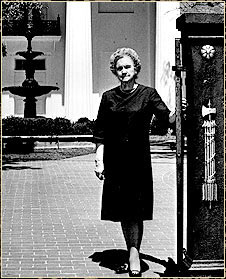
Agnes McDaniel Loewer was a driving force and the first curator of the Old State House Museum.

Born June 26, 1893, in Searcy, she moved to Little Rock with her family in 1900.  After turning 18, she began her business career working for the Underwood Typewriter Company, Mayor Charles Taylor, and the Little Rock YWCA.  In 1919, at age 26, she married Charles F.W. Loewer.

Throughout the years, Agnes McDaniel Loewer was active in numerous civic organizations, devoting her business and organizational skill to a great many causes. She served as secretary, treasurer, and president of various organizations, and filled leadership roles in accomplishing goals and missions. Loewer was a member of the Arkansas Federation of Women’s Clubs, the Business and Professional Women’s City Club, the Women’s Division of the State Fair, the Arkansas Conference of Welfare Legislation, the National Youth Association, the Canteen Corps of the American Red Cross, and the Arkansas Federation of Garden Clubs, among others.
Around 1939 Loewer and Louise Loughborough lobbied daily in the halls of the State Capitol for the preservation of the Old State House. Successful in this endeavor, Loewer was appointed a member of the Arkansas Commemorative Commission of 1947, which was formed that year to oversee the restoration of the Old State House and create a future museum of Arkansas history. She served as secretary to the commission, a position that later evolved into director.
When the restoration was completed, Loewer was hired as the first curator of the Old State House, beginning July 1951.  Utilizing a small paid staff and an army of well-instructed volunteers, she oversaw the museum.  Throughout her curatorship, she promoted the Old State House as a historic shrine and tourist attraction, and continued to battle threats to its preservation.

Her interest in history extended beyond the Old State House, she was a member of the Quapaw Quarter Association, Arkansas State Historical Society, Pulaski County Historical Society, and Arkansas Landmarks.

In March 1972, she retired at age 78, after 21 years as curator.  Among the honors she received were a commendation from the Arkansas Legislative Council in 1971 for her public service; a certificate of appreciation from the Arkansas Parks, Recreation and Travel Commission in 1974; and an award from the National Trust for Historic Preservation in 1974, presented by former first lady Lady Bird Johnson.
Loewer died on September 18, 1975 and is buried in Roselawn Memorial Park.