
On July 4, 1893, Arsenal Park opened in Little Rock. This was the City’s first municipal public park. Though it predated the establishment of a formal Parks and Recreation Department by several decades, it is the oldest part of that department.
The land now known as MacArthur Park had originally served as a horse racetrack in the early days of Little Rock. By 1836, the federal government purchased the land for construction of a military arsenal. The flagship building, the Arsenal Tower building, is the only remaining structure from that time period.
The land served as a military outpost until 1892. On April 23, 1892, a land swap took place where in the City of Little Rock was given the property with the stipulation that it would be “forever exclusively devoted to the uses and purposes of a public park.” (Never mind that the federal government took part of the land back for the construction of the Wilbur Mills Freeway.) Congressman William L. Terry was active in negotiating the land swap. (His son David would also serve in Congress.)
In return for giving the City this land, the federal government took possession of land on the north side of the Arkansas River (then part of Little Rock) – that 1,000 acres became Fort Logan H. Roots.
The park officially opened on July 4, 1893, with the name Arsenal Park. Since it was the City’s first and only park at the time, residents started referring to it as City Park. In time, the designation Arsenal Park fell from use. In fact, it is referred to as City Park exclusively and officially in City documents throughout the first 42 years of the 20th Century.
On March 9, 1942, Little Rock’s first public park was renamed by the Little Rock City Council. By a vote of fourteen ayes, zero nays and four absent, the alderman approved Ordinance 6,388 which renamed the park in honor of General Douglas MacArthur.
In 1952, General MacArthur (contemplating a run for the GOP nomination for President) visited Little Rock in March. Later that year, the eventual GOP nominee (and 34th US President) General Dwight Eisenhower visited the park.
Today, MacArthur Park is the anchor of the burgeoning MacPark district as well as the MacArthur Park Historic Distric.

 The Clinton Center’s popular Super Summer Saturdays are back – and this year they have penguins!
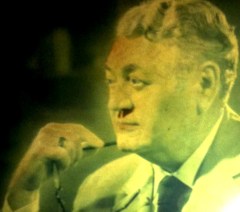 On July 6, 1902, future Little Rock Mayor Haco O. Boyd was born in Leslie, Arkansas. At the age of four, his family moved to Little Rock; he graduated from the Little Rock public schools. He attended and graduated from Hendrix College.
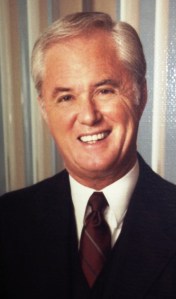 Future Little Rock Mayor James Weldon “Buddy” Benafield was born on July 5, 1927 in Coy, Arkansas. As a child he spent part of his time chopping cotton. He graduated from England High School and then served in the U.S. Navy. Following his stint in the military, he enrolled in Arkansas State Teachers College (now the University of Central Arkansas).
 Future Little Rock Mayor Dr. Matthew Cunningham was born on July 5, 1782, in Pennsylvania. After receiving his medical degree from the University of Pennsylvania, he ended up in New York City. He also served in the Army during the War of 1812.
 Little Rock Culture Vulture