
 On March 3, 1866, William Marmaduke Kavanaugh was born in Alabama. He later moved with his family to Kentucky before coming to Little Rock as a newspaper reporter.
Kavanaugh served as editor and manager of the Arkansas Gazette before entering politics. From 1896 until 1900, he served as Pulaski County Sheriff, which at the time also included the duties of tax collector.
From 1900 until 1904, he was County Judge of Pulaski County. In that capacity he helped wrangle several cities, railroads and trolley lines to create a compromise which lead to the completion of the Third Street Viaduct which connected Little Rock with Pulaski Heights. It is still in use today.
After leaving his post as County Judge, he had a varied career in banking and business interests.
When Senator Jeff Davis died in early January 1913, he left the last few weeks of his term incomplete as well as the new term he was set to start in March 1913. There was much interest in who would fill the remainder of Davis’ current term, because that person might be the frontrunner to also fill out the new term. (This was at the time that the U.S. Senators were still selected by state legislatures.) Defeated Governor George Donaghey appointed J. N. Heiskell to fill out the term. But once the Arkansas General Assembly convened in mid-January, they overrode Donaghey’s appointment and replaced Heiskell with Kavanaugh.
Kavanaugh served in the Senate from January 29, 1913 until March 3, 1913. He was succeeded by Joseph T. Robinson who had only recently taken office as Governor. Speculation was that Kavanaugh would not want the full six year term, so that he was acceptable choice to all of the politicians jockeying for the full appointment. From 1912 until 1915, he was an Arkansas member of the Democratic National Committee.
Another interest of Kavanaugh’s was baseball. He served as president of the Southern Association minor league starting in 1903. The baseball field in Little Rock situated at West End Park was named Kavanaugh Field in his honor. It stood until the 1930s when it was replaced by what is now known as Quigley Stadium. (In 1927, Little Rock High School had opened on the land which had been West End Park.)
Kavanaugh died on February 2, 1915 at the age of 48. He is buried in Oakland Cemetery.
Prospect Road was renamed Kavanaugh Boulevard in his memory.
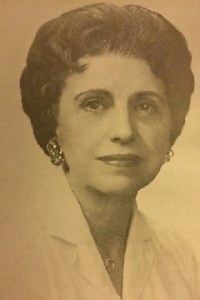 Nancy Pearl Johnson Hall was married to longtime Arkansas Secretary of State C. G. “Crip” Hall. Following his death, Mrs. Hall was appointed to succeed him as Secretary of State. With this appointment, she became the first woman to serve as a Constitutional Officer in Arkansas. As an appointee to that office, she could not run for it in the following election.
 On March 2, 1819, the Arkansas Territory was authorized by an act of Congress, to take effect on July 4, 1819.
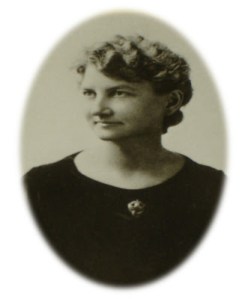 First woman sworn in as a member of the Arkansas General Assembly: Erle Chambers.
 The Old State House Museum (OSHM) will host rising country music star Erin Enderlin on March 1, 7-9 p.m., for a free community concert.
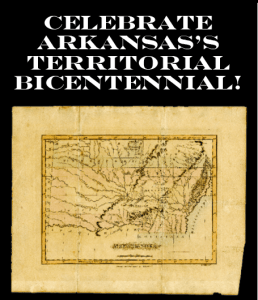 On March 2, 1819, the Arkansas Territory was created. It was carved out of the Missouri Territory (which itself had been carved out of the Louisiana Territory). The land consisted of what is now Arkansas as well as most of what is now Oklahoma.
