February’s Science after Dark is a special Valentine’s Edition

No photo description available.


Since the month of February is devoted to love, the Museum of Discovery is devoting a Science After Dark to it – but one can’t talk about love without exploring the science of sex. They will look at attraction and reproduction in humans and the animal kingdom.

Perhaps the best part? Exploring aphrodisiacs! And what is the world’s favorite aphrodisiac? CHOCOLATE! We’ll learn about making chocolate and pairing chocolate all while sampling chocolate with some of the best chocolatiers around!

Science After Dark is for adults 21 and up. Tickets are $10 or free for members. You will be able to purchase food, cocktails and beer from the sponsors.  Those presenting sponsors are Fassler Hall Little Rock and Dust Bowl Lanes & Lounge Little Rock and sponsors Rock Town Distillery and Stone’s Throw Brewing

Little Rock Look Back: Studio Gang announces plans for re-imagined Arkansas Arts Center

South entrance of new AAC


On February 27, 2018, the Arkansas Arts Center unveiled design plans for a renovation that would cost $70 million.

Construction for the museum is scheduled to begin later this year, and the center is expected to open in 2022. The upgrades, led by architecture firm Studio Gang, include new exhibition areas, a children’s theater space, an expanded educational facility, a glass-enclosed walkway, a garden, and the uncovering of the institution’s original facade from 1937. The $24 million budget increase, which does not include additional costs such as architectural or consultants’ fees, will be taken care of by private funds.

Officials originally explained that $50 million in private donations would complement general obligation bonds approved by Little Rock constituents for the expansion of the museum, whose artworks are owned by the nonprofit Arkansas Arts Center Foundation. “It’s a more expensive project than we originally thought it would be,” Studio Gang owner Jeanne Gang said. “You discover things. There’s a lot to it. There’s a lot of, also, ambition for the project to make it visible, to make it really bring the institution up to the next level.”

The building is currently made up of eight different structures that were added over a period of time to the city’s Museum of Fine Arts, built in 1937. Studio Gang’s aim is to offer a more coherent layout, as well as provide additional space for the AAC’s expansive public arts programming of classes, lectures and film showings.

Among the main features of the project is the introduction of a new axis, which will cut through the center of the building. It will lead from the northern entrance facing Crescent Drive to the 36-acre MacArthur Park on the southern side.

Four glazed volumes featuring curved walls and folded roofs will join up to form the axis – a new entrance will be placed at the front with walls angled to open up to the city, while three others will trail towards the park at the rear, ending with a double-height dining room.

Around 127,000 square feet of space will be added or revamped. The enhanced location will feature an edition of British sculptor Henry Moore’s Large Standing Figure: Knife Edge, 1976, which is currently on view in the city’s Union National Plaza.

Polk Stanley Wilcox is the associate architect and SCAPE is the landscape architect.  More members of the consulting team were added throughout 2018.

CRAZY RICH ASIANS tonight at CALS Ron Robinson Theater

Crazy Rich Asians PosterAs part of their “Date Night Tuesdays” series, the CALS Ron Robinson Theater is showing the romantic comedy Crazy Rich Asians.
Based on Kevin Kwan’s novel of the same name, the story follows Rachel Chu, an American-born Chinese economics professor, who travels to her boyfriend Nick’s hometown of Singapore for his best friend’s wedding.

Before long, his secret is out: Nick is from a family that is impossibly wealthy, he’s perhaps the most eligible bachelor in Asia, and every single woman in his ultra-rarefied social class is incredibly jealous of Rachel and wants to bring her down.

The movie, directed by Jon M. Chu, stars Constance Wu, Henry Golding, Michelle Yeoh, Gemma Chan, Lisa Lu, Awkwafina, Harry Shum Jr., Ken Jeong, Sonoya Mizuno and Chris Pang.

The film starts at 7:00 pm.  Admission is $5.  Concessions are available for purchase.

2019 Arkansas Food Hall of Fame ceremony tonight

The 2019 Arkansas Food Hall of Fame ceremony takes place at the CALS Ron Robinson Theater tonight (February 25).

The 2019 Arkansas Food of the Year is Catfish. Not only is it a staple in many restaurants throughout the state, it is also a major contributor to the state’s economy.

Last month, the finalists in four of the five categories were announced. The fifth, the People’s Choice Award, goes to the entity that received the most nomination submittals. It will be announced, along with the winners in the other categories tonight.

The finalists in the other four categories are:

Food Hall of Fame
AQ Chicken House (Springdale)
4-Dice Restaurant (Fordyce)
Bruno’s Little Italy (Little Rock)
Burge’s Restaurant (Lewisville)
Craig Brothers Cafe aka Craig’s (De Valls Bluff)
Doe’s Eat Place (Little Rock)
Keeney’s Food Market (Malvern)
Kream Kastle (Blytheville)
The Ohio Club (Hot Springs)
Star of India (Little Rock)

Proprietor of the Year
Capi Peck, Little Rock (Trio’s)
Loretta Tacker, Marion (Tacker’s Shake Shack)
Peter Brave, Little Rock (Brave New Restaurant)
Sami Lal, Little Rock (Star of India)
Scott McGehee, Little Rock (Yellow Rocket Concepts restaurants)

Food Themed Event
Hope Watermelon Festival
International Greek Food Festival (Little Rock)
Our Lady of the Lake Annual Church Spaghetti Dinner (Lake Village)
Tontitown Grape Festival
World Championship Duck Gumbo Cook Off (Stuttgart)

Gone But Not Forgotten
Klappenbach Baker (Fordyce)
La Scala Italian Restaurant (Little Rock)
Mary Maestri’s Italiano Grillroom (Springdale)
The Shack Barbecue (Little Rock)
Uncle John’s (Crawfordsville)

The Arkansas Food Hall of Fame is a project of the Department of Arkansas Heritage.  The members of the Arkansas Food Hall of Fame Committee are:

  • Paul Austin
  • Swanee Bennett
  • Yvette Brady
  • Chip Culpepper
  • Montine McNulty
  • Dr. Cindy Grisham
  • Tim Horton
  • Rex Nelson
  • Tim Nutt
  • Dr Wendy Richter
  • Kat Robinson
  • Christina Shutt

Making History: African-American Mayors in Arkansas is topic of noon conversation today at the Clinton Presidential Center

Clockwise from left: Smith-Creer, Washington, McGill, Scott

Today at noon, the Clinton Presidential Center will host a program featuring four African-American mayors from across Arkansas.

The panel will be moderated by former Little Rock Mayor Lottie Shackelford, who was Little Rock’s first female mayor and second African-American mayor.

The program will feature the newly elected Mayor Veronica Smith-Creer of El Dorado, Mayor George McGill of Fort Smith, Mayor Frank Scott, Jr. of Little Rock, and Mayor Shirley Washington of Pine Bluff, who was first elected in 2016.

Little Rock Look Back: Byron Morse

On February 23, 1917, future Little Rock Mayor Byron R. Morse was born.

A founder of the real estate firm of Rector-Phillips- Morse, he was long active in civic affairs of Little Rock.

Mayor Morse was first elected to the City Board of Directors in November 1960. In 1963, he was chosen as Little Rock Mayor. After serving two years as Mayor, he chose to not seek re-election to the City Board. Long active in civic affairs, in 1968 he chaired the fundraising drive to keep the Arkansas Arts Center’s doors open.

In 1980, he was appointed to the City Board to fill out an unexpired term. He was later asked to fill another unexpired term but declined.  In 1983, he was elected national president of the Society of Industrial and Office Realtors. Mayor Morse also served as president of the Little Rock Chamber of Commerce, the Little Rock United Way, the Little Rock Red Cross, and was a member of the Board of Directors of the Little Rock Boy’s Club. He was a member of the Fifty for the Future.

On July 25, 2001, Mayor Morse died.

Little Rock Look Back: SCOTUS decision in BATES v LITTLE ROCK case

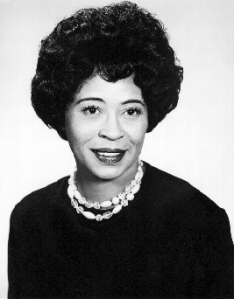
On February 23, 1960, the U. S. Supreme Court handed down a decision in the case of Daisy BATES et al., Petitioners, v. CITY OF LITTLE ROCK et al.  This case had been argued before the Court in November 1959.

Daisy Bates of Little Rock and Birdie Williams of North Little Rock were the petitioners.  Each had been convicted of violating an identical ordinance of an Arkansas municipality by refusing a demand to furnish city officials with a list of the names of the members of a local branch of the National Association for the Advancement of Colored People. The question for decision was whether these convictions can stand under the Due Process Clause of the Fourteenth Amendment to the United States Constitution.

The Little Rock ordinance (10,638) was passed on October 14, 1957. It charged that certain non-profits were actually functioning as businesses and using non-profit status to skirt the law. Therefore it required the non-profits to disclose their members and sources of dues.  North Little Rock passed an identical ordinance.

(Mayor Woodrow Mann was not present at the meeting of the LR Council when the ordinance was passed. But he signed all of the resolutions and ordinances approved that night.  Ordinance 10,638 was the only legislation that night which had also been signed by Acting Mayor Franklin Loy.  Mayor Mann crossed through Loy’s name and signed his own.)

Mrs. Bates and Mrs. Williams as keepers of the records for their respective chapters of the NAACP refused to comply with the law.  While they provided most of the information requested, they contended they did not have to provide the membership rosters and dues paid.

After refusing upon further demand to submit the names of the members of her organization, each was tried, convicted, and fined for a violation of the ordinance of her respective municipality. At the Bates trial evidence was offered to show that many former members of the local organization had declined to renew their membership because of the existence of the ordinance in question. Similar evidence was received in the Williams trial, as well as evidence that those who had been publicly identified in the community as members of the National Association for the Advancement of Colored People had been subjected to harassment and threats of bodily harm.

Each woman was convicted in the court of Pulaski Circuit Court, First Division, William J. KirbyJudge. They were fined $25 a person.  On appeal the cases were consolidated in the Supreme Court of Arkansas in 1958. The convictions were upheld by five justices with George Rose Smith and J. Seaborn Holt dissenting.

Mrs. Bates and Mrs. Williams then appealed to the U. S. Supreme Court.  The pair’s legal team included Robert L. Carter and George Howard, Jr. (who would later become a federal judge).  Little Rock City Attorney Joseph Kemp argued the case for the City.  The arguments before the U. S. Supreme Court were heard on November 18, 1959.

The SCOTUS decision was written by Associate Justice Potter Stewart.  He was joined by Chief Justice Earl Warren and Associate Justices Felix Frankfurter, Tom C. Clark, John M. Harlan II, William J. Brennan and Charles E. Whittaker.  Justices Hugo Black and William O. Douglas wrote a concurring opinion.

The U. S. Supreme Court reversed the lower courts.

In sum, there is a complete failure in this record to show (1) that the organizations were engaged in any occupation for which a license would be required, even if the occupation were conducted for a profit; (2) that the cities have ever asserted a claim against the organizations for payment of an occupation license tax; (3) that the organizations have ever asserted exemption from a tax imposed by the municipalities, either because of their alleged nonprofit character or for any other reason.

We conclude that the municipalities have failed to demonstrate a controlling justification for the deterrence of free association which compulsory disclosure of the membership lists would cause. The petitioners cannot be punished for refusing to produce information which the municipalities could not constitutionally require. The judgments cannot stand.

In their concurring opinion, Justices Black and Douglas wrote that they felt the facts not only violated freedom of speech and assembly from the First Amendment, but also aspects of the Fourteenth Amendment. They wrote that the freedom of assembly (including freedom of association) was a principle to be applied “to all people under our Constitution irrespective of their race, color, politics, or religion. That is, for us, the essence of the present opinion of the Court.”

Neither the Gazette or Democrat carried any reaction from City leaders. There was a City Board meeting the evening of the decision. If it was mentioned, the minutes from the meeting do not reflect it.

Arkansas Attorney General Bruce Bennett, on the other hand, was very vocal in his outrage. The city laws were known as Bennett Laws because they had been drafted by him as ways to intimidate African Americans and others he viewed as agitators.

In 1960 Bennett was challenging Governor Orval Faubus for the Democratic gubernatorial nomination.  In reaction to the to the Supreme Court he vowed that, if elected Governor, he would “de-integrate” (a term he proudly took credit for coining) the state.

For his part, and not to be outdone by the AG, Faubus fretted that the Court’s decision meant that Communists would be able to give money to the NAACP.