
Little Rock Look Back: The Return of STAR WARS Day

Today, May the 4th, is Star Wars Day.  This year marks 40 years since the first (fourth?) movie first opened!

The classic film first opened in May 1977 (though after May 4).  It did not reach Little Rock until June 24, 1977.

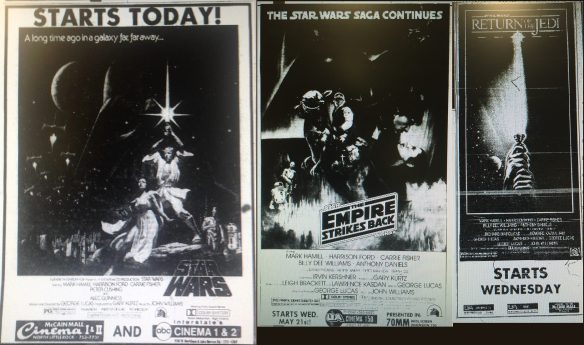
Given its status as a sleeper hit, it is no surprise that it came into Little Rock largely unnoticed.  In that day, major films opening on a Friday would be heralded the previous Sunday with a substantial advertisement.  The first Star Wars ad ran on Thursday, June 23, 1977, the day before it opened.  By contrast, Herbie Goes to Monte Carlo, which would play at the same theatre, had a large ad on Sunday, June 19.

While Star Wars would seem like the perfect movie for the great UA Cinema 150, it did not play there.  The film playing at the 150 was A Bridge Too Far, which was, at least an action movie.  Star Wars did not even open at a UA theatre.  It opened at the ABC Cinema 1 & 2 (located at Markham and John Barrow) and at the McCain Mall Cinema.  (The ABC Cinema location is now home to discount cellphone and discount clothing businesses; a cinema has returned to McCain Mall, but now in the location of the former MM Cohn’s store.)

The day it opened, there was a fairly large ad which incorporated the familiar beefcake Luke, Leia in flowing gowns, and Darth Vader mask.  On the Sunday after it opened, there was a slightly smaller ad with the same artwork.  McCain Mall also ran a small add for both Star Wars and Herbie. It noted that Star Wars was a film that management “does not recommend for children.”

Three years later, The Empire Strikes Back opened nationwide on May 21, 1980. Opening a film on the same date was a newer phenomenon, due in part to the success of Star Wars.  For the opening weeks, The Empire Strikes Back played an exclusive showing at the UA Cinema 150.  It would eventually play at other theatres in Little Rock.   It is interesting to note what was playing at the two theatres which had originally screened the 1977 film.  The McCain Mall Cinema was showing Coal Miner’s Daughter and The Fog. The former ABC Cinema was now the Plitt Southern Theatre and showed the Bill Murray comedy Where the Buffalo Roam and the “Get Smart” movie The Nude Bomb.  None were likely to attract the same number of audience members as The Empire Strikes Back.

On the day The Empire Strikes Back opened, the Arkansas Gazette had four different stories about the movie in that day’s edition.  While the Arkansas Democrat did not have any stories that day (though they would in subsequent days), they did carry a story on David Letterman preparing to start his (what would turn out to be short-lived) morning TV show.

On May 25, 1983, The Return of the Jedi opened.  Like the first film, though it would have been perfect for the Cinema 150, it did not play there.  Instead it played at the UA Cinema City (Breckenridge Village), the UA Four (at Geyer Springs and I-30 – now the Ron Sherman production studios), and at McCain Mall.  Flashdance was playing at the Cinema 150. In a forerunner of what is now standard practice, The Return of the Jedi played simultaneously on two of the seven screens at UA Cinema City and two of the four screens at UA Four.  While this is now part of the modus operandi, at the time, it was extremely rare to have a movie play on more than one screen in the same complex.  Though each of the theatres was smaller than the Cinema 150, the five combined exceeded the availability if it had played an exclusive run at the Cinema 150.

By the time The Return of the Jedi opened, the former ABC Cinema was now part of the ill-fated locally-based Rand Cinema chain and was known as the Markham 1 & 2.  It was showing the Roy Scheider film Blue Thunder and Dan Aykroyd in Dr. Detroit.

The cost to see The Return of the Jedi in Little Rock in 1983 was $5.00 for adults and $2.50 for children.  (That would be the equivalent of $12.37 today for an adult ticket.)
Little Rock Look Back: Mayor Lottie H. Shackelford

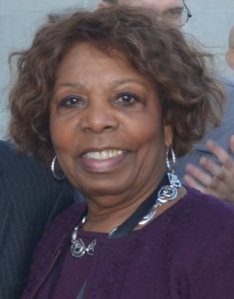
While this headline may say “Little Rock Look Back,” Lottie Shackelford is still very much focused on the present and the future!

On April 30, 1941, future Little Rock Mayor Lottie Shackelford was born. Throughout her career in public service she has been a trailblazer.

Active in community activities and politics, she ran for the City Board in 1974 and lost.  But she was appointed to the Little Rock City Board in September 1978 to fill a vacancy.  This made her the first African American woman to serve on he City Board, and indeed on any governing board for the City (during Reconstruction, there were at least three African Americans on the City Council, but they were all men.) She was subsequently elected to a full-term on the City Board in 1980 winning 55% of the vote over three male candidates.

She was subsequently re-elected in 1984 (unopposed) and in 1988 (with 60% of the vote).

In January 1987, Shackelford became the first female mayor of Little Rock when she was chosen by her colleagues on the City Board to serve in that position. She was Mayor until December 1988.

From 1982 until 1992, she served as Executive Director of the Arkansas Regional Minority Purchasing Council.  She left that position to serve as Deputy Campaign Manager of Clinton for President.  She subsequently served on the Clinton/Gore transition team. She later served on the Overseas Private Investment Corporation from 1993 to 2003. She was the first African American to be in that position.

A graduate of Philander Smith College, she has also studied at the Arkansas Institute of Politics at Hendrix College and the Kennedy School of Government at Harvard University.

Mayor Shackelford has also served on numerous boards including the Little Rock Airport Commission, Philander Smith College, Chapman Funds (Maryland) and Medicis Pharmaceutical Corporation (Arizona).  She has been the longest serving Vice-Chair of the Democratic National Committee.

Mayor Shackelford was in the first class of inductees for the Arkansas Black Hall of Fame.  In 2015, she was inducted into the Arkansas Civil Rights Heritage Trail.

Little Rock Look Back: President James Monroe

On April 28, 1758, future U.S. President James Monroe was born in Virginia.  It was during his Presidency that Arkansas was surveyed and platted. Little Rock was also officially settled during the Monroe Presidency.  The Quapaw Line was drawn during his presidency. This document was the first official document to use the name “Little Rock” to describe this settlement.

Monroe was the last president who was a Founding Father.  A soldier in the Revolutionary War, he studied law under Thomas Jefferson and served as a delegate in the Continental Congress.  Although he felt the new Constitution gave too much power to a central government, Monroe served in the first US Senate before serving as Governor of Virginia.  As a diplomat, he helped negotiate the Louisiana Purchase.

He was easily elected president in 1816.  During his first term in office, the US acquired Florida from the Spanish and jointly occupied Oregon with the British. He was the first president to preside over land from the Atlantic to the Pacific.  Because of successes abroad (including the Monroe Doctrine) and domestically, the Monroe Presidency was known as the “Era of Good Feeling.”

Following his retirement in 1825, Monroe was plagued by financial difficulties. He died in New York City on July 4, 1831.

Monroe Street in Little Rock is named after him.

Little Rock Look Back: Nicholas Peay

On April 28, 1784, in Virginia, future Little Rock Alderman (and acting Mayor) Major Nicholas Peay was born the eleventh of at least thirteen children.  (His gravestone lists a May date for his birth, but all other records indicate April 28, 1784.) A veteran of the War of 1812 and the Indian Wars, he later moved to Kentucky (where he met and married his wife, Juliet Neill, in 1814) before settling in Arkansas on September 18, 1825.  At the time, they were the ninth family to set up residence in Little Rock.
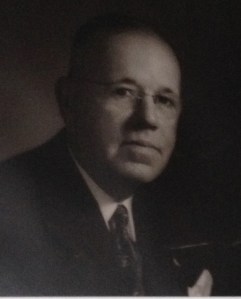
After arriving in Little Rock, he bought the Little Rock Tavern. This started a fifty year tradition of his family owning taverns and hotels in Little Rock. In 1828, he was appointed Assistant Postmaster of Little Rock.  From 1825 to 1831, Little Rock residents were allowed to elect five Trustees prior to the formal incorporation. Major Peay was one of those who served on the Board of Trustees.

He later served on the Little Rock City Council, and in 1839 served for seven months as Acting Mayor due to the prolonged absence of Mayor Jesse Brown.  In 1841, his friend Gen. Zachary Taylor, paid a visit to Little Rock and stayed with him on the General’s way to Fort Smith.

Nicholas and Juliet Peay had at least eleven children, though only five appeared to have lived until adulthood. One of those, Gordon Neill Peay, served as Little Rock’s 23rd Mayor from 1859 to 1861. Other descendants of Nicholas Peay who followed him into public service include his grandson Ashley Peay, who was an Alderman in the 1920s (son of John Coleman Peay) and great-great-grandson Joseph B. Hurst (a great-grandson of Mayor Peay), who was a City Director from 1967 to 1970. In addition, City Director Hurst’s daughter-in-law, Stacy Hurst served three terms on the City Board from 2003 to 2014; she is now Director of the Department of Arkansas Heritage.

Major Peay’s egg-nog recipe has been passed down for generations. It is the inspiration for the Historic Arkansas Museum yearly Nog-Off.  This past year, museum director Bill Worthen and his daughter were the sixth and seventh generation of the family to make Peay’s egg-nog. The Worthens are descended from Mayor Peay’s son who was also named Gordon Neill Peay.

Major Nicholas Peay is buried with his wife and many other family members in Mount Holly Cemetery.

The Smithsonian Institution records indicate they have an oil painting of Major Peay as well as of his wife. But there are conflicting records as to whether they have been lost or are in private collections.

Little Rock Look Back: Mayor Sam M. Wassell

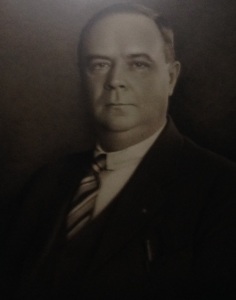
On April 28, 1883, future Little Rock Mayor Sam M. Wassell was born.  His grandfather John W. Wassell had been appointed Mayor of Little Rock in 1868.  He is the only Little Rock Mayor to be a grandson of another Little Rock Mayor.

Sam Wassell served on the Little Rock City Council from 1928 through 1934 and again from 1940 through 1946.  He is one of the few 20th Century Little Rock Mayors who previously served on the City Council.

Wassell was an attorney.  He practiced law privately and also served as an Assistant US Attorney.  In 1930, he ran unsuccessfully for the Democratic nomination for the US Congress representing the 5th Congressional District, which at the time included Little Rock.

Wassell ran for Mayor in 1947 and was unopposed in the general election.  He was unopposed in his bid for re-election in 1949.  During his second term, President Harry S. Truman visited Little Rock.  In 1951, he sought a third term as Mayor.  No Little Rock Mayor had been successful in achieving a third consecutive term since 1923.  Though he received the Democratic nomination, the Republican party nominated Pratt Remmel who defeated Wassell by a 2 to 1 margin.

With a new USS Little Rock nearing commissioning, it is interesting to note that Mrs. Sam Wassell christened the previous USS Little Rock in 1944.  At the time, she was a City Councilor’s wife.

Mayor Wassell died on December 23, 1954 and is buried at Roselawn Cemetery in Little Rock.

Little Rock Look Back: Land for first LR public park is transferred to city

April 23, 1892, marked the beginning of the City of Little Rock’s public park system.  On that date, the City officially took possession of land which would become what is now known as MacArthur Park.
The park land had originally served as a horse racetrack in the early days of Little Rock.  By 1836, the federal government purchased the land for construction of a military arsenal.  The flagship building, the Arsenal Tower building, is the only remaining structure from that time period.  

The land served as a military outpost until 1892.  On April 23, 1892, a land swap took place where in the City of Little Rock was given the property with the stipulation that it would be “forever exclusively devoted to the uses and purposes of a public park.” (Never mind that the federal government took part of the land back for the construction of the Wilbur Mills Freeway.)  In return for giving the City this land, the federal government took possession of land on the north side of the Arkansas River (then part of Little Rock) – that 1,000 acres became Fort Logan H. Roots. 

After clearing most of the buildings from the land and preparing it for recreation, the park opened on July 4, 1893, with the name Arsenal Park. Since it was the City’s first and only park at the time, residents started referring to it as City Park. In time, the designation Arsenal Park fell from use.  In fact, it is referred to as City Park exclusively and officially in City documents throughout the first 42 years of the 20th Century. 

The City Council’s action to name it MacArthur Park in March 1942, was accompanied by petitions encouraging the action which were submitted by the Arkansas Authors and Composers Society, the Arkansas Engineers Club and the Pulaski County Republican Central Committee.  

City records do not indicate if anyone registered opposition to the name change. It would be another decade before General MacArthur would return to the site of his birth, a place he had not visited since his infancy.

Little Rock Look Back: Mayor Charles Moyer

On April 18, 1880, future Little Rock Mayor Charles E. Moyer was born in Glenwood, Minnesota. A man of contradictions, he was both a candidate backed by (and probably personally involved in) the Ku Klux Klan, yet he also brought the Goodwill Industries organization to Little Rock and Arkansas to help those less fortunate.

He came to Little Rock shortly after the turn of the 20th century as a clerk in the Post Office, and later served as a mail carrier. He then worked for Plunkett-Jarrell Wholesale Grocer Company in Little Rock. On January 1, 1921, he took office as County Judge for Pulaski County. In 1924, he ran against incumbent mayor Ben Brickhouse in the Democratic primary. Since Brickhouse had displeased the Klan, which was an active part of Democratic politics in Little Rock and throughout the nation at the time, Moyer won the primary.

Mayor Moyer led the City of Little Rock from April 1925 through April 1929. In 1927, the last lynching in Little Rock took place. While race-baiting crowds were surrounding City Hall demanding an African American prisoner be released to them for vigilante justice, Mayor Moyer was in hiding at an undisclosed location. Not able to get the prisoner they wanted, they took out their venom on another man who had assaulted a white woman and her daughter.

After leaving office in 1929, Moyer moved for a time to Batesville. He returned to Little Rock and was a chief deputy sheriff. From 1937 to 1941, he served as Pulaski County Assessor. In 1941, he returned to the office of Little Rock Mayor after J. V. Satterfield opted to serve only one term and did not seek re-election. Mayor Moyer led Little Rock through most of World War II. He left office in April 1945 and died on May 29, 1945, barely one month after leaving City Hall.