Little Rock Look Back: Rev. Dr. Martin Luther King, Jr.

Ernest Green, Dr. King and Daisy Bates share a relaxed moment -- which was probably rare for the three in 1958

Ernest Green, Dr. King and Daisy Bates share a relaxed moment — which was probably rare for the three in 1958

Today is the Martin Luther King Jr. Holiday.  It is an apt time to think about Dr. King and Little Rock.  A friend of L. C. and Daisy Bates, he attended the 1958 Central High School graduation to witness Ernest Green receiving a diploma. Each senior only received eight tickets to the ceremony at Quigley Stadium. Dr. King was in the state to address the Arkansas AM&N (now UAPB) graduation.

His attendance was briefly mentioned in the local press, but there was no media photo of him at the ceremony.  The Little Rock School District limited the press to one Democrat and one Gazette photographer. Other press were limited to the press box.

Ernest Green has a photo of him with Daisy Bates and Dr. King (pictured on this entry).

In 1968, when Dr. King was assassinated, Little Rock did not see the unrest that many cities did.  Part of that was probably due to quick action by Governor Winthrop Rockefeller. The Governor released a statement fairly quickly expressing his sorrow at the tragedy and calling for a day of mourning. He also made the State Capitol available for the NAACP to have a public memorial, as well as worked with a group of ministers to host an interdenominational service.

Little Rock Mayor Martin Borchert issued a statement as well:

We in Little Rock are disturbed about the incident in Memphis. We are disturbed regardless of where it had happened.  Killing is not the Christian solution to any of our problems today.

In Little Rock, we feel we have come a long way in 10 years toward solving some of our problems of living and working together regardless of race, creed or color.

The city Board of Directors in Little Rock has pledged itself toward continuing efforts to make Little Rock a better place in which to live and work for all our citizens.

We feel the efforts of all thus far have proved we can live in harmony in Little Rock and are confident such an incident as has happened will not occur in Little Rock.  We will continue our most earnest efforts toward the full needs of our citizens.

The day after Dr. King was assassinated, a group of Philander Smith College students undertook a spontaneous walk to the nearby State Capitol, sang “We Shall Overcome” and then walked back to the campus.  President Ernest T. Dixon, Jr., of the college then hosted a 90 minute prayer service in the Wesley Chapel on the campus.

On the Sunday following Dr. King’s assassination, some churches featured messages about Dr. King.  As it was part of Holy Week, the Catholic Bishop for the Diocese of Little Rock had instructed all priests to include messages about Dr. King in their homilies. Some protestant ministers did as well. The Arkansas Gazette noted that Dr. Dale Cowling of Second Baptist Church downtown (who had received many threats because of his pro-integration stance in 1957) had preached about Dr. King and his legacy that morning.

Later that day, Governor Rockefeller participated in a public memorial service on the front steps of the State Capitol. The crowd, which started at 1,000 and grew to 3,000 before it was over, was racially mixed. At the conclusion of the ceremony, Governor and Mrs. Rockefeller joined hands with African American ministers and sang “We Shall Overcome.”

That evening, Trinity Episcopal Cathedral was the site of an interdenominational service which featured Methodist Bishop Rev. Paul V. Galloway, Catholic Bishop Most Rev. Albert L. Fletcher, Episcopal Bishop Rt. Rev. Robert R. Brown, Rabbi E. E. Palnick of Temple B’Nai Israel, Gov. Rockefeller, Philander Smith President Dixon, and Rufus King Young of Bethel AME Church.

Earlier in the day, Mayor Borchert stated:

We are gathered this afternoon to memorialize and pay tribute to a great American….To achieve equality of opportunity for all will require men of compassion and understanding on the one hand and men of reason and desire on the other.

Mayor Borchert pledged City resources to strive for equality.

Another Little Rock Mayor, Sharon Priest, participated in a ceremony 24 years after Dr. King’s assassination to rename High Street for Dr. King in January 1992.  The name change had been approved in March 1991 to take effect in January 1992 in conjunction with activities celebrating Dr. King’s life.  At the ceremony, Daisy Bates and Annie Abrams joined with other civil rights leaders and city officials to commemorate the name change.
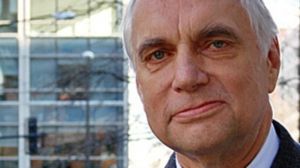
Little Rock Look Back: Mayor Webb Hubbell

Mayor HubbellOn January 18, 1948, future Little Rock Mayor Webster “Webb” Hubbell was born. After playing football in high school, he played for the University of Arkansas Razorbacks.  He also received his law degree from the U of A.

At the age of 30, already a successful attorney, Hubbell was appointed to the Little Rock City Board of Directors to fill a vacancy in September 1978.  In 1980, he was elected to a four year term on the City Board.

In June 1979, there was a vacancy in the office of Mayor of Little Rock.  Hubbell was selected by his fellow City Directors to serve as Mayor until December 1980.  In January 1981, he was selected to serve another term as Mayor.  In June 1981, he stepped down as Mayor but continued to serve on the City Board of Directors.

In 1984, Hubbell was appointed to serve as Chief Justice of the Arkansas Supreme Court to finish out the term of Richard B. Adkisson.  Following his service on the court, he returned to the practice of law at the Rose Law Firm.  He later served as the Associate Attorney General in the Justice Department during the Clinton administration.

Hubbell resigned from the Justice Department due to an investigation related to Whitewater.  He has been an author and management consultant.  His novel, When Men Betray, was published by Beaufort Books in May 2014.  His next novel Ginger Snaps was released in May 2015.  A Game of Inches, another mystery novel, will be released in 2016.

Little Rock Look Back: First Little Rock Council Meeting in 1832

TowncouncilplaqueOn January 16, 1832, Mayor Matthew Cunningham MD presided over Little Rock’s first council meeting. Since Little Rock did not yet have a government hall, the Mayor and his wife hosted the meeting at their house. The Cunninghams owned the entire block which was bordered by what is now Main Street, 3rd Street, Louisiana Street and 4th Street.

A plaque at 3rd and Main Street commemorates this meeting and was placed at the northeast corner of the block in the 1930s. The Cunningham’s house was likely closer to the southwest corner of the block.

The plaque is on the Fulk building which now houses CJRW. The block also includes the Mann on Main project, which is comprised of the buildings originally constructed for the Gus Blass Department store.  Bruno’s and Samantha’s are also on the block.

Little Rock was chartered as a town in November 1831 and elections were subsequently held. Dr. Cunningham outpolled Rev. W. W. Stevenson to become the first Mayor.

Joining Mayor Cunningham at the first meeting were the original four Town Council members – Charles Caldwell, Benjamin Clemens, David Holt and John McLain.

In 1931 a plaque, as part of Little Rock’s Centennial, a plaque was erected to note the first meeting. The plaque erroneously implies that the first meeting was in 1831. This mistake is understandable since the legislation incorporating Little Rock was approved in November 1831. The plaque also refers to the body as the City Council. It was, in fact, the Town Council. There would not be a City Council until 1835 when Little Rock was elevated to City status.

Little Rock Look Back: LR Mayor Martin Borchert

Mayor BorchertOn January 16, 1916, future Little Rock Mayor Martin Borchert was born in Stuttgart.  After graduating high school he moved to Little Rock.  During World War II, he served as a bomber.  He started work at ACME Brick and spent 21 years there before engaging in other business interests.  Among these businesses were Martin Borchert Co., ASCO Hardware, Dtection Systems Inc. and Component Systems Inc.  In 2005 he was inducted into the Arkansas Construction Hall of Fame.

Mayor Borchert was elected to the Little Rock City Board of Directors in 1964 and served from January 1965 through December 1968. He chose not to seek a second term.  In 1967 and 1968 he served as Mayor of Little Rock. During this time, he laid out the vision for what has become Riverfront Park along the Arkansas River.

Other civic achievements included being a member of the Board of the Little Rock Chamber of Commerce, being on the Governor’s Citizens Advisory Committee, a member of the Pulaski County Quorum Court, vice chairman of the Arkansas Planning Commission, and being on the Little Rock Air Force Base Community Council. In 1967 he served on the President’s National Advisory Council to the Small Business Administration. Mayor Borchert served on the Little Rock Water Commission, including a tenure as chairman. In 1985, he was chairman of the Metropolitan Transit Policy Board and as chairman oversaw the transfer of the Central Arkansas Transit system to the Central Arkansas Transit Authority. One of the achievements of which he was very proud of was that he was one of the very first in Arkansas to receive an Adopt the Highway road.

Mayor Borchert was married for 57 years to Rosemary “Biddy” Branch Borchert.  They had two children, a son, John “Topper” Borchert and a daughter, Leslie Borchert Wilson.  He died on May 11, 2007.

Documentary on MLK in Arkansas shown at Clinton School

mlk filmToday (January 15) at 12 noon, the Clinton School of Public Service is hosting a screening of the documentary “Dr. Martin Luther King Jr. in Arkansas.”

It originally aired on KATV-7 on January 19, 1987, as a 30-minute television special. Narrated by Arkansas native Deborah Mathis, it includes Dr. King’s attendance at Ernest Green’s Little Rock Central High School graduation and his commencement address at the University of Arkansas Pine Bluff.

It will be shown at the Clinton School.


Evolution of Jazz and its place on 9th Street focus of forum by Clinton School, Oxford American and Mosaic Templars

jazz forumTonight (January 14) at 6pm at the Mosaic Templars Cultural Center, the Clinton School Speaker Series is presenting a forum on Jazz.  “Jazz: Evolution of an American Art Form and Its Place on 9th Street,” Jazz Symposium will be presented in partnership with the Oxford American and Mosaic Templars Cultural Center.

This panel discussion will be moderated by musician and lifelong jazz enthusiast, Chris Parker, and feature panelists Amina Claudine Myers (born in Blackwell, Ark.), a New York-based jazz singer and pianist; John Cain, a Little Rock-based activist and 9th Street historian; and Nathan Hood, a Hot Springs-based baritone saxophone player. The panel will share personal experiences as jazz musicians and lovers of the genre, as well as the art form’s historical context within the African American microeconomics that existed in U.S. cities prior to the Civil Rights movement.

At 7:30 p.m. — following the 60-minute symposium — a jazz ensemble led by Chris Parker will play a 60-minute set of music. Featured members of the ensemble will include bassist Bill Huntington, drummer Yvette ‘Babygirl’ Preyer, and saxophonist Nathan Hood. Parker, Huntington, Preyer, and Hood have worked with an impressive and wide range of musicians, including Ellis Marsalis, Dr. John, Benny Powell, Art Pepper, Isaac Hayes, and Harold Ousley, among others. Admission for the performance is $10 regular or $5 for students/artists.

Art+History Throwback Thursday: Museum of Fine Arts

MFA postcardOn February 9, Little Rock voters will have the chance to say Yes to improving the Arkansas Arts Center, MacArthur Museum of Arkansas Military History and MacArthur Park.

Leading up to that election is a good time to look back at the development of these two MacArthur Park sited museums.

The Museum of Fine Arts opened in October 1937.  The groundbreaking was held on January 3, 1936, with the cornerstone laid on October 6 of that year.  Nearly one year later, the Fine Arts Club held its first meeting in the building and hosted a grand open house on October 5, 1937.

The front doorway to the museum is visible today inside a gallery of the Arkansas Arts Center.