13 pieces of art will be unveiled at Mosaic Templars as part of 2015 Creativity Arkansas event

Mosaic Templars Cultural Center, Arkansas’s museum of African American history and culture, will unveil thirteen unique pieces in the 2015 Creativity Arkansas art collection during an Opening Reception at 6 p.m. Thursday, Sept. 17.

First introduced in 2009, Creativity Arkansas showcases works from prominent African American artists who have a connection to Arkansas which depict, represent, or illustrate historical places, events, or people that have been significant to the state’s black culture. Consistent with the mission of MTCC, the collection preserves and documents Arkansas’s African American history through vivid works in a variety of media.

The name Creativity Arkansas is inspired by the Kwanzaa holiday principle of “Kuumba” (or “Creativity”) which translates to mean to do as much as we can to leave our communities more beautiful and beneficial than we inherited. The 2015 Creativity Arkansas theme is Ancestral Landscapes: From Africa to Arkansas and contains artwork by ten renowned artists: AJ Smith, Jonathan Wright, Rex DeLoney, LaToya Hobbs, Higgins Bond, Danny Campbell, Ariston Jacks, Angela Davis Johnson, Bryan Massey, Sr., and George Frederick Nash.

Artwork acquired for Creativity Arkansas are used for MTCC’s educational programming and periodically serve as inspiration for new public programs. The entire collection is funded through a grant from the Arkansas Natural and Cultural Resources Council.

The museum opened its doors in September 2008, and the opening of the art exhibit is part of activities marking its 7th anniversary celebration. Free and open to the public, the reception will feature refreshments and live music by Off the Cuff.

The 2015 Creativity Arkansas exhibit will be on display at Mosaic Templars Cultural Center from September 2015 through March 2016.

For more information about MTCC’s anniversary events, please visit mosaictemplarscenter.com or call 501.683.3593.

The Mosaic Templars Cultural Center, a museum of the Department of Arkansas Heritage, is dedicated to telling the history of African Americans in Arkansas from 1870 to the present, especially in the areas of politics, business and the arts. Other agencies of the Department of Arkansas Heritage include Arkansas Arts Council, Arkansas Historic Preservation, Arkansas Natural Heritage Commission, Delta Cultural Center, Historic Arkansas Museum and Old State House Museum.

Free movie tonight at MacArthur Museum of Ark. Military History – Latino Americans: War and Peace

MacMuseMovHispSeptember 15 to October 15 is Hispanic Heritage Month.  In partnership with AETN, the MacArthur Museum of Arkansas Military History will host a screening of the Latino Americans: War and Peace (1942-1954). The screening starts at 6:30pm tonight at the museum in MacArthur Park.

Free admission. Free popcorn and beverages provided.


The documentary tells the story of Latino Americans serving during WWII and their struggle for equality in the military and at home after the war.  

After the war, Army Staff Sgt. Macario Garcia became the first Mexican National to earn the Congressional Medal of Honor for his exploits fighting in Europe.  He was later refused service in a Texas diner.  The experience during the war pushed Latinos to fight for civil rights back home.

The MacArthur Museum of Arkansas Military History is a program of the City of Little Rock’s Parks and Recreation Department.

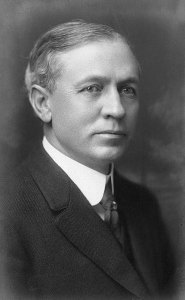
Little Rock Look Back: H. L. Fletcher, 35th Mayor of Little Rock

Mayor H L Fletcher

On September 15, 1833, future Little Rock Mayor Henry Lewis Fletcher was born in Saline County.  His parents were Henry Lewis and Mary Lindsey Fletcher.  One of his siblings was future Little Rock Mayor John Gould Fletcher.  The Fletcher brothers are the only set of siblings to serve as Mayors of Little Rock.

Though the life of John Gould Fletcher is fairly well documented, not much information is available on his brother Henry Lewis (and some of what is out there is incorrect).  He married Susan Bricelin August 30, 1855, in Pulaski County.  During the Civil War, he served as a sergeant in the cavalry for the Confederate Army in Captain Ed Nowland’s Company.

As a civic leader, Fletcher oversaw Arkansas’ contribution to the Philadelphia Centennial Exposition in 1876. The building received as a prize a cast-iron fountain. A replica of that stands in front of the Old State House Museum.

Fletcher served as Mayor of Little Rock from 1891 to 1893.  When Fletcher became Mayor he appointed a new Police Chief (as most Mayors did) and the entire police force was dismissed.  A new police force was hired by E. H. Sanders, who served as chief for 18 months.  Upon his resignation, Frank MacMahon (who had been dismissed from the force when Fletcher came to office), was appointed Chief by Mayor Fletcher.  He would serve from 1892 until 1905.

Mayor Fletcher died on June 30, 1896 and is buried at Oakland Cemetery next to his wife (who died in 1911).

Little Rock Look Back: Charles Taylor, LR’s 42nd Mayor

Mayor TaylorOn September 15, 1868, future Little Rock Mayor Charles E. Taylor was born in Austin, Mississippi.  After locating to eastern Arkansas, his family moved to Little Rock around 1880.

Taylor graduated from Scott Street High School in Little Rock and proceeded to work for various hardware stores and other businesses.  In 1895 he married Belle Blackwood, with whom he would have four children.

In 1910, Taylor announced his intention to run for Mayor of Little Rock.  Though he had never held elective office, he had been involved in several civic organizations.  Taylor was the main challenger to Alderman John Tuohey.  Seen as a reformer, Taylor initially lost to Tuohey.  But after an investigation of voter fraud and a subsequent runoff, Taylor was elected Mayor.

Upon taking office in August 1911, Mayor Taylor focused on improving health conditions in the city, upgrading the fire department and enhancing the overall moral tone of the city.

As a progressive of the era, he fought against gambling, drinking and prostitution.  He created a Health Department and enhanced the City Hospital.  His efforts led to a decrease in the death rate in Little Rock.  As Mayor, Taylor introduced motorized vehicles to the Fire Department.  He also led the City Council to establish building and electrical codes.  Mayor Taylor also oversaw the construction of the 1913 Beaux Arts Central Fire Stations (which today serves as the City Hall West Wing).

Under his leadership, the City of Little Rock annexed Pulaski Heights. One of the selling points to Pulaski Heights residents was Mayor Taylor’s ability to provide modern services such as paved streets, water mains, fire hydrants and street lights.

Though neither his 1911 Parks Master Plan nor his dreams for a civic auditorium came to fruition, they paved the way for future successes in both of those areas.

Funding for projects continued to be a problem throughout Mayor Taylor’s four terms in office.  He believed that one obstacle to city funding was the prohibition by the state constitution against cities issuing bonds.  Though that ban has since been lifted, Taylor tried three times unsuccessfully to get it changed while he was Mayor.

In April 1919, Taylor left office after having served eight years.  He was the longest serving Mayor of Little Rock until Jim Dailey served in the 1990s and 2000s.  Following several business ventures, Taylor moved to Pine Bluff and led their chamber of commerce from 1923 through 1930.

Mayor Charles E. Taylor died in Pine Bluff in 1932. He was buried at Oakland Cemetery in Little Rock.

During his time in office, Mayor Taylor was presented with an unofficial flag of Little Rock by a group of citizens.  During Mayor Dailey’s tenure, that flag was restored by some private citizens and presented to the City.  It is framed on the 2nd Floor of Little Rock City Hall.

Today is last day to purchase tickets for First Ladies event at Old State House

Help save the dresses by participating in the Luncheon on Tuesday, October 6!
The First Ladies’ Gowns exhibit at the Old State House Museum is the largest exhibit of its kind outside the Smithsonian and by far the most popular at the museum. The exhibit features gowns worn by the first ladies alongside items of everyday life in Arkansas from the 1840s to the present.

While the gowns have always been preserved according to the highest professional standards, some deterioration with age is inevitable. The current version of the First Ladies’ Gowns exhibit is housed on the second floor of the museum, in the west wing, in cases specially designed to minimize the deterioration caused by light, dust and humidity.

During a routine survey of artifacts in 2014, the museum’s curator noticed signs of stress on certain gowns. Upon closer inspection it was decided that a textile conservator should evaluate the collection. The museum staff worked closely with conservator Harold Mailand to create a prioritized list of conservation needs for gowns in the exhibit.

“One challenge is to secure funding both to conserve the gowns and to update the exhibit area so that a substantial part of the collection can be kept on view while preserving the gowns for generations of future Arkansans,” said Bill Gatewood, director of the Old State House Museum, a museum of the Department of Arkansas Heritage.

First lady Susan Hutchinson, along with the Old State House Museum Associates board of directors, a nonprofit group established to support the Museum, will host a lunch on the grounds of the Governor’s Mansion on Tuesday, October 6, to raise funds to preserve the gowns.

A seated lunch on the lawn will be followed by a special presentation in the Great Hall. Five of Arkansas’s former first ladies (Ginger Beebe, Janet Huckabee, Betty Tucker, Gay White and Barbara Pryor) have committed to be present for the event and will attend a special reception for table sponsors before the luncheon.


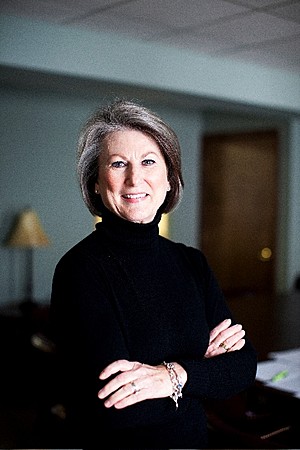
Little Rock Look Back: Mayor Sharon Priest

13632023960On September 12, 1947, future Little Rock Mayor Sharon Priest was born in Montreal, Canada. After marrying Bill Priest, she came to Little Rock. She began her public service at the grassroots level when she led the effort to bring flood relief to Southwest Little Rock and Pulaski County following the devastating flood of 1978 that killed 13 people in central Arkansas.

She was appointed to the Little Rock City Beautiful Commission.  Following that, she challenged an incumbent City Director and won her first elective office in 1986. In January 1989, she was named Vice Mayor of Little Rock by her colleagues on the City Board.  Two years later, she was selected Mayor becoming only the second female to serve as Mayor of Little Rock.  During her service to the City of Little Rock, she spearheaded the effort to create a Little Rock flag.  At the conclusion of her second four year term on the City Board, she decided to run for Secretary of State.

In November 1994, she elected Secretary of State, becoming the first woman to be elected to that position in Arkansas.  She was reelected in 1998.   In the summer of 2000, she became President of the National Association of Secretaries of State. After the 2000 presidential election, she was thrust into the forefront of the movement toward election reform. Ms. Priest testified before U.S. House and Senate Committees on election reform. As Secretary of State, restoring the Governor’s Reception Room and the Old Supreme Court Chamber of the State Capitol to their original splendor and restoring the rotunda marble are a few of her proudest achievements.

In January 2003, Priest was selected to serve as Executive Director of the Downtown Little Rock Partnership. She served in that capacity until early 2015.  She has also been a leading champion for the redevelopment of MacArthur Park, the City’s oldest park.

Prior to her work as an elected official, she worked as Director of Membership for Little Rock Chamber of Commerce and was founder and owner of the Delvin Company, a property management firm.

She was a Toll Fellow in 1995, and has won numerous distinctions including the Excellence in Leadership Fellowship, Women Executives in State Government, 1997 and TIME/NASBE Award for Outstanding Leadership in Voter Education, 1996.  In 2013, she was the featured honoree at the Big Brothers/Big Sisters Roast and Toast, becoming the first (and to date only) female to be so honored.


Little Rock Look Back: Alderman Angelo Marre

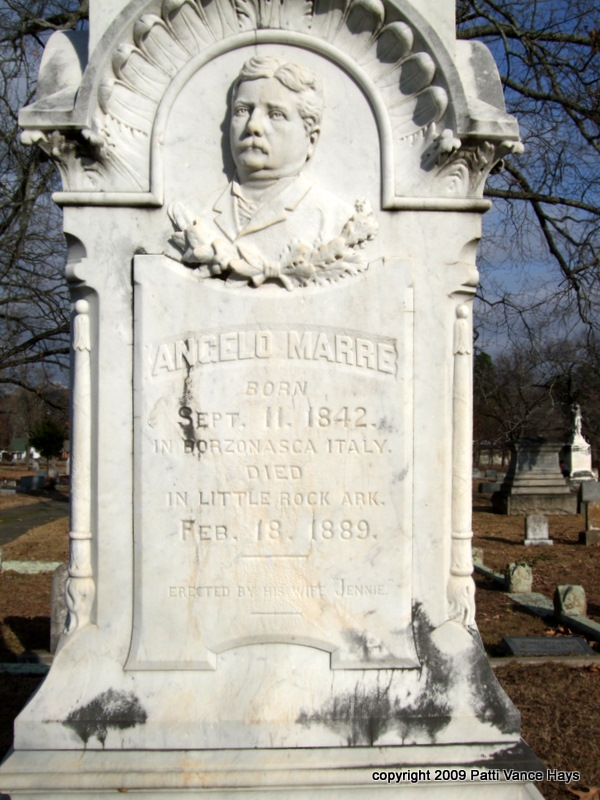
angelomarre

On September 11, 1842, future Little Rock Alderman Angelo Marre was born in Borzonaca, Italy.  He immigrated to Tennessee with his parents in 1854.

During the Civil War, he served in the Confederate Army. From 1865 to 1868, Angelo Marre worked for the Memphis Police Department but was forced to resign after he was accused of killing a man during an argument.  After his acquittal, he returned to the saloon business.  In 1872 Marre was convicted of stealing money and sentenced to three years in prison.

Tennessee Governor John Brown granted Marre a full pardon two years into his sentence, and he regained his citizenship in 1879.

After getting out of prison, he claimed an inheritance and joined his brothers in Little Rock.  He worked as a bartender at the Metropolitan Hotel.  He later opened a saloon and billiard parlor.

By the mid-1880s, Marre owned two saloons, a liquor import business, an office building in downtown LR, 3,000 sharesof stock in mining companies operating in Garland and Montgomery counties, and he was the first president of Edison Electric Company of LR.

In 1883, he was elected as an alderman on the Little Rock City Council.  He lost is bid for reelection in 1885. In 1888, he was an unsuccessful candidate for Pulaski County Sheriff.

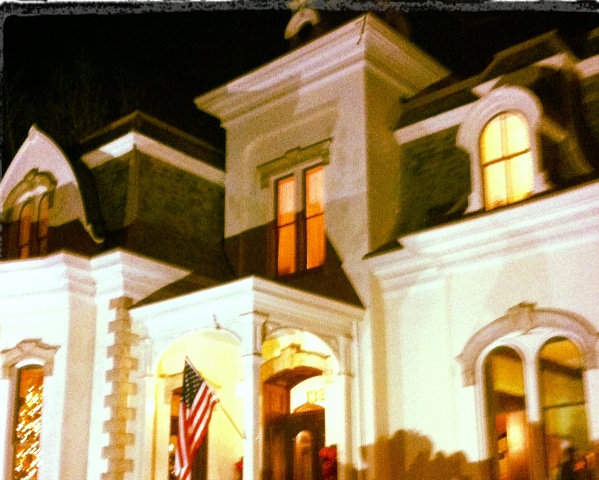
villamarreAngelo Marre died February 18, 1889, as a result of his infection.  He is buried at Calvary Cemetery in LR. His custom designed, marble monument was ordered from Florence, Italy, and cost $5,000.

Marre is probably best known today as the builder of the structure now known as the Villa Marre.  Built in 1881, it is designed in the Italianate and Second Empire styles.  It was built in 1881 and 1882 on Block 21, Lots 5 & 6 of the Original City of Little Rock.  The cost was $5,000.

It was originally a red brick structure and has been modified and expanded several times as well as painted white.  It did not bear the name Villa Marre until the 1960s when historic preservation advocate Jimmy Strawn gave it that name.

After serving as the headquarters for the Quapaw Quarter Association for several years, it was returned to a private residence.  It is now available for special events and rentals.

The Villa Marre is probably best known locally and nationally for serving as the facade for the Sugarbaker design firm on the CBS sitcom “Designing Women.”  Though the interior of the house does not match the interior on TV, the building was featured in the opening credits as well as in exterior shots each week.