Legacies & Lunch Today: Music industry legend Bill Carter

bill_carterThe monthly Legacies & Lunch program returns today with music industry legend Bill Carter.

He will discuss his exciting, wildly varied career as an attorney, agent, and more at the Butler Center for Arkansas Studies’ Legacies & Lunch on Wednesday, June 5, at noon in the Main Library’s Darragh Center, 100 Rock Street. (For instance, when the Rolling Stones were arrested in Arkansas, they called Carter.)

Carter will talk about his childhood in Rector, Arkansas and his wild ride through the music industry, plus a stint as a Secret Service agent. As an attorney, he is noted for his work with the Rolling Stones, securing their ability to enter and tour the United States in the sixties. As an agent, he represented musical artists such as Reba McEntire, Tanya Tucker and Waylon Jennings. He also served as a Secret Service agent, which he addresses in his memoir, Get Carter. His book will be available for sale and signing at the program.

The Butler Center’s Legacies & Lunch program is free and open to the public and supported in part by the Arkansas Humanities Council. Attendees are invited to bring a sack lunch; drinks and dessert will be provided.

The Butler Center for Arkansas Studies is a department of the Central Arkansas Library System (CALS). It was founded in 1997 to promote the study and appreciation of Arkansas history and culture. The Butler Center’s research collections, art galleries, and offices are located in the Arkansas Studies Institute building at 401 President Clinton Ave. on the campus of the CALS Main Library.

For more information, call 918-3029.

June 4 Architeaser: Justice Building Rotunda

IMG_5749Today’s photo features the rotunda of the 1976 annex of the Justice Building on the State Capitol grounds. This section was dedicated in January 1976 and was designed by Noland Blass. The circular building houses the Supreme Court chambers. It is surrounded by a hallway which wraps around the chamber and is sheathed by panels of glass .  Notice how the glass reflects the surroundings but also allows for a clear view through to the sculpture on the interior wall.

The original portion of the Justice Building was dedicated on June 10, 1958.  Before the Court Room was built, the Supreme Court held court in a temporary (for nearly 18 years) court room in the south end of the Justice Building.

On a personal note, it was in this building in 1986 that I served as Chief Judge of the Court of Appeals at Arkansas Boys State.  I don’t remember the “case” we heard or how we ruled.  But I do remember getting to wear a black judge robe over by Boys State T-shirt.

HPAA Announces Seven to Save

seventosaveThe Historic Preservation Alliance of Arkansas’s 2013 list of Arkansas’s Endangered Places is comprised of two antebellum houses, a neighborhood school, a grand orphanage with pastoral grounds, a service station shaped like an oil can, a turn of the century commercial building that housed an opera house and two Mid-Century Modern gems.

The Historic Preservation Alliance of Arkansas announced the list in front of the historic William E. Woodruff House in Little Rock on May 23.

“The 2013 list of endangered places highlights distinctive sites throughout Arkansas that represent important aspects of Arkansas’s culture and history. Though each circumstance is difference, each of these places is important to the community where it is located and each is worth saving,” said Vanessa McKuin, executive director of the Historic Preservation Alliance of Arkansas, a statewide non-profit organization.

“By calling attention to these sites now, we want to encourage local action to rehabilitate and maintain these important places.” said McKuin. “By listing these properties, we hope to bring attention to the places and to encourage local support and involvement in these preservation efforts throughout the state.”

Named to the list were:

  • Hantz & Durst Houses, 1950 & 1951, 855 & 857 Fairview St., Fayetteville, Washington County
  • Ferguson House1861, 416 North 3th Street, Augusta, Woodruff County
  • Frith-Plunkett Housec. 1858, 801 Main Street, Des Arc, Prairie County
  • Park Hill Elementary School1924, 3801 JFK Boulevard, North Little Rock, Pulaski County
  • Roundtop Filling Station (Happy’s Service Station), 1936, Old Highway 67, Sherwood, Pulaski Co.
  • St. Joseph’s Home1910, 6800 Camp Robinson Rd., North Little Rock, Pulaski County
  • Wynne Opera House, c. 1900, 218 S. Front Street, Wynne, Cross County

The Arkansas’s Most Endangered Historic Places list highlights historically and architecturally significant properties throughout the state that are facing threats such as deterioration, neglect, insufficient funds, insensitive public policy, and inappropriate development. The Alliance solicited nominations from residents and organizations across Arkansas.

The Alliance launched Arkansas’s Most Endangered Historic Places in 1999 to raise awareness of the importance of Arkansas’s historic properties to our state’s heritage. Previously-listed places listed include the Johnny Cash Boyhood Home in Dyess, the Donaghey Building in Little Rock, Bluff Shelter Archaeological Sites in Northwest Arkansas, the Westside Junior High in Little Rock, the Woodmen on Union Building in Hot Springs, the Packet House in Little Rock, the Stephen H. Chism House in Booneville, and the John H. Johnson House in Arkansas City.

The Historic Preservation Alliance is the statewide non-profit organization dedicated to preserving Arkansas’s architectural and cultural heritage. For more information about the Alliance and becoming a member, contact Vanessa at 501-372-4757, vmckuin@preservearkansas.org, or visit preservearkansas.org.

May 30 Architeaser: National Old Line Building

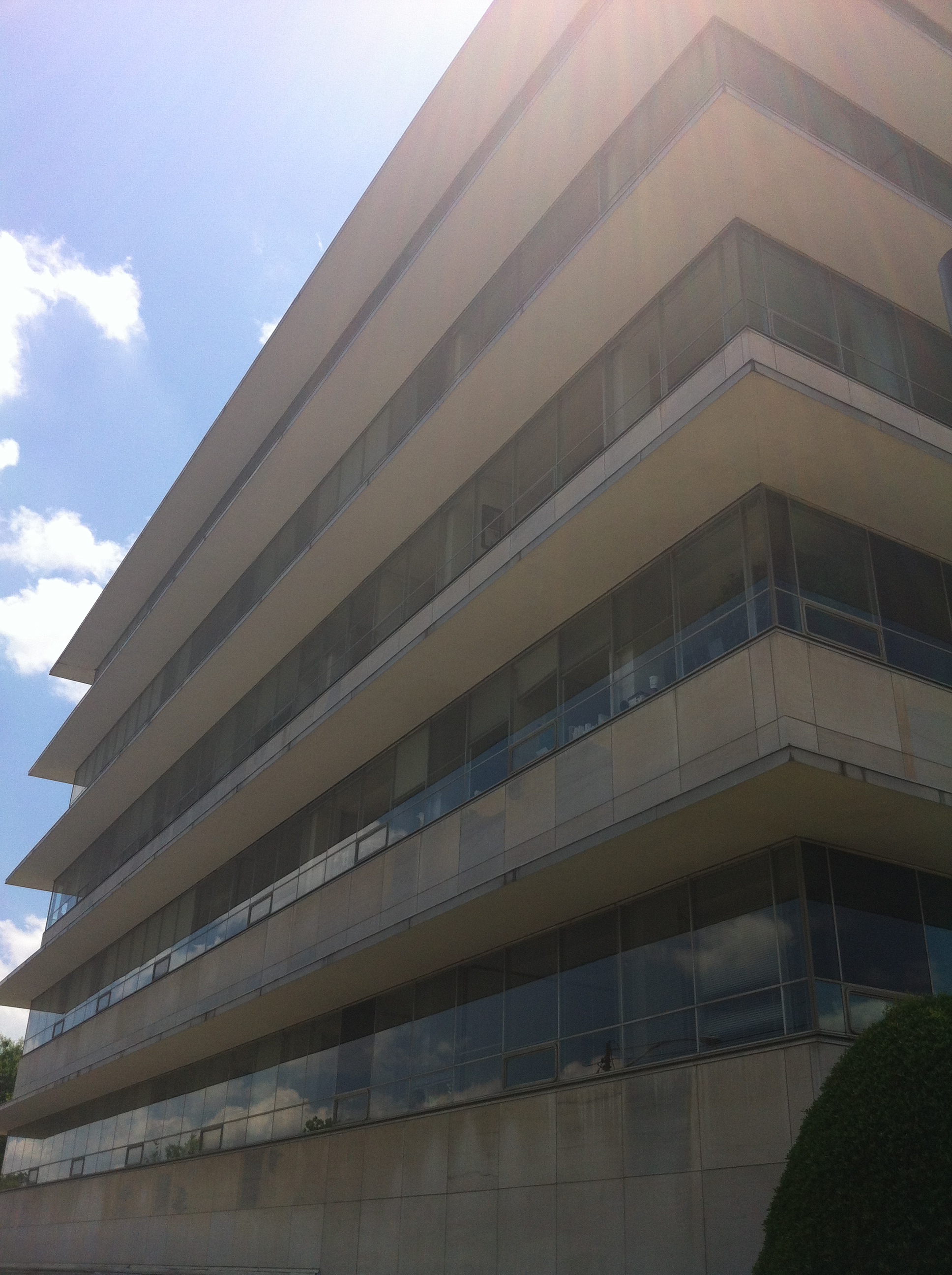
In 1955 the National Old Line Insurance Building was opened.  This seven story structure has been described as “perhaps the finest example of the International Style of architecture in Arkansas.”  Over the years, the building has switched ownership and changed names several times.

Over the years the building has generated controversy. Because of its height (7 stories) and architectural style, it has often been derided as detracting from the look of the adjacent Arkansas State Capitol Building.  There have been several suggestions that the building be torn down and replaced by a parking lot or a lower and more architecturally-sympathetic building.  Conversely, there have also been attempts to expand the building.  Neither school of thought has succeeded.

Today the building is known as the 501 Building (an homage to its address on Woodlane as well perhaps as a nod to the area code of Central Arkansas).  It houses many state offices.IMG_5660

May 28 Architeaser: AP&L Building

20130527-140356.jpg

The Arkansas Arts Center just opened an exhibit on Bauhaus architecture. Though Little Rock doesn’t have any strictly Bauhaus style buildings, there are a few buildings designed in the International Style which was related to Bauhaus.

The Arkansas Power & Light Building on Louisiana and 9th Streets was announced in 1953 and completed in 1959. The design was by Fred Arnold of the Wittenberg Delony & Davidson firm. The reason for the delay was due to uncertainty regarding a rate case and labor contracts.

The four story building features a combination of glass, marble and brick. The second and third stories float over an open space as they extend eastward. In 2010, the marble panels on the second and third stories were replaced because of buckling. They were replaced with marble from the same quarry as the original marble.

The orb atop the building once bore the likeness of Reddy Kilowatt, a mascot used by AP&L as well as many other electric utilities in the post-World War II era. When AP&L changed its name to Entergy Arkansas (as part of the system-wide rebranding of various companies into Entergy), the orb was replaced with one which features a three-dimensional version of the Entergy logo.

Bauhaus architecture school focus of exhibit at Arkansas Arts Center

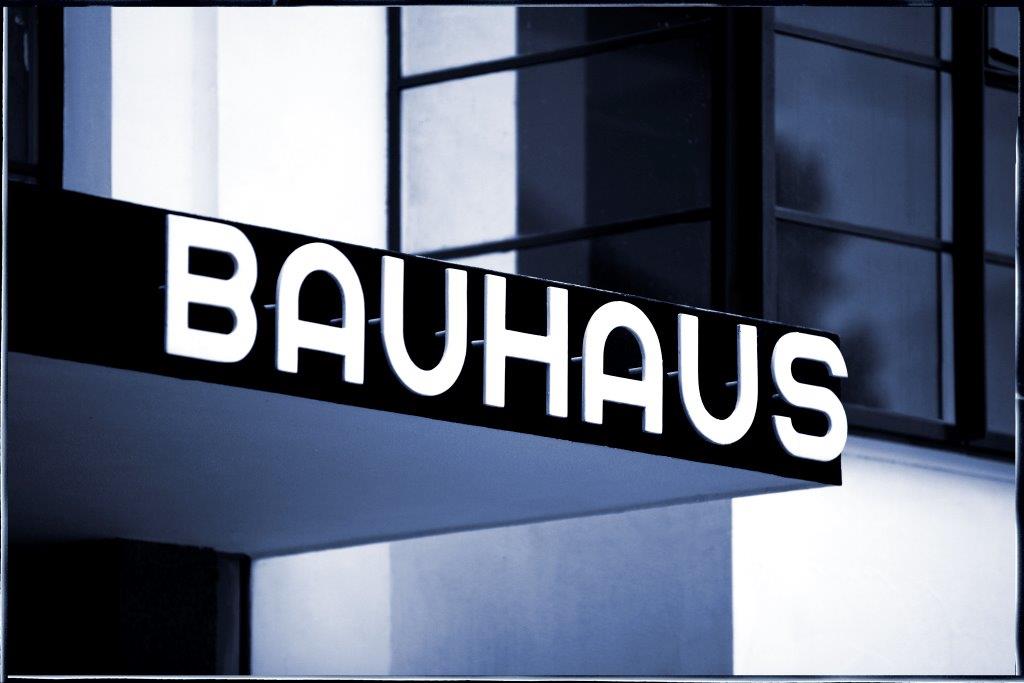
bauhausOrganized by Foto+Synthesis Incorporated, Bauhaus twenty-21: An Ongoing Legacy – Photographs by Gordon Watkinson runs through September 22.  

This exhibition conveys the architectural history, design and enduring philosophies of the Bauhaus, a German expression meaning “house for building” and the name of an important German School principle of architecture and design.

The exhibition offers a unique perspective on Bauhaus design philosophy as it relates to architecture and its relevance in today’s society. The Bauhaus school was founded by Walter Gropius in 1919 and introduced principles that shaped the foundation of modern architecture. Conceived as a project encompassing architecture, design and photography, Bauhaus twenty-21 not only conveys the architectural history, but also illustrates the enduring philosophies of the Bauhaus.

The exhibition is comprised of 77 photographs, plans and elevations and furniture that capture the essence of Bauhaus design and its influence on modern architecture and design.

Memorial Day: Visit Mount Holly

mthollyToday is Memorial Day – a time to pay tribute to the men and women in uniform who died in service to their country.

As a way to give this recognition, today would be a good day to visit a cemetery. One of Little Rock’s most storied cemeteries is Mt. Holly Cemetery. There are veterans from all wars: Revolutionary, War of 1812, Mexican, Civil War, Spanish-American, World War I and II, Korean, Vietnam and Desert Storm.

Founded in 1843, Mount Holly has been called “The Westminster Abbey of Arkansas.” Thousands of visitors come each year. Those interested in history come to see the resting places of the territorial citizens of the state, including governors, senators, generals, black artisans, and even a Cherokee princess. For others the cemetery is an open air museum of artistic eras: Classical, Victorian, Art Deco, Modern––expressed in gravestone styles from simple to elaborate. Some come to read the epitaphs that range from heartbreaking to humorous to mysterious. The cemetery is maintained by the Mount Holly Cemetery Association, a non-profit organization with a volunteer Board of Directors. The cemetery is located at 1200 South Broadway in Little Rock, Arkansas. Gates are open from 8 a.m. until 5 p.m. in the summer and from 8 a.m. until 4 p.m. in the winter.

Interred within the rock walls of Mount Holly are 11 state governors, 15 state Supreme Court justices, four Confederate generals, seven United States senators and 22 Little Rock mayors, two Pulitzer Prize recipients, as well as doctors, attorneys, prominent families and military heroes.