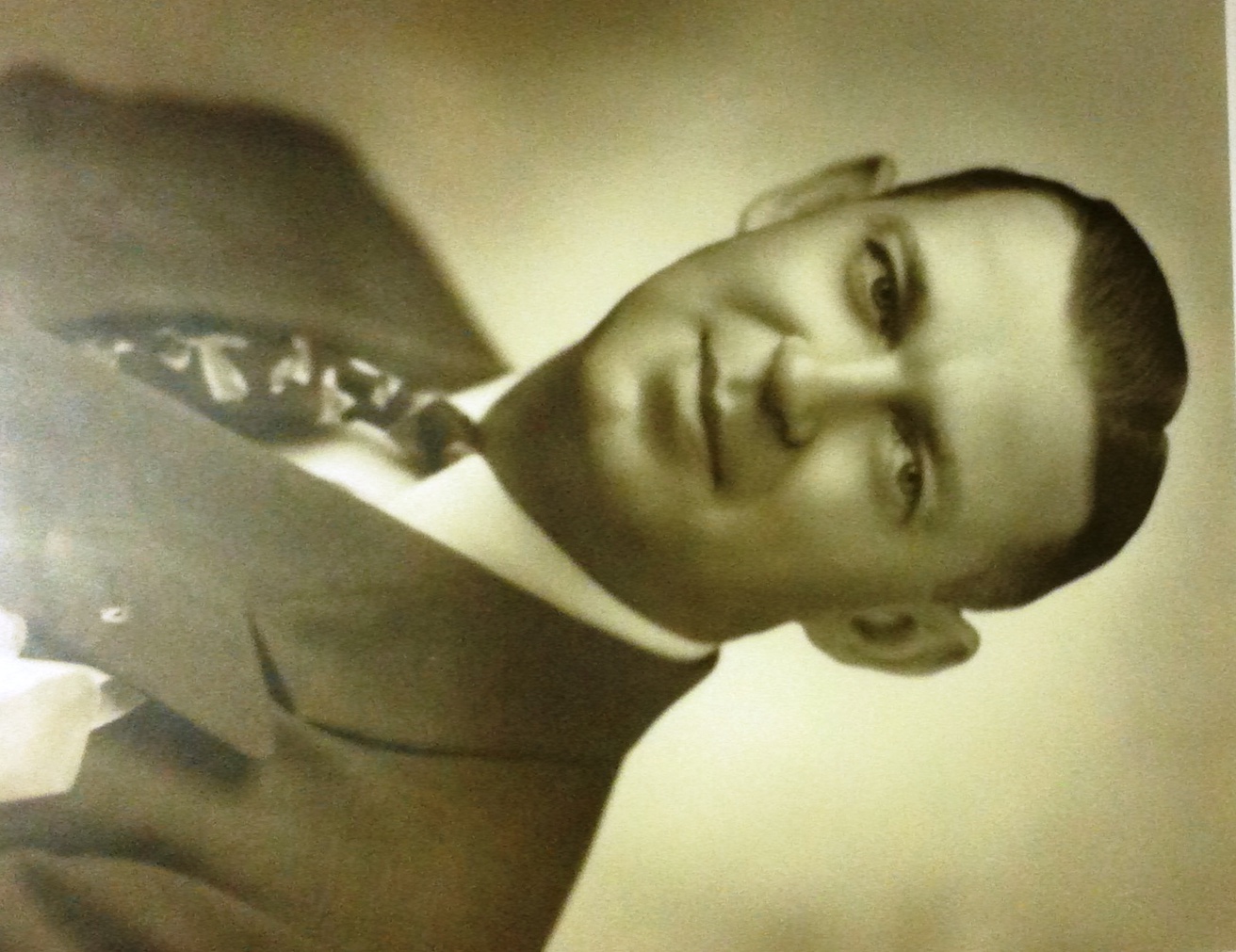
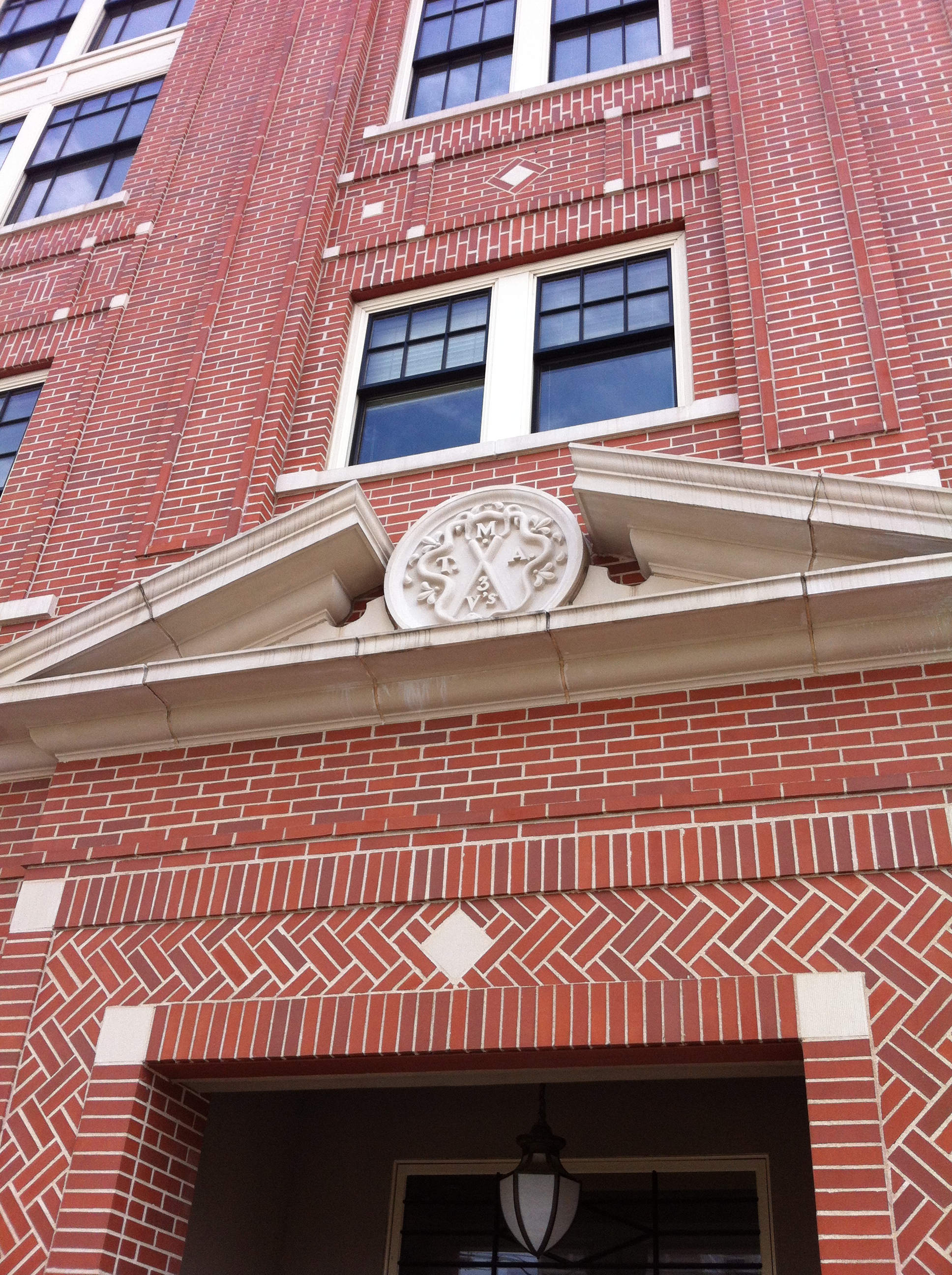
LR Look Back: Mayor Thomas D. Merrick

IMG_5546

Thomas D. Merrick grave in Mt. Holly Cemetery

Thomas D. Merrick was born on 23 May, 1814, in Hampden County, Massachusetts. He later moved to Indianapolis IN and Louisville KY before ending up in Little Rock.

On January 17, 1841, he married Anna M. Adams of Kentucky at Christ Episcopal Church in Little Rock. They had seven children: George, Annie, Ellie, Mollie, Lillian, Dwight, and Thomas. Thomas died at age ten.

Merrick became a prominent member of the Little Rock business community, as a merchant and cotton broker. He was involved in Freemasonry, holding the position of Grand Secretary of the Grand Lodge of Arkansas in 1845.

In 1855 Merrick entered into a business partnership with future LR Mayor John Wassell. Merrick was also involved in city politics, serving on the city council and also as mayor from January 1854 to January 1855.

He saw active service during the Civil War. On February 6, 1861, Merrick delivered an ultimatum to Captain James Totten of the United States Arsenal at Little Rock, demanding the surrender of the federal troops. Merrick also raised a regiment of Confederate Arkansas Militia, holding the rank of Colonel of Infantry at Camp Conway, near Springfield, Arkansas.  Following the Battle of Shiloh (April 1862), Merrick resigned his commission and returned to Little Rock.

Merrick died in his home in Little Rock on March 18, 1866.  He is buried in Mt. Holly Cemetery.

QQA Preservation Conversation: Tour of Woodruff House

woodruff houseThe latest Quapaw Quarter Association Preservation Conversation is this evening.  Instead of being at Curran Hall, this one is a tour of the William Woodruff House, located at 1017 East 8th Street. The program will begin at 5pm this evening.  This tour is one of the QQA’s activities for Arkansas Heritage Month.

The William E. Woodruff House was built in 1852-3 and placed on the National Register of Historic Places in 1989. In 2007, the Historic Preservation Alliance of Arkansas place the Woodruff House on its Most Endangered List.

Woodruff was the founder of the Arkansas Gazette. The two and one-half story house sits on three lots just two blocks east of I-30, near the MacArthur Park Historic District and the rapidly developing River Market District. Originally built in the Greek Revival Style, the house has many Colonial Revival elements, dating from an early 20th century remodeling. The footprints of outbuildings are still evident on the property, and the original cistern is located nearby.

The Quapaw Quarter Association’s mission is to promote the preservation of Little Rock’s architectural heritage through advocacy, marketing and education.

Incorporated in 1968, the QQA grew out of an effort to identify and protect significant historic structures in Little Rock during the urban renewal projects of the early 1960s. Throughout its existence, the QQA has been a driving force behind historic preservation in Greater Little Rock.


LR Look Back: Mayor Dan T. Sprick

SprickFuture Little Rock Mayor Dan T. Sprick was born on May 19, 1902.  He served three terms on the Little Rock City Council (from 1935 to 1941).  In 1945, he was elected Mayor of Little Rock and served one term.

Sprick later served for ten years in the Arkansas State Senate (from 1961 to 1970).  During his tenure in the Senate, Sprick was closely aligned with Gov. Orval Faubus.  When the Little Rock high schools had been closed a year to ensure segregation, Sprick had served on the board of a private school set up by some of the leaders of the segregation movement.

His time in the Senate was also marked by controversy.  He was one of three Senators to opposed Muhammad Ali’s speaking at the University of Arkansas at Fayetteville.  After an Arkansas Gazette editorial lambasted him, Sprick sued the paper for libel. The Gazette settled with him out of court because his health was poor.

Sprick died in January 1972.


Military History Museum Hosts Author Today

1368546527-enduringlegacyOn Saturday, May 18, the MacArthur Museum of Arkansas Military History will host author and professor, Dr. Stuart Towns, as he tours to promote his new book Enduring Legacy: Rhetoric and Ritual of the Lost Cause (University of Alabama Press, 2012).  Dr. Towns will speak at 2pm at the museum in MacArthur Park.

Enduring Legacy explores the vital place of ceremonial oratory in the oral tradition in the South. It analyzes how rituals such as Confederate Memorial Day, Confederate veteran reunions, and dedication of Confederate monuments have contributed to creating and sustaining a Lost Cause paradigm for southern identity. Towns studies in detail post—Civil War southern speeches and how they laid the groundwork for future generations, from southern responses to the civil rights movement and beyond. The Lost Cause orators that came after the Civil War, Towns argues, helped to shape a lasting mythology of the brave Confederate martyrs and of the southern positions for why the Confederacy lost and who was to blame.

W. Stuart Towns is recently retired from Professor and Chairman of the Department of Communication Studies at Southeast Missouri State University. Before that he was Professor and Chair of Department of Communication at Appalachian State University and the University of West Florida. After spending over 30 years in the Active Army Reserves, Stuart retired as a Colonel. While in the Reserves, he served with the 361st Civil Affairs Brigade, and was a member of the Consulting Faculty Program at the U. S. Army Command and General Staff College at Fort Leavenworth, Kansas.

The MacArthur Museum of Arkansas Military History relates the military heritage of Arkansas and its citizens to a diverse and widespread audience. Located in the historic Arsenal Building in MacArthur Park—one of Central Arkansas’s oldest surviving structures and the birthplace of one of this country’s foremost military heroes—the museum collects, preserves, and interprets our state’s rich military past from its territorial period to the present.

May 16 Architeaser: Mosaic Templars Cultural Center

IMG_5421As part of Arkansas Heritage Month, today’s Architeaser focuses on the cornice over the entrance to the Mosaic Templars Cultural Center.

The Mosaic Templars Cultural Center began as a dream by community leaders who had grown up attending events at the Mosaic Templars of American National Grand Temple. This had been a centerpiece of African American life not just for Little Rock but for the mid-south.

In 1992, the building was slated for demolition so that a fast-food restaurant could be built on the lot. In late 1993, the City of Little Rock purchased the building for $110,000  to save it from demolition as organizers were raising funds for the restoration.  In 2001, the City transferred ownership to the State of Arkansas for the establishment of the Mosaic Templars Cultural Center.

Originally, the Center planned to restore the 1913 Mosaic Templars of America National Grand Temple, but the original building was destroyed by fire in March 2005. The new 35,000 square feet interior is a state-of-the-art museum complex with exhibits, classroom, staff offices, and an Auditorium that seats 400 people. The façade of the new structure is a facsimile of the 1913 building complete with the Annex building façade, which burned in 1984.

The cornice which is featured today is a copy of the original cornice.  The original cornice, as well as the cornerstone, are some of the few things which survived the 2005 fire.  The original cornice is on display.

A museum of the Department of Arkansas Heritage, the Mosaic Templars Cultural Center is dedicated to collecting, preserving, interpreting, and celebrating African American history, culture and community in Arkansas from 1870 to the present, and informs and educates the public about black achievements – especially in business, politics and the arts.

Through special events, education programs, ongoing research and exhibits such as the Arkansas Black Hall of Fame, the museum celebrates Arkansas’s African American heritage. Tours of the museum provide a detailed look at the history of African Americans in Little Rock and Arkansas.


May 14 Architeaser

towerNot only is the Catlett-Prien Tower Building a great example of the International school of architecture, it is also home to the Department of Arkansas Heritage and several of its agencies, including the Arkansas Historic Preservation Program.  Because of this, it is today’s Architeaser feature (as part of Arkansas Heritage Month).  It is also home to the non-profit Historic Preservation Alliance of Arkansas.

The Tower Building was designed by Dallas architect Harold A. Berry in collaboration with Little Rock architect Frank Eugene Withrow. The Tower Building was Withrow’s first big project.  The building was the brainchild of future Arkansas Governor Winthrop Rockefeller.

Construction of the Tower Building began in 1958 and finished in 1960 for a cost of $4 million.  At 18 stories, it would be Little Rock’s tallest building from 1960 until 1968 when the Union Bank Building was completed.


LR Look Back: Mayor J. V. Satterfield Jr.

SatterfieldOn May 14, 1902, future Little Rock Mayor John Vines Satterfield, Jr. was born in Marion.   He grew up in Little Rock and Earle. J.V. was a star quarterback for the Earle football team and is ostensibly featured in a painting of that team by respected painter Carroll Cloar.

Following high school, J.V. taught and coached and sold Fords.  He then moved to Little Rock and sold insurance and later securities.  In 1931 he opened his own business; that same year he built a house at 40 Beverly Place in Little Rock, which would serve as his home until his death.

J. V. Satterfield was elected to serve as Mayor of Little Rock in 1939 and served one term, until 1941.  He was credited with saving the City from bankruptcy because of his fiscal policies. Among his efficiencies were the creation of a central purchasing office and using grass moved from the airport to feed the Zoo animals.

Satterfield was a staunch supporter of the airport and worked to expand it.  He would serve as the chair of the first Municipal Airport Commission.  He also established the Little Rock Housing Authority (on which he would later serve on the board) and oversaw the bonds needed to finish constructing Robinson Auditorium.  He was mayor when the building opened.  Mayor Satterfield also served as President of the Arkansas Municipal League in 1941.

Following the outbreak of World War II, Satterfield enlisted in the Army and was given the rank of a Major. He later was promoted to a Colonel and worked in the Pentagon during its early days.

In the late 1940s Satterfield became president of a small Little Rock bank called People’s Bank.  The bank changed its named to First National Bank when it moved into new offices at 3rd and Louisiana in 1953.  By focusing on smaller customers and courting corporate customers, Satterfield grew the bank into one of the state’s largest banks.  He maintained his desk in the lobby of the bank so he could interact with the customers and ensure they were having a positive experience.

Due to some health issues, Satterfield retired from the bank in 1964. He died in March 1966.