
See Washington’s Family Bible on the Washington Birthday Holiday

George Washington’s Family Bible

On exhibit through July 12, 2013
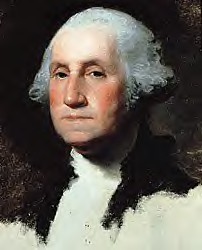
1presToday is the George Washington Birthday Holiday.  George Washington’s Family Bible is currently on display in Little Rock at Historic Arkansas Museum.  It is part of the museum’s exhibit, Treasures of Arkansas Freemasons, 1838 – 2013, on exhibit  through July 12, 2013, in the museum’s Study Gallery. The exhibit correlates with the 175th anniversary of the Grand Lodge of Arkansas, Worshipful Grand Lodge of Free and Accepted Masons of Arkansas, in downtown Little Rock and also features which will be on display for the entire length of the exhibit. Admission to the exhibit is free.

The George Washington Family Bible is on loan from the George Washington Masonic Memorial in Alexandria, VA. It contains Washington’s signature and notes written in his hand. George Washington was a life-long Mason, having joined as a young man. He was later asked to be Charter Master of Alexandria Lodge No. 2. renamed after his death Alexandria-Washington Lodge. The Lodge was the recipient of many of Washington’s personal possessions, including this family bible. The George Washington Masonic Memorial is now the repository of many of the Alexandria-Washington Lodge’s artifacts.

“Freemasonry has been described as a system of morality, veiled in allegory and illustrated by symbols, the goal of which is to take good men and make them better men,” guest curator Dick Browning wrote for the Encyclopedia of Arkansas. Along with the George Washington bibles, Arkansas treasures often imbued with the symbolism of freemasonry will be on exhibit, including masonic aprons and jewels, ceremonial trowels, gavels, a ballot box and the chair of Arkansas’s most famous Freemason, Albert Pike.
LR Look Back: Mayor John Wassell

JWassellFuture Little Rock Mayor John Wassell was born on February 15, 1813 in Kidderminster, England.

In 1829, he came to the United States.  He learned carpentry and construction in Ohio and ended up in Little Rock.  One of his jobs was as the finishing contractor on the State Capitol building, now known as the Old State House.  He later gave up carpentry and became an attorney.  (It is said that he did so after becoming embroiled in a legal dispute arising from one of his construction jobs.) Wassell also served as a judge.

In 1868, he was appointed Mayor of Little Rock by President Andrew Johnson.  He is Little Rock’s only Mayor to have served through a military appointment.  Mayor Wassell died in January 1881 and is buried at Mt. Holly Cemetery along with his wife and other family members.  One of his grandsons, Samuel M. Wassell also served as Mayor of Little Rock.

Reception on Feb 15 for New Exhibit at MacArthur Museum of Arkansas Military History

macmuseLast April, the MacArthur Museum of Arkansas Military History launched a new temporary exhibit program entitled “American Heroes” to recognize individuals from our city and state for their military service.

On Friday, February 15, there will be a public reception for the next unveiling of “Arkansas Heroes.”

The exhibit, entitled “Veteran’s Photo Voice,” places cameras in the hands of veterans and gives them an opportunity to express their feelings and thoughts through photography. Displayed photos are accompanied by a brief narrative.

During the process, veterans document in pictures and words their own perceptions of their experiences and values. It is amazing to watch participants grow in confidence as they become adept at shooting photos expressive of their own lived experience.

The exhibit was developed by the Arkansas Department of Veterans Affairs, and the Museum is hosting the reception for its opening.

The MacArthur Museum of Arkansas Military History was created to interpret our state’s military heritage from its territorial period to the present.

Located in the historic Tower Building of the Little Rock Arsenal–the birthplace of General Douglas MacArthur–the museum preserves the contributions of Arkansas men and women who served in the armed forces.

Exhibits feature artifacts, photographs, weapons, documents, uniforms and other military items that vividly portray Arkansas’s military history at home and abroad.

Friday Faces of February: Andrew Carnegie

andrewcarnegieThis Friday’s face is a bronze plaque of Andrew Carnegie. It can be found in the first floor of the main building of the Central Arkansas Library System.

A Scottish immigrant to the US, he amassed a great wealth as an industrialist, chiefly in the steel industry.  He started funding libraries in the 1880s.  He set up the Carnegie Corporation and used that as one of his avenues for philanthropy, especially for the establishment of libraries.

There were several Carnegie Libraries built in Arkansas.  Little Rock’s first public library, which opened in 1910, was one of these libraries.  It was located at the southwest corner of 7th and Louisiana.

The original building was razed in 1964, but the four columns which were on the front facade now stand outside the current Main Library building at 100 Rock Street.

2nd Friday Art Night: Washington’s Inaugural Bible

George Washington’s Inaugural Bible will be on exhibit at the museum during 2nd Friday Art Night on Friday, February 8, 5 – 8 pm; and on Saturday, February 9, 9 am to 5 pm. The bible is part of the museum’s upcoming exhibit, Treasures of Arkansas Freemasons, 1838 – 2013, on exhibit February 8 through July 12, 2013, in the museum’s Study Gallery.

The exhibit correlates with the 175th anniversary of the Grand Lodge of Arkansas,Worshipful Grand Lodge of Free and Accepted Masons of Arkansas, in downtown Little Rock and also features George Washington’s Family Bible which will be on display for the entire length of the exhibit. Admission to the exhibit is free.

“The museum is delighted to have the opportunity to exhibit two rare bibles closely associated with America’s preeminent Mason of the colonial era, and our nation’s first president—George Washington,” said Historic Arkansas Museum Deputy Director and Chief Curator Swannee Bennett.
George Washington’s Inaugural Bible is on loan from St. John’s Lodge, No. 1. In New York on April 30, 1789, George Washington took the oath of office as the first president of the United States. When it was discovered that a bible had not been arranged for, one was provided by a Mason in attendance. The bible Washington used came from nearby St. John’s Lodge No. 1, Ancient York Masons—and they have preserved it ever since. George Washington’s Inaugural Bible has been used in the inaugural ceremonies of Warren G. Harding, Dwight D. Eisenhower, Jimmy Carter and George H. W. Bush.

The George Washington Family Bible is on loan from the George Washington Masonic Memorial in Alexandria, VA. It contains Washington’s signature and notes written in his hand. George Washington was a life-long Mason, having joined as a young man. He was later asked to be Charter Master of Alexandria Lodge No. 2. renamed after his death Alexandria-Washington Lodge. The Lodge was the recipient of many of Washington’s personal possessions, including this family bible. The George Washington Masonic Memorial is now the repository of many of the Alexandria-Washington Lodge’s artifacts.

Friday Faces of February: Native Knowledge

In the month of February the LR Culture Vulture will highlight four different faces found in sculpture and architecture in Central Arkansas.

Native American Face

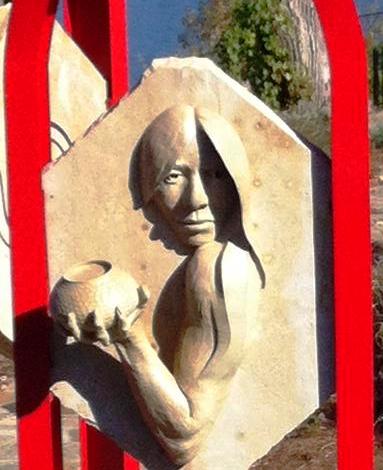
To start things off is one of the faces from the new sculpture Native Knowledge which is located in Riverfront Park.  The installation was created by Denny Haskew.  Native Knowledge is a tribute to the Caddo, Osage, and Quapaw Native American Cultures of Arkansas.

It is sited near the Quapaw Line and La Petite Roche.  The location is important because the Quapaw Line was used as demarcation to separate the Quapaw Tribe from land available for white settlers.  It ran from La Petite Roche due south.  In addition, La Petite Roche was a stop along the “Trail of Tears” as Native American tribes were resettled from their original homes in the American Southeast to points west.


Sandwiching in History at Capital Hotel today

Capital Hotel frontThe Arkansas Historic Preservation Program’s “Sandwiching in History” program pays a visit this month to a location which is accustomed to receiving visitors — The Capital Hotel.

Built in 1872-1873 by businessman William P. Denckla, the Denckla Block, as it was then called, housed various shops on the first floor with offices and gentlemen’s apartments on the upper floors. The building featured a distinctive cast-iron façade with a projecting cornice, arched window openings, and engaged columns with Corinthian capitals. In 1877 the Denckla Block was converted into an hotel and quickly became the center of political and social activity in Little Rock. Over the years the building has been expanded upward and southward.

By the late 1960s, it fell into disrepair.  But through two extensive renovations, the Capital Hotel has been restored to its original beauty and continues to provide luxury accommodations in the capital city.

The “Sandwiching In History” program is a series of tours that seeks to familiarize people who live and work in central Arkansas with the historic structures and sites around us. The tours take place on Fridays at noon, last less than an hour, and participants are encouraged to bring their lunches so that they can eat while listening to a brief lecture about the property and its history before proceeding on a short tour.

The Arkansas Historic Preservation Program is an agency of the Department of Arkansas Heritage.