
Birth of future Razorback football star and LR Mayor Sonney Henson

On July 18, 1928, future Little Rock Mayor Harold E. “Sonney” Henson, Jr. was born in Fayetteville to Harold E Henson Sr. and Dollie Croxdale Henson.  He and his sister Sara Sue grew up in Springdale.

Henson graduated from Springdale High School and was later inducted as one of the first inductees into the Springdale High School Hall of Fame where he participated in the state high school championship in football and basketball. He attended the University of Arkansas in 1945 on an athletic scholarship where he participated in three sports: golf, basketball and football, and graduated in 1949 with a degree in Business Administration.

He was active in ROTC at the university and graduated as a second lieutenant in the U.S. Army. Henson served in Korea as a captain and commander during the Korean conflict. He attained the rank of major as an active member of the Army reserve post his duty in Korea.

Henson’s professional career began with First National Bank of Springdale and soon moved to Little Rock where he served as Vice President at the Worthen Bank on Asher Avenue. In 1962 he was elected to the City of Little Rock Board of Directors.  From January 1965 to December 1966, he served as mayor of Little Rock.  In November 1966, he was unopposed in his bid for a second term on the City Board.  However in October 1967, he resigned from the City Board because he was taking a position with a bank in Joplin, Missouri.

From 1966 to 1972, he served as President of Security National Bank Joplin.  While there, he was a Missouri amateur championship golfer.  Herbert Thomas then asked him to move to Ft. Smith to head up City National Bank (present Bank Corp South) where he served as President and CEO from 1972 to his retirement in 1993 at the age of 65. He continued his service to Bank Corp South as an active board member for several years.

Among his many civic activities throughout his career were the Springdale Junior Chamber of Commerce,  Sparks Regional Medical Center board of directors of Fort Smith, president and active member of the board for the Arkansas Sports Hall of Fame and Razorback Foundation, on the board for the University of Arkansas for Medical Sciences foundation, the Westark area council for Boy Scouts, the Arkansas State Chamber of Commerce, the Small Colleges of Arkansas, Leadership Fort Smith, the Community Rescue Mission and the President of the Arkansas Bankers Association to name a few.  In 1995 he received the meritorious service award by the Arkansas Sports Hall of Honor for his lifelong commitment to Arkansas sports.

Henson was married for 53 years to Helen Garrott Henson. He had four children, 16 grandchildren and one great-grand child.  He died on August 8, 2013, and is buried in Fort Smith.

Four years since U.S.S. Little Rock christened

On July 18, 2015, the new U.S.S. Little Rock (LCS9) was christened and officially launched in a ceremony in Marinette, Wisconsin.

Among those in attendance at the ceremony were Little Rock Mayor Mark Stodola and US Senator John Boozman.   Then-Secretary of the Navy Ray Mabus, who served on the original U.S.S. Little Rock during the Vietnam War, was also present at the ceremony.

The U.S.S. Little Rock will be the nation’s ninth littoral combat ship.  It has been built for the U.S. Navy by Lockheed Martin and Marinette Marine Corporation (MMC) at the MMC shipyard in Marinette, Wisconsin.

The christening ceremony celebrated the ship’s physical transition from land to sea.  The ceremony was a symbolic transition from a hull number to a ship with a name and spirit of its own.

Following Janee Bonner’s shattering of the champagne bottle on the hull, the U.S.S. Little Rock was side launched into the Menominee River.  A side launch is unique, because the ship enters the water broadside. It is mostly used on inland waters, rivers and lakes.  To see the side launch, view the video here.

In December 2017, the ship was commissioned in Buffalo, New York.  Situated next to the original USS Little Rock (now docked in Buffalo as a museum), it was the first time a ship was commissioned adjacent to a former ship bearing the same name.

Little Rock Look Back: Apollo 11 Lifts Off on July 16, 1969

On July 16, 1969, Apollo 11 lifted off from Florida as 528 million people (15% of the world’s population at the time) viewed it on television.  As would be expected for that historic trip to the moon, both the Arkansas Gazette and the Arkansas Democrat were filled with stories covering all aspects of the preparations and the launch.
The Gazette carried a story in which Sargent Shriver, then Ambassador to France, recalled his brother-in-law John F. Kennedy saying that if he died before the US landed on the moon, he would be watching it from his rocking chair in heaven and would have a better view than anyone on earth. The comments were made on May 25, 1962, the same day President Kennedy addressed a joint session of Congress about the quest to send man to the moon.

But Apollo 11 was not the only thing in the newspapers.

  • July 16 was the first preliminary night for the Miss Arkansas pageant.
  • Ruth the elephant was ailing at the Little Rock Zoo.
  • The Arkansas Constitutional Convention continued
  • The Loch Ness Monster had gone into hiding according to Scottish officials
  • Plans were underway to bring private Little Rock University into the University of Arkansas System

Sports headlines included:

  • The Cardinals beat the Phillies 5 to 0
  • The Travelers were rained out at home.
  • Joe Namath was in secret meetings with NFL leadership regarding his retirement plans. He’d announced them rather than give up ownership of a club frequented by mobsters.
  • Brooks Robinson was named to his 13th consecutive All-Star game.

In advertisements (and there were pages and pages and pages of advertisements – comparing them to papers of today one really sees how much a drop in revenue newspapers are facing):

  • Curtis Finch Furniture offered a side by side refrigerator with icemaker for $499
  • Bruno’s was now serving wine and cocktails
  • Moses Melody Shop had a color TV for $399.50
  • Pfeifer-Blass was selling shoes for $3.50 and women’s jersey dresses for $11.99

Birth of Little Rock Mayor James Woodson (aka – future Ron Swanson)

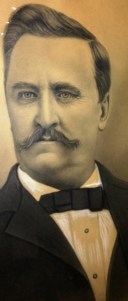
On July 14, 1848, future Little Rock Mayor James Alexander Woodson was born in North Carolina.  The son of two prominent eastern families, he and his parents moved to Pine Bluff in 1849.  His father died within two weeks of the family’s arrival in Arkansas.

With the outbreak of the Civil War, he enlisted as a drummer boy in the Ninth Arkansas infantry but was discharged because of his youth. He worked as a clerk at a general store in Pine Bluff. After the Civil War ended, he attended school in Virginia and Maryland before returning Pine Bluff. Upon his return he worked in the steamboat business and eventually started working in railroads. He was instrumental in putting together one of the forerunners of the Missouri Pacific Railroad and worked for them for 18 years.

Woodson moved to Little Rock in March 1881 and continued working for the railroad until 1891.  Working in the mercantile business allowed him more time to be engaged in civic affairs.  In 1895 he was elected mayor.   He handily defeated former mayor W. G. Whipple who was seeking to return to office.

During Mayor Woodson’s tenure, he oversaw renovations of the 1867 Little Rock City Hall (which was located at the time on the north side of Markham between Main Street and Louisiana Street).  He also championed the construction of a city hospital and the first free bridge across the Arkansas River.  Mayor Woodson was reelected in April 1897 and April 1899.

In April 1890, he resigned to take over the Arkansas and Southwestern Railway.  After restoring it to sound financial footing, he later led the Arkansas Asphalt Company.  That company provided the first asphalt for paving Little Rock city streets.

Woodson served as a director of the Little Rock board of trade (forerunner to the Little Rock Regional Chamber of Commerce), director of the Mercantile Trust Company and president of the state board of trade (forerunner of the Arkansas State Chamber of Commerce).

Woodson married Virginia Lanier in 1868.  They had six children, five of whom lived to adulthood.  Mayor Woodson died on October 19, 1908 and is buried in Mount Holly Cemetery.  His wife lived until 1937 and is buried next to him.  Also buried in Mount Holly are their children James Alexander Woodson, Benjamin Morehead Woodson and Gertrude Woodson Hardeman; each of whom died before their mother.  Mrs. Hardeman’s husband and son are also buried in Mount Holly.

Some have noted his resemblance to actor Nick Offerman of the show “Parks and Recreation.”

Bastille Day look at Benard de La Harpe

Today is Bastille Day, or as they say in France, la Fête nationale.  It commemorates both the 1789 storming of the Bastille as well as the 1790 Fête de la Fédération.   

At the time both events occurred, the land today known as Little Rock, like the rest of the Louisiana Purchase, was under Spanish control. (A fact overlooked in the operetta The New Moon which is set in New Orleans during the French Revolution.)

However, since this area was “owned” by the French from 1699 to 1762 and again from 1800 to 1804, it seems appropriate to acknowledge the French heritage of the area on this day.

Even though Arkansas was explored by the French in 1722, no official settlement of the area now known as Little Rock took place until 1812.  There was no permanent settlement until 1820 (though by 1818 settlement was eminent as evidenced by the Quapaw Treaty).

Jean-Baptiste Benard de La Harpe was the lead French explorer who first came to Little Rock in 1722.

From 1718 through 1723, he spent time exploring various areas of the southern sections of North America.  His 1722 trip up the Mississippi and Arkansas Rivers was at least his third such expedition along a river in the area.  From 1718 to 1719, he explored part of what is now Oklahoma up from the Red River.  Next, he explored part of what is now the eastern section of Texas.

After a trip back to France in 1720, he came back to the New World in 1721.  After his February to May 1722 trip up the Mississippi and Arkansas Rivers, he then went to transfer Pensacola to the Spanish on behalf of the French. In 1723 he went back to France and remained there until his 1765 death.

Remembering Joe T. Robinson

Eighty-two years ago today, on July 14, 1937, U.S. Senator Joseph Taylor Robinson died in his apartment in Washington D.C.

The Senator’s wife, Ewilda, was in Little Rock making preparations for a trip the couple was to take. (She was informed of her husband’s death when her sister-in-law called to express condolences. No one had yet notified her in Little Rock.) Following his demise, Mrs. Robinson went to Washington to accompany her husband’s body back to Arkansas.

As the Senate Majority Leader, Senator Robinson was usually President Franklin Roosevelt’s point person to shepherd legislation on Capitol Hill.  The Democrat’s 1928 Vice Presidential nominee, Senator Robinson was particularly close to FDR. He had successfully steered numerous pieces of New Deal legislation through Congress.  However, at the time of his death, the Senator was facing an uphill climb trying to build consensus on the President’s unpopular Court Packing scheme.

The Senator was honored with a memorial service in the Senate chambers on Friday, July 17.  President Roosevelt and the cabinet joined members of the senate on the floor in what was described as a state funeral without pomp.  Mrs. Robinson sat with her brothers and two nephews as well as Bernard Baruch and Arkansas Power & Light’s Harvey Couch, who were Senator Robinson’s closest friends.  Eleanor Roosevelt was one of the many crowded in the senate galleries observing the service.  Following the service his body remained in the chambers until it was transferred to a train to make the journey to Little Rock.

The funeral train bore his body, his family, 50 senators and over twenty congressmen. It reached Little Rock around 8am on Sunday the 19th.  From there, Senator Robinson’s body was taken to his house on Broadway Street until noon.  It subsequently lay in state at the Arkansas State Capitol until being escorted by military to First Methodist Church.

1,500 people packed the church a half hour before the service began. The sun shone through the windows onto the flag-draped coffin as Rev. H. Bascom Watts led the service. Among the pallbearers was former Vice President Charles G. Dawes. Governor Carl Bailey of Arkansas was joined by Governors Richard Leche of Louisiana and E.W. Marland of Oklahoma.

As the funeral procession reached Roselawn Cemetery, thunder echoed. The skies which had alternated between sun and rain that day, returned to rain. A deluge greeted the end of the service and sent visitors hurrying for shelter at the end.

Five months after her husband’s death, Mrs. Robinson participated in the groundbreaking of the Joseph Taylor Robinson Memorial Auditorium.  The ceremony was the first time it was announced that building would be named in his memory.   On a plaque inside that building today, a quote from President Roosevelt stands as a further testament of the importance of Senator Robinson to the US.  Taken from President Roosevelt’s remarks upon learning of the Senator’s death, the plaque reads, in part, “A pillar of strength is gone.”

Seventy-eight and a half years later, the church was the site of the funeral of longtime US Senator Dale Bumpers in January 2016.

Pop-Up Zine: Little Rock Live music, stories, radio, conversations, and film all on South on Main stage

Image may contain: text

A LIVE MAGAZINE, EH?

Yes! Think of it as, like, the eclecticism of a print magazine—reported narratives! interviews! photo essays!—but all that stuff has been brought to life onstage.

… SO, WHAT DOES THAT MEAN?

It means you’re in for a pretty amazing treat. Starting at 5:30 p.m., you’ll experience:

-A personal story of desegregation and the LRSD from writer Frederick McKindra
-A hilarious dispatch from the backroads of Arkansas by photographer Don House
-A radio profile of the nation’s only certified interpreter of Marshallese by KUAF’s Katy Henriksen
-A film about skateboarding, Paragould and heart, excerpted from filmmaker Mark Thiedeman’s “Kevin”
-A story of coming out and finding your community from writer Meosha Howard
-A fascinating conversation between True Detective writer Graham Gordy and Arkansas Times associate editor Rebekah Hall

4:30 p.m.: Music by Isaac Alexander
5:30 p.m.: Show time!
Tickets are $7 at the door, or RSVP at https://www.eventbrite.com/e/pop-up-zine-little-rock-tickets-64543593626

BONUS: Themed snacks and drinks from South on Main!