Little Rock Look Back: Classes resume in Little Rock high schools

On August 12, 1959, something remarkable and yet unremarkable happened.  Little Rock teenagers started the high school year.

After turmoil and no classes in 1958-1959 (dubbed the Lost Year), the state law allowing for schools to be shut down in order to keep them segregated had been overturned.

The six new school board members (all of whom had started since December 1958) decided to start classes in the middle of August instead of the traditional post-Labor Day start. The original start date of post-Labor Day was changed in an announcement on Monday, August 4.  Among the reasons was to get classes started before Gov. Faubus could convene the Arkansas General Assembly into special session and create more mischief in order to try to keep Little Rock’s high Schools segregated.

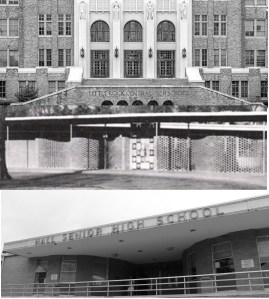
While it WAS important to have the schools reopened, the desegregation was minimal.  Originally, only three African Americans were admitted to Central High (Jefferson Thomas, Elizabeth Eckford, and Carlotta Walls, who had all been part of the Little Rock Nine) and only three were admitted to Hall High.  One of the three admitted to Central, Eckford, had enough credits due to correspondence courses, and did not enroll.

On August 12, about 1,000 segregationists attended a rally at the State Capitol hearing from Gov. Faubus and other speakers.  After it was over, about 250 marched or drove toward Central High School.  A block away from the school, they met a phalanx of police officers who turned them away.  When the marchers broke into rioters, the Fire Department turned its hoses on them. The police ended up arresting 24 people.  (This more active response by Police and Fire personnel was a marked difference from two years prior.)

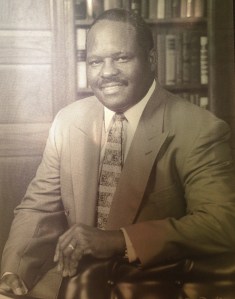
After the school year started, the School Board interviewed over a dozen African American students who wished to transfer from Horace Mann to either Central, Hall, or Technical high schools.  Of these, three would be admitted to Central, including sophomore Sybil L. Jordan (now better known as Dr. Sybil Jordan Hampton).

August 9, 1947 – Little Rock chosen as site for War Memorial Stadium

War Memorial Stadium was approved by the Arkansas General Assembly in March 1947.  The work then began on the finalization of the location.

Four cities were in the running:  Little Rock, North Little Rock, Hot Springs, and West Memphis.  Each of the cities was required to donate the land for the stadium, provide parking for it, and sell local subscriptions equivalent to $250,000 to raise money for it as well.

On May 19, 1947, the Little Rock City Council approved Resolution 1,747 to donate the land for the stadium in Fair Park if Little Rock was selected.  This was not the first mention of a stadium in City records.  In March of 1947, the City Council had set aside land in Fair Park to use for a playground — with the stipulation that if it was eventually needed for a stadium, it would be relinquished for that purpose.

On August 9, 1947, the War Memorial Stadium Commission met in the House Chambers of the Arkansas State Capitol to select the location for the stadium.  West Memphis dropped out prior to the meeting; they had not been able to raise the sufficient local funds.  That left the three remaining cities.  (Cities had until June 24 to file paperwork expressing their interest in applying and were to submit their proposals by August 1.)

Instead of meeting in a usual committee room, the meeting was held in the House Chambers of the State Capitol.  The location for the meeting had been set because a large crowd was expected.  And the attendance did not disappoint.  City government and business leaders from all three cities turned out in full force.

The members of the Commission were Ed Keith, Chairman, Magnolia; Gordon Campbell, Secretary, Little Rock; Ed Gordon, Morrilton; Senator Lee Reaves, Hermitage; Senator Guy “Mutt” Jones, Conway; Dallas Dalton, Arkadelphia; Judge Maupin Cummings, Fayetteville; Dave Laney, Osceola; and Leslie Speck, Frenchman’s Bayou.

For several hours the nine heard proposals from the three cities.  Little Rock’s location was in Fair Park, North Little Rock’s was near its high school, and Hot Springs was on land next to Highway 70 approximately 2.5 miles from downtown.  Finally it was time to vote.  After two rounds of voting, Little Rock was declared the winner on a weighted ballot.

The north shore’s leadership was magnanimous in their defeat.  Hot Springs, however, was far from it.  In the coming days they filed suit against the Stadium Commission alleging flaws in Little Rock’s proposal as well as improprieties by members of the commission.  A preliminary decision sided with the state.  Ultimately, Hot Springs’ relatively new mayor Earl T. Ricks opted to drop the suit.  The Spa City’s business community was concerned that fighting the location might delay construction – and could negatively impact legislative and tourists’ feelings toward Hot Springs.  (And it was entirely possible that the State Police could have been used to “discover” that there was gambling going on in Hot Springs.)

Though ground was broken later in the year, by December 1947, the stadium was still $250,000 shy of funding for the construction.  This was after the state and Little Rock had previously both upped their commitments to $500,000 each.

The building did eventually open on schedule in conjunction with the 1948 Arkansas Razorback football games.

As for Mayor Ricks of Hot Springs, he moved to Little Rock to serve as Adjutant General of the Arkansas National Guard during the governorship of Sid McMath.  He later held leadership positions in the National Guard Bureau in Washington DC.  He died in 1954 at the age of 45.  Among the ways he was memorialized was a National Guard armory in Little Rock, which stood in the shadow of War Memorial Stadium.

Birth of Little Rock’s 22nd and 24th mayor – William Eliot Ashley

On August 6, 1823, future Little Rock Mayor William Eliot Ashley was born in Little Rock.  He would go on to become the first Little Rock Mayor to be born in Little Rock.  Ashley was the son of Mary and Chester Ashley; his father would later serve as a U. S. Senator from Arkansas.  He was the second of the couple’s seven children.

Though he was raised in Little Rock, he did receive some schooling out of state. The State History Commission has correspondence between eleven year old William, studying in New York, and his father. Part of the letter is a request for money.

On October 26, 1846, he married Frances Eliza Grafton at Christ Episcopal Church.  They were the first Little Rock residents to be married in that church.  The couple had five children, including triplets.  Only one of the children, Frances (who was one of the triplets) survived to adulthood.

Ashley was first elected Mayor of Little Rock in 1857. After completing a two year term, he was succeeded by Gordon N. Peay (another scion of a prominent Little Rock family).  In 1861, Ashley returned to the office of Mayor.  He was reelected to a third term in 1863.  In September 1863, following the defeat of Confederate troops by the Union forces at the Battle of Little Rock, the City of Little Rock ceased operations.  On September 21, 1863, Little Rock municipal government closed its doors, stopped collection of taxes and disbanded.  Thus Ashley’s third term ended.

In addition to his interest in local government, Ashley was a member of St. John’s College Board and a director of the newly-formed Little Rock Gas Company.

William Eliot Ashley died on August 16, 1868, at the age of 45.  He was buried in Mt. Holly Cemetery (which sat partially on land that had once belonged to his family). His parents, wife and children are all buried in Mt. Holly as well.

Interestingly, for someone who grew up in a prominent family, there does not appear to be a surviving likeness of Mayor Ashley – either in painting or photograph.  Several exist of his parents, but none of him.

1906 verdict halts plans for new LR City Hall, Jail and Auditorium

The 1906 plans for City Hall with the Municipal Auditorium on the left portion.

Little Rock Mayor Warren E. Lenon had been advocating for a new City Hall a municipal auditorium since shortly after taking office in April 1903. After plans were approved in July 1906, a group of citizens, led by Arkansas Gazette publisher J. N. Heiskell, filed suit to stop the City.

The closing arguments in the trial against plans for a new City Hall and auditorium complex had been heard on Monday, July 30.  The case was heard by Chancery Judge J. C. Hart.  Serving as an advisor to Chancellor Hart throughout the trial (though with no official legal standing) was Pulaski County Circuit Court Judge Robert J. Lea.  To accommodate the expected large attendance, the trial had been moved into his courtroom which was larger than Chancellor Hart’s.

On Friday, August 3, Pulaski County Chancery Judge J. C. Hart issued an injunction to keep the City from signing a contract for the construction of a city hall, jail and auditorium.  Chancellor Hart concurred with the plaintiffs that Arkansas’ constitution and laws dictated all taxation must be for public purposes.  He found there was nothing in Arkansas case law which defined an auditorium to be used for conventions as a public purpose.

As had been the case throughout the trial, the tone of the coverage of the decision differed greatly in the city’s two daily papers.  The subheading in the Democrat noted that the plaintiffs would be liable for any losses to the municipal government’s coffers due to a delay in commencing the construction if Little Rock eventually prevailed.  That fact is not mentioned by the Gazette.  Both papers did make note that Judge Lea agreed with the Chancellor’s decision.

For now, it looked as if the City of Little Rock would be stuck in the 1867 City Hall on Markham between Main and Louisiana.  Mr. Heiskell and his compatriots waited to see if the City would appeal the decision.

While August would be a quiet month publicly, work would go on behind the scenes.  More on that, in the future.