
MacArthur Returns to Little Rock

MacArthur and Mayor Remmel

General MacArthur and Mayor Remmel

On Sunday, March 23, 1952, General Douglas MacArthur made his only post-infancy visit to Little Rock. He had previously been scheduled to visit Mississippi, and Little Rock Mayor Pratt Remmel had persuaded him to add a visit to Little Rock to the agenda. The fact that Little Rock now had a Republican mayor had apparently piqued the General’s interest.

General MacArthur, accompanied by his wife and son as well as several journalists and members of his military retinue, arrived at Little Rock Airport at 10:40 am. He was met by a delegation of civic leaders including Mayor Remmel. Alderman James Griffey made welcoming remarks on behalf of the city. Then the General and Mayor boarded an open car and led a motorcade from the airport to downtown.

The motorcade’s destination was Christ Episcopal Church at Capitol and Scott streets. It was at this church that MacArthur had been baptized as an infant. The delegation was greeted by the Episcopal Bishop R. Bland Mitchell, Rector J. Hodge Alves, and Rector Emeritus W. P. Witsell. (While he had been Rector, Dr. Witsell had garnered national attention by issuing an Easter blessing to Gen. MacArthur as he had been evacuating the Philippines at the height of World War II.) In order to gain admittance to the church that morning, church members and guests had to have tickets.

Following the worship service, the General and his party went to three events in the park named in his honor. The first was a tour of the Museum of Natural History (now the Museum of Discovery and located in the River Market; the current tenant of the building is the MacArthur Museum of Arkansas Military History), which was located in the building in which the General had been born. After the tour, he spoke at a dedication of a small rose garden adjacent to the museum. It was sponsored by the Little Rock City Beautiful Commission and the Garden Clubs of Greater Little Rock.

Though every stop of the General’s visit had featured crowds, the largest was at the third location in MacArthur Park. A crowd of several thousand greeted the General as he spoke from the Foster Bandshell in the park’s southwest corner. Chamber of Commerce president Richard C. Butler (brother-in-law of Mayor Remmel) was the master of ceremonies. Following an invocation by Methodist Bishop Paul Martin, the only other speaker was the General. In his remarks he spoke of his Southern heritage and of his appreciation for the support of the citizens of Little Rock over the years.

Several gifts were bestowed upon the MacArthurs at the ceremony. The City of Little Rock presented Mrs. MacArthur with an engraved silver serving tray.

Following the events in MacArthur Park, the family retired for a brief respite to the Hotel Marion. They then attended a luncheon buffet in their honor at the home of Howard and Elsie Stebbins on Edgehill Road. The General and Mrs. MacArthur circulated through the house greeting guests and then eschewed a special table in favor of balancing their plates on their laps and sitting in wingback chairs. Meanwhile Arthur MacArthur stayed upstairs and discussed stamp collecting and other hobbies with the Stebbins’ two teenage sons.

Following the luncheon, the MacArthur party went back to the airport and by 4:00pm, the plane was in the air.

Though this visit was coming at the end of a whirlwind of activities, by all accounts, the General and Mrs. MacArthur were very gracious and accommodating. The General was being mentioned as a potential GOP candidate for President, but purposefully steered clear of any political comments in his remarks. He and Mrs. MacArthur dutifully posed for photos not only for the media but also for amateur photographers. At lunch, the General even asked a Gazette photographer to take a photo of him with his Little Rock Police motorcycle escorts so that they could have a souvenir of the visit.
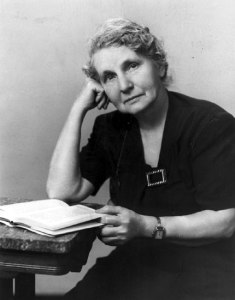
LR Women Making History – Bernie Babcock

Julia Burnelle “Bernie” Smade Babcock was an author and museum founder.  When her husband died, leaving her with five children, she starting writing for money. She published several temperance novels and later wrote for the Arkansas Democrat.  She also published a magazine, wrote plays which were performed in New York, and authored a poetry anthology.  She later became recognized as an expert on Abraham Lincoln and wrote several books about him, as well as other historical figures.  For her writing skills, she became the first Arkansas woman to be included in Who’s Who in America.

In 1927, after professional curmudgeon H. L. Mencken wrote derisively of Arkansas, she decided to start a museum. The Museum of Natural History and Antiquities was first located in a Main Street storefront.  In 1929, she “gave the City of Little Rock a Christmas present” by giving the museum to the city.  It was relocated to the unfinished third floor of City Hall, with her as its employee. After being closed during part of the Great Depression, she relocated the museum to the Arsenal Building and reopened it as the Museum of Natural History.  She was involved in the efforts to rename City Park in honor of Douglas MacArthur (who had been born there) and welcomed him when he came to Little Rock in 1952.

Following her retirement in 1953, she moved to Petit Jean Mountain where she wrote and painted.

After more name changes and a relocation, her museum is now known as the Museum of Discovery and is an anchor in the River Market district.

LR Women Making History – Kaki Hockersmith

In 2015, Kaki Hockersmith was honored at the Governor’s Arts Awards.  She creates art as a designer. In addition, she promotes arts and heritage through her tireless efforts on behalf of numerous cultural institutions.  This award was only one of many recognitions she has received.
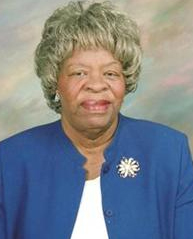
In 2010, she was appointed to the President’s Advisory Committee on the Arts for The Kennedy Center.  In that capacity, she serves as a national ambassador for The Kennedy Center. She has also brought programs from The Kennedy Center to Arkansas to help established and emerging arts organizations. She also serves as a commissioner on the cultural committee of UNESCO – the United Nations Educational, Scientific and Cultural Organization.  For the past two years, she and Stephanie S. Streett have led the efforts for FUSION which creates an arts and humanities curriculum for Arkansas teachers.

In 1993, she redesigned the interior of The White House during the Clinton Administration. She was also appointed a member of the Committee for the Preservation of The White House.  Her work on this American landmark was featured in Hillary Clinton’s book An Invitation to the White House: In Celebration of American Culture.

Locally, she has served on the Board of Trustees for the Arkansas Arts Center and the Arkansas Governor’s Mansion Association. She is an active supporter of many cultural organizations in Little Rock.  She and her husband Max Mehlburger open their home to host receptions and fundraisers for numerous cultural institutions and organizations.  In 2014, she was recognized for this support at Ballet Arkansas’ Turning Pointe gala.

Professionally, she has been honored by the national ASID organization as well as the Washington D.C. chapter. Her projects have won 16 regional ASID awards, including seven gold awards.

LR Women Making History – Annie Abrams

Annie Mable McDaniel Abrams is a retired educator by trade and civic activist by avocation.  She is included in this list because she is also a historian.  As a writer and preservationist, she has worked to document history and ensure historical properties and neighborhoods will long remain in Little Rock.

Born in Arkadelphia, she moved to Little Rock at age 13 to attend Dunbar Junior High School and High School.  She studied education at Dunbar Junior College and later taught in Marianna. In 1956, she returned to Little Rock to work for the Arkansas Teachers Association.  After her return to the capital city, she married Orville Abrams.  In addition to raising her four children, Miss Annie has helped raise countless others through her advice, support, love, and sometimes strong admonitions.  She also found time to return to school and receive a degree from Philander Smith College.

Among her many accomplishments are leading efforts to rename High Street for Martin Luther King, 14th Street for Daisy L. Gatson Bates and 20th Street for Charles Bussey.  Through her community activities, she had worked closely with both Bates and Bussey.  She was a friend to the Little Rock Nine (who were only a few years younger than she) and to their families. Perhaps, because she has been a personal friend of many Arkansas and national politicians over the past 60 years, it should come as no surprise that she and her husband were also acquainted with Governor Faubus.

Whether a leading political figure or a small child, Miss Annie isn’t afraid to give advice or to share her love.  Once an educator, always an educator, she loves to learn and teach. It is rare for her to miss a speech at the Clinton School or a Political Animals Club meeting.

In recognition of all her efforts she has been recognized with an honorary doctorate from Philander Smith College, the Brooks Hays Award, and an award award from the national Martin Luther King Jr. Commission.  In 2010, she was inducted into the Arkansas Black Hall of Fame.

For more on Annie Abrams and other inductees into the Arkansas Black Hall of Fame, visit the permanent exhibit at the Mosaic Templars Cultural Center. That museum is an agency of the Department of Arkansas Heritage.

LR Women Making History – Nancy Rousseau

Though not a graduate of Little Rock Central High School, Nancy Rousseau is a Central High Tiger through and through.

She has been principal of Little Rock Central High School since the summer of 2002. Born in New York, she graduated high school in Tenafly, New Jersey.  After attending Ohio University, she graduated from Adelphi University with a degree in English education.  Her first job was teaching in Port Washington, NY, where she won the “New Teacher of the Year” award.  After teaching in Midwest City, Oklahoma, she arrived in Little Rock in 1976.

From 1976 until 1986, she taught English at Pulaski Academy.  After receiving her master’s degree in educational administration from the University of Arkansas at Little Rock, she was hired by the Little Rock School District as an Assistant Principal at Central High School.  From 1991 until 1998, she served in that capacity. During that time, she worked on the planning for the 40th anniversary of the integration of Central High by the Little Rock Nine.

In 1998, she became principal of Pulaski Heights Junior High School.  She led the school’s transition from a junior high to a middle school.  When the position of Central High School principal became open in 2002, she applied for the job.

Since returning to Central as its principal, Mrs. Rousseau has been a very visible champion of the school, its students, faculty and alumni.  She served as co-chair for the Central High Integration 50th Anniversary Commission.  During her tenure, the school’s physical plant has been upgrade and much of the historic façade and interior has been restored.  A Central High Alumni Association and a Tiger Foundation have been formed.  Through their effort, the arts, academics and athletics have been enhanced.

Mrs. Rousseau also participated in the planning for the 60th anniversary of the school’s integration.  She is one of a very few who worked on the 40th, 50th and 60th anniversaries.

LR Women Making History – Jeannette Edris Rockefeller

Jeannette Edris Rockefeller only lived in Arkansas for about fifteen years. But her impact on the cultural life of Little Rock and all of Arkansas continues to be felt today.

Born and raised in Seattle, as a young mother she met Winthrop Rockefeller while both were in New York.  He moved to Arkansas in 1953; after their 1956 marriage, she joined him. They split their time between Little Rock and Petit Jean.

In 1959, she was asked to become involved in plans for a new art museum in Little Rock.  She became a tireless advocate and fundraiser for the new Arkansas Arts Center.   In 1960, she assumed the role of president of the Arkansas Arts Center Board of Trustees, a position she held until 1968.  During that time period she oversaw the planning, construction and opening of the building.  She also invited Townsend Wolfe, who she had met when he taught some classes at the Arts Center, to apply to become the museum’s first executive director.

From 1967 to 1971, she was First Lady of Arkansas.  In that capacity, she supervised renovation of the Governor’s Mansion and started the tradition of displaying art on the walls.

Shortly after her 1971 divorce from Rockefeller, she relocated to California.  She continued to be a supporter of the Arts Center.  One of the galleries in the Arts Center is named in her honor.  In addition, one of the sculptures on the lawn of the Arts Center, Standing Red, was dedicated in 1970 in recognition of her service on the Arts Center Board.

LR Women Making History – Louise Loughborough

Louise Loughborough was the first woman to serve on the Little Rock Planning Commission.  Not only was the she first woman to serve on this body, she was the first to serve on any City commission other than the Board of Censors or Library Board.  Born Louisa Watkins Wright in Little Rock 1881, her ancestors included many early Arkansas leaders including Little Rock Mayor David Fulton.

In 1935, Loughborough was appointed to the Little Rock Planning Commission, and it was in this role that she first heard about the plan to condemn the half-block of houses that she had grown up admiring on Cumberland and East Third streets. Although the neighborhood had fallen on hard times, becoming a red-light district and slum, Loughborough feared the loss of several historic structures, including the Hinderliter House, the oldest building in Little Rock and thought to be Arkansas’s last territorial capitol. She mobilized a group of civic leaders to save these buildings. She enlisted the aid of prominent architect Max Mayer and coined the term “town of three capitols” to try to capture the imagination of potential supporters, grouping the “Territorial Capitol” with the Old State House and the State Capitol.

The Arkansas Territorial Restoration opened on July 19, 1941. The project was the first Arkansas agency committed to both the restoration of structures and the interpretation of their history, and it served as a model and inspiration for historic preservation in the state. Around the same time, she was a moving force behind the creation of a museum at the Old State House as well.  Today both Historic Arkansas Museum (as the Territorial Restoration is now known) and the Old State House Museum are agencies of the Department of Arkansas Heritage.

As founding Chairman of the Arkansas Territorial Restoration Commission, Louise Loughborough provided daily direction for the museum house complex through the first twenty years of its existence. She died in Little Rock on December 10, 1962 and was buried at Mount Holly Cemetery.