Creative Class 2016: Karen Q. Clark

cc16-clarkKaren Q. Clark has played a sympathetic nun on film and an exceedingly unsympathetic nun on stage.   In between she has been a singing nun (in The Sound of Music).  Outside of the habit, she has appeared in New York, many regional theatres, and most (if not all) Little Rock stages.  A native of Wisconsin, she came to Little Rock with her husband (and fellow thespian) Jay Clark.  During the day, she is Lower School choral and drama teacher at Episcopal Collegiate School.

In addition to being a fixture in the Little Rock theatre scene, she also has numerous credits in many Arkansas-made films.  Favorite stage roles include: Mrs. Banks, Mary Poppins (Arkansas Rep); Betty in The It Girl (IRNE nomination, Worcester Foothills); Princess Rhyme in the world premiere of The Phantom Tollbooth and Rachel in Inherit the Wind (Wheelock Family Theatre); Irene in Hello Dolly! (Jekyll Island); Maria in The Sound of Music; and Narrator in Joseph and the Amazing Technicolor Dreamcoat (Arkansas Shakespeare Theatre). Another favorite role is being Quin’s mom.

Creative Class 2016: Thomas Alexander

cc16-alexanderOctober is National Arts & Humanities Month. So the Culture Vulture returns to daily postings by featuring each day a member of the 2016 Creative Class.  First up is the youngest member, Thomas Alexander.

While still a student at Hendrix College, Thomas is currently serving as Interim Director of Music and Organist at St. Luke’s Episcopal Church.  This past summer he was an Organ Scholar at Christ Church in downtown Little Rock.  An accomplished organist (who creates outstanding improvisational pieces on the organ) and choral director, he is the founder and director of the Compline service at Hendrix.  In addition to being a full-time student at Hendrix, where he is a junior, he serves on the Executive Council of Province VII of the Episcopal Church (which encompasses Arkansas and part or all of six other states).


2016-2017 ASO season starts with UNESCO Artist for Peace Elisso Bolkvadze

ASO NewThe Arkansas Symphony Orchestra, Philip Mann, Music Director and Conductor, presents the first concert of the 2016-2017 season with Opening Night: Mozart, Schubert & Mayhem, Saturday, October 1st at 7:30 p.m. and Sunday, October 2nd at 3:00 p.m. at the Maumelle Performing Arts Center. The concert will include ASO Composer of the Year Stephanie Berg’s Ravish and Mayhem, Schubert’s Symphony No. 5 in B-flat Major, and Mozart’s Piano Concerto No. 21 featuring Richard Sheppard Arnold Artist of Distinction, Elisso Bolkvadze, recently named a UNESCO Artist for Peace. The Masterworks Series is sponsored by the Stella Boyle Smith Trust.

Concert Conversations – All concert ticket holders are invited to a pre-concert lecture an hour before each Masterworks concert. These talks feature insights from the Maestro and guest artists, and feature musical examples to enrich the concert experience.

Shuttle service is available – The ASO provides shuttle service from Second Presbyterian Church in Pleasant Valley to the Maumelle Performing Arts Center and back after the concert. For more information and to purchase fare, please visit http://www.ArkansasSymphony.org/shuttle.

Tickets are $14, $39, $55, and $67; active duty military and student tickets are $10 and can be purchased online at http://www.ArkansasSymphony.org; at the Maumelle Performing Arts Center box office beginning 90 minutes prior to a concert; or by phone at 501-666-1761, ext. 100. All Arkansas students grades K-12 are admitted to Sunday’s matinee free of charge with the purchase of an adult ticket using the Entergy Kids’ Ticket, downloadable at http://www.arkansassymphony.org/freekids.

 Artists

Philip Mann, conductor 
Elisso Bolkvadze, piano – Richard Sheppard Arnold Artist of Distinction
Stephanie Berg – Arkansas Symphony Orchestra Composer of the Year


Program

Stephanie Berg — Ravish and Mayhem
Mozart — Piano Concerto No. 21 in C Major, K 467
Schubert — Symphony No. 5 in B-flat Major, D 485


Program Notes:
Mozart’s Concerto No. 21 was part of the “golden dozen” concerti produced when the composer relocated to Vienna. Known for being deeper and more mature, these pieces were premiered by Mozart himself and later served as inspiration for such romantic titans as Beethoven and Brahms.

About Arkansas Symphony Orchestra

The Arkansas Symphony Orchestra celebrates its 50th season in 2016-2017, under the leadership of Music Director Philip Mann. ASO is the resident orchestra of Robinson Center Music Hall, and performs more than sixty concerts each year for more than 165,000 people through its Stella Boyle Smith Masterworks Series, ACXIOM Pops LIVE! Series, River Rhapsodies Chamber Music Series, Intimate Neghborhood Concerts, and numerous concerts performed around the state of Arkansas, in addition to serving central Arkansas through numerous community outreach programs and bringing live symphonic music education to over 26,000 school children and over 200 schools.

Arkansas Heritage Month – LR Mayor Satterfield oversees opening of Robinson Auditorium

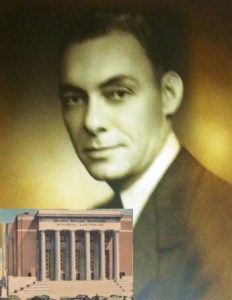
Satterfield AuditUpon taking office as mayor in April 1939, J. V. Satterfield felt he was getting a handle on Little Rock’s precarious financial situation. He would soon discover that it was more unstable than he had imagined.  Included in this was Robinson Auditorium, currently under construction across the street from his office in City Hall.  Mayor Satterfield disclosed that he had voted against the auditorium in 1937 because he felt the finances were not sufficient. But as the mayor, he promised to open the building.

By the summer of 1939, it was becoming apparent that there would not sufficient money to finish the construction.  Even with the issuance of the final round of approved bonds (which had been held back as a reserve), there would not be enough money.  The Mayor and Harvey Couch made plans to go to Washington DC to try to get more money from the federal government.  Mr. Couch was a personal friend of President Roosevelt as well as head of Arkansas Power & Light.  The pair made the trip but returned with no additional money.

At the same time, the Auditorium Commission, which had been appointed by Mayor Overman to oversee the governance of the building, resigned as a group. They said they had been appointed to administer a building, not a construction site. Since it was uncertain as to when the building would open, they stepped down.

Mayor Satterfield was able to negotiate a series of deals to get the necessary work completed for construction of the building to be completed. Part of it involved issuing another round of bonds after the building had been officially opened to finish furnishing the building as well as complete the landscaping.  In January 1940, with a new opening date becoming a stronger possibility, the mayor appointed a new Auditorium Commission.

At the same time, regular events started to take place in the lower level exhibition hall.  There had been a few in November and December, but with a lack of utilities and ongoing construction upstairs in the music hall, those were curtailed.

On February 16, 1940, Joseph Taylor Robinson Memorial Auditorium officially opened. Mayor Satterfield was joined onstage for the ribbon cutting with Senator Robinson’s widow and her sister-in-law, who was a member of the Auditorium Commission.

In April 1940, Little Rock voters approved the final round of bonds which allowed for the building to be finished.

After only two years in office, Mayor Satterfield chose not to seek another term. He left City Hall in April 1941 with finances in order and a new municipal auditorium across the street.

Little Rock Look Back: Elvis in his final Robinson Auditorium Show

Photo by Wayne Cranford

Photo by Wayne Cranford


After two visits in 1955 where he was down on the bill, Elvis Presley made his third and final appearance at Robinson Auditorium on May 16, 1956.  This time he was the star and Robinson was packed. The tickets were $1.50 in advance at Walgreens and $2.00 at the box office.

The ads featured 8 great acts in “his” variety show which consisted of the Jordonaires; Rick and Emil Flaim and their orchestra; vocalists Frankie Conners and Jackie Little and comedian-magician Phil Maraquin. A second show was added at 9:30 p.m. to accommodate the ticket demand.

About 30 minutes late, due to a missed flight, Elvis appeared on stage in a purple blazer and started singing “Heartbreak Hotel.”  The crowd rushed the stage. Little Rock police officers were able to control them eventually and get the teenagers back to their seats.  While the crowd was impressed, the police officers were less so.  One of the patrolmen told the Arkansas Gazette reporter: “I wouldn’t know him if I saw him. And I wouldn’t be here unless I was being paid.”

Disc jockey Ray Green recorded the concert that night.  Copies of the concert on CD (which also includes an interview with Presley) are prized possessions of Presley collectors.

The Arkansas Democrat-Gazette has a special section on its website containing quotes from some of the concert attendees.

Little Rock Look Back: William Grant Still

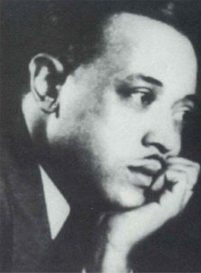
bhm StillLong known as the Dean of African American composers, Dr. William Grant Still was a legend in his own lifetime.

Dr. Still, who wrote more than 150 compositions ranging from operas to arrangements of folk themes, is best known as a pioneer. He was the first African-American in the United States to have a symphonic composition performed by a major orchestra. He was the first to conduct a major symphony orchestra in the US; the first to conduct a major symphony in the south; first to conduct a white radio orchestra in New York City; first to have an opera produced by a major company. Dr. Still was also the first African-American to have an opera televised over a national network

Dr. Still was born May 11, 1895 in Woodville, Mississippi to parents who were teachers and musicians. When Dr. Still was only a few months old, his father died and his mother took him to Little Rock. Inspired by RCA Red Seal operatic recordings, his musical education began with violin lessons.  He graduated from Gibbs High School in Little Rock.

After his studies at Wilberforce University and the Oberlin Conservatory of Music, he played in orchestras and orchestrated for various employers including the great W. C. Handy. For several years he arranged and conducted the “Deep River Hour” over CBS and WOR.  He also played in the orchestra for the 1921 musical Shuffle Along, which was the first Broadway musical to feature an all African-American cast and writing team.  A musical is currently on Broadway about the creation of that musical, but Still is not a character in it.

In the 1920’s, Still made his first appearances as a serious composer in New York. Several fellowships and commissions followed. In 1994, his “Festive Overture” captured the Jubilee prize of the Cincinnati Symphony orchestra. In 1953, he won a Freedoms Foundation Award for “To You, America!” which honored West Point’s Sesquicentennial Celebration. In 1961, he received honors for this orchestral work, “The Peaceful Land”. Dr. Still also received numerous honorary degrees from various colleges and universities, as well as various awards and a citation from Arkansas Governor Dale Bumpers in 1972.

In 1939, Dr. Still married journalist and concert pianist Verna Avery, who became his principal collaborator. They remained together until Dr. Still’s death in 1978.  In a proclamation marking the centennial of Dr. Still’s birth, President Bill Clinton praised the composer for creating “works of such beauty and passion that they pierced the artificial barriers of race, nationality and time.”

In 1995, Dr. Still was posthumously inducted into the Arkansas Black Hall of Fame.

Arkansas Heritage Month – “Little Rock” Songs

Monroe RussellThe Capital City has popped up in a variety of songs in different genres over the years.  Today we look at five notable instances.

Collin Raye’s 1994 song “Little Rock” peaked at Number 2 on the Billboard Country charts and was Number 14 for the entire year.  Found on Raye’s album Extremes, it was written by Tom Douglas.  The song centers on a man who is trying to rebuild his life after battles with alcohol have affected his marriage.

Notable lyric: “I think I’m on a roll here in Little Rock.”


Hayes Carll’s take on Arkansas’ capital is also known as “Little Rock.” It was his title track from the 2005 album.  It tells the tale of a man who has traveled all over the US and is excited to make it back to Little Rock. With a driving country-rock beat, it typifies Carll’s style of music which has one foot squarely in both camps as a singer-songwriter.

Notable lyric: “All of my life I’ve tried to find/ “a piece of this earth for my peace of mind.”


Leo Robin and Jule Styne wrote the 1949 song “Little Girl from Little Rock” for their Broadway musical Gentlemen Prefer Blondes.  Introduced by Carol Channing, it told of quintessential 1920s vamp Lorelei Lee’s rise from “the wrong side of the tracks” to Manhattan’s elite neighborhoods.  It has remained part of Channing’s repertoire in nightclubs and concerts.  In 1953, it was retooled with sanitized lyrics and made into a duet for Marilyn Monroe and Jane Russell in the film version of the musical.

Notable lyric: “Then someone broke my heart in Little Rock/and I up and left old Arkansas.”


Little Rock has also appeared in several “List songs” including “I’ve Been Everywhere.” Originally written with Australian place names in 1959, it was adapted to North American places in 1962 by Hank Snow. Arkansan Johnny Cash recorded it in 1996.

Little Rock appears in the second verse: “Glen Rock, Black Rock, Little Rock, Oskaloosa,”


Billy Joel’s 1989 “We Didn’t Start the Fire” contains three references to Little Rock. In the first section’s look at 1949, the Rodgers and Hammerstein musical South Pacific is mentioned.  With a heroine from Little Rock, this musical was the most popular show on Broadway during the 1948-1949 and 1949-1950 Broadway seasons.  The second comes in the 1953 portion with “Rockefeller” which referenced playboy Winthrop Rockefeller’s abandonment of New York City for Arkansas. He had residences in both Little Rock and on Petit Jean Mountain. The final entry came in 1957, when Joel references the Central High integration crisis with the lyric “Little Rock, Pasternak, Mickey Mantle, Kerouac, Sputnik, Chou En-Lai, Bridge on the River Kwai.”