
Little Rock Look Back: First Meeting of the WEC

Vivion Brewer, Adolphine Terry, and Pat House with an award presented to the WEC around the time the group disbanded.

On Tuesday, September 16, 1958, the first meeting of the Women’s Emergency Committee to Open Our Schools took place at the Pike-Fletcher-Terry House in downtown Little Rock.  Fifty-eight women were in attendance at the initial meeting.

The group had been envisioned four days earlier, on September 12. At the time, Adolphine Fletcher Terry had invited Vivion Lenon Brewer and Velma Powell to her house to discuss the current school situation. Terry and Brewer were both daughters of former Little Rock mayors.  They were frustrated with the stalemate that was taking place with the Little Rock School District, the State, and the Federal Government.

In a conversation about the group with her friend Arkansas Gazette editor Harry Ashmore, Mrs. Terry stated, “The men have failed, it’s time to call out the women.”

The same day the trio met, an immediate concern superseded their general discontent.

On September 12, Governor Faubus had signed several segregationist bills into law. One of them gave him the authority to temporarily close schools in order to keep the from being integrated. After signing the bills, he issued an order closing Little Rock’s four high schools. He set October 2 as the election day for Little Rock voters to ratify or reject the closing.

The closure of the schools and impending election, gave an urgency and an immediate focus for the WEC. The women sprung into action.

The way the election law was written, keeping the schools open would require a majority of all registered voters — not just those voting in the election.  There were several other requirements written into the law that made it all but impossible to reject the closure.  Nonetheless the WEC went to work.  They wrote letters, made phone calls, made personal pleas, raised money, and placed newspaper ads.

Their need for a quick and efficient organization became even more paramount with the Governor moved the election forward to September 27.  His public reason was to remove the uncertainty; but privately he was likely concerned that there was organized opposition.

Though the voters approved keeping the high schools closed, the WEC was undaunted. They continued to work throughout the 1958-59 school year in a variety of ways. They backed candidates in the December 1958 school board elections, and succeeded in getting three moderates elected.  In May 1959, they were a crucial bloc in the campaign to recall of three segregationist school board members.

Following the reopening of the schools in 1959, the WEC continued to focus on social issues until disbanding in 1963.

The membership of the WEC was kept a secret. No official roll was kept.  With a membership which swelled to over 1,300, obviously not all attended meetings at once. There were well organized phone trees which quickly got the word out to the membership.  During elections, they would create files on all registered voters with codes for Saints, Sinners and Savable.

In an effort of intimidation (as if anyone could intimidate Adolphine Fletcher Terry), there were efforts to force the WEC to disclose membership lists. The officers and their legal counsel replied that there were no lists in existence, so there was nothing to disclose.

On March 13, 1998, the names of the WEC were made public for the first time when they were published in the Arkansas Democrat-Gazette.  This was done in conjunction with the 40th anniversary of the year of the founding.  Later in the year, the names were etched in glass in the solarium of the Pike-Fletcher-Terry House.  (In the 1970s, the house was given by the family to the City of Little Rock for use by the Arkansas Arts Center.)

A ceremony at the house in October 1998 celebrated the 40th anniversary and the names permanently etched there.  First Lady Hillary Rodham Clinton came back to Little Rock to deliver remarks at the ceremony.

Sara Murphy, a member of the WEC wrote a book about the organization which was published in 1997, shortly after her death.  Around the same time, Sandra Hubbard produced a documentary called The Giants Wore White Gloves.  A sold out screening of the film is scheduled today at the CALS Ron Robinson Theatre as a presentation of the Clinton School Speaker Series in conjunction with the Butler Center for Arkansas Studies.
Little Rock Look Back: Charles E. Taylor, born 150 years ago

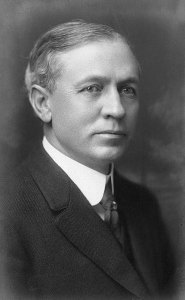
On September 15, 1868, future Little Rock Mayor Charles E. Taylor was born in Austin, Mississippi.  After locating to eastern Arkansas, his family moved to Little Rock around 1880.
Taylor graduated from Scott Street High School in Little Rock and proceeded to work for various hardware stores and other businesses.  In 1895 he married Belle Blackwood, with whom he would have four children.

In 1910, Taylor announced his intention to run for mayor of Little Rock.  Though he had never held elective office, he had been involved in several civic organizations.  Taylor was the main challenger to Alderman John Tuohey.  Seen as a reformer, Taylor initially lost to Tuohey.  But after an investigation of voter fraud and a subsequent runoff, Taylor was elected Mayor.

Upon taking office in August 1911, Mayor Taylor focused on improving health conditions in the city, upgrading the fire department and enhancing the overall moral tone of the city.

As a progressive of the era, he fought against gambling, drinking and prostitution.  He created a Health Department and enhanced the City Hospital.  His efforts led to a decrease in the death rate in Little Rock.  As mayor, Taylor introduced motorized vehicles to the Fire Department.  He also led the City Council to establish building and electrical codes.  Mayor Taylor also oversaw the construction of the 1913 Beaux Arts Central Fire Stations (which today serves as the City Hall West Wing).

Under his leadership, the City of Little Rock annexed Pulaski Heights. One of the selling points to Pulaski Heights residents was Mayor Taylor’s ability to provide modern services such as paved streets, water mains, fire hydrants and street lights.

Though neither his 1911 Parks Master Plan nor his dreams for a civic auditorium came to fruition, they paved the way for future successes in both of those areas.

Funding for projects continued to be a problem throughout Mayor Taylor’s four terms in office.  He believed that one obstacle to city funding was the prohibition by the state constitution against cities issuing bonds.  Though that ban has since been lifted, Taylor tried three times unsuccessfully to get it changed while he was Mayor.

In April 1919, Taylor left office after having served eight years.  He was the longest serving Mayor of Little Rock until Jim Dailey served in the 1990s and 2000s.  Following several business ventures, Taylor moved to Pine Bluff and led their chamber of commerce from 1923 through 1930.

Mayor Charles E. Taylor died in Pine Bluff in 1932. He was buried at Oakland Cemetery in Little Rock.

During his time in office, Mayor Taylor was presented with an unofficial flag of Little Rock by a group of citizens.  During Mayor Dailey’s tenure, that flag was restored by some private citizens and presented to the City.  It is framed on the 2nd Floor of Little Rock City Hall.

How a former Little Rock alderman played a role in the naming of Razorback’s stadium

Razorback Stadium as it would have looked when it was Bailey Stadium

What is now known as Donald W. Reynolds Razorback Stadium first opened in September 24, 1938 as University Stadium.  A few days later it was renamed to Bailey Stadium in honor of Arkansas’ then current governor, Carl Bailey.  He had just been renominated to a second two year term and was expected to easily glide to a victory in November over a nominal GOP opponent, which he did.

Two years later, Homer Adkins, a former Little Rock alderman who had been aligned with Bailey foe Joe T. Robinson, challenged Bailey as the latter sought a third term.  Bailey and Adkins had long been opponents, but had never faced off personally.  In the August 1940 primary, Adkins bested Bailey.

The animosity between Bailey and Adkins apparently stemmed from the time that Bailey, as prosecuting attorney, filed charges against a friend of Sen. Robinson.  Though the friend was eventually pardoned, Robinson and his political circle did not forgive Bailey.  The fact that Bailey backed Brooks Hays, who opposed Robinson, did not help matters.  By the mid 1930s, Arkansas Democrats were clustered around either Bailey or Adkins.

Adkins had served on the Little Rock City Council from April 1930 until April 1934.  He previously had been Sheriff of Pulaski County.  At the suggestion of Sen. Robinson, President Roosevelt had appointed Adkins as collector of internal revenue. Given all of the federal programs that took place in Arkansas throughout the 1930s, Adkins was well positioned to strengthen his political network.  He stepped down from the job when he challenged Bailey in 1940.

Obviously, by 1941 the new governor was none too pleased that the football stadium of the state’s flagship university bore the name of his vanquished foe.  By the time the 1941 football season came around, the stadium was known as Razorback Stadium.  It held that name from 1941 until the September 8, 2001, rechristening with its current name.

And what of Adkins and Bailey?  The two longtime foes united to back Sid McMath in his gubernatorial efforts. But the reconciliation was only for political purposes.  However, both lie buried in Roselawn Cemetery in Little Rock.

Little Rock Look Back: Ike meets with Orval

On September 14, 1957, in an attempt to end the stalemate in Arkansas, President Dwight D. Eisenhower met with Arkansas Governor Orval Faubus.  The meeting was brokered by Rep. Brooks Hays, whose district included Little Rock.
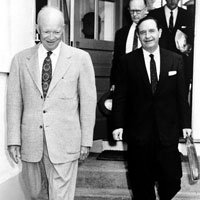
The meeting took place in Newport, Rhode Island, where the President was vacationing.  After exchanging pleasantries, the President and Governor adjourned to the Presidents office where they met privately for about twenty minutes.  During that conversation, Faubus proclaimed to the President that he was a law abiding citizen and discussed his own World War II service.  President Eisenhower suggested to Faubus that as a law abiding citizen, he should change the National Guard’s orders so that they protected the Little Rock Nine, not kept them from the building.  He reminded Faubus that the Justice Department was prepared to issue a injunction against him and that the governor would undoubtedly lose in court.

Following their conversation, Congressman Hays and U.S. Attorney General Herbert Brownell Jr.  joined the two in a larger office and continued conversations for approximately another 100 minutes.

When the meeting was over, the President felt like Faubus had agreed to refocus the mission of the National Guard and allow the Little Rock Nine to enter.  The President’s statement to the press thanked Faubus for his cooperation.  Upon returning to Little Rock, Faubus issued his own statement which did not address the President’s statement directly.  He did not even mention the National Guard or the students.

Apparently, President Eisenhower felt betrayed by the Governor’s actions.

The stage was set for these two to continue their face off.

Little Rock Look Back: September 12, 1958–a day of educational chaos in Little Rock

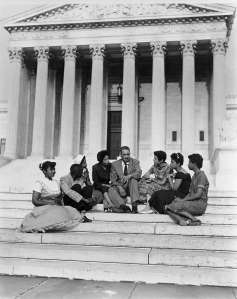
Thurgood Marshall, of the NAACP, sits on the steps of the Supreme Court Building after he filed an appeal in the integration case of Little Rock’s Central High School. (AP Photo, file)

The Court found that “the federal judiciary is supreme in the exposition of the law of the Constitution” and all state officials must adhere to the Court’s decisions and follow the rules laid down in those decisions in similar future cases.

Following the decision, the Little Rock School Board issued a statement that the schools would open as planned on Monday, September 15, 1958.  One of the School Board members, Henry V. Rath, resigned his position on the board that day. He was frustrated that the School Board was caught between federal law and state law.

Later that afternoon, Governor Faubus signed several bills into law which had been passed in a special session. These bills were designed to make it more difficult to integrate public schools.  One of them gave the Governor the authority to temporarily close schools to keep them segregated.  The Governor would then call a special election for the voters in that district to decide whether to remain closed or be opened and integrated. (One of the other laws, which would come in to play later during the school year, laid out the plans for a recall of school board members.)

Shortly after signing the law which gave him the authority to close the schools, Governor Faubus did just that.  He announced that Little Rock’s four public high schools would not open on Monday, September 15.  He set October 7 as the date for the special election about keeping the schools closed.

No one seemed to know what the next steps were.

That night, high school football took place, as previously scheduled.  Central came from behind to defeat West Monroe, Louisiana, by a score of 20 to 14.

Over the weekend, there were many meetings and phone conversations as people were trying to figure out what to do.

One meeting that took place on September 12 was at the home of Mrs. Adolphine Fletcher Terry.  She invited a few friends over to discuss what role the women of the city could play in solving this crisis.  The group decided to meet on the following Tuesday, September 16, at Terry’s house.  It would eventually grow to over 1,300 members and have the name of Women’s Emergency Committee to Open Our Public Schools.

Little Rock Look Back: Sharon Priest

Little Rock’s 70th mayor, Sharon Priest, celebrates her birthday on September 12.
She began her public service at the grassroots level when she led the effort to bring flood relief to Southwest Little Rock and Pulaski County following the devastating flood of 1978 that killed 13 people in central Arkansas.

Sharon was appointed to the Little Rock City Beautiful Commission.  Following that, she challenged an incumbent City Director and won her first elective office in 1986. In January 1989, she was named Vice Mayor of Little Rock by her colleagues on the City Board.  Two years later, she was selected Mayor becoming only the second female to serve as Mayor of Little Rock.  During her service to the City of Little Rock, she spearheaded the effort to create a Little Rock flag.  At the conclusion of her second four year term on the City Board, she decided to run for Secretary of State.

In November 1994, she elected Secretary of State, becoming the first woman to be elected to that position in Arkansas.  She was reelected in 1998.   In the summer of 2000, she became President of the National Association of Secretaries of State. After the 2000 presidential election, she was thrust into the forefront of the movement toward election reform. Ms. Priest testified before U.S. House and Senate Committees on election reform. As Secretary of State, restoring the Governor’s Reception Room and the Old Supreme Court Chamber of the State Capitol to their original splendor and restoring the rotunda marble are a few of her proudest achievements.

In January 2003, Priest was selected to serve as Executive Director of the Downtown Little Rock Partnership. She served in that capacity until early 2015.  She has also been a leading champion for the redevelopment of MacArthur Park, the City’s oldest park.

Little Rock Look Back: The Man behind Little Rock’s Villa Marre

On September 11, 1842, future Little Rock Alderman Angelo Marre was born in Borzonaca, Italy.  He immigrated to Tennessee with his parents in 1854.
During the Civil War, he served in the Confederate Army. From 1865 to 1868, Angelo Marre worked for the Memphis Police Department but was forced to resign after he was accused of killing a man during an argument.  After his acquittal, he returned to the saloon business.  In 1872 Marre was convicted of stealing money and sentenced to three years in prison.

Tennessee Governor John Brown granted Marre a full pardon two years into his sentence, and he regained his citizenship in 1879.

After getting out of prison, he claimed an inheritance and joined his brothers in Little Rock.  He worked as a bartender at the Metropolitan Hotel.  He later opened a saloon and billiard parlor.

By the mid-1880s, Marre owned two saloons, a liquor import business, an office building in downtown LR, 3,000 sharesof stock in mining companies operating in Garland and Montgomery counties, and he was the first president of Edison Electric Company of LR.

In 1883, he was elected as an alderman on the Little Rock City Council.  He lost is bid for reelection in 1885. In 1888, he was an unsuccessful candidate for Pulaski County Sheriff.

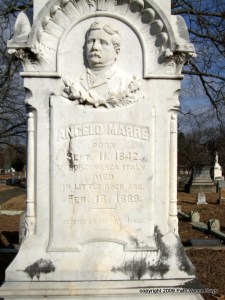
villamarreAngelo Marre died February 18, 1889, as a result of his infection.  He is buried at Calvary Cemetery in LR. His custom designed, marble monument was ordered from Florence, Italy, and cost $5,000.

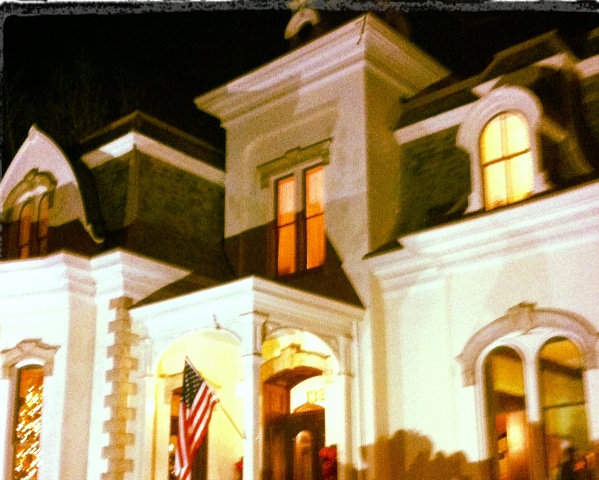
Marre is probably best known today as the builder of the structure now known as the Villa Marre.  Built in 1881, it is designed in the Italianate and Second Empire styles.  It was built in 1881 and 1882 on Block 21, Lots 5 & 6 of the Original City of Little Rock.  The cost was $5,000.

It was originally a red brick structure and has been modified and expanded several times as well as painted white.  It did not bear the name Villa Marre until the 1960s when historic preservation advocate Jimmy Strawn gave it that name.

After serving as the headquarters for the Quapaw Quarter Association for several years, it was returned to a private residence.  It is now available for special events and rentals.

The Villa Marre is probably best known locally and nationally for serving as the facade for the Sugarbaker design firm on the CBS sitcom “Designing Women.”  Though the interior of the house does not match the interior on TV, the building was featured in the opening credits as well as in exterior shots each week.