Little Rock Look Back: Arkansas Arts Center produces first play at its theatre

The Arts Center Theatre view from the stage in 1963

On May 3, 1963, at 8:30 pm, the curtain rose as the Arkansas Arts Center produced its first show in its own theatre.  Though the building would not be officially dedicated until later in May (more about that later), programming had been taking place in the facility for several months.

In December 1962, a community theatre production was the first play in the Arkansas Arts Center theatre.  Over the ensuing months, it would play host to a variety of concerts and performances.  At the time, the Arkansas Arts Center planned to use the theatre as a house for its own productions (one series geared to adults, the other series geared to kids), other shows produced by Little Rock organizations, and touring shows which might be too small for Robinson Auditorium.

Friday, May 3, 1963, was a momentous evening, as the Arkansas Arts Center presented Rumpelstiltskin.  (Since the theatre space has been focused on children’s theatre since the late 1970s, it seems prescient that the first AAC produced play was a children’s production some fifteen years earlier.)

The production was overseen Joseph N. Carner, who was the theatre director.  It was his hope that the Arts Center plays geared toward children would also encourage other groups throughout the state to produce plays specifically for younger audiences.  Margaret Davies Carner, who taught speech at Little Rock University, directed the play.  She also taught drama classes at the Arts Center.

The cast included Garry White as the title character with Dell Blaine, Michael Hosman, Lesie Smith, Tom Abraham, Dickie Atchison, Butch Lashee, henry Fletcher, Charles McRaven, Ann Thomson, Dannette Joe Baker, Sallie Penn, Paul Motes, Leslie Newell, and Robin Hosman.

In addition to a Friday night performance, there were 2:30 matinees on Saturday and Sunday that were geared toward children’s audiences.

A Good Start for Arkansas Rep

In the early days of the Arkansas Repertory Theatre, it was commonly referred to by the shorthand of ART.  Along the way, that branding went away and the more common The Rep or Arkansas Rep was adopted.  Just as the Rep’s nickname changed, the location changed, and the way they hired actors changed (a move from a true repertory company into a different set of actors each show.)

As we have seen during the news of the past week, other things changed.  The public’s perception of the value of the Rep seems to have changed. And not for the better.  Last week’s announcement was a jolt of reality for many.

I bring this up because according to media reports, the Rep announced they have raised over $113,000 the week since they announced they were suspending operations.  That is 15% of their publicly stated goal of $750,000 to pay bills and stabilize financial obligations.

In order to fully sustain, the Rep will need to raise more than $750,000.  Estimates range between $1 million to $5 million depending on the timeframe being discussed.

But $113,000 in one week is a very good start for the Rep.  Equally as important, the Rep’s announcement has started a whole host of community conversations about the value of the arts, in general, and the Rep specifically.  People who probably have not thought about the Rep in a while are now thinking about it and talking about.  People who think about the Rep a lot are continuing to think and talk about it.

Tuesday’s Rally for the Rep crystallized the outpouring of positive response.  It brought people together to be civically and culturally engaged. It also raised some money.  Likewise, it offered a catharsis for those who were still reeling from the news of the Rep’s situation.   Organizers Skip Rutherford, Anna-Lee Pittman and Stacy Sells understood the need for folks to gather.  They kept the mood upbeat by a combination of speakers and live music.

Last week, right after the news, feelings were so raw.  It was a combination of shock and depression.  Not only was Little Rock on the verge of losing its professional Equity theatre, but friends were losing jobs.  Last week was “Shock” and “Pain” in the seven stages of grief.  Thankfully the “Anger” and “Depression” stages seemed to have been bypassed by most.

The Rally was a crystallization of “The Upward Turn.”  It is up to us as civically and culturally engaged individuals to make sure the process continues the Upward Turn and moves to Reconstruction and Hope.

Acceptance of the loss of the Rep is not an option. Not now, not in August, not Ever!

Legacies and Lunch at Butler Center at noon today (5/2)

The Butler Center’s monthly Legacies & Lunch program is today.

The speaker is Holly Hope, Special Projects Historian for the Arkansas Historic Preservation Program.  Her topic is “A Storm Couldn’t Tear Them Down: The Mixed Masonry Buildings of Silas Owens, Sr., 1938-1955”

Silas Owens, Sr. from Twin Groves, Arkansas was a farmer and self-taught rock mason who most notably produced buildings constructed in what the Arkansas Historic Preservation Program coined Mixed Masonries. These were cut stone buildings trimmed with brick. Owens introduced an artistry to a vernacular form that is unmatched and makes them easily recognizable.

Legacies & Lunch is free,  and open to the public. Programs are held from noon-1 p.m. on the first Wednesday of each month. Attendees are invited to bring a sack lunch; drinks and dessert are provided. For more information, contact 918-3033.

Remember to Rally for the Rep TODAY!

In light of last week’s announcement from the Arkansas Repertory Theatre, the community is coming together to help save The Rep. Community volunteers are hosting a Rally for The Rep on Tuesday, May 1 at 5 p.m., directly in front of the theatre. Residents are encouraged to come out and show their support by donating to The Rep’s “Next Act” campaign.

“We were all devastated to hear the news that one of our community’s most iconic cultural institutions is on the verge of shutting down,” said volunteer organizer Anna-Lee Pittman. “From Little Rock to New York, the public outcry has been felt, and countless memories and stories of lives changed by The Rep have been shared. We hope this Rally will unleash a groundswell of support and renew our community’s commitment to keeping the theatre alive and properly funded for generations to come.”

The Greasy Greens will perform, founder of The Rep Cliff Baker will be in attendance, and special guests and friends of The Rep will make remarks.

“In order to continue operations, The Rep must raise $5 million,” said Dean of the Clinton School and volunteer organizer Skip Rutherford. “But in the immediate, there are vendor bills that need to be paid and a three-story facility to maintain. For people like me who love The Rep and who recognize its cultural significance for this city, now is the time to step up and make a contribution.”

For updates and additional details:  https://www.facebook.com/friendsofarkrep

RIP David McCollum

I was not blessed with athletic ability.  Or coordination.  But I am very competitive.

My lack of skill did not stop me from dragging my parents to four years of soccer and a concurrent six years of basketball.

McCollum_David_400x400Because of my lack of talents on the field, and my interest in competition, I have found myself drawn to sports journalism and sports history.  Which, being in Central Arkansas, lead me to the writing of David McCollum.

Disclosure, for several years I attended church with him and his family.  My parents and sister still do.  But he was such an unassuming gentleman, my interest in his writing sprung not from familiarity with him. It came from what and how he wrote.

With a career of over 50 years, David entered the newspaper business as it was starting the transition from hot lead and pecking out a story on typewriters into the world of computers and electronic filing.  Likewise the field of sports journalism was transitioning from the era of colorful, hyperbolic language (which might not always be 100% accurate) into a time of bare facts crammed into increasingly shrinking column inches.

David did not try to be a colorful sportswriter. He was not trying to have the spotlight shown on him through his writing.  In his stories, David sought to serve the sports. But he brought to his writing a sense of history and style that hearkened back to bygone days without sacrificing the facts that he knew his readers wanted.  In serving his sports, he also served his readers.

While often the smartest guy in the room, especially when it came to Conway sports, David never acted like it.  In his prose, he shows his expertise without lording it over the reader.  He used his knowledge to let his readers be more informed. He was like that favorite teacher we all had at least once in high school or college. He wanted to bring us along on the journey.

For a sportswriter, working in Conway must have been a dream job.  Both UCA and Hendrix have active athletic programs.  And the Wampus Cats of Conway have long been dominant. In addition, during his career, David was able to see towns like Vilonia, Mayflower, and Greenbrier grow and develop into powerhouses in their own high school sports classifications.

Over the years, as I’ve been seeking to learn more about a sports topic, I’ve often gone back to his writing on a player, an event, a game.  Whether it was a story or an interview, his trademark understated and engaging prose was on display.  Earlier this year, I was needing background on a Little Rock Touchdown Club scholarship because we were honoring a recipient at Little Rock City Hall.

There it was.

In a column David wrote a few years ago, there were not just the facts, but the emotions. In writing about how some Texas Longhorns had created a scholarship in Little Rock to pay tribute to the memory of one of their own, David touched on the sentiment without being maudlin.  He did not pile on the irony of Longhorns who beat the Hogs in the 1969 shootout creating a scholarship here. He let the story speak for itself.  The kinship the two teams feel for each other now came through in David’s prose.

As David’s son Gavin said in making the announcement his father had died, “there were more stories for him to write.”  Yes, there were.  I feel sorry for future athletes in Faulkner County that they won’t get to be interviewed by him.  I feel sorry for the readers who won’t get his take on a future game.

David had seen enough games to know that the outcome does not always go your way.  As much as he would probably be uncomfortable with the outpouring of emotions that are now going on, I think he would understand we need to do this.  We need to express our sadness.  It helps us to move on to the next challenge.  And part of that challenge is a world without him.  I know he would be very pleased to see, just as a team rallies together, people are rallying together to support his wife and son.

So thank you, David McCollum. For your life and your commitment to excellence.  Though it has fallen out of usage these days, I’m old school enough to pay tribute to your life and career with an old journalism and PR tool to indicate the end.

David McCollum -30-

Little Rock Look Back: Lottie Holt Shackelford

Lottie at Civil RightsWhile this headline may say “Little Rock Look Back,” Lottie Shackelford is still very much focused on the present and the future!

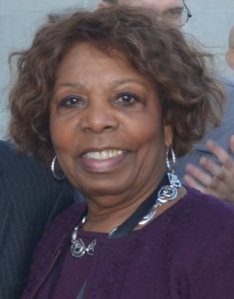
On April 30, 1941, future Little Rock Mayor Lottie Shackelford was born. Throughout her career in public service she has been a trailblazer.

Active in community activities and politics, she ran for the City Board in 1974 and lost.  But she was appointed to the Little Rock City Board in September 1978 to fill a vacancy.  This made her the first African American woman to serve on he City Board, and indeed on any governing board for the City (during Reconstruction, there were at least six African Americans on the City Council, but they were all men.) She was subsequently elected to a full-term on the City Board in 1980 winning 55% of the vote over three male candidates.

She was subsequently re-elected in 1984 (unopposed) and in 1988 (with 60% of the vote).

In January 1987, Shackelford became the first female mayor of Little Rock when she was chosen by her colleagues on the City Board to serve in that position. She was Mayor until December 1988.  During that time, Mayor Shackelford invited the Little Rock Nine back to the City to be recognized for the 30th anniversary of their integration of Central High School.

From 1982 until 1992, she served as Executive Director of the Arkansas Regional Minority Purchasing Council.  She left that position to serve as Deputy Campaign Manager of Clinton for President.  She subsequently served on the Clinton/Gore transition team. She later served on the Overseas Private Investment Corporation from 1993 to 2003. She was the first African American to be in that position.

A graduate of Philander Smith College, she has also studied at the Arkansas Institute of Politics at Hendrix College and the Kennedy School of Government at Harvard University.

Mayor Shackelford has also served on numerous boards including the Little Rock Airport Commission, Philander Smith College, Chapman Funds (Maryland) and Medicis Pharmaceutical Corporation (Arizona).  She has the longest tenure of any serving as Vice-Chair of the Democratic National Committee.

Mayor Shackelford was in the first class of inductees for the Arkansas Black Hall of Fame.  In 2015, she was inducted into the Arkansas Civil Rights Heritage Trail.

Pulitzers Play Little Rock: WHO’S AFRAID OF VIRGINIA WOOLF?

WAVW LR Jan65As April winds down, today’s featured play did not actually win the Pulitzer Prize for Drama.  In 1963, Edward Albee’s Who’s Afraid of Virginia Woolf? was the choice of the Pulitzer Drama Jury to receive the award.  However, each Pulitzer category’s jury can be overruled by the Pulitzer Board.  In 1963, they chose not to award the Pulitzer in Drama.

Though the Pulitzer board is notoriously tight-lipped about their decisions, the reason for their rejection of the Albee play is known.  At the time, the Pulitzer rules contained language (written originally by Mr. Pulitzer in setting up the prizes) that stated the prize winners must be uplifting and represent high moral values.  With its frank depiction of a fractured marriage and use of vulgarities, the Pulitzer board did not feel that Who’s Afraid of Virginia Woolf? met that criteria.

The resulting outcry over the exclusion of Albee’s play contributed to the removal of the clause.  Albee did subsequently win for his plays A Delicate Balance, Seascape, and Three Tall Women.

The national tour of Who’s Afraid of Virginia Woolf? came to Little Rock in January 1965.  The tour starred Vicki Cummings and Kendall Clark.  Bryerly Lee and Donald Briscoe played the younger couple.  The production was directed by Alan Schneider (who had won the Tony Award for directing the play on Broadway).

Little Rock native Ben Piazza was a close friend of Edward Albee.  When Albee was working on the play, Piazza participated in the first read-through of it. He did not appear in the original Broadway cast, but ended up playing the part of Nick on Broadway for most of the show’s run.  He still holds the record of appearing in Who’s Afraid of Virginia Woolf? in a Broadway run longer than any other actor.

2018 marks the 100th anniversary of the first Pulitzer Prize for Drama being given. To pay tribute to 100 years of the Pulitzer for Drama, twenty-nine days this month a different Little Rock production of a Pulitzer Prize winning play was highlighted.  Many of these titles have been produced numerous times.  This look veered from high school to national tours in an attempt to give a glimpse into Little Rock’s breadth and depth of theatrical history.