Today at noon – Bill Worthen discusses Historic Arkansas Museum for Butler Center Legacies & Lunch

Bill-Worthen_K0A4687-webAt Legacies & Lunch, Bill Worthen, director of the Historic Arkansas Museum, will discuss the museum’s history, placing emphasis on Louise Loughborough, founder of the museum, and Ed Cromwell, who led the museum after Loughborough’s death.
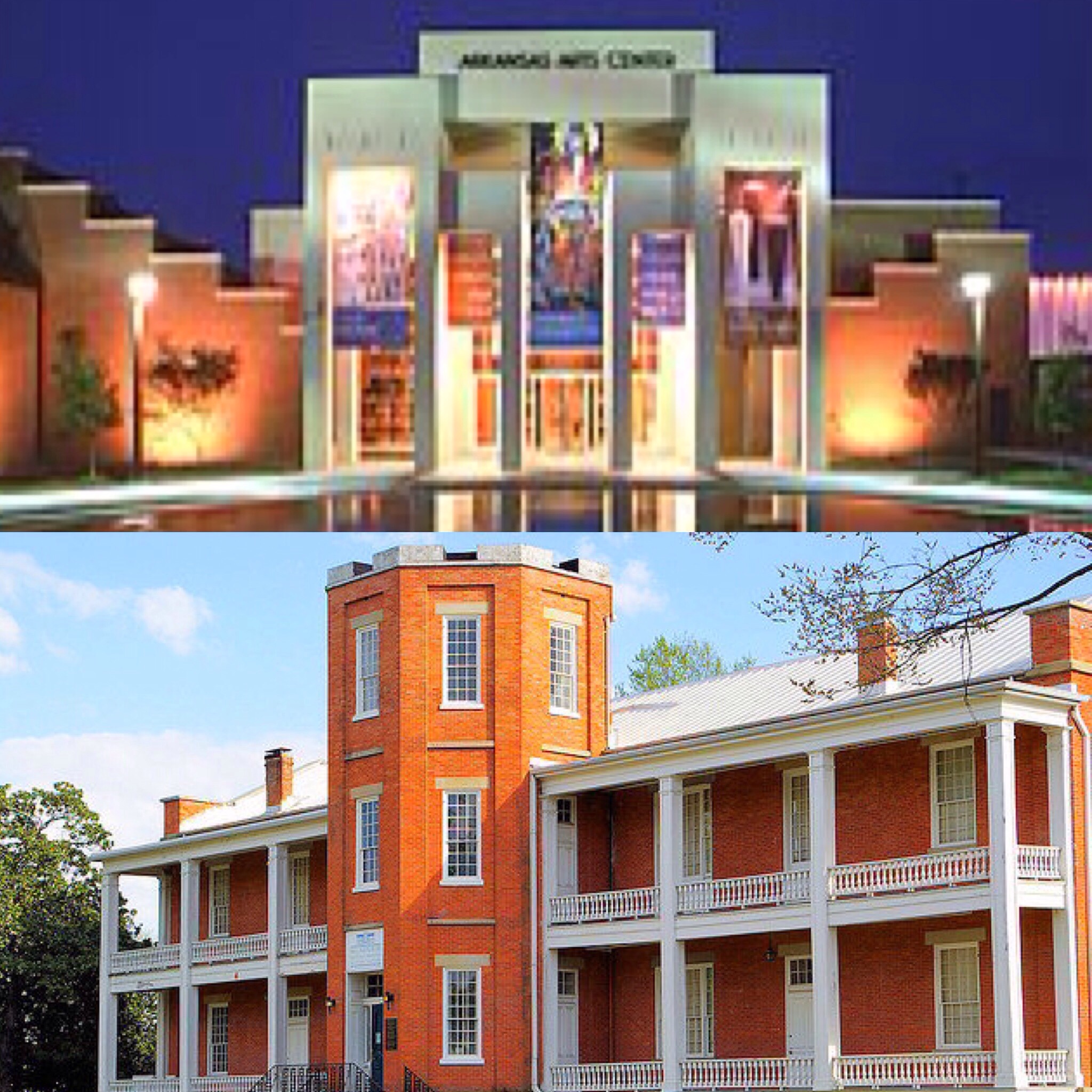
Worthen, a Little Rock native, is a graduate of Hall High School and Washington University, St. Louis. After teaching high school in Pine Bluff for three years, Worthen became director of what was then known as the Arkansas Territorial Restoration in 1972. In 1981, the organization became the first history museum in Arkansas to be accredited by the American Association of Museums. The museum was renamed the Historic Arkansas Museum in 2001 to reflect its expanded facility and mission. Worthen’s current research interests are the bowie knife, sometimes called the Arkansas toothpick, and the Arkansas Traveler, in its many forms.

Legacies & Lunch is free, open to the public, and supported in part by the Arkansas Humanities Council. Programs are held from noon-1 p.m. on the first Wednesday of each month. Attendees are invited to bring a sack lunch; drinks and dessert are provided. For more information, contact 918-3033.

Little Rock to vote on additional funds for Arts Center, Military Museum

The City of Little Rock Board of Directors tonight (December 1) voted to refer two hotel sales tax initiatives to the ballot.  The election will be on Tuesday, February 9. 

More details about the specifics of the proposals will be presented on this blog leading up to the election. 

In short, one tax is the third penny for hotels and the other tax is the fourth penny which state law allows for parks.  Because it would be for hotels and similar lodging establishments only, the money would be paid by visitors, not Little Rock residents. 

The City Board also passed a resolution outlining a formula by which the Museum of Discovery, Little Rock Zoo, other parks and other cultural institutions would be able to access any excess bond revenues from these taxes.  


#GivingTuesday – support a cultural institution

Today is #GivingTuesday. Since most of the cultural institutions are non-profits, please remember them when considering a donation.


Little Rock Look Back: Election Set for Auditorium Approval

muni aud elect ad editedOn November 30, 1936, Little Rock Mayor R. E. Overman asked the City Council to call a special election for January 1937 for approval of the issuance of bonds for a municipal auditorium.  Prior to asking the aldermen to call the election, the mayor had been in Washington DC to visit with Public Works Administration (PWA) officials. The mayor was assured that the auditorium project would be approved for federal funds.

While the mayor was meeting with federal officials, architects Eugene Stern, George Wittenberg and Lawson Delony were meeting with local PWA officials in Little Rock.  They were reviewing the plans for the funding request.  Though there were still a few refinements to be completed in the documents, the local officials seemed satisfied.  With these assurances in hand, Mayor Overman moved forward with putting the request before the City Council.

Though there were many things discussed at length during the November 30 City Council meeting, there was virtually no conversation regarding the structure before the 15-0 vote by the City Council to refer the auditorium bonds to the voters.  There were three different bond programs to be put before the voters in January 1937: a municipal auditorium, expansion of the public library and creation of a park for African Americans.

The bonds for the auditorium would be $468,000 in general obligation bonds which would be paid off between 1940 and 1971.  This was toward a total cost of $760,000 for the entire project.  At the time of the initial auditorium application in 1935, the mayor had noted that if the PWA failed to approve funding for the entire project, it could be submitted to the voters for the issuance of municipal bonds.  This was ultimately the course of action that would come to pass.  The PWA grant would only cover a portion of the project.  The government did agree it would purchase the financing bonds if no other entity did.

The election would be held on January 26, 1937.

21 Songs with Cody Belew & John Willis tonight at South on Main

codyandjohn.png.190x140_q60_cropA perfect way to spend Thanksgiving weekend Saturday: South on Main proudly presents 21 Songs with Cody Belew & John Willis, presented by Barbara/Jean and ESGI. Doors open at 4:00 PM, show begins at 9:00 PM. Wristbands can be purchased for $10 after doors open. Call (501) 244-9660 to reserve your table for this show in advance.

Cody grew up singing at rodeos and in black gospel church houses. He was a scrawny little white kid with a stutter and big voice. He could not carry on in normal conversation, so he sang- all the time. Life happened to him, and he grew up; finding his feet somewhere between college and 22 years of age. He moved to Arkansas’ capital city, Little Rock, and booked his first show in the fall of 2008 at a little club called The Afterthought. He has been tearing his way through sold out show after sold out show ever since. Shortly after moving to Nashville, Tennessee, Cody received the call that would change his life. After making it to the top 8 on season 3 of NBC’s number one show, “The Voice,” Cody has earned his spot in the world of music. He is currently working on his debut album that will introduce the world to his heart and soul. Good things to come.

How do you get to be @likejohnwillis? Grow up listening to equal parts MoTown, 60’s-70’s singer/songwriters, and Gospel. Take piano lessons long enough to learn to love classical music. Start listening to late-night jazz on public radio in high school because you think it will make you cool. Start listening to world music in college because you think it will teach you something and because you think it will make you unique. Read some good books and some good poetry in hopes you’ll apprehend how to express adequately all your heartache and your hope. Keep practicing. Play some shows. Record your songs. Play some more shows. Keep it interesting. Have fun.

John Willis released the King of the Cocktail Party EP in 2013 and his latest single, “Enough,” in October of this year. He’s been featured on AETN’s “On the Front Row” and UALR’s Songwriter Showcase. He also sings and plays keys in Late Romantics, the 4-voiced soul-pop band he helped form in 2014. John Willis is thrilled to be back at the piano playing with Cody Belew for this special Thanksgiving Weekend show.

Explore Little Rock’s civil rights history with new app

Little Rock-area residents and visitors have a new way to explore the city’s rich civil rights history.

The University of Arkansas at Little Rock Institute on Race and Ethnicity and Little Rock city officials  have unveiled the Arkansas Civil Rights History Tour app.

The free Apple and Android app guides users on an excursion through some of the city’s most influential historical sites, going back to the 1840s. Each of the 35 stops on the GPS-guided tour includes compelling narratives, historic photos, audio, and links to related content.

Tour stops range from the L.C. and Daisy Bates House to the Trail of Tears. The tour includes a total of three National Historic Landmarks, three National Register Historic Districts, and numerous buildings on the National Register of Historic Places.

Narrated in both English and Spanish, the app also offers information about Jewish history in Little Rock, Hispanic migrations to Arkansas, and Native American tribes.

Organizers recommend app users begin their route at Broadway and West Ninth Street in downtown Little Rock, but the app can help people customize their own path.

A collaboration of the Institute on Race and Ethnicity, the City of Little Rock, the Mayor’s Tourism Commission, and KUAR, UALR’s public radio station, led to the creation of the Arkansas Humanities Council-funded app.

“The institute’s mission is to remember and understand the past, to inform and engage the present, and to shape and define the future in the area of race and ethnicity,” said Dr. John Kirk, director of the Institute on Race and Ethnicity.

“The tour app helps us to do all those things: It powerfully sheds light on the past, it allows people to engage with the past in the present moment, and it helps us to consider how those legacies and lessons can shape and define the future of the city and state.”

The app can be found in the Apple App Store and on Google Play by searching for “Arkansas history.”

PIGSKIN TURKEY DAY IN THE ROCK, Part 6 – A Variety of Foes

Turkey Day 1921From the first Thanksgiving football game for Little Rock High School in 1914 until 1933, the Tigers played a variety of opponents.  They faced off against other Arkansas high schools, out of state high schools, a college and a team of soldiers.  Their record in these twenty games was 18 wins and 2 losses.  While the opponent may have varied, each year the Tiger eleven lined up against their foes at home in Little Rock. The team had enough of a reputation that they could invite opponents and never had to travel.

Playing games on Thanksgiving had become a tradition by the time Little Rock joined in the fray in 1914. Their first Thanksgiving Day opponent was Texarkana High School.  The Tigers won by a score of 20 to 0. The crowd of 1,500 at West End Park (now the site of Quigley Stadium) not only witnessed the high school game, but also saw Arkansas College (now Lyon College) defeat Little Rock College (no association with UALR) by a score of 40 to 0.  With their win, Little Rock captured the state championship – their fourth since 1907.

By the next Thanksgiving Day, the field at West End Park was known as Kavanaugh Field. It would have that name until it was replaced by Quigley Stadium in 1936.  From 1915 until 1933, Little Rock would defeat three Arkansas high schools Van Buren, Benton and Hot Springs as well as high schools from Oklahoma, Mississippi, Louisiana, Texas, Alabama, Kansas, Illinois and Missouri.  Three of their out of state opponents returned for a second time, so even though these schools were generally overwhelmed by Little Rock High, it was obviously viewed as a positive experience.  Playing out of state teams garnered other benefits. In 1920, they played Tupelo Military Institute, which held the Mississippi-Alabama championship. By defeating them, Little Rock High School claimed the state championship of four states: Arkansas, Alabama, Tennessee and Mississippi.

In 1917, they beat the college team of Arkansas State Normal School (now UCA) by a score of 45 to 0. (The Tigers so overpowered State Normal that the Gazette mused that the extremely muddy field was all that kept LR from scoring more than 45 points.)

The Tigers’ only two defeats came in 1918 and 1924.  The first Thanksgiving Day defeat came in 1918 when Little Rock played a team of soldiers from Camp Pike. The soldiers were an average of 20 pounds heavier than the Tigers. They used that weight to their advantage to defeat the high schoolers by a score of 42 to 0.  This was at the height of the US involvement in The Great War. So this game was certainly part of Little Rock’s war effort as the City worked to extend hospitality to soldiers. The Tigers’ 1924 defeat was at the hands of Atlanta Tech High School by a score of 35 to 7.

While the Thanksgiving games were serious business for the Tigers and their fans, they also provided for moments of entertainment.  In 1923, the Gazette reported that the Tigers had hosted a dance at the Capital Hotel for the visiting Ensley High football team from Birmingham, Alabama.  One wonders if there were a motive to their hospitality considering that the next day the Tigers won by a score of 20-7. Perhaps distracting the opposing players the night before the game was all part of Coach Earl Quigley’s strategy.  On Thanksgiving 1929, Little Rock hosted previously undefeated Soldan High from Saint Louis. At halftime of the game (which would end with LR scoring 26 to their opponent’s 6), there was a performance by the Little Rock High School band as well as a group of girls called Quigley’s Quackers.

Based on their reputation as a powerhouse, Little Rock would continue to play teams from other states. But after 1933, Little Rock would play a close rival: first North Little Rock (1934-1957) and then Hall High (1958-1982).  During the two decades of playing various teams, the Little Rock Tigers achieved ten shutouts and suffered one shut out.  The Tigers scored 492 points and gave up 133 points.

1914 Little Rock 20 Texarkana 12
1915 Little Rock 40 Muskogee Central High 0
1916 Little Rock 46 Van Buren 0
1917 Little Rock 45 Arkansas State Normal 0
1918 Little Rock 0 Camp Pike 42
1919 Little Rock 52 Benton 0
1920 Little Rock 6 Tupelo Military Institute 3
1921 Little Rock 21 New Orleans Warren Easton High 3
1922 Little Rock 7 Bryan (TX) High 0
1923 Little Rock 20 Birmingham Ensley High 7
1924 Little Rock 7 Atlanta Technical High 35
1925 Little Rock 6 New Orleans Warren Easton High 0
1926 Little Rock 18 Birmingham Ensley High 6
1927 Little Rock 37 Wichita Central High 0
1928 Little Rock 18 Chicago Lindblom High 0
1929 Little Rock 26 Saint Louis Soldan High 6
1930 Little Rock 33 Chicago Lindblom High 13
1931 Little Rock 31 Dallas Woodrow Wilson High 0
1932 Little Rock 6 Saint Louis Cleveland High 0
1933 Little Rock 13 Hot Springs 6


  • Muskogee Central High has been known as Muskogee High since the 1970 integration of the formerly all-white school with an African American high school.
  • Tupelo Military Institute existed from 1913 to 1937.
  • Warren Easton High is Louisiana’s oldest high school. After Hurricane Katrina it is now a charter high school.
  • Bryan High School was replaced by Stephen F. Austin High School, which was replaced by a new Bryan High School.
  • Ensley High in Birmingham closed in 2006.
  • Atlanta Technical High closed in 1947. A charter school with the same name operated from 2004 to 2012.
  • Wichita Central High has been known as Wichita East High since 1929. It is the largest high school in Kansas.
  • Chicago Lindblom High now educates under the name Lindblom Math and Science Academy.
  • Saint Louis Soldan High now educates as Soldan International Studies High School
  • Woodrow Wilson High School continues to operate in the Lakewood neighborhood of East Dallas.
  • Saint Louis Cleveland High now educates as Cleveland Junior Naval Academy and is no longer in the longtime Grover Cleveland High School building.