Sculpture Vulture: National Dog Day

Today is National Dog Day. In celebration of that, today we shine the spotlight on two canine sculptures in the Vogel Schwartz Sculpture Garden.

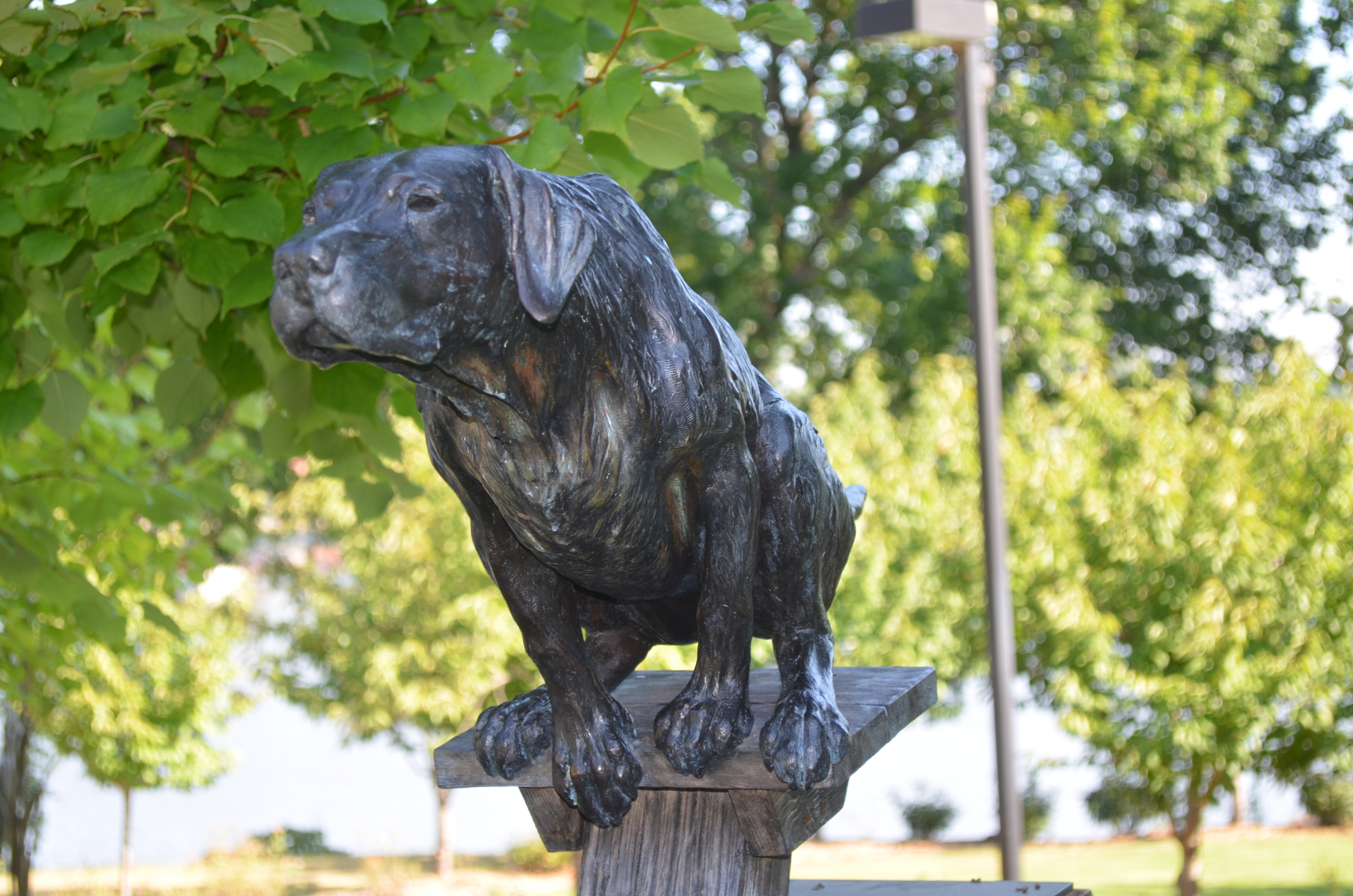
DSC_0710First is Dan Glanz’s Boris.  Commissioned in 2010 and unveiled in 2011, this is a likeness of Boris Kumpuris, the dog and companion of Mary and Dr. Dean Kumpuris.

Glanz captures the friendly and inquisitive nature of Boris in this work, which can be found in the Vogel Schwarz sculpture garden. Most weekends Boris can be seen with Dean as the two walk through Riverfront Park and the River Market. Boris explores and inspects the park along with Dean. Each year during the Sculpture at the River Market show, Boris visits with Dean and meets all the sculptors.

The sculpture was donated by longtime Kumpuris family friend Margaret Clark. She and her late husband Bill were two of the earliest supporters of sculpture along the Arkansas River. They donated another piece in honor of their grandchildren. A sculpture in memory of Bill was unveiled last year and stands in the wetlands park which bears his name.

DSC_0713
A few yards from Boris is Ken Newman’s Forever Ready.  It depicts a hunting dog waiting but poised to spring into action.  The sculpture was donated by the Sculpture at the River Market committee in 2009.

Dr. Clea Hupp to lead UALR History Department

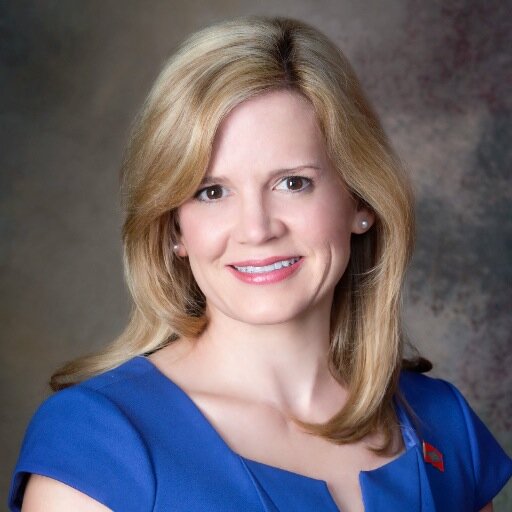
C-HuppDr. Clea Hupp has been named as the new Chair of the UALR History Department.

Clea E. Hupp is an Associate Professor of History. She joined the UALR History Department in 2006 and received her Ph.D. at the University of Arkansas, Fayetteville in 2004.

Clea Hupp specializes in the history of the Modern Middle East and U.S. – Middle Eastern relations. Dr. Hupp received grants from numerous institutions including the John F. Kennedy Foundation, the Lyndon Johnson Foundation, the Society for Historians of American Foreign Relations, and the American Center of Oriental Research. Her latest book was recently published from I. B. Tauris and is entitled “The United States and Jordan: Middle East Diplomacy during the Cold War.” She has traveled extensively in the Middle East and she speaks both Arabic and French.

She has made numerous presentations both in Arkansas and throughout the US on Middle East relations.  In addition to her book, her publications include:

“Strike at Samu: Covert Diplomacy and Shifting Alliances Prior to the Six Day War,” Diplomatic History January,2008.

“Supporting the Brave Young King: The Suez Crisis and Eisenhower’s New Approach to Jordan, 1953-1958” in Reassessing Suez 2008.

“Balancing Act: Jordan and the United States during the Johnson Administration,” Canadian Journal of History 2006.

Dr. Hupp serves on the Board of Directors of Ballet Arkansas. She is also an active supporter of many arts organizations in Little Rock.

Nativity Scenes from the Americas on exhibit at UALR

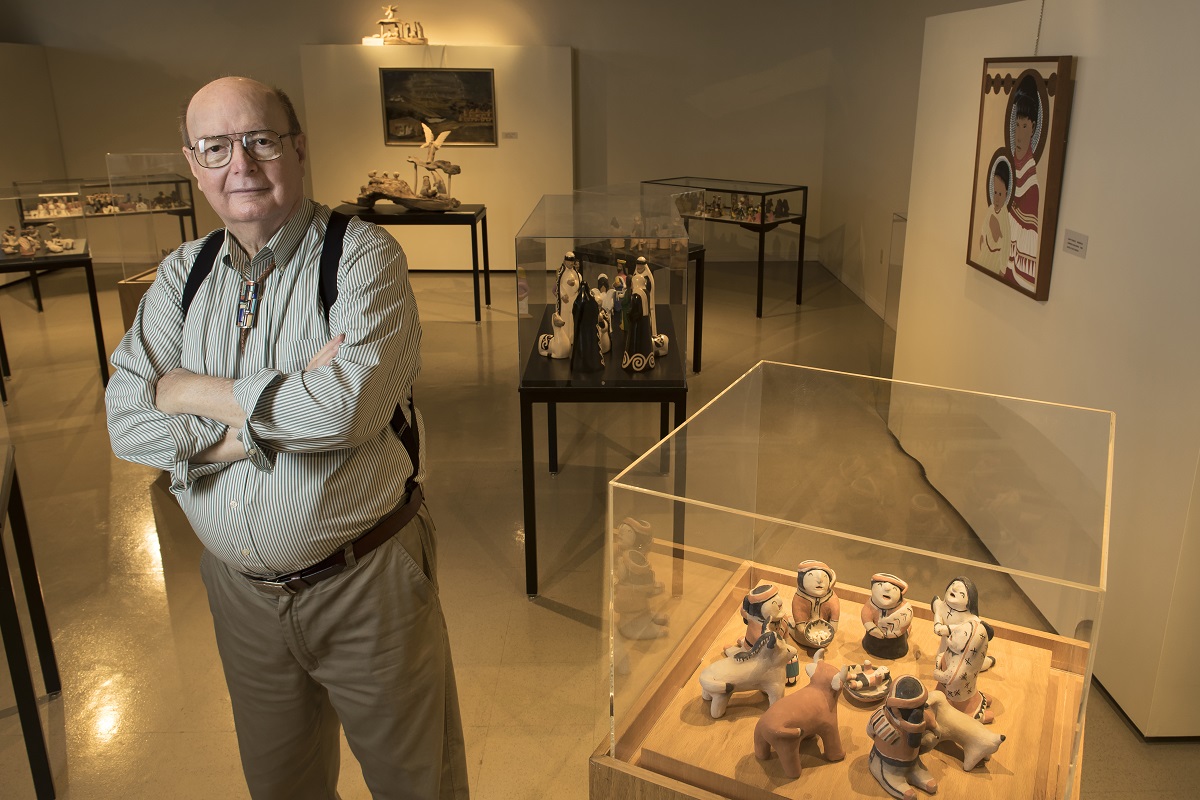
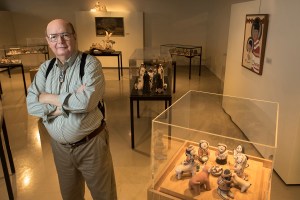
Dr. Bill Wiggins at UALR's Sequoyah National Research Center on Wednesday, August 5, 2015.

Dr. Bill Wiggins at UALR’s Sequoyah National Research Center on Wednesday, August 5, 2015.

Christmas is four months from today – yet you can see a variety of Nativity scenes at UALR.

Dr. J.W. “Bill” Wiggins took a different route with his Nativity scene collection. Essentially, if he ran across something native-arts related that he liked during his travels, he bought it.

“As I started to collect Nativities, it quickly became a folk art collection,” Wiggins said.

Figures and paintings Wiggins accumulated during the past four decades found a home in his “Nativities from the Americas” exhibit, available for viewing 8 a.m. to 5 p.m. weekdays through Oct. 9 at the University of Arkansas at Little Rock Sequoyah National Research Center.

The exhibit features about 45 Nativity scenes, mainly crafted by Native American, Mexican and South American artists, although there also are some from other parts of the world.

Wiggins is fascinated with how different cultures view Christianity and the story of the birth of Jesus Christ. Most of the artists represented in his collection incorporate their culture into the imagery.

That means, for example, visitors might see a buffalo or an eagle among the Nativity animals in some displays, and they’ll have a chance to view the figures presented in different mediums — from wood to clay, to even mud.

Wiggins said the Nativity collection is one of his most popular and most-requested exhibits. It was last on display in 2011, and Wiggins’ collection has grown since then.

One of the reasons for the exhibit’s popularity is that so many families decorate with Nativity sets of their own, Wiggins said, and the exhibit lets people see different interpretations of that venerated tradition.

Visitors to Wiggins’ exhibit shouldn’t expect to find Nativity scenes similar to those that annually line department store shelves. His collection features unique artistic perspectives such as a display that uses characters from other American holidays to symbolically represent the birth in Bethlehem.

Wiggins enjoys meeting the artists as he adds to his collection, and he tries not to miss an opportunity to discuss the displays with guests.

“I’m always interested in people’s reaction,” Wiggins said. “And what they see and what they don’t see is interesting.”

The Sequoyah National Research Center is home to one of the largest collections of Native American expression in the world. Its mission is to acquire and preserve the written and visual ideas of Native North Americans.

For more information, visit its website: http://ualr.edu/sequoyah/

Historian Dr. John Kirk is new director of UALR Institute on Race and Ethnicity

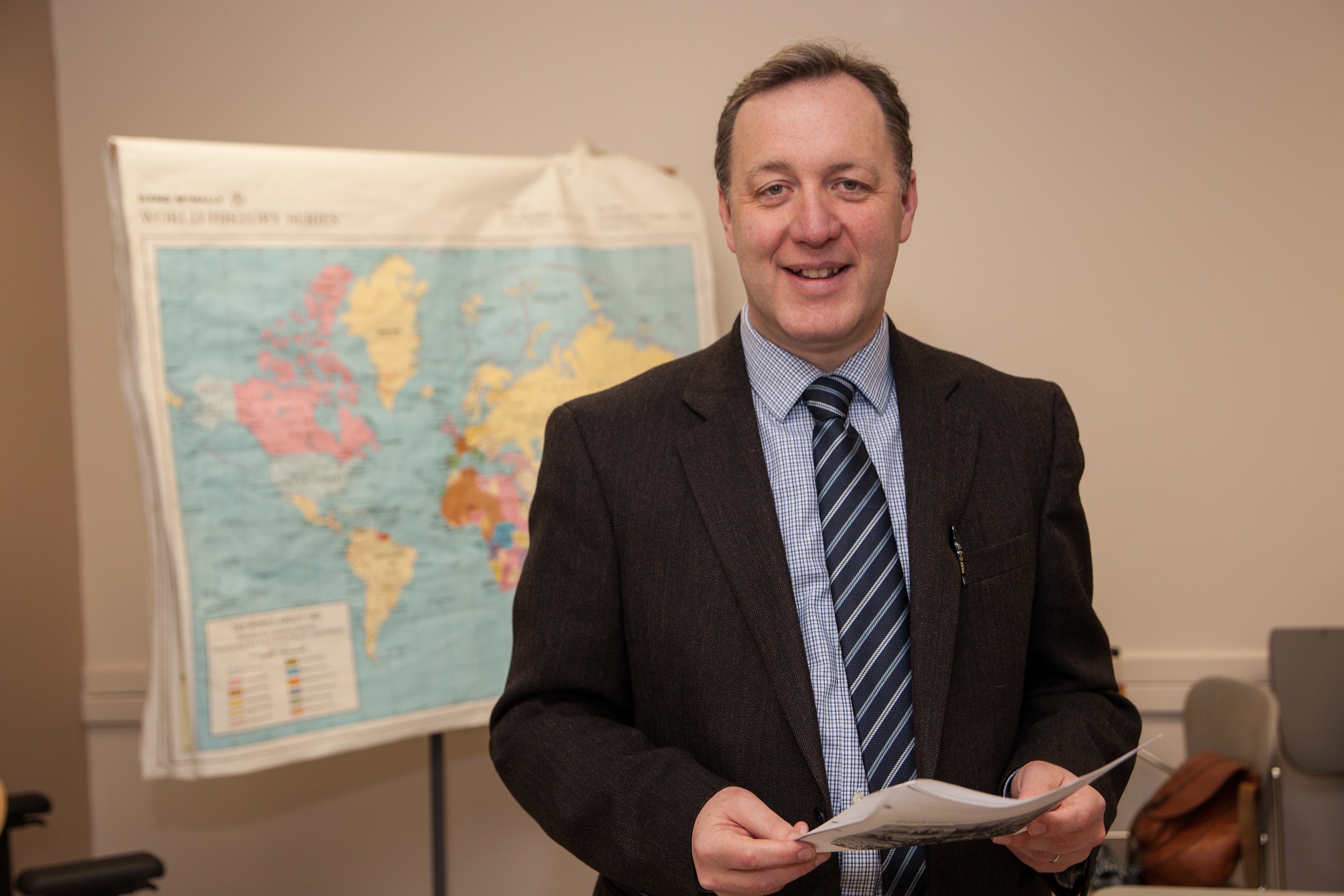
JohnKirk_history1aDr. John A. Kirk has been named the new director of the University of Arkansas at Little Rock’s Institute on Race and Ethnicity.  A native of Great Britain, he has garnered international acclaim for his research and writings on race and the civil rights movement — with a particular focus on Little Rock.

Kirk has been a member of the Chancellor’s Committee on Race and Ethnicity since he arrived at the university more than five years ago and has been involved with the institute since its inception about four years ago.

“I have a deep personal and professional commitment to the pursuit of racial and ethnic justice, and I think that should be the primary reason anyone takes on the job of director of UALR’s Institute on Race and Ethnicity — it is at the very heart of what the institute does,” Kirk said.

Kirk plans to connect with and engage as many students, faculty, and community members as possible in achieving the goals of the institute, which include:

  • Raising awareness of race and ethnicity issues
  • Providing research-based information and policy recommendations
  • Building bridges and seeking reconciliation through interracial and interethnic dialogue
  • Engaging students
  • Serving as a clearinghouse for on- and off-campus initiatives related to race and ethnicity
  • Holding UALR accountable for becoming a more diverse and multi-ethnic community.

For the past 25 years, Kirk has researched and written about issues of race and ethnicity in the United States, especially in Little Rock and Arkansas. He’s the author of numerous books, including “Race and Ethnicity in Arkansas: New Perspectives,” “Martin Luther King, Jr. and the Civil Rights Movement,” and “Beyond Little Rock: The Origins and Legacies of the Central High Crisis.” He also recently partnered with the BBC on its Martin Luther King Jr. web display that serves as an information resource for an international audience.

In announcing Kirk’s appointment, UALR Chancellor Joel E. Anderson noted the professor’s knowledge and passion for civil rights-related topics were ideal fits for the institute’s leadership role.

“It is a rare opportunity to work with someone who grew up in Great Britain but whose knowledge of Arkansas civil rights history is probably greater than anyone else’s in Arkansas or the United States,” Anderson said.  “Dr. John Kirk is a well-known resource in our community for his expertise on the many ways race has shaped our city and state. I am confident that under his leadership the UALR Institute on Race and Ethnicity will continue to grow in influence and will help shape a better future for the people of Arkansas.”

Kirk replaces Dr. Michael R. Twyman, who resigned in July to take a position at the Indiana Black Expo organization.

With Kirk’s new director responsibilities, he will remain the Donaghey Distinguished Professor of History  but no longer will serve as the UALR History Department chair.

“I am excited by the challenges and opportunities that the director’s job brings with it,” Kirk said. “I particularly look forward to getting to know more about and working with students, faculty, and community members who are learning, teaching, researching and serving on issues of race and ethnicity.”

Tonight at 6 at South on Main, Clinton School & Oxford American present “Jazz: Integrated Art in Segregated America” symposium

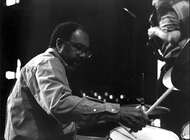
alvin02sm.jpg.190x140_q60_cropThis evening at 6pm at South on Main, Oxford American in partnership with the Clinton School of Public Service presents “Jazz: Integrated Art in Segregated America,” a symposium and panel discussion surrounding music and race.

The discussion will be led by Dr. Jackie Lamar, Professor of Saxophone at University of Central Arkansas’s College of Fine Arts and Communication. A jazz performance will follow the panel discussion. Thanks to sponsors Clinton School of Public Service, UCA College of Fine Arts & Communication, Piano Kraft, Rosen Music Company, and Arkansas Arts Council for helping make this event possible.

Featured panelists include Little Rock-based singer Irene Crutchfield; bassist Bill Huntington (born, New Orleans, LA); drummer Alvin Fielder (pictured), based in Jackson, MS; and bassist London Branch, also based in Jackson, MS. The symposium event is free and open to the public. South on Main’s doors open at 5:00 PM. with light food and drinks available for purchase.

At 8pm, the Oxford American presents jazz ensemble The Southeast Quartet at South on Main. This event is $10 regular, or $5 students/artists payable in cash at the doors on the night of the show.

Little Rock Look Back: The Quapaw Line

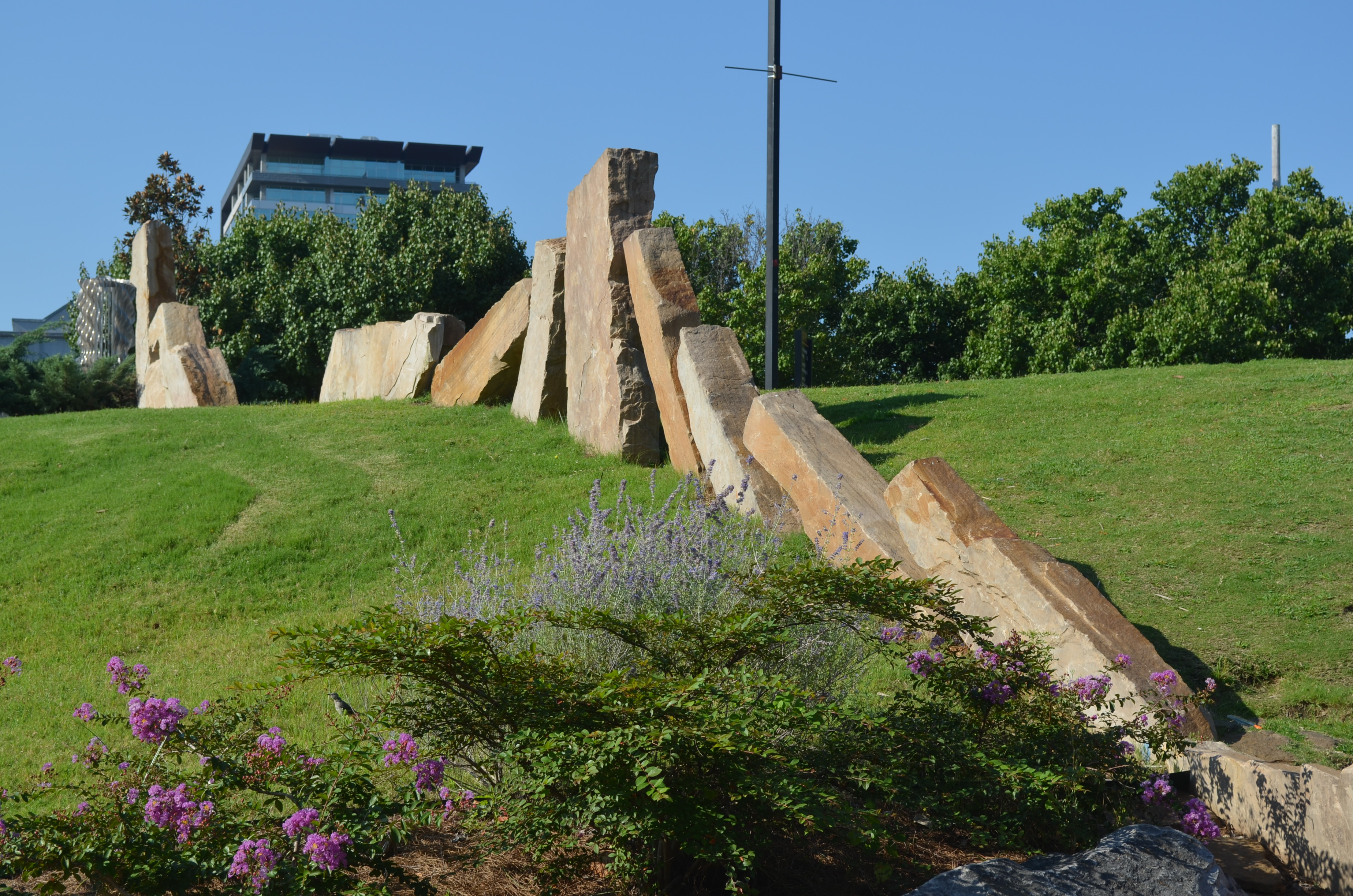
Stones placed in Riverfront Park denote where there Quapaw Line started from La Petite Roche

Stones placed in Riverfront Park denote where there Quapaw Line started from La Petite Roche

On August 24, 1818, the Quapaw Line was drawn.  Starting at La Petite Roche and heading due south, this line formed the boundary between the Quapaw tribe lands and public lands available for settlement.  Though by 1824, the Quapaw were forced to give up all of their lands, the line continued serve as an important marker.  In the ensuing six years, the first permanent settlement of Little Rock took place and streets were planned.

It is interesting to note that the 1818 treaty referred to La Petite Roche as the Little Rock.  Some have speculated that this is the first official use of “Little Rock” to designate the outcropping.  When the Post Office was established in March 1820, it was given the name Little Rock.

There is a marker commemorating the beginning of the Quapaw Line located at La Petite Roche in Riverfront Park.  The first segment of the line is also noted in the park.  There are also sunken markers place along the line at various points.  In MacArthur Park, at the corner of 9th and Commerce Streets, there is a marker noting that the line passed through at that location.

A good account of walking the Quapaw Line through downtown Little Rock can be found on this website.

Most of what is now called the Quapaw Quarter was located to the west of the Quapaw Line.  However, it did take its name from the fact that the tribe had once lived in that area and was later sequestered to lands near it.  The name for the area was chosen by a committee composed of David D. Terry, Peg Newton Smith, Mrs. Walter Riddick Sr., Dr. John L. Ferguson, and James Hatcher. They had been appointed to a Significant Structures Technical Advisory Committee to advocate for preservation of important structures as a component of the City of Little Rock’s urban renewal efforts.

Be a Part of Fountain Fest – Design Public Art for the Fountain

AAC Con FF2015Your public art installation proposal could put you at the center of this fall’s Fountain Fest, hosted by the Arkansas Arts Center Contemporaries. Submit your entry on the following pages so you can be in the running for this prestigious art installation in front of the Arkansas Arts Center. The winning artist’s name(s) will be included in publicity about this event, and there is a cash prize.

The AAC Contemporaries are seeking an artist or a group of artists to create a (temporary) art installation centered on or around the Carrie Remmel Dickinson fountain in front of the AAC. The selection process will be by jury.

Art Installation initial proposal shall include a written description of the project and a sketch (or more if needed). The written description can include a list of materials that will be used and ideas about execution. Deadline for initial proposal is September 11. Jury will narrow down the applicants to no more than the top four. The finalists will be notified by Wednesday September 18, letting them know that they have been selected to expand upon their proposal. Interviews with the finalists will follow. The artist or group which is selected will be notified by September 21.

The artist (or group of artists) who is selected as the winner will be awarded $1,000 to offset cost of materials and time.

Please feel free to visit the Carrie Remmel Dickinson fountain in person, for help with visualizing the size and scale for your proposed project. Click here for fountain dimensions and views

Artists may submit their proposal any time before September 11 via this form, including the written description of the idea and attaching a jpeg (300 dpi) of the proposal sketch, or may send a package via the US Post Office to Arkansas Arts Center Attn: Spencer Jansen PO Box 2137 Little Rock, AR 72203 containing a written description of the proposed idea along with sketch(es). All (postal) mailed entries must be received before September 11.

2015 marks the third annual Fountain Fest, an outdoor party around the Carrie Remmel Dickinson fountain hosted by the Arkansas Arts Center Contemporaries. Funds raised will go toward purchasing artwork and to fund Contemporaries projects that support the AAC.

The Contemporaries is an affiliate-membership group of the Arkansas Arts Center whose members are made up of young art enthusiasts who wish to expand their knowledge and appreciation of the arts.