RobinsoNovember: Mayor R. E. Overman

Overman AuditR. E. Overman assumed the office of Little Rock mayor in April 1935. Around that time, a new wave of New Deal programs were filtering down from Washington DC to cities.  It can be said of Mayor Overman that he did not meet a New Deal program he did not like.  From rebuilding the sewer system, to creating a public water utility, to constructing of structures for the Museum of Fine Arts, Little Rock Zoo, and Boyle Park, Mayor Overman signed the City up for program after program.

While the programs were all worthwhile, and in some cases absolute necessities, Mayor Overman did not seem to consider how these massive projects running concurrently would impact the City finances.  In November 1935, he submitted a proposal to the Public Works Administration for the construction of a new municipal auditorium to be located at the northeast corner of the intersection of Scott Street and Capitol Avenue. It would have taken up three/quarters of that block and wrapped around the Women’s City Club building (now the Junior League of Little Rock headquarters).  Because of other projects in the works, he did not pursue any further action on the auditorium project at the time.

In November 1936, Mayor Overman asked the City Council to place three bond issues on a special election ballot for January 1937, one of which was a municipal auditorium. Though a location had previously been identified in 1935, at this point in time supporters made a concerted effort to disclose that no location had been selected.  After the election was called, there was a concerted effort by supporters of the three separate bond issues to collaborate.  Voters overwhelmingly approved all three issues, and Little Rock’s journey to a municipal auditorium at last was underway. Perhaps.

Over the summer, architects and lawyers were selected. In the autumn, a consultant was hired to help with the selection for the site.  The month of October was consumed with City Council battles over the auditorium site.  Mayor Overman favored a location at Markham and Spring Streets (now site of the Cromwell Building and the Bankruptcy Courthouse). Because the Federal Government owned half the site and did not want to sell it, that location was deemed not feasible – though that did not stop Mayor Overman and others from repeatedly citing it as their first choice.  The only person who favored the location at Markham and Broadway did not have a vote: Planning Commission Chair J. N. Heiskell. Though he had no vote, he had the twin bully pulpits of Planning Commission and the Arkansas Gazette. As other sites fell by the wayside, he kept advocating for it.  Finally, the City Council approved of Heiskell’s choice, and the auditorium had a site.

The groundbreaking had to take place by January 1, 1938, or the money would be rescinded. After finalizing a location, planning could get underway.  With a week to spare, the ground was broken on December 24, 1937.  Mrs. Joseph T. Robinson, widow of the recently deceased US Senator from Arkansas, joined Mayor Overman in the groundbreaking. This ceremony was the first mention of the building being named in memory of the fallen senator, who had died in the summer of 1937.

Construction progressed throughout 1938 and into 1939.  Because of the precarious state of the City’s finances, Mayor Overman lost the support of the business community.  In November 1938, he lost his bid for the Democratic nomination for Mayor and was denied a third two-year term.  He left office in April 1939.
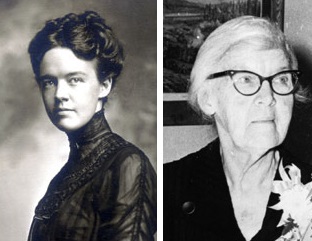
Little Rock Look Back: Mrs. Adolphine Fletcher Terry

Photos from the collection of the Butler Center

Photos from the collection of the Butler Center

Adolphine Fletcher Terry was born on November 3, 1882 to former Little Rock Mayor John Gould Fletcher and his wife Adolphine Krause Fletcher.

Raised in Little Rock, in 1889 she moved into the Albert Pike House on East 7th Street, when her aunt transferred the title to her father. That house would be her primary residence the rest of her life.  Her sister Mary Fletcher Drennan never lived in Arkansas as an adult after marriage. Her brother John Gould Fletcher spent much of his adulthood in Europe before returning to Little Rock and establishing his own house, Johnswood.

At age 15, Adolphine attended Vassar. She later credited that experience as broadening her views on many issues.  After graduating at age 19, she returned to Little Rock.  Her parents both died prior to her 1910 wedding to David D. Terry, which took place at what was then known as the Pike-Fletcher House (and today is known as the Pike-Fletcher-Terry House).

She is perhaps best known today for establishing the Women’s Emergency Committee in 1958 and for her subsequent deeding of the family house to the City for use by the Arkansas Arts Center.  But her entire life was based on civic engagement.

She was instrumental in establishing the first juvenile court system in Arkansas and helped form the first school improvement association in the state. She was long an advocate for libraries, serving 40 years on the Little Rock public library board.  Through her leadership, the library opened its doors to African Americans in the early 1950s. Today a branch of the Central Arkansas Library System (the successor the Little Rock public library) is named after her.  Another branch is named after her Pulitzer Prize winning brother.

Adolphine formed the Little Rock chapter of the American Association of University Women, the Pulaski County tuberculosis association and the Community Chest.

In 1958, when the Little Rock public high schools were closed instead of allowing them to be desegregated again, she called Harry Ashmore the editor of the Gazette and exclaimed, “the men have failed us…it’s time to call out the women.”  With this, she formed the Women’s Emergency Committee to Open Our Schools. This group played a major role in getting the four high schools open the following year.

From 1933 to 1942, David Terry served in the U.S. Congress. During that time, Adolphine alternated her time between Washington DC and Little Rock. But she spent much time in Little Rock raising her five children.

After her husband’s death in 1963, she continued to remain active in civic affairs. In the 1960’s, she and her sister deeded the Pike-Fletcher-Terry House to the City of Little Rock for use by the Arkansas Arts Center upon both their deaths.  Following Adolphine Fletcher Terry’s death in 1976, Mary turned over the title to the City.

Adolphine Fletcher Terry is buried in Mount Holly Cemetery alongside her husband. Three of her children are also buried in that plot.  Her parents and brother are buried in a nearby plot.

Her son William Terry and his wife Betty continue to reside in Little Rock. Their daughters and their families also carry on Adolphine Fletcher Terry’s commitment to making Little Rock better.

Creative Class 2016: Ruth Shepherd

cc16-shepherdThough Arts & Humanities Month ended yesterday, today is a bonus for the Creative Class 2016.  Ruth D. Shepherd has spent her career utilizing the arts and creativity to spread joy, messages of hope, and to change hearts and minds.

She is “retiring” later this year after having served as Director of Just Communities of Arkansas since 2000.  Though she will leave that post, her work in Little Rock and Arkansas will continue.

In her other careers, she has been a school teacher and worked in various non-profits.  She is probably most closely identified with the Arkansas Repertory Theatre having served as a volunteer, staff member, and Board member off and on for most of its 40 years of existence.  She has also served as Tabriz co-chair for the Arkansas Arts Center.

Ruth has graced several Little Rock stages including UALR (where she was in Hair), Community Theatre of Little Rock, the Weekend Theatre, and the Phoenix Theatre among others.  The Culture Vulture’s favorite performance was her riveting portrayal of a frustrated and frustrating matriarch in Edward Albee’s Three Tall Women.

While wrapping up her current role with JCA, she is busy putting the finishing touches on next Sunday’s Walk for CommUNITY.  It is not too late to sign up.  For more information on that and other JCA projects and programs, visit their website.

Creative Class 2016: Tod Switch

cc16-switchTod Switch  has worked as an architectural photographer since 1991.  In that capacity, he has had many artistic experiences while traveling throughout the US and eighteen countries around the world.

Making the transition to the fine arts in 2010, he started by using what came naturally to him, visualization. He saw intrinsic beauty in found objects and transformed them into his own vision with the addition of metal, wood, and stone. Composition, form, and perspective, concepts he utilized daily with photography, are now put to use in his sculptural work.

His sculptures often combine different materials and fabrication processes. Many works are one of a kind or unique in a series.  He currently is working on a series of keyholes as well as a series of city blocks, which are a variety of wood blocks, laser etched with architectural images that I have taken from around the world. They will be capped with copper, bronze, brass, or nickel.

Tod has shown at Sculpture at the River Market.  In 2015, he won the Best of Show Award and in 2016 received an Award of Merit.  His temporary installation was chosen for the Arkansas Arts Center’s Fountain Fest in 2015, as well.  He has also taught seminars for the Arkansas Arts Council.

His goals in public art are to appeal to the largest audience and have them say, “I wish I would have thought of that,” and to produce site – specific works of art that will stand the test of time.

Creative Class 2016: Kathryn Pryor

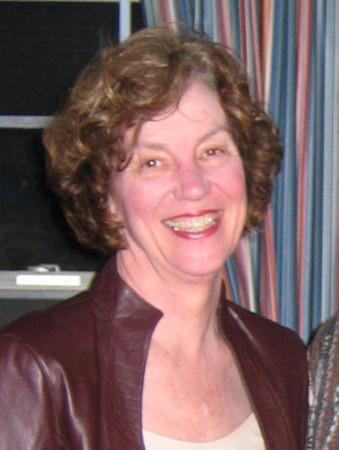
cc16-pryorWhile she may be a successful attorney by day, Kathryn Pryor, is also an accomplished singer and actor.

Having grown up appearing on stage, it is no surprise she continues to appear in productions throughout Central Arkansas.

Earlier this year she reprised her role of Hillary Clinton in the biennial political spoof Gridiron.   Over the years she has also played leading roles in GYPSY, CABARET, SWEENEY TODD, COMPANY, VICTOR/VICTORIA, SOUTH PACIFIC, and MERRILY WE ROLL ALONG.  

In addition, she has appeared in New York in a cabaret act with her brother Will Trice. For the 2015 edition of the Arkansas Arts Center’s Tabriz, she and Will reprised their act.

Creative Class 2016: Gretchen Hall

cc16-hallA hardhat and reflective vest have been part of Gretchen Hall‘s work wardrobe almost every day for the past 30 months.  As the President and CEO of the Little Rock Convention and Visitor’s Bureau, she has been actively overseeing the deconstruction and reconstruction of Robinson Center Music Hall. Taking a New Deal era assembly hall and making it into a state-of-the-art performance facility is not an easy task. Gretchen and her team have worked with the architects, engineers, designers and consultants to make it happen.

Gretchen joined LRCVB in 2001 and has worked her way up through the organization.  In May 2011, she was named to her current position.  Since that time, the LRCVB has undertaken numerous efforts to enhance Little Rock’s cultural life including a new amphitheatre in Riverfront Park, enhanced programming at the River Market, and increased financial support of cultural organizations.  In addition, she helped lead the effort to see the additional penny of the hotel tax be dedicated to support the Arkansas Arts Center and MacArthur Museum of Arkansas Military History. That tax was approved by voters earlier in 2016.

The new Robinson Center will feature seats that are closer to the stage and acoustics that can be adjusted to maximize the different needs of a symphony performance and a Broadway musical.  The changes in the facility have already attracted bookings by the national tours of The Phantom of the Opera (in 2017) and The Lion King (in 2018).  In addition, there will be new special event space including a ballroom and meeting rooms.  The historic lobby at the top of the iconic front steps is being restored to its original appearance — much of which was stripped away or covered up in the early 1970s.

After the November 10 ribbon cutting, Robinson Center will be re-opened.  As Hall points out, almost all residents of Central Arkansas have a connection to Robinson Center. She notes in her family alone, her mother played basketball there, her own high school graduation was there, and her niece has appeared in Ballet Arkansas’ The Nutcracker there.

Canvas unveiled as new Arkansas Arts Center restaurant

aac-canvas-dinner-01Canvas, at the Arkansas Arts Center, officially launched Thursday, September 29 with a special dinner seating during Art After Hours. Formerly Best Impressions, Canvas features an updated space, along with several new menu items, including shrimp and grits, a grilled salmon salad and pimento cheese. New dishes incorporate a selection of locally-sourced ingredients; a Boursin cheeseburger with Grass Roots CoOp ground beef, a blackened chicken salad with Crystal Lake Farms chicken, shrimp and grits with Kent Walker cheddar.

Canvas owner Brian Kearns has been in the restaurant business for 15 years. Originally from St. Louis, Mo., Kearns moved to Little Rock in 2008 to open Ya Ya’s Euro Bistro in Chenal. Throughout his career, he has made a mark on several local restaurants, including Arthur’s Prime Steakhouse, Oceans at Arthur’s, Kemuri and the Country Club of Little Rock. Along with Canvas, he is also the owner of Simply the Best Catering.

“We want Canvas to be a fun, relaxed environment where you can enjoy food prepared with the best ingredients we can procure,” Kearns said.

Canvas Restaurant Hours
Tuesday – Friday, 11 a.m. – 2 p.m., Saturday & Sunday, 10 a.m. – 2 p.m.

For reservations or more information, please call 501-907-5946.