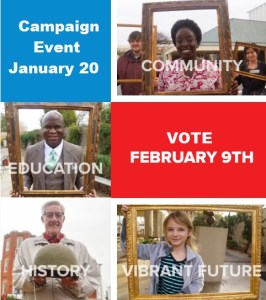
Arts+History campaign event this evening from 4:30 to 6:30

CfAandHGrab a drink, listen to some music and learn about how you can support Arts + History in Arkansas. Donations of all levels will be appreciated.

When: Wednesday, January 20 at 4:30 – 6:30 p.m.

Where: Arkansas Arts Center Lobby

The Committee for Arts and History is a group of citizen advocates campaigning for Little Rock residents to vote FOR a bond issue backed by an already approved hotel tax on out-of-town visitors to improve the Arkansas Arts Center, MacArthur Museum of Arkansas Military History, and MacArthur Park in a special election on February 9, 2016.

The improvements are of vital importance for the Arkansas Arts Center to keep its accreditation in 2016, to preserve a National Historic Landmark, and for Little Rock citizens to protect our cultural attractions.

Nathalia Edenmont: Force of Nature exhibit brings larger than life photographs to Arkansas Arts Center

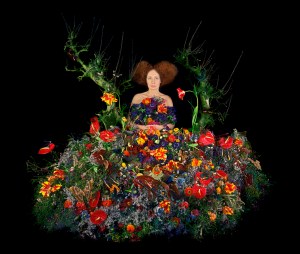
AAC LargerLifeToday through May 1, the Arkansas Arts Center plays host to photographer Nathalia Edenmont’s first major U.S. exhibition.

Nathalia Edenmont: Force of Nature is the artist’s first solo exhibition in a major American museum and features ten, richly colored, large-format photographs. Five of the photographs, including Eden, a self-portrait of the artist, are recent works and have never before been exhibited. Force of Nature is organized by the Arkansas Arts Center and Nancy Hoffman Gallery (New York City) and is presented in conjunction with the Garden Club of America Zone 9 annual meeting, which occurs in Little Rock in late-April 2016.

“Nathalia Edenmont’s photos are striking both in terms of their scale and colorful content,” said Brian J. Lang, chief curator and curator of contemporary craft at the Arkansas Arts Center. “We look forward to hosting Edenmont’s first major U.S. exhibition, giving Arkansans the opportunity to be among the first to see some of her most recent photos.”

Born in 1970 in Yalta, Ukraine, Nathalia Edenmont moved to Sweden by the age of 20, realizing that life in the former Soviet Union was disintegrating and held no future for her. At 27, Edenmont enrolled in the Forsbergs Skola to study graphic design. At the school her artist-mentor, Per Hüttner, encouraged her to visualize her inner pictures and to try to capture them with the camera.

All of Edenmont’s photographs derive from her life experience. “I only look inside my head,” the artist explains. “What I see in my mind is what I create. I do not sketch; the image is complete and sharp within me. I have absolute control over all aspects of what I do.”

Using a large-format Sinar camera with 8×10 film and many lenses, Edenmont works with a team of eight to twelve people over the course of one day to compose a single “shot.” She has two camera assistants (both professional photographers), a hair stylist and a dressmaker.

What each figure wears is central to the meaning of each work. The artist’s “portraits” reflect intensity, each subject stands expressionless and motionless against a pitch-black background, cloaked in flowers revealing only her neck and shoulders; light emanates from within. It is the “flower pile” or dress the artist composes that tells the tale, sometimes with birds or snakes, sometimes with fresh flowers or vegetables, and at other times with wilted blooms. “Since my childhood I have heard that a woman’s beauty is like a flower, it passes quickly,” Edenmont says. “That is why I switch from fresh flowers to dry and very old. I see much beauty in dried flowers. I grew up as a Russian Orthodox and in the cemetery the fresh graves covered in flowers looked like my flower piles from which I compose my dresses.”

Edenmont is a two-time recipient of the Konstnarsnamndens Arbetsstipendium, a grant awarded by the Culture Department in Stockholm, Sweden. Her work has been exhibited internationally, including museums in Sweden, Russia and Germany; Nathalia Edenmont: Force of Nature is the artist’s first solo exhibition in a major American museum.

Edenmont will speak at an AAC Member Lecture & Late Night event at 6 p.m. on Thursday, January 21. A book signing will immediately follow the lecture.

Nathalia Edenmont: Force of Nature is sponsored by Tipton & Hurst, Kara and David Dowers for Annie Dowers and Dr. and Mrs. Charles Cole.

LR Look Back: HAIR flows at Robinson Auditorium in 1972

Ad for the original production of HAIR in Little Rock. Note the ticket prices. And that they could be purchased at Moses Music Shops.

Ad for the original production of HAIR in Little Rock. Note the ticket prices. And that they could be purchased at Moses Music Shops.

Forty-four years ago today, on January 18, 1972, the musical Hair settled in for a week-long run at Robinson Auditorium.  The saga to bring the national tour to Little Rock had actually begun eleven months earlier.

In February 1971, a young Little Rock attorney named Phil Kaplan petitioned the Little Rock Board of Censors to see if it would allow a production of Hair to play in the city. He was asking on behalf of a client who was interested in bringing a national tour to Arkansas’ capital city. The show, which had opened on Broadway to great acclaim in April 1968 after an Off Broadway run in 1967, was known for containing a nude scene as well for a script which was fairly liberally sprinkled with four-letter words. The Censors stated they could not offer an opinion without having seen a production.

By July 1971, Kaplan and his client (who by then had been identified as Southwest Productions) were seeking permission for a January 1972 booking of Hair from the City’s Auditorium Commission which was charged with overseeing operations at Robinson Auditorium. At its July meeting, the Commissioners voted against allowing Hair because of its “brief nude scene” and “bawdy language.”

Kaplan decried the decision. He stated that the body couldn’t “sit in censorship of legitimate theatrical productions.” He noted courts had held that Hair  could be produced and that the Auditorium Commission, as an agent for the State, “clearly can’t exercise prior censorship.” He proffered that if the production was obscene it would be a matter for law enforcement not the Auditorium Commission.

The Commission countered that they had an opinion from City Attorney Joseph Kemp stating they had the authority. One of the Commissioners, Mrs. Grady Miller (sister-in-law of the building’s namesake the late Senator Robinson, she had served on the Commission since 1940), expressed her concern that allowing Hair would open the door to other productions such as Oh! Calcutta!

On July 26, 1971, Southwest Productions filed suit against the Auditorium Commission. Four days later there was a hearing before federal Judge G. Thomas Eisele. At that hearing, Auditorium Commission member Lee Rogers read aloud excerpts from the script he found objectionable. Under questioning from Kaplan, a recent touring production of Neil Simon’s Plaza Suite was discussed. That play has adultery as a central theme of one of its acts. Rogers admitted he found the play funny, and that since the adultery did not take place on stage, he did not object to it. Among those testifying in favor of it was Robert Reddington, who was director of performing arts at the Arkansas Arts Center.

Judge Eisele offered a ruling on August 11 which compelled the Auditorium Commission to allow Hair to be performed. Prior to the ruling, some of the Auditorium Commissioners had publicly stated that if they had to allow Hair, they would close it after the first performance on the grounds of obscenity. To combat this, Judge Eisele stated that the Commission had to allow Hair to perform the entire six day engagement it sought.

Upon hearing of the Judge’s ruling, Commissioner Miller offered a succinct, two word response. “Oh, Dear!”

In the end, the production of Hair at Robinson would not be the first performance in the state.  The tour came through Fayetteville for two performances in October 1971 at Barnhill Arena.

On January 18, 1972, Hair played the first of its 8 performances over 6 days at Robinson Auditorium.  In his review the next day, the Arkansas Gazette’s Bill Lewis noted that Hair “threw out all it had to offer” and that Little Rock had survived.

The ads promoting the production carried the tagline “Arkansas will never be the same.”  Tickets (from $2 all the way up to $8.50) could be purchased at Moses Melody Shops both downtown and in “The Mall” (meaning Park Plaza). That business is gone from downtown, but the scion of that family, Jimmy Moses, is actively involved in building downtown through countless projects. His sons are carrying on the family tradition too.

Little Rock was by no means unique in trying to stop productions of Hair.  St. Louis, Birmingham, Los Angeles, Tallahassee, Boston, Atlanta, Charlotte NC, West Palm Beach, Oklahoma City, Mobile and Chattanooga all tried unsuccessfully to stop performances in their public auditoriums.  Despite Judge Eisele’s ruling against the City of Little Rock, members of the Fort Smith City Council also tried to stop a production later in 1972 in that city. This was despite warnings from City staff that there was not legal standing.

Within a few years, the Board of Censors of the City of Little Rock would be dissolved (as similar bodies also were disappearing across the US). Likewise, the Auditorium Commission was discontinued before Hair even opened with its duties being taken over by the Advertising and Promotion Commission and the Convention & Visitors Bureau staff.  This was not connected to the Hair decision; it was, instead, related to expanding convention facilities in Robinson and the new adjacent hotel.  Regardless of the reasons for their demise, both bygone bodies were vestiges of earlier, simpler and differently focused days in Little Rock.

Final day to see OUR AMERICA exhibit at the Arkansas Arts Center

Today is the final day to enjoy the Arkansas Arts Center exhibition Our America: The Latino Presence in American Art.  This major collection of modern and contemporary Latino art from the Smithsonian American Art Museum has been here since October.

The exhibition Our America includes 93 works in all media by 72 artists who participated in various artistic styles and movements, including abstract expressionism; activist, conceptual and performance art and classic American genres such as landscape, portraiture and scenes of everyday life.

Our America presents the rich and varied contributions of Latino artists in the United States since the mid-20th century, when the concept of a collective Latino identity began to emerge. The exhibition is drawn entirely from the Smithsonian American Art Museum’s pioneering collection of Latino art.


Our America features bilingual labels for each work and a Spanish-language website created by the Smithsonian American Art Museum. Select works also feature podcasts with the artist’s commentary. Museum goers can simply call a number, scan a QR code or visit a website for more background on the artist and background on each piece—in English and Spanish.

Artists featured in the exhibition reflect the rich diversity of Latino communities in the United States. Our Americashowcases artists of Mexican, Puerto Rican, Cuban and Dominican descent, as well as other Latin American groups with deep roots in the United States. By presenting works by artists of different generations and regions, the exhibition reveals recurring themes among artists working across the country.

The 72 artists featured in the exhibition are ADÁL, Manuel Acevedo, Elia Alba, Olga Albizu, Carlos Almaraz, Jesse Amado, Asco (Harry Gamboa Jr., Gronk, Willie Herrón and Patssi Valdez), Luis Cruz Azaceta, Myrna Báez, Guillermo Bejarano, Charles “Chaz” Bojórquez, María Brito, Margarita Cabrera, María Magdalena Campos-Pons, Melesio “Mel” Casas, Leonard Castellanos, Oscar R. Castillo, José Cervantes, Enrique Chagoya, Roberto Chavez, Carlos A. Cortéz, Marcos Dimas, Ricardo Favela, Christina Fernandez, Teresita Fernández, iliana emilia garcía, Rupert García, Scherezade García, Carmen Lomas Garza, Ignacio Gomez, Ken Gonzales-Day, Hector González, Luis C. “Louie the Foot” González, Muriel Hasbun, Ester Hernandez, Judithe Hernández, Carmen Herrera, Carlos Irizarry, Luis Jiménez, Miguel Luciano, Emanuel Martinez, María Martínez-Cañas, Antonio Martorell, Ana Mendieta, Amalia Mesa-Bains, Franco Mondini-Ruiz, Delilah Montoya, Malaquias Montoya, Abelardo Morell, Jesús Moroles, Raphael Montañez Ortiz, Pepón Osorio, Amado M. Peña Jr., Chuck Ramirez, Paul Henry Ramirez, Sophie Rivera, Arturo Rodríguez, Freddy Rodríguez, Joseph Rodríguez, Frank Romero, Emilio Sánchez, Juan Sánchez, Jorge Soto Sánchez, Rafael Soriano, Ruben Trejo, Jesse Treviño, John M. Valadez, Alberto Valdés and Xavier Viramontes.

The exhibition is organized by E. Carmen Ramos, curator of Latino art at the Smithsonian American Art Museum.

Our America: The Latino Presence in American Art is organized by the Smithsonian American Art Museum. Generous support for the exhibition has been provided by Altria Group, the Honorable Aida M. Alvarez, Judah Best, The James F. Dicke Family Endowment, Sheila Duignan and Mike Wilkins, Tania and Tom Evans, Friends of the National Museum of the American Latino, The Michael A. and the Honorable Marilyn Logsdon Mennello Endowment, Henry R. Muñoz III, Wells Fargo and Zions Bank. Additional significant support was provided by The Latino Initiatives Pool, administered by the Smithsonian Latino Center. Support for “Treasures to Go,” the museum’s traveling exhibition program, comes from The C.F. Foundation, Atlanta.

Our America is sponsored in Arkansas by Donna and Mack McLarty, The Brown Foundation, Inc., of Houston, Consulate of Mexico in Little Rock and Alan DuBois Contemporary Craft Fund. Media sponsors include ¡Hola! Arkansas and Telemundo Arkansas.

Art+History Throwback Thursday: Museum of Fine Arts

MFA postcardOn February 9, Little Rock voters will have the chance to say Yes to improving the Arkansas Arts Center, MacArthur Museum of Arkansas Military History and MacArthur Park.

Leading up to that election is a good time to look back at the development of these two MacArthur Park sited museums.

The Museum of Fine Arts opened in October 1937.  The groundbreaking was held on January 3, 1936, with the cornerstone laid on October 6 of that year.  Nearly one year later, the Fine Arts Club held its first meeting in the building and hosted a grand open house on October 5, 1937.

The front doorway to the museum is visible today inside a gallery of the Arkansas Arts Center.

Architecture Design Network tonight presents Tommy Pacello discussing Innovations in City Building

150511_Tommy_U3_Philly_Langdon_004INNOVATIONS IN CITY BUILDING: Lessons from Memphis, a lecture by Tommy Pacello

     DATE: Tuesday, January 19, 2016

    TIME:  6:00 p.m., preceded by a reception at 5:30 p.m

PLACE: Arkansas Arts Center, 9th and Commerce, Little Rock, AR

Tommy Pacello will talk about lessons to be learned from the Memphis (TN) Mayor’s Innovation Delivery Team (MMIDT), a body charged with helping struggling city neighborhoods become economically viable once again. Tasked with bringing about change, team members, with the assistance of public-private partnerships, work with distressed  communities as they deal with the challenges of urban blight, vacant properties, youth gun violence and the lack of adequate community services. Through the team’s efforts many distressed neighborhoods have been made livable again and enabled to sustain their viability.

Tommy Pacello is an attorney and city planner. He specializes in innovative yet pragmatic approaches to city buildings. He is currently consulting with U3 Advisors developing an Anchor Strategy around nine institutional anchors in Memphis, TN.

Prior to working with U3 Advisors, Tommy served as the Director of the Innovation Delivery Team in Memphis, Tennessee. This non-profit team, originally funded by Bloomberg Philanthropies, is charged with developing strategies to address the city’s most pressing challenges. In Memphis, the team’s focus is on generating economic vitality in core city neighborhoods, reducing youth gun violence, reducing the number of blighted and vacant properties, and improving service delivery among city departments.

Tommy previously worked with the Austin, Texas based firm Code Studio where he managed several national planning and development code projects. Tommy started his career as an Assistant City Attorney in Memphis representing the city on legal matters involving planning, zoning, and constitutional law and managed the development of the city’s first unified development code.

Tommy was recently named one of the top 40 Real Estate Professionals under the age of 40 by Urban Land Magazine and serves as the Chairman of Mission Advancement for the Memphis Chapter of the Urban Land Institute. He is also actively involved with the Congress for the New Urbanism and is a frequent national speaker on civic innovation and urban issues.

Tommy earned his Bachelor of Business Administration from the University of Georgia, Terry College of Business, and a Master of City and Regional Planning from the University of Memphis’ School of Urban Affairs and Public Policy.  Tommy holds a Juris Doctor from the University of Memphis’ Cecil C. Humphreys School of Law.

Pacello’s lecture is free and open to the public. Reservations are not required.

ADN supporters include the Arkansas Arts Center, the UA Fay Jones School of Architecture and Design, the Central Arkansas Section of the Arkansas Chapter of the American Institute of Architects and friends in the community.

For additional information, contact ardenetwork@me.com .  

The Arkansas Arts Center seeking entries for 58th Annual Delta Exhibition

58thDeltaThe Arkansas Arts Center, the state’s premiere center for visual and performing arts, announces a call for entries for the 58th Annual Delta Exhibition which will be on display June 10 – August 28, 2016. The deadline to submit entries is March 11.

“As one of the most anticipated Arkansas Arts Center events of the year, the 58th Annual Delta Exhibition offers a unique snapshot of the talent located in the Delta region,” said Arkansas Arts Center Executive Director Todd Herman. “This exhibition allows artists to lead and inspire their communities through art, education and cultural excellence.”

The competition is open to all artists who live in or were born in one of the following states: Arkansas, Louisiana, Mississippi, Missouri, Oklahoma, Tennessee and Texas. All work must be completed during the last two years and must not have been exhibited previously at the Arkansas Arts Center.

Elizabeth K. Garvey will serve as juror for the 58th Annual Delta Exhibition. Garvey is the co-founder and owner of Garvey-Simon Art Access, Inc. Prior to her current role, she was co-director of the venerable Schmidt-Bingham Gallery in New York, where she worked from 1989-1998; and then president and owner of EKG Art Advisory, (1999-2009). She has been a fine art dealer and advisor in New York City for over 20 years and leverages her professional relationships with galleries, auction houses, private dealers and artists to offer clients a relaxed entry into the often intimidating visage of the New York art world. Garvey maintains a boutique gallery in Manhattan that is focused on drawing, works on paper, unusual materials and design; while also acting as curator and advisor to select private clients. She is a member of ArtTable, and a founding member of the New York chapter of the Association of Women Art Dealers.

Garvey will select the artworks to be exhibited and will assign the $2,500 Grand Award and two $750 Delta Awards. Additionally, a $250 Contemporaries Delta Award will be selected by the Contemporaries, an auxiliary membership group of the Arkansas Arts Center. Artists and AAC members will be invited to attend a special reception and exhibition preview on Thursday, June 9 during which the 58th Annual Delta winners will be announced.

The Delta Exhibition of Painting and Sculpture was founded in 1958 to feature contemporary work by artists from Arkansas and the bordering states. Today, the Annual Delta Exhibition has grown to encompass works in all media and is a showcase for the dynamic vision of the artists of the Mississippi Delta region. The diversity of their art reflects the region’s strong traditions of craftsmanship and observation, combined with an innovative use of materials and an experimental approach to subject matter.

Artists will be responsible for all shipping arrangements. Interested parties may enter their information and upload images of their work at ArkansasArtsCenter.org/delta by March 11, 2016. The entry fee is $20 for one entry and $10 for each additional entry. Artists are limited to three entries. Notifications will be mailed on March 30 and all accepted work must be received by April 27. This year’s exhibition will be on view June 10 – August 28.

The 58th Annual Delta Exhibition is sponsored by Isabel and John Ed Anthony, Bank of the Ozarks and the Delta Regional Authority. The Grand Award is supported by The John William Linn Endowment Fund. The exhibition is supported by the Andre Simon Memorial Trust in memory of everyone who has died of acquired immune deficiency syndrome (AIDS).