
Arkansas Heritage Month – Townsend Wolfe of the Arkansas Arts Center

wolfe

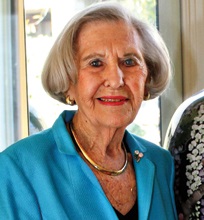
Continuing with a focus on Little Rock recipients of the Governor’s Arts Awards, today’s focus is Townsend Wolfe, who led the Arkansas Arts Center for 34 years.

Though not the founding director of the Arkansas Arts Center, Townsend Wolfe was the director for well over half of the institution’s 53 year history. Hired in 1968 at the age of 32 (making him one of the youngest art museum directors in the US at the time), he retired in 2002.  That year he was honored with the Governor’s Arts Award for Lifetime Achievement by the Arkansas Arts Council.

A native of South Carolina, Wolfe holds a bachelor’s degree from the Atlanta Art Institute and a master’s degree from the Cranbrook Academy of Art. He also received a certificate from the Harvard Institute of Arts Administration, and honorary doctoral degrees from two other institutions.  He was recruited to the Arkansas Arts Center by Governor and Mrs. Winthrop Rockefeller.

During his tenure at the Arts Center, he first was responsible for creating financial stability. After drastic cost-cutting measures, he refocused programming which led to the creation of the current Museum School, a focus of works on paper for the collection, cultivating a thriving collectors group, establishment of a children’s theatre, expansion of statewide services, and several additions to the physical plant.

In addition to serving on the National Council of the Arts, Wolfe was a member of the National Museum Services Board and the board of the Elizabeth Foundation for the Arts in New York. He was curator for an exhibition in the First Ladies’ Sculpture Garden at the White House in 1995, and was the recipient of the 1997 Distinguished Service Award (outside the profession) by the National Art Educators Association.

Over the years, Wolfe has served in a variety of capacities for the Association of American Museums, the National Endowment for the Arts, and the Institute of Museum and Library Services.

Arkansas Heritage Month – Dr. Dean Kumpuris

Arts Community Development recipient Dean Kumpuris

Arts Community Development recipient Dean Kumpuris

This week as part of Arkansas Heritage Month’s focus on the arts, we will be looking at seven recipients of the Governor’s Arts Awards from Little Rock.

2016 honoree in Arts Community Development, Dr. Dean Kumpuris has spent the last three decades working to improve the cultural and civic life of Little Rock. In particular, he has focused much of his work on the revitalization of downtown, the development of the River Market, and expansion of Riverfront Park.

Through his vision and efforts to place public art downtown, in less than 10 years, nearly 100 sculptures have been installed in the Vogel Schwartz Sculpture Garden, as well as in parks along the Arkansas River and throughout Little Rock. He created the annual fundraiser, Sculpture at the River Market Show and Sale, which attracts thousands of visitors to Little Rock each year and features hundreds of sculptures from internationally recognized artists.

He is a gastroenterologist and has served on the Little Rock City Board of Directors since 1995.

Arkansas Heritage Month – Jeane Hamilton

Photo taken for SOIREE

Photo taken for SOIREE

Happy Mother’s Day.  Today as part of Arkansas Heritage Month, we salute Jeane Hamilton — the “mother” of the Arkansas Arts Center.  In 2007, she was awarded the Arkansas Arts Council’s Lifetime Achievement Governor’s Arts Award.

Arriving in Little Rock a young wife in 1952, she immediately set about to become involved in her new community as she and her husband James set up a household.  In the mid-1950s, the Junior League of Little Rock tapped her to chair the initiative to create a new art museum for Little Rock.  The two decades old Museum of Fine Arts was threadbare through years of neglect and unfocused programming and collecting.

Hamilton, along with Junior League President Carrie Remmel Dickinson and Vice President Martha McHaney, approached Winthrop Rockefeller (then a relatively new resident) to lead the fundraising effort for the new museum.  He agreed on a few conditions: one was that a base amount had to be raised in Little Rock first, and second that the museum would be for the entire State of Arkansas and not just Little Rock.

Hamilton and her colleagues set about to raise the funds. They raised $645,000 at the same time Little Rock’s business climate was stymied by the aftereffects of the Central High crisis.

Now a lifetime honorary member of the Arkansas Arts Center Board, Hamilton has spent much of her life working on Arkansas Arts Center projects since that visit in 1959.  She has served on the Board, chaired committees, chaired special events, served hot dogs, helped kids paint and danced the night away at countless fundraisers.  She was on the committee which hired Townsend Wolfe as executive director and chief curator.  Jeane has led art tours for the Arts Center to a number of countries over the years.

When she is not at the Arts Center, she is often seen at the Rep, the Symphony or any number of other cultural institutions.  While she enjoys seeing old friends at these events, she also loves to see a room full of strangers – because that means that new people have become engaged in the cultural life of Little Rock.

Arkansas Heritage Month – “Little Rock” Songs

Monroe RussellThe Capital City has popped up in a variety of songs in different genres over the years.  Today we look at five notable instances.

Collin Raye’s 1994 song “Little Rock” peaked at Number 2 on the Billboard Country charts and was Number 14 for the entire year.  Found on Raye’s album Extremes, it was written by Tom Douglas.  The song centers on a man who is trying to rebuild his life after battles with alcohol have affected his marriage.

Notable lyric: “I think I’m on a roll here in Little Rock.”


Hayes Carll’s take on Arkansas’ capital is also known as “Little Rock.” It was his title track from the 2005 album.  It tells the tale of a man who has traveled all over the US and is excited to make it back to Little Rock. With a driving country-rock beat, it typifies Carll’s style of music which has one foot squarely in both camps as a singer-songwriter.

Notable lyric: “All of my life I’ve tried to find/ “a piece of this earth for my peace of mind.”


Leo Robin and Jule Styne wrote the 1949 song “Little Girl from Little Rock” for their Broadway musical Gentlemen Prefer Blondes.  Introduced by Carol Channing, it told of quintessential 1920s vamp Lorelei Lee’s rise from “the wrong side of the tracks” to Manhattan’s elite neighborhoods.  It has remained part of Channing’s repertoire in nightclubs and concerts.  In 1953, it was retooled with sanitized lyrics and made into a duet for Marilyn Monroe and Jane Russell in the film version of the musical.

Notable lyric: “Then someone broke my heart in Little Rock/and I up and left old Arkansas.”


Little Rock has also appeared in several “List songs” including “I’ve Been Everywhere.” Originally written with Australian place names in 1959, it was adapted to North American places in 1962 by Hank Snow. Arkansan Johnny Cash recorded it in 1996.

Little Rock appears in the second verse: “Glen Rock, Black Rock, Little Rock, Oskaloosa,”


Billy Joel’s 1989 “We Didn’t Start the Fire” contains three references to Little Rock. In the first section’s look at 1949, the Rodgers and Hammerstein musical South Pacific is mentioned.  With a heroine from Little Rock, this musical was the most popular show on Broadway during the 1948-1949 and 1949-1950 Broadway seasons.  The second comes in the 1953 portion with “Rockefeller” which referenced playboy Winthrop Rockefeller’s abandonment of New York City for Arkansas. He had residences in both Little Rock and on Petit Jean Mountain. The final entry came in 1957, when Joel references the Central High integration crisis with the lyric “Little Rock, Pasternak, Mickey Mantle, Kerouac, Sputnik, Chou En-Lai, Bridge on the River Kwai.”


Arkansas Heritage Month – SOUTH PACIFIC wins the Pulitzer Prize

SoPa Pul GazOn May 6, 1950, the Associated Press ran a story which would later be carried in the Arkansas Gazette about the Rodgers and Hammerstein musical South Pacific capturing the Pulitzer Prize in Drama.  The reason this carried such weight in Arkansas was that the musical had a connection to Little Rock.

The 1950 Pulitzer for Drama went to a musical, for only the second time in the history of the awards.  The recipient was South Pacific by Richard Rodgers, Oscar Hammerstein II and Joshua Logan.  The character was the leading lady of Nellie Forbush. She was an Navy ensign and a nurse stationed on an exotic island during World War II.  The musical was based on a Pulitzer Prize winning novel, James Michener’s Tales of the South Pacific.

In the Michener novel, Miss Forbush is not from Little Rock.  She is actually from a small town in Alabama.  The part was written for Mary Martin from Weatherford, Texas.  Rodgers, Hammerstein & Logan did not discuss why they relocated Nellie’s birthplace.

Originally the musical contained a song entitled “My Girl Back Home” in which Nellie sang of being from “Little Rock, A-R-K” while another character sang of being from “Philadelphia, P-A” and “Princeton, N-J.”  It is possible the change to Little Rock was made because it offered more lyrical possibilities, but that is only a supposition on the part of the Culture Vulture. That song did appear in the movie version in which Mitzi Gaynor played Nellie Forbush.  It was also featured in the 2008 Broadway revival, this time with Kelli O’Hara playing Nellie.

In the musical, Nellie struggles with her own prejudices. This issue of prejudice became an instance of fact meeting fiction. In 1957, a few weeks after Eisenhower sent troops into Little Rock to ensure that Central High would be desegregated, a production of South Pacific on Long Island was temporarily halted when the audience booed and yelled after Nellie mentioned she was from Little Rock.  Interestingly, the movie was released in 1958, but retained references to Little Rock. That was either a testament to the expense of re-editing it, or the fact that audience reaction had lessened.

Arkansas Heritage Month – Cinco de Mayo with Diego Rivera

portrait-of-two-womenToday is Cinco de Mayo. This Mexican holiday seems a good day to return again to the art of Diego Rivera.  He is one of the Culture Vulture favorite artists, so any excuse to discuss him and his relationship with the Rockefeller family is greatly appreciated.

One of Rivera’s masterpieces is 1914’s Portrait of Two Women which is part of the permanent collection of the Arkansas Arts Center. The official name is Dos Mujeres.  It is a portrait of Angelina Beloff and Maria Dolores Bastian.  The former was Rivera’s first wife.

This oil on canvas stands six and a half feet tall and five and a half feet wide.

Influenced by cubists such as Picasso, Rivera adopted fracturing of form, use of multiple perspective points, and flattening of the picture plane.  Yet his take on this style of painting is distinctive.  He uses brighter colors and a larger scale than many early cubist pictures. Rivera also features highly textured surfaces executed in a variety of techniques.

The painting was a gift to the Arkansas Arts Center by Abby Rockefeller Mauzé, sister of Arkansas Governor Winthrop Rockefeller.  At the 1963 opening of the Arkansas Arts Center, James Rorimer, the director of the Metropolitan Museum of Art, remarked several times to Arts Center trustee Jeane Hamilton that the Met should have that piece. Jeane politely smiled as she remarked, “But we have it.”

Of all her brothers, Abby was closest to Winthrop. The other brothers, at best ignored, and at worst, antagonized the two.  Given the complicated relationship of Rivera with members of the Rockefeller family, it is not surprising that if Abby were to have purchased this piece, she would donate it to a facility with close ties to Winthrop.  (Though the Rockefeller brothers had Rivera’s mural at Rockefeller Center destroyed, he maintained a cordial relationship with Abby Aldrich Rockefeller — well as cordial as an anti-social Communist could be with the doyenne of capitalist NYC Society.)

The Arkansas Arts Center has several other works of art in their collection with ties to Mexico. Some are by Mexican artists. Others are inspired by Mexico. They have several by Elsie Fruend depicting scenes in Mexico.

Arkansas Heritage Month – Sibelius’ FINLANDIA rings out at Robinson Auditorium

finlandia_kansi_300This fall, when the newly renovated Robinson Center Music Hall reopens, the Arkansas Symphony Orchestra will play the first notes in the new space.

The first notes in the original space were Jean Sibelius’ Finlandia.  The piece was commissioned in 1899 as part of a three day arts festival to celebrate the Finnish press.  At the time, Tsarist Russia was cracking down on the press in Finland, so this festival was planned as a way to show solidarity. The selection was one of seven composed to be played against tableaus of scenes of Finnish history.  The pieces were played in a new music hall.

Given the political nature of the music, subsequent performances of it were often given fake names to avoid Russian censorship in the ensuing years.

Because of the fact it had been played at the opening of a new facility, Finlandia was chosen to be played at the opening of the Joseph Taylor Robinson Memorial Auditorium in February 1940.  It would be played by the Arkansas State Symphony Orchestra (a forerunner, though not directly connected, to the current Arkansas Symphony Orchestra).

In the weeks leading up to the opening of Robinson, the Russians invaded Finland sparking the “Winter War.” Against overwhelming odds the Finnish people fought back though the Russians had far more soldiers and military weaponry.  However, by February 1, the Russians started breaking through lines on several fronts, and it became apparent that they would likely best the Finns.

With Finland dominating the front pages of newspapers, the performance of Finlandia took on additional significance for the audience at Robinson’s first performance on February 16, 1940. Press accounts indicate that the selection was very warmly received by the audience.

Though not noticed at the time, there was another reason that Finlandia was an apt selection to open the building.  The location of Robinson Auditorium had been chosen by Arkansas Gazette editor J.N. Heiskell. It was no one else’s first choice as the site for the building. As other options fell away, Heiskell kept trumpeting the northeast corner of Markham and Broadway.  So it was appropriate that the first piece of music be a selection that celebrated newspapers and the people who published them.