Learn more about Native American Heritage at Historic Arkansas Museum

HAMCollectionHeadPotNovember is Native American Heritage Month.  It’s a great time of year to visit Historic Arkansas Museum and explore their permanent exhibit “We Walk In Two Worlds: The Caddo, Osage and Quapaw in Arkansas.”

And remember – Admission to the galleries at Historic Arkansas Museum is FREE!

This exhibit tells the story of Arkansas’s first people–the Caddo, Osage and Quapaw Indian tribes–from early times to today. More than 150 objects, such as pottery, clothing and weapons, are on display.

The exhibit has six thematic areas that are arranged chronologically.  Along with objects and a historical timeline are passages of relevant research from archeologists, historians and ethnographers.

Throughout the exhibit, is the dominant presence of the Native American voice, from each of Arkansas’s three prominent tribes. During the two years of exhibit development, many tribal members were interviewed and it is this voice that informs, educates and guides visitors through the exhibit. Historic Arkansas Museum chief curator and deputy director Swannee Bennett said, “What makes this exhibit unique is that it is a story of the Arkansas Native American told in large part with an Indian voice.”

This permanent exhibit enables the museum to tell the bigger story of Arkansas’s frontier history. “We Walk in Two Worlds is a milestone as the State of Arkansas officially partners with the Caddo, Osage and Quapaw Nations and the Smithsonian’s National Museum of the American Indian to tell this story of struggle and endurance.” said museum director Bill Worthen.

HAM kicks off 75th Anniversary Celebration with Candlelight Gala

HAM CandleThe biennial Candlelight Gala will usher Historic Arkansas Museum into its 75th Diamond Anniversary tonight.

The 20th Candlelight Gala will be a special night for friends, families and colleagues who value Arkansas heritage, history and the arts. Proceeds from the 20th Candlelight Gala will empower Historic Arkansas Museum to continue protecting and preserving our Arkansas heritage.

Historic Arkansas Museum is both a history and historic site museum. The museum’s mission is to communicate the early history of Arkansas and its creative legacy through preserving, interpreting, and presenting stories and collections for the education and enjoyment of the people who visit.

Founded in 1941 as the Arkansas Territorial Restoration, it was one of Arkansas’ first historic preservation efforts.  The museum of today has far exceeded what the founders could have envisioned.  It not only contains Little Rock’s oldest buildings but also some of its newest art.

Historic Arkansas Museum is led by longtime director Bill Worthen. It is an agency of the Department of Arkansas Heritage.

Monday Musings: Bill Worthen

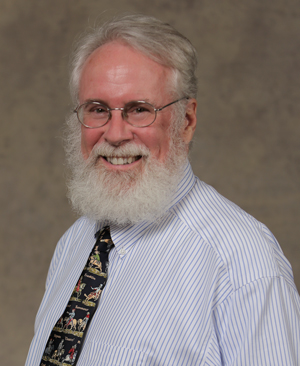
Bill-Worthen_K0A4687-webBill Worthen IS Mr. Little Rock and Arkansas History.  Not only do his family roots (in many branches) go back to the early days of Arkansas, he has overseen Historic Arkansas Museum’s transformation from a sleepy collection of historic structures to a dynamic museum experience.  This week, he and his staff are putting the final touches on Saturday’s Candlelight Gala which will celebrate the 75th anniversary of Historic Arkansas Museum.

-My earliest memory was (age and incident)

With my Grandmother at the train station in Hot Springs, maybe 3?

-When I was in high school and imagined my adulthood, I thought I would be…

In junior high, when required to do a project on a possible career, I interviewed an illustrator/cartoonist, but I never had a solid direction until it was required of me.

-Star Wars, Star Trek, Battle of the Network Stars, or Dancing with the Stars?

Star Wars

-I most identify with the Winnie the Pooh character of…

Tiggerbillworthen

-The performer I’d drop everything to see is…

The Band

-My first paying job was…

Occasional paperboy, paid by my brother, who was the real paperboy

-A book I think everyone should read is….

I usually don’t push my taste on others, but I love Arkansas Folklore, by Masterson.

-My favorite season is…

Spring

-We are all geeks (or experts) about something. My field is….

bowie knife and Arkansas Traveler


Legacy of LR architect Ed Cromwell to be discussed tonight

CromwellTonight the Architecture and Design Network will host a panel discussion on the legacy of longtime Little Rock architect Ed Cromwell.
The panelists are:
  • Charles Penix, Chief Operating Officer, Cromwell Architects and Engineers
  • Bill Worthen, Director, Historic Arkansas Museum
  • Don Evans, architect and associate of the late Ed Cromwell

Chris East is the program’s moderator.  It will take place at 6pm at the Arkansas Arts Center, following a reception at 5:30pm.

After working at various jobs during the early years of the Depression, Ed Cromwell, who graduated from Princeton in 1931 with a degree in architecture, moved to Little Rock in 1935 to take a position with the  Resettlement Administration. After a year with the agency, he left to devote full time to the practice of architecture, a career which spanned forty-eight years, from 1936 to1984. Cromwell, who remained active in the community after his retirement, died in 2001, leaving a legacy that continues to impact people’s lives.

There would be no Maumelle if it hadn’t been for Cromwell’s vision of a planned community on the 5,000 acres of land owned by Jess P. Odum, an Arkansas businessman and insurance executive. The Capital Hotel might have been taken out by the wrecker’s ball if it hadn’t been for his determination to save the historic structure. An advocate for the city’s riverfront development, he understood its importance long before others did. He championed historic preservation and  chaired the commission of the Arkansas Territorial  Restoration (now the Historic Arkansas Museum). Cromwell Architects and Engineers, the firm he founded, has to its credit the design of many public buildings and facilities throughout the state and beyond.

The three panelists will explore Cromwell’s legacy as a creative architect, a visionary planner and a champion of  historic  preservation. Architecture and Design Network (ADN) lectures are free and open to the public. For additional information, contact ardenetwork@me.com.

ADN’s supporters include the Arkansas Arts Center, the University of Arkansas Fay Jones School of Architecture, the Central Section of the Arkansas Chapter of the American Institute of Architects and friends in the community.

Little Rock Look Back: Major Nicholas Peay

LR sealOn April 28, 1784, in Virginia, future Little Rock Alderman (and acting Mayor) Major Nicholas Peay was born the eleventh of at least thirteen children.  (His gravestone lists a May date for his birth, but other records indicate April 28, 1784.) A veteran of the War of 1812 and the Indian Wars, he later moved to Kentucky (where he met and married his wife, Juliet Neill, in 1814) before settling in Arkansas on September 18, 1825.  At the time, they were the ninth family to set up residence in Little Rock.

After arriving in Little Rock, he bought the Little Rock Tavern. This started a fifty year tradition of his family owning taverns and hotels in Little Rock. In 1828, he was appointed Assistant Postmaster of Little Rock.  From 1825 to 1831, Little Rock residents were allowed to elect five Trustees prior to the formal incorporation. Major Peay was one of those who served on the Board of Trustees.

He later served on the Little Rock City Council, and in 1839 served for seven months as Acting Mayor due to the prolonged absence of Mayor Jesse Brown.  In 1841, his friend Gen. Zachary Taylor, paid a visit to Little Rock and stayed with him on the General’s way to Fort Smith.

Nicholas and Juliet Peay had at least eleven children, though only five appeared to have lived until adulthood. One of those, Gordon Neill Peay, served as Little Rock’s 23rd Mayor from 1859 to 1861. Other descendants of Nicholas Peay who followed him into public service include his grandson Ashley Peay, who was an Alderman in the 1920s (son of John Coleman Peay) and great-great-grandson Joseph B. Hurst (a great-grandson of Mayor Peay), who was a City Director from 1967 to 1970. In addition, Hurst’s daughter-in-law, Stacy Hurst served three terms on the City Board from 2003 to 2014; she is now Director of the Department of Arkansas Heritage.

Major Peay’s egg-nog recipe has been passed down for generations. It is the inspiration for the Historic Arkansas Museum yearly Nog-Off.  This past year, museum director Bill Worthen and his daughter were the sixth and seventh generation of the family to make Peay’s egg-nog. The Worthens are descended from Mayor Peay’s son who was also named Gordon Neill Peay.

Major Nicholas Peay is buried with his wife and many other family members in Mount Holly Cemetery.

10th Ever Nog-Off at Historic Arkansas Museum tonight

Tonight from 5pm to 8pm Historic Arkansas Museum will host the 10th Ever Nog-off.  And it’s free!

Get in the holiday spirit with some holiday spirits at this celebration of a favorite holiday drink. Sample a variety of nogs and vote for your favorite at this friendly competition for the best nog in town.
Noggers include Cache Restaurant, Capital Bar and Grill, Copper Grill, the Empress of Little Rock, Loblolly Creamery, Bridget Fennel Farris, John Selig and Family, and Stone’s Throw Brewery.
Also Nogging will be Bill Worthen and his daughter Rachel Worthen who are the sixth and seventh generations to make Nicholas Peay’s egg nog.  Peay was a founder of Little Rock, served as acting Mayor and was father of Mayor Gordon N. Peay (whose birthday is today.)
The judges will be Mayor Mark Stodola; attorney and cocktail expert Joel DiPippa; and Emily Van Zandt, food and drink editor of Arkansas Life.
Live music by Kemistri featuring Nicky Parrish

Commemorate Native American Heritage Month at Historic Arkansas Museum

HAMCollectionHeadPotNovember is Native American Heritage Month.  It’s a great time of year to visit Historic Arkansas Museum and explore their permanent exhibit “We Walk In Two Worlds: The Caddo, Osage and Quapaw in Arkansas.”

And remember – Admission to the galleries at Historic Arkansas Museum is FREE!

This exhibit tells the story of Arkansas’s first people–the Caddo, Osage and Quapaw Indian tribes–from early times to today. More than 150 objects, such as pottery, clothing and weapons, are on display.

The exhibit has six thematic areas that are arranged chronologically.  Along with objects and a historical timeline are passages of relevant research from archeologists, historians and ethnographers.

Throughout the exhibit, is the dominant presence of the Native American voice, from each of Arkansas’s three prominent tribes. During the two years of exhibit development, many tribal members were interviewed and it is this voice that informs, educates and guides visitors through the exhibit. Historic Arkansas Museum chief curator and deputy director Swannee Bennett said, “What makes this exhibit unique is that it is a story of the Arkansas Native American told in large part with an Indian voice.”

This permanent exhibit enables the museum to tell the bigger story of Arkansas’s frontier history. “We Walk in Two Worlds is a milestone as the State of Arkansas officially partners with the Caddo, Osage and Quapaw Nations and the Smithsonian’s National Museum of the American Indian to tell this story of struggle and endurance.” said museum director Bill Worthen.