
Black History Month Spotlight – Lynching of John Carter

John Carter lynch victimThe new Arkansas Civil Rights History Audio Tour was launched in November 2015. Produced by the City of Little Rock and the University of Arkansas at Little Rock allows the many places and stories of the City’s Civil Rights history to come to life an interactive tour.  This month, during Black History Month, the Culture Vulture looks at some of the stops on this tour which focus on African American history.

On May 4, 1927, Little Rock witnessed its worst episode of racial violence in the twentieth century. Thirty-eight year old African American John Carter allegedly “assaulted” two white women on the outskirts of the city. A white mob hunted Carter down, hung him from a telegraph pole, and riddled his dead body with hundreds of bullets. The mob transported Carter’s body downtown and then dragged it through the streets tied to the back of an automobile.

Thousands of white onlookers gathered at West Ninth Street and Broadway, the heart of the black business district. There the mob tore pews from Bethel AME Church, one of the city’s largest and oldest black churches, and threw Carter’s body onto a makeshift funeral pyre. The mob only dispersed when Gov. John E. Martineau sent in Arkansas National Guardsmen because Mayor Charles Moyer, the Chief of Police, and Sheriff “could not be reached.” No charges were ever brought against any of the perpetrators.

During the Jim Crow era, white lynch mobs murdered at least 284 black people in Arkansas, the second highest per capita number of lynchings in any state outside of Mississippi.

The app, funded by a generous grant from the Arkansas Humanities Council, was a collaboration among UALR’s Institute on Race and Ethnicity, the City of Little Rock, the Mayor’s Tourism Commission, and KUAR, UALR’s public radio station, with assistance from the Little Rock Convention and Visitors Bureau.
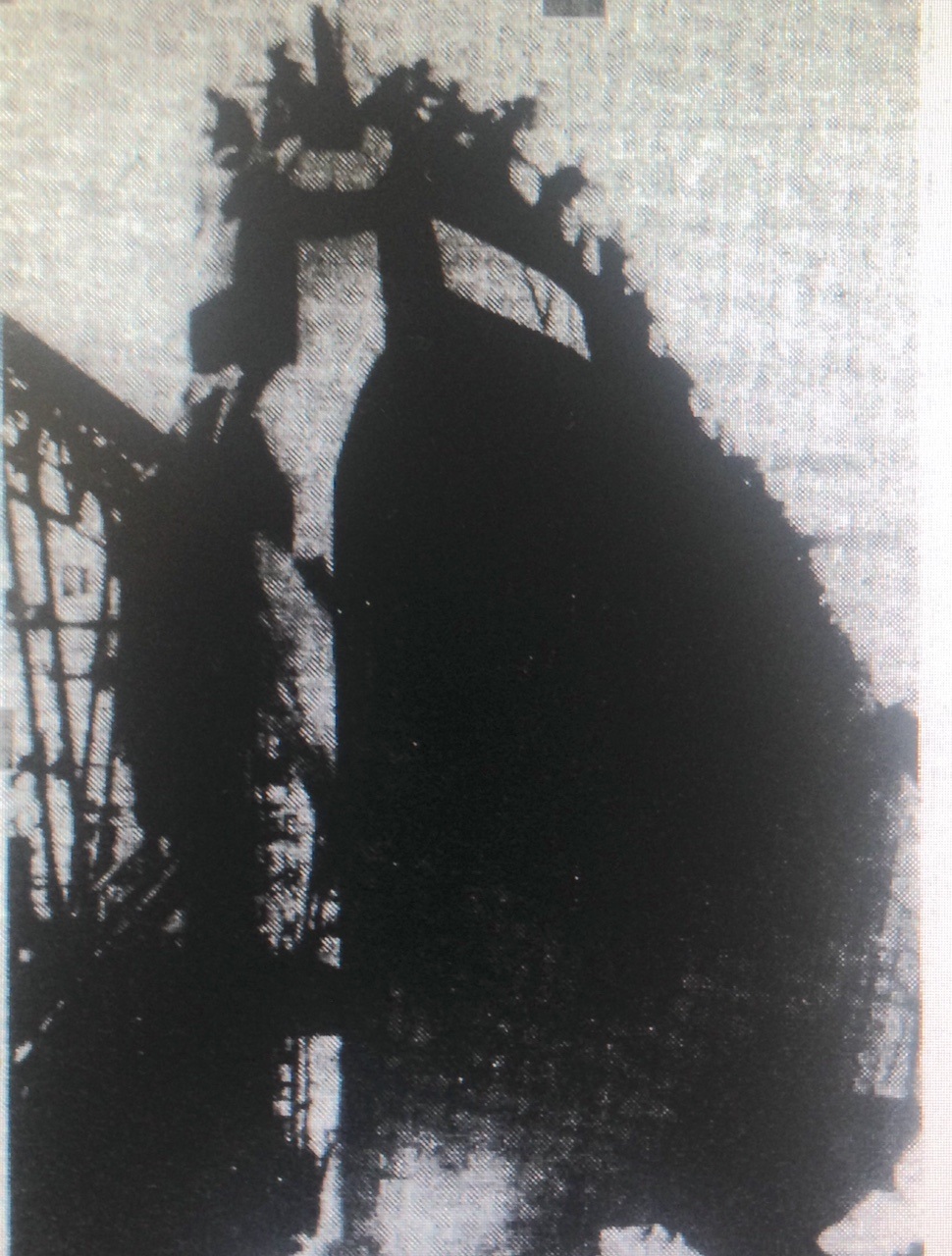
Little Rock Look Back: 1944 Launch of USS Little Rock

USS LR 1944On August 27, 1944, the first USS Little Rock was launched in Philadelphia at the Cramp Shipbuilding Company shipyards.  A 10,000 ton light cruiser, it first touched water in the Delaware River.

The sponsor of the ship (who broke the champagne bottle on the hull) was Mrs. Ruth May Wassell, the wife of Little Rock alderman Sam Wassell.  The main address was delivered by Congressman Brooks Hays, whose district included Little Rock.  A crowd of 5,000 was gathered to witness the launch.

According to the Associated Press Congressman Hays called light cruisers, “the hottest item of naval combat.”

The congressman further elaborated:

The people of Little Rock are proud to have such a ship as this bear their city’s name.” said Mr. Hays. “Even those of us who know little about the classification of naval vessels know that the cruisers have distinguished themselves in the Pacific war and that this is the outstanding type of combat vessel for that area. The navy men tell us that the cruiser is the ‘work horse of the navy.’ big enough to go into any battle, fast enough to lead any task force.

Carrying, as it has, the heaviest load in the Pacific where the greatest battles have taken place, the cruisers have added luster to naval history. We hope that, in the time remaining before our enemies are put down, the Little Rock will take her place along side the Boise, the San Francisco, the Helena, and the Chicago, preserving the prestige of the cruisers.

We are glad to honor the workmen and the company for which they work.  I am sure we are all impressed with the spirit of teamwork which produced the results we observe today.  In March 1943, the keel was laid and for 18 months materials for the ship have come from everywhere. The taxes to pay for it will be assessed against men and women of great and little resources. Teamwork from beginning to end did the job.

So with the war.  A glorious victory lies ahead, but there is much remaining to be done. Only teamwork can supply the dynamic power yet needed to complete that victory. Every ship launching is a reminder of the power that comes to a people who work together to achieve.”

Other guests at the ceremony included United States Senator John L. McClellan and Congressman and senator-elect J. William Fulbright. Alderman Sam Wassell was also present.  He and his wife hosted a dinner for the Arkansas delegation and other dignitaries the night before the christening while they were in Philadelphia.

At the request of the Secretary of the Navy, Little Rock Mayor Charles Moyer designated Mrs. Wassell for the honor of sponsoring the USS Little Rock. There are not details as to why Mayor Moyer made the designation.  A first cousin of Alderman Wassell, Dr. Corydon Wassell had been an early World War II hero and was a favorite of President Franklin Roosevelt.  That may have been a reason for the designation.

The Little Rock City Council sent a bouquet of roses to the ceremony, fitting since the city’s nickname at the time was “City of Roses.” After the launch, Mrs. Wassell sent a telegram to Mayor Moyer and the Council

Thanks a million for the beautiful bouquet of red roses. They made the christening of the cruiser Little Rock perfect. I wish it could have been possible for you to have been present.  The cruiser is 600 feet long and will have a crew of 1,200 men.  I was so proud of our city.  Little Rock has something to be proud of.

Little Rock Look Back: Rabbi Ira Sanders

SandersIraE_fOn May 6, 1894, Ira Eugene Sanders was born in Missouri.  After receiving an undergraduate degree and rabbinate degree in Cincinnati, he was ordained a rabbi in 1919.  He served congregations in Pennyslvania and New York before coming to Little Rock in September 1926.

Shortly after arriving to lead the B’nai Israel congregation, Rabbi Sanders became active in the Little Rock community.  Among his projects were the Little Rock Community Fund, Little Rock School of Social Work (which he founded), Central Council of Social Agencies, and University of Arkansas Extension Department. During the Great Depression, he helped organize the Pulaski County Public Welfare Commission.  Other areas of involvement over his career included the Arkansas Human Betterment League, Urban League of Greater Little Rock and Arkansas Lighthouse for the Blind.  On November 3, 1930, Rabbi Sanders debated Clarence Darrow about the existence of God in front of a packed house at Little Rock High School.

For his many involvements, he received an honorary Doctor of Humanities degree in 1951 from the University of Arkansas.  Three years later he received an honorary Doctor of Divinity degree from Hebrew Union College’s Jewish Institute of Religion.

A lifelong supporter of a Jewish state, he participated in nineteen bond drives for the state of Israel.  In August 1963, he retired as the leader of B’nai Israel after over 35 years. He would remain as Rabbi Emeritus until his deal in 1985.

In January 1978, Rabbi Sanders tendered his resignation from the Central Arkansas Library board of directors.  The City Board of Directors passed resolution 5873 which noted that he had served for 51 years on the Library Board. He was first appointed in 1926.  He served during 19 different Mayoral administrations from Charles Moyer’s first term through Donald Mehlburger’s.

On April 8, 1985, Rabbi Ira Eugene Sanders died of natural causes.  He is buried in the City’s Oakland Jewish Cemetery.  The Central Arkansas Library System honors his memory with an annual distinguished lecture series.

Little Rock Look Back: LR Mayor Charles Moyer

Mayor MoyerOn April 18, 1880, future Little Rock Mayor Charles E. Moyer was born in Glenwood, Minnesota. A man of contradictions, he was both a candidate backed by (and probably personally involved in) the Ku Klux Klan, yet he also brought the Goodwill Industries organization to Little Rock and Arkansas to help those less fortunate.

He came to Little Rock shortly after the turn of the 20th century as a clerk in the Post Office, and later served as a mail carrier. He then worked for Plunkett-Jarrell Wholesale Grocer Company in Little Rock. On January 1, 1921, he took office as County Judge for Pulaski County. In 1924, he ran against incumbent mayor Ben Brickhouse in the Democratic primary. Since Brickhouse had displeased the Klan, which was an active part of Democratic politics in Little Rock and throughout the nation at the time, Moyer won the primary.

Mayor Moyer led the City of Little Rock from April 1925 through April 1929. In 1927, the last lynching in Little Rock took place. While race-baiting crowds were surrounding City Hall demanding an African American prisoner be released to them for vigilante justice, Mayor Moyer was in hiding at an undisclosed location. Not able to get the prisoner they wanted, they took out their venom on another man who had assaulted a white woman and her daughter.

After leaving office in 1929, Moyer moved for a time to Batesville. He returned to Little Rock and was a chief deputy sheriff. From 1937 to 1941, he served as Pulaski County Assessor. In 1941, he returned to the office of Little Rock Mayor after J. V. Satterfield opted to serve only one term and did not seek re-election. Mayor Moyer led Little Rock through most of World War II. He left office in April 1945 and died on May 29, 1945, barely only one month after leaving City Hall.

Little Rock Look Back: City Park becomes MacArthur Park

GOn March 9, 1942, Little Rock’s first public park was renamed by the Little Rock City Council.  By a vote of fourteen ayes, zero nays and four absent, the alderman approved Ordinance 6,388 which renamed the park in honor of General Douglas MacArthur. 

The text of the ordinance says that “it is fitting and proper that the bravery and glorious deeds of General Douglas MacArthur, a native son of Little Rock, should be commemorated.”  This was passed a few months after the United States’ entry into World War II. 

Though he was already a well-established military figure, most of the MacArthur legend during the war would take place after this naming. 

The park land had originally served as a horse racetrack in the early days of Little Rock.  By 1836, the federal government purchased the land for construction of a military arsenal.  The flagship building, the Arsenal Tower building, is the only remaining structure from that time period.  

The land served as a military outpost until 1892.  On April 23, 1892, a land swap took place where in the City of Little Rock was given the property with the stipulation that it would be “forever exclusively devoted to the uses and purposes of a public park.” (Never mind that the federal government took part of the land back for the construction of the Wilbur Mills Freeway.)  

In return for giving the City this land, the federal government took possession of land on the north side of the Arkansas River (then part of Little Rock) – that 1,000 acres became Fort Logan H. Roots. The park opened on July 4, 1893, with the name Arsenal Park. Since it was the City’s first and only park at the time, residents started referring to it as City Park. In time, the designation Arsenal Park fell from use.  In fact, it is referred to as City Park exclusively and officially in City documents throughout the first 42 years of the 20th Century. 

The action of the City Council in March 1942, was accompanied by petitions encouraging the action which were submitted by the Arkansas Authors and Composers Society, the Arkansas Engineers Club and the Pulaski County Republican Central Committee.  

City records do not indicate if anyone registered opposition to the name change. It would be another decade before General MacArthur would return to the site of his birth, a place he had not visited since his infancy.MacPark ordinance

Little Rock Look Back: Charles E. Moyer, Little Rock’s 44th and 49th Mayor

Mayor MoyerOn April 18, 1880, future Little Rock Mayor Charles E. Moyer was born in Glenwood, Minnesota. A man of contradictions, he was both a candidate backed by (and probably personally involved in) the Ku Klux Klan, yet he also brought the Goodwill Industries organization to Little Rock and Arkansas to help those less fortunate.

He came to Little Rock shortly after the turn of the 20th century as a clerk in the Post Office, and later served as a mail carrier. He then worked for Plunkett-Jarrell Wholesale Grocer Company in Little Rock. On January 1, 1921, he took office as County Judge for Pulaski County. In 1924, he ran against incumbent mayor Ben Brickhouse in the Democratic primary. Since Brickhouse had displeased the Klan, which was an active part of Democratic politics in Little Rock and throughout the nation at the time, Moyer won the primary.

Mayor Moyer led the City of Little Rock from April 1925 through April 1929. In 1927, the last lynching in Little Rock took place. While race-baiting crowds were surrounding City Hall demanding an African American prisoner be released to them for vigilante justice, Mayor Moyer was in hiding at an undisclosed location. Not able to get the prisoner they wanted, they took out their venom on another man who had assaulted a white woman and her daughter.

After leaving office in 1929, Moyer moved for a time to Batesville. He returned to Little Rock and was a chief deputy sheriff. From 1937 to 1941, he served as Pulaski County Assessor. In 1941, he returned to the office of Little Rock Mayor after J. V. Satterfield opted to serve only one term and did not seek re-election. Mayor Moyer led Little Rock through most of World War II. He left office in April 1945 and died on May 29, 1945, barely only one month after leaving City Hall.

Little Rock Look Back: City Park renamed for MacArthur

GOn March 9, 1942, Little Rock’s first public park was renamed by the Little Rock City Council.  By a vote of fourteen ayes, zero nays and four absent, the alderman approved ordinance 6388 which renamed the park in honor of General Douglas MacArthur.

The text of the ordinance says that “it is fitting and proper that the bravery and glorious deeds of General Douglas MacArthur, a native son of Little Rock, should be commemorated.”  This was passed a few months after the United States’ entry into World War II. Though he was already a well-established military figure, most of the MacArthur legend during the war would take place after this naming.

The park land had originally served as a horse racetrack in the early days of Little Rock.  By 1836, the federal government purchased the land for construction of a military arsenal.  The flagship building, the Arsenal Tower building, is the only remaining structure from that time period.  The land served as a military outpost until 1892.  On April 23, 1892, a land swap took place where in the City of Little Rock was given the property with the stipulation that it would be “forever exclusively devoted to the uses and purposes of a public park.” (Never mind that the federal government took part of the land back for the construction of the Wilbur Mills Freeway.)  In return for giving the City this land, the federal government took possession of land on the north side of the Arkansas River (then part of Little Rock) – that 1,000 acres became Fort Logan H. Roots.

The park opened on July 4, 1893, with the name Arsenal Park. Since it was the City’s first and only park at the time, residents started referring to it as City Park. In time, the designation Arsenal Park fell from use.  In fact, it is referred to as City Park exclusively and officially in City documents throughout the first 42 years of the 20th Century.

The action of the City Council in March 1942, was accompanied by petitions encouraging the action which were submitted by the Arkansas Authors and Composers Society, the Arkansas Engineers Club and the Pulaski County Republican Central Committee.  City records do not indicate if anyone registered opposition to the name change.

It would be another decade before General MacArthur would return to the site of his birth, a place he had not visited since his infancy.

MacPark ordinance