Little Rock Look Back: Gordon N. Peay, Little Rock’s 23rd Mayor

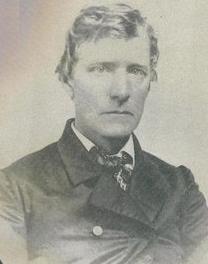
Mayor PeayOn December 12, 1819, future Little Rock Mayor Gordon Neill Peay was born.  The Peay family arrived in Arkansas from Kentucky in 1825.  They quickly became one of Little Rock’s leading families.  Mayor Peay’s father, Nicholas Peay served on the Little Rock Board of Trustees (which existed before the town was incorporated) and later served on the City Council and was acting mayor.

Godon N. Peay served as mayor of Little Rock from 1859 to 1861.  During the Civil War, Peay served as Captain and later Colonel of the Capital Guard.  He later received a pardon from the federal government.  In the days leading up to the Civil War and during it, Mayor Peay was one of a select group of civic leaders who corresponded with President Lincoln and other Union leaders. It has been said that this conciliatory tone is a reason that Little Rock fared better during Federal occupation and Reconstruction than did many other Confederate cities.

The Peay family owned the Peay Hotel, Little Rock’s first hotel, and were also co-founders of what became Worthen Bank.  They were also a founding family of Christ Episcopal Church. Mayor Peay later served as Pulaski County Chancery Clerk.

He died on December 14, 1876, and is buried at Mount Holly Cemetery along with many members of his family.  A nephew of his, Ashley Peay, served on the City Council in the 1920s.  Mayor Peay’s great-grandson Joseph Barber Hurst, Sr. served on the Little Rock City Board of Directors from 1967-1971. One of Mr. Hurst’s sons, Howard, was born on Mayor Peay’s birthday.

2016 Arkansas Literary Festival dates and lineup announced

ALF 2016_textPrestigious award-winners, screenwriters, comedians, an expert witness, artists, and a Pulitzer Prize-winning poet are among the diverse roster of presenters who will be providing sessions at the thirteenth annual Arkansas Literary Festival, April 14-17, 2016. The Central Arkansas Library System’s Main Library campus and many other Little Rock venues are the sites for a stimulating mix of sessions, panels, special events, performances, workshops, presentations, opportunities to meet authors, book sales, and book signings. Most events are free and open to the public.
     The Arkansas Literary Festival, the premier gathering of readers and writers in Arkansas, will include more than 80 presenters including featured authors from approximately 24 different states and guests hailing from Canada, England, Russia, and Singapore. Each year, several of the attending authors have not visited Little Rock, Arkansas, or even the South.
     Presenters come from a wide range of backgrounds including: journalist, documentary filmmaker, economist, editor, microbiologist, national bank examiner, essayist, photographer, sports reporter, psychological examiner, musician, actress, reporter, and professor. One is co-producing Keanu Reeves’ new television show and writing an adaptation of his own book for Warner Bros. and Bradley Cooper.
     Special events for adults during the Festival include a cocktail reception with the authors, a tour of the Governor’s Mansion gardens with a wine and cheese reception, an escape room, and Readers’ Map of Arkansas launch party. Panels and sessions include genres and topics such as literary fiction, barbecue, Monopoly, female rocket scientists, travel, graphic novels, science fiction, classic literature, and a story told in playing cards.
     Children’s special events include a session by Nikki Grimes, activity hour, concert by the Kinders, and the play How the Camel Got His Hump. based on Rudyard Kipling’s Just So Stories. Festival sessions for children will take place at both the Hillary Rodham Clinton Children’s Library and Learning Center, 4800 10th Street, and the Youth Services Department at the Main Library, 100 Rock Street. Special events for teens include North Little Rock High School Readers Theater, a teen poetry competition, and a panel with three authors of books for young adults.
     Through the Writers In The Schools (WITS) initiative, the Festival will provide presentations by several authors for central Arkansas elementary, middle, and senior high schools and area colleges.
     Author! Author!, a cocktail reception with the authors, will be Friday, April 15, at 7 p.m. Tickets are $25 in advance and $40 at the door, and go on sale at ArkansasLiteraryFestival.org beginning Monday, March 15.
     This year’s Festival authors have won an impressive number and variety of distinguished awards and fellowships including: Pulitzer Prize, James Beard Award, PEN/Hemingway Award, Hugo Award, Coretta Scott King Award, Will Eisner Comic Industry Award, National Book Foundation “5 Under 35” Honoree, Coretta Scott King Illustrator Award, Dashiell Hammett Prize, Barnes & Noble Discover Great New Writers Selection, National Endowment for the Arts Fellowship, Fulbright Fellowship, Guggenheim Fellowship, Houghton Mifflen Literary Fellowship, Arkansas Arts Council Fellowship.
     The work of this year’s Festival authors has been featured in notable publications including: New York Times, Details, McSweeney’s Quarterly, Forbes, the Paris Review, theHuffington Post, Women’s Health, Gourmet Magazine, the New Republic, the Los Angeles Times, Smithsonian, the Daily Telegraph UK, VICE, the New Yorker, Harper’s, the Atlantic, Slate, Time, Popular Science, Salon, the Best American Travel Writing, Outside Magazine, Esquire, USA Today, Reader’s Digest, Best American Essays, Best American Short Stories, Penthouse, the Nation, Best American Poetry, the Washington Post, Town & Country, the Economist, the Christian Science Monitor, National Geographic, the Wall Street Journal, Bloomberg BusinessWeek, Rolling Stone, GQ, Sports Illustrated, and Vogue
     The Literary Festival is presented by the Central Arkansas Library System. Sponsors include Arkansas Humanities Council, Friends of Central Arkansas Library System (FOCAL), Clinton Presidential Center, Fred K. Darragh Jr. Foundation, KUAR FM 89.1, ProSmartPrinting.com, Rebsamen Fund, Arkansas Democrat-Gazette, Arkansas Times, Gibbs Elementary School, Hendrix-Murphy Foundation Programs in Literature and Language, MacArthur Museum of Arkansas Military History, Museum of Discovery, Otter Creek Elementary School, UALR Department of English, Windstream, Arkansas Library Association, Christ Episcopal Church, East Harding Construction, Hampton Inn, Hemingway-Pfeiffer Museum and Educational Center, Henderson State University, Hendrix College Project Pericles Program, University of Arkansas Clinton School of Public Service, Witt Stephens Jr. Central Arkansas Nature Center, Greater Little Rock Council of Garden Clubs, Capital Hotel, City of Little Rock, Et Alia Press, Consulate General of Israel to the Southwest, Literacy Action of Central Arkansas, Mayor Mark Stodola, Mollie Savage Memorial/CALS, North Little Rock High School, Plum Street Publishers, Inc., Pyramid Art Books & Custom Framing/Hearne Fine Art, Sibling Rivalry Press, Stickyz Rock ‘N’ Roll Chicken Shack, UALR Department of Rhetoric and Writing, and Whole Hog. The Arkansas Literary Festival is supported in part by funds from the Arkansas Humanities Council and the National Endowment for the Humanities.
     The Festival’s mission is to encourage the development of a more literate populace. A group of dedicated volunteers assists Festival Coordinator Brad Mooy with planning the Festival. Committee chairs include Kevin Brockmeier, Talent Committee; Susan Santa Cruz, Festival Guides; and Amy Bradley-Hole, Moderators.
     Visit the Festival Facebook and Twitter pages to get the latest news about the Festival. For more information about the 2016 Arkansas Literary Festival, visit ArkansasLiteraryFestival.org, or contact Brad Mooy at bmooy@cals.org or 918-3098. For information on volunteering at the Festival, contact Angela Delaney at adelaney@cals.org or 918-3095.

Little Rock Look Back: Gen. Douglas MacArthur

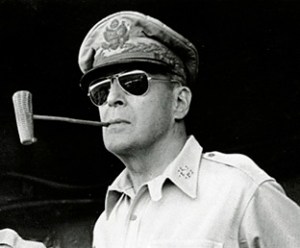
GOn January 26, 1880, Douglas MacArthur was born in the Arsenal Building while his father was stationed at the Little Rock Barracks.  Though he left Arkansas a few weeks later when his father was transferred, he returned to his birthplace on March 23, 1952. On that day he was greeted by crowds welcoming one of the USA’s most famous military figures.

Though Gen. MacArthur spent only a few weeks in Little Rock, he was baptized at Christ Episcopal Church.  The location of the baptism remains a mystery today because the church was meeting in temporary locations due to the first structure having been lost to a fire.

When the General returned to Little Rock in 1952, he did pay a brief visit to Christ Church.  He also spoke at the Foster Bandshell in the park which bore his name.  He was one of three presidential candidates to speak at the Foster Bandshell in 1952, the others were the eventual Democratic and Republican nominees Adlai Stevenson and Dwight Eisenhower.

When General MacArthur died, he was granted a state funeral.  He was one of the few non-Presidents to have been given this honor.

Today, the MacArthur Museum of Arkansas Military History is located in the Arsenal building.  It was created to interpret our state’s military heritage from its territorial period to the present.  Located in the historic Tower Building of the Little Rock Arsenal–the birthplace of General Douglas MacArthur–the museum preserves the contributions of Arkansas men and women who served in the armed forces.  Exhibits feature artifacts, photographs, weapons, documents, uniforms and other military items that vividly portray Arkansas’s military history at home and abroad.

That museum will be one of the main beneficiaries of the successful approval of the tax election set for February 9.

2015 In Memoriam – Bert Parke

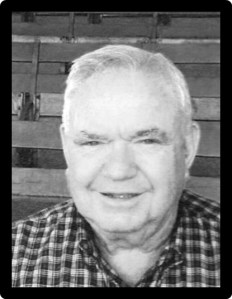
1515 ParkeBert Parke enjoyed music.  While he may have been better known for listening to the organ at the baseball park (first Ray Winder Field, then Dickey-Stephens Ballpark), he also enjoyed the organ at Christ Episcopal Church.  Of course his affection for the church organ cannot be separated from the fact that his beloved Ann Blair was often in the choir singing with the organ.

To many in Arkansas (and — let’s be honest, beyond Arkansas), Bert was known for his decades-long association with the Arkansas Travelers. He was part of the small group of businessmen who kept baseball in Little Rock in the 1960s by turning the Travelers into the nation’s only community-owned professional baseball team. In the 1970s, he served as Treasurer of the Travelers before being elected as President in 1980. For the next 30 years, he served in that capacity until becoming President Emeritus in 2010. Just weeks before he died, Bert was elected to the Texas League Hall of Fame.

As a businessman, he led Democrat Printing & Lithograph through many innovations and changes. Through it all, he made sure it continued to serve its customers. He passed this on to his sons Frank and John. To his children and grandchildren, he also passed on to his family the importance of philanthropy and serving the community.  He and Ann Blair co-chaired the first Opus Ball for the Arkansas Symphony Orchestra. At the time, there were very few black tie balls in Little Rock, so their leadership was crucial to the success of the event.

Bert also was involved in the MacArthur Museum of Arkansas Military History; he was named an Honorary Lifetime Commissioner of that museum. A life-long member of Christ Episcopal Church, he held many leadership positions in the church and the Episcopal Diocese of Arkansas.

These words do poor service to the man who was Bert Parke. He had a perpetual twinkle in his eye. His mouth was always curled ready to burst into one of his generous smiles. He met no strangers.  For a while in 2015, he and I both were using walkers as we trudged down the side aisle at Christ Church. Well, I trudged. Bert reveled in the affection as he worked the crowd in a way that would be the envy of most politicians who try to work a rope line.  Each week, he would check on my progress as I recovered from a broken ankle.

For a better job at capturing the spirit of Bert Parke, here is the Rev. Scott Walters’ outstanding homily which was delivered at his service.

Little Rock Look Back: Mayor Gordon N. Peay

Mayor PeayOn December 12, 1819, future Little Rock Mayor Gordon Neill Peay was born.  The Peay family arrived in Arkansas from Kentucky in 1825.  They quickly became one of Little Rock’s leading families.  Mayor Peay’s father, Nicholas Peay served on the Little Rock Board of Trustees (which existed before the town was incorporated) and later served on the City Council and was acting mayor.
Godon N. Peay served as mayor of Little Rock from 1859 to 1860.  During the Civil War, Peay served as Captain and later Colonel of the Capital Guard.  He later received a pardon from the federal government.

The Peay family owned the Peay Hotel, Little Rock’s first hotel, and were also co-founders of what became Worthen Bank.  They were also a founding family of Christ Episcopal Church. Mayor Peay later served as Pulaski County Chancery Clerk.

He died on December 14, 1876, and is buried at Mount Holly Cemetery along with many members of his family.  A nephew of his, Ashley Peay, served on the City Council in the 1920s.  Mayor Peay’s great-grandson Joseph Barber Hurst, Sr. served on the Little Rock City Board of Directors from 1967-1971. One of Mr. Hurst’s sons, Howard, was born on Mayor Peay’s birthday.

Creative Class of 2015: Scott Walters

scottwaltersOctober may have ended yesterday. But since this is about Creativity, the Creative Class stretches into November for one day this year.  Scott Walters uses his position as Rector of Christ Church to build connections and raise awareness of a variety of art forms and creative disciplines.

Through his leadership and encouragement, two different public gallery spaces have been created at Christ Church, an Arts at Christ Church series has been launched (featuring all types of music from Grammy winning soul to Renaissance chamber), the basement has been turned into The Undercroft music venue with regular performances, and a partnership with the Arkansas Literary Festival has been undertaken.

Concerned with the built environment, he has led walking tours of downtown which have focused not only on the history of the neighborhood but also looking at its present and envisioning its future possibilities.  Because Christ Church is at a hub of development in the River Market, Creative Corridor, SoMa, MacArthur Park and Hanger Hill, he is exploring ways to more actively integrate the church into its greater community.

Interested in historic preservation, he is currently shepherding an effort to restore the historic stained glass windows at the church. A student of poetry, philosophy and urban planning, he can often be found engaged in discussions about those topics.  But he is just as likely to discuss comedians, YouTube videos, and the local music scene.

Little Rock Look Back: Little Rock takes first steps to becoming a city

CLR oct271825Little Rock started functioning as the capital of Arkansas in June 1821. But by 1825 the settlement know as Little Rock was little more than a loosely defined group of structures. One hundred and ninety years ago today, on October 27, 1825,Territorial Governor George Izard signed legislation which started establishing a framework for Little Rock to function as a city.

It established that Little Rock citizens could elect a board of trustees to decide matters. Those trustees would choose one of their own to be a presiding officer. Though Little Rock would not be officially incorporated until 1831, this was the first step towards incorporation. The first trustees, elected for 1826, were Robert Crittenden, Joseph Henderson, Nicholas Peay, Bernard Smith and Isaac Watkins. Smith was chosen to be the presiding officer.

Crittenden had been largely responsible for the relocation of the capitol to Little Rock, where he owned a lot of land. He was a major political force in Arkansas politics during the territorial days. Watkins was a nephew of a signer of the Declaration of Independence. He had established the first tavern in Little Rock in 1821 and later he first mill in 1826. He was murdered in 1827 and the perpetrator was never captured.

Peay bought the tavern from Watkins in 1826 and continued in the tavern and hotel business the rest of his life. He later served on the Little Rock City Council and was acting mayor. His son Gordon Neill Peay served as Mayor of Little Rock. The Peay family also cofounded Worthen Bank and Christ Episcopal Church. Members of several branches of Mr. Peay’s descendants including the Worthen and Hurst families remain active in Little Rock affairs.