Memorial Day – Remember the Fallen

Today is Memorial Day – a time to pay tribute to the men and women in uniform who died in service to their country.

As a way to give this recognition, today would be a good day to visit a cemetery. One of Little Rock’s most storied cemeteries is Mount Holly Cemetery. There are numerous persons buried there who died while in service to their country.

One of them is 2Lt Carrick W. Heiskell, son of Arkansas Gazette editor J. N. Heiskell.  2Lt Heiskell died while flying for the Air Transport Command in the Himalayas during World War II.  He was posthumously the recipient of the Distinguished Unit Emblem, Purple Heart, and the Air Medal.

Founded in 1843, Mount Holly has been called “The Westminster Abbey of Arkansas.” Thousands of visitors come each year. Those interested in history come to see the resting places of the territorial citizens of the state, including governors, senators, generals, black artisans, and even a Cherokee princess. For others the cemetery is an open air museum of artistic eras: Classical, Victorian, Art Deco, Modern––expressed in gravestone styles from simple to elaborate. Some come to read the epitaphs that range from heartbreaking to humorous to mysterious.

Though a City of Little Rock facility, the cemetery is maintained by the Mount Holly Cemetery Association, a non-profit organization with a volunteer Board of Directors. The cemetery is located at 1200 South Broadway in Little Rock. Gates are open from 8 a.m. until 5 p.m. in the summer and from 8 a.m. until 4 p.m. in the winter.
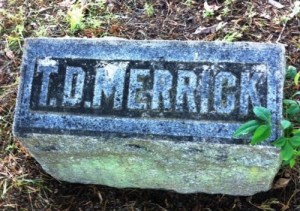
Little Rock Mayor T. D. Merrick born on May 23, 1814

_Thomas D. Merrick was born on May 23, 1814, in Hampden County, Massachusetts. He later moved to Indianapolis and Louisville before ending up in Little Rock.

On January 17, 1841, he married Anna M. Adams of Kentucky at Christ Episcopal Church in Little Rock. They had seven children: George, Annie, Ellie, Mollie, Lillian, Dwight, and Thomas.

Merrick became a prominent member of the Little Rock business community, as a merchant and cotton broker. He was involved in Freemasonry, holding the position of Grand Secretary of the Grand Lodge of Arkansas in 1845.

In 1855 Merrick entered into a business partnership with future LR Mayor John Wassell. Merrick was also involved in city politics, serving on the city council and also as mayor from January 1854 to January 1855.

He saw active service during the Civil War. On February 6, 1861, Merrick delivered an ultimatum to Captain James Totten of the United States Arsenal at Little Rock, demanding the surrender of the federal troops.  This was more than two months before Fort Sumter was attacked.

Captain Totten ignored the ultimatum. Merrick, however, did not lead an attack on the Arsenal, which would have certainly been viewed as aggression against the federal government.

Merrick also raised a regiment of Confederate Arkansas Militia, holding the rank of Colonel of Infantry at Camp Conway, near Springfield, Arkansas.  Following the Battle of Shiloh (April 1862), Merrick resigned his commission and returned to Little Rock.

Merrick died in his home in Little Rock on March 18, 1866.  He is buried in Mount Holly Cemetery.

176 years of Mount Holly Cemetery

Mount Holly Cemetery in January 2013.

2019 marks the 176th year of Mount Holly Cemetery in Little Rock.

The land was donated by Roswell Beebe and Chester Ashley in February 1843.  From March through October 1843, the Little Rock City Council would pass a variety of ordinances and resolutions governing the cemetery and making other provisions for it.

Though the opening day sale of lots and picnic would not take place until May 1843, the first burial appears to have been on April 8, 1843.  William Cummins was buried will full Masonic orders on that day.  The service was conducted by Little Rock’s second mayor, Rev. W. W. Stevenson.

On May 1, 1843, it became illegal to bury persons in Little Rock any location other than Mount Holly.  This ordinance had been adopted on March 7, 1843.

The prior cemetery had been at Capitol and Gaines Streets (on which a portion of the Federal Courthouse now stands). Skeletal remains have also been found at Seventh and Rock Streets, in what was probably a family burial plot.  Other small plots were in existence until action in 1834 by the Little Rock Town Council which prohibited private cemeteries.

During the Civil War and years following it, the City would establish other cemeteries and allow additional cemeteries to be created.  But the creation of Mount Holly marked another step in Little Rock’s development as a city.

From 1843 until 1877, Mount Holly was governed by a City Council Committee.  Upset by the lack of attention given to the cemetery, a group of civic leaders asked the City Council to create a separate Commission to govern the cemetery. This was done on March 20, 1877.  It was possibly the first City Board or Commission composed of non-elected officials.

By 1914, the cemetery was once again being neglected.  This time a group of Little Rock’s leading women decided it was time to band together to address it.  In June 1915, the Little Rock City Council disbanded the Cemetery Commission for Mount Holly and designated the Mount Holly Cemetery Association as the governing body.  103 years later, the ladies of the Mount Holly Cemetery Association continue this outstanding work.

Little Rock Look Back: Dan Sprick

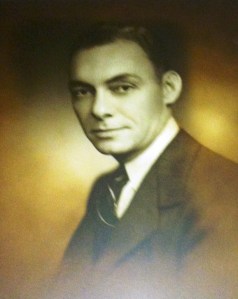
Future Little Rock Mayor Dan T. Sprick was born on May 19, 1902.  He served three terms on the Little Rock City Council (from 1935 to 1941).  In 1945, he was elected Mayor of Little Rock and served one term. During his tenure on the City Council, he was the sole vote against locating Robinson Auditorium at Markham and Broadway.  He had favored another location.
He was not alone, however, in being held in contempt of court and spending part of the day in jail.  On Monday, December 4, a dozen of Little Rock’s aldermen (which included Sprick) reported to the county jail to serve sentences for contempt of court. The previous Monday, the twelve council members had voted against an ordinance which had been ordered by the judge in an improvement district matter. The other aldermen had either voted in the affirmative or had been absent. Because the twelve had refused to change their votes since that meeting, the judge ordered them jailed.  After the aldermen changed their votes later in the day, they were freed.

His tenure as Mayor was relatively quiet. He took office the same month that World War II ended. While in office, the Sprick administration was marked by growth in the city budget and in city positions. As a part of that growth, there were many more new purchases taking place which had prompted extra scrutiny of the City’s purchasing procedures. A thorough investigation toward the end of his tenure found no malfeasance or misfeasance, it did note that the city needed to do a better job of anticipating cash flow. Much of the City’s focus during the Sprick tenure was on growth and keeping up infrastructure needs.

Sprick later served for ten years in the Arkansas State Senate (from 1961 to 1970).  During his tenure in the Senate, Sprick was closely aligned with Gov. Orval Faubus.  When the Little Rock high schools had been closed a year to ensure segregation, Sprick had served on the board of a private school set up by some of the leaders of the segregation movement.

His time in the Senate was also marked by controversy.  He was one of three Senators to opposed Muhammad Ali’s speaking at the University of Arkansas at Fayetteville.  After an Arkansas Gazette editorial lambasted him, Sprick sued the paper for libel. The Gazette settled with him out of court because his health was poor.

One of the landmark pieces of legislation he guided through the Arkansas General Assembly allowed cities to collect advertising and promotion taxes.  The 1972 and 1973 upgrades to Robinson Center were funded by this tax (as have some subsequent upgrades). So the building he voted against while on the LR City Council benefited from legislation he championed while in the General Assembly.

Sprick died in January 1972.

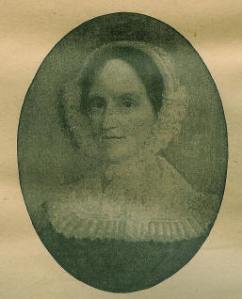
Little Rock’s Founding Mother: Eliza Wilson Bertrand Cunningham

Eliza Wilson Bertrand Cunningham was the First Lady of Little Rock.  She literally was the first lady and the founding mother.

She became the first permanent female resident when she joined her husband Matthew Cunningham in Little Rock.  She gave birth to Chester Ashley Cunningham, the first baby born in Little Rock, as well as several other children with Cunningham.

When he became the first Mayor of Little Rock, she was the first First Lady of Little Rock. They hosted the first Little Rock Council meeting at their house on what is now the block downtown bounded by Third, Main, Fourth and Louisiana Streets.  Her son Charles P. Bertrand, from her first husband, later served as Mayor of Little Rock, making her the only woman to be married to a Mayor and be mother of a Mayor.

Born in Scotland in December 1788, she emigrated with her parents to the United States as a young girl.  In 1804 or 1805, she married a French businessman, Pierre Bertrand in New York City.  She lived in New York City, while he traveled to his various business ventures.  He never returned from a trip to his coffee plantation in Santo Domingo and was presumed to have died in 1808 or 1809.  She and Bertrand had three children, Charles Pierre, Arabella and Jane. (Jane may have died in childhood, because records and lore only indicated Charles and Arabella coming to Little Rock with their mother.)

Eliza married Dr. Matthew Cunningham in New York City.  He later moved to Saint Louis and settled in Little Rock in early 1820.  Eliza and her two children came to Little Rock in September 1820.  In 1822, she gave birth to Chester Ashley Cunningham, the first documented baby born in Little Rock.  (There are unsubstantiated reports that at least one slave child may have been born prior to Chester.)  She and Matthew also had Robert, Henrietta, Sarah and Matilda.  The latter married Peter Hanger, after whom the Hanger Hill neighborhood is named.

Dr. Cunningham died in June 1851.  Eliza died in September 1856. They and Chester (who died in December 1856) are buried in the Hanger family plot at Mount Holly Cemetery.