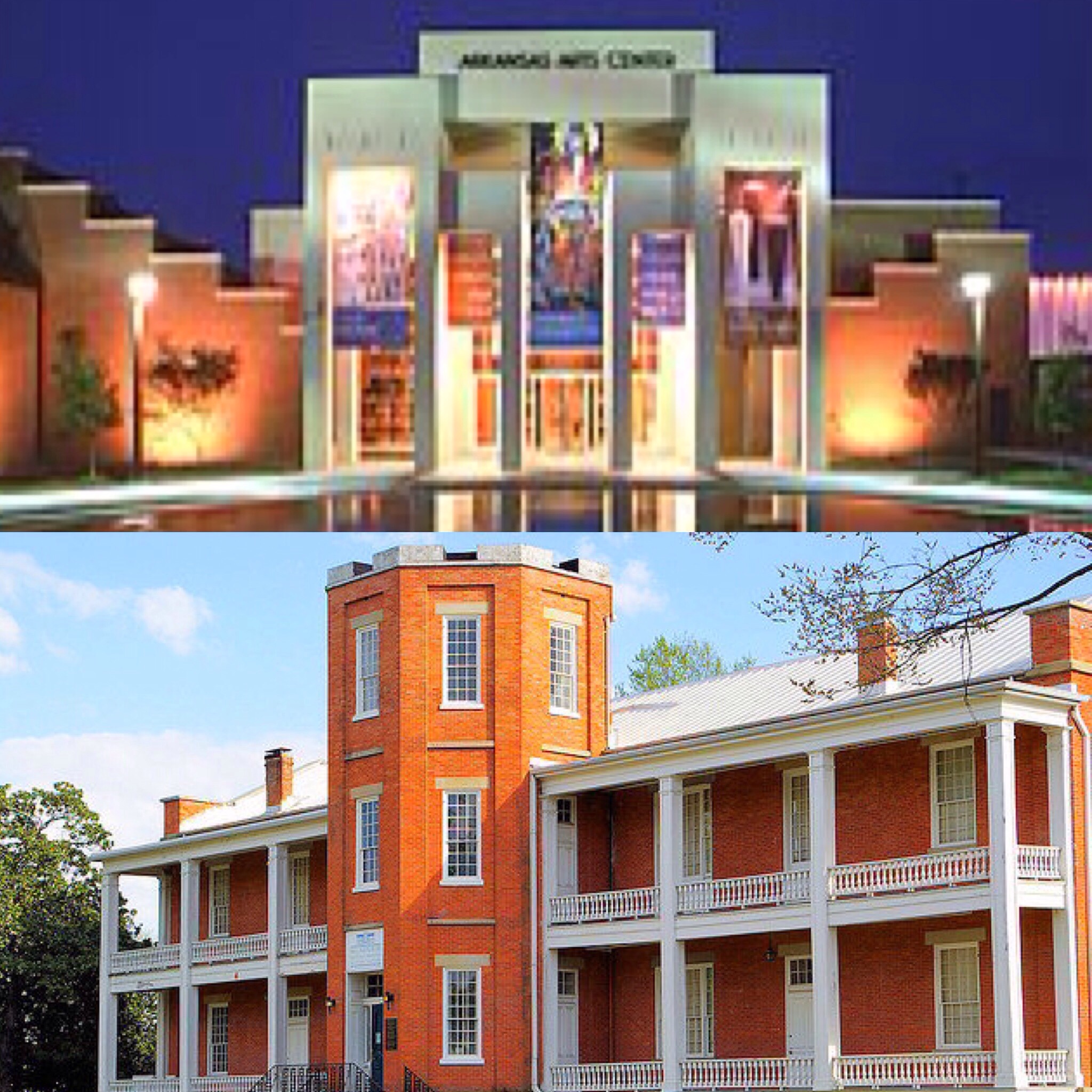
Little Rock Look Back: Little Rock votes to Restore Robinson

On Tuesday, Dec. 10, 2013, voters of Little Rock overwhelmingly chose to renovate the historic Joseph Taylor Robinson Memorial Auditorium.

By a vote of 5,183 For and 1,800 Against, Little Rock citizens approved a plan to use a portion of the city’s existing 2 percent restaurant and hotel tax to repay bonds for a renovation of Robinson Center.  The campaign was chaired by businessman Charles Stewart, restaurateur Capi Peck and former LR Mayor Jim Dailey.

Robinson has long been a landmark in central Arkansas. Construction of the Joseph T. Robinson Memorial Auditorium began in 1938 (after a December 1937 groundbreaking under a deadline) and officially opened February 1940. The structure was a PWA (Public Works Administration) project, and is an excellent example of the Art Deco style architecture of the time. The building was added to the National Register of Historic Places in 2007.

The facility is owned by the City of Little Rock and managed by the Little Rock Convention & Visitors Bureau.

The 1940 structure suffered from a wide array of deficiencies, including stage loading and unloading, stage size, acoustical insufficiency, dressing room access and inadequate wing space within the performance hall. Also, structural, mechanical and electrical issues, public circulation and outdated conference center spaces existed within the facility.

Knowing the center is in need of major upgrades if the facility is to continue to serve central Arkansas into the future, the Little Rock Advertising and Promotion Commission (LRA&P) empanelled a Robinson Center Concept Team in October 2011. The group was tasked with evaluating all aspects of the existing facility, researching user needs, proposing conceptual solutions and estimating the cost and construction schedule of the proposed additions and renovations. The concept team was led by Mike Steelman of SCM Architects, PLLC, and included representatives from WD&D Architects, Shuler Shook Theatre Planners, Jaffe-Holden Acoustical Consultants, TME Inc. Mechanical and Electrical Engineers, ECI Inc. Structural Engineers, McClelland Consulting Engineers Inc. Civil Engineers, East Harding Construction, HVS Consulting and Hunt Construction Group.

Additionally, stakeholder and tenant organizations representing the Arkansas Symphony Orchestra, Celebrity Attractions of Tulsa, Oklahoma and the Double Tree Hotel participated in the planning. The concept team findings were presented publicly on June 5, 2012.

On January 17, 2013 the LRA&P announced the selection of Polk Stanley Wilcox Architects, partnered with Ennead Architects, as the architectural and design team for the future renovations. On March 28, 2013 CDI Contractors LLC, partnered with Hunt Construction Group, were selected by LRA&P as the general contractors and construction managers.

On September 23, 2013 the final schematic renderings and cost estimates were presented publicly. The schematic plans depict major interior upgrades within the performance hall including additional volume to create a two-balcony setup, increased lobby space, acoustical improvements, theatrical upgrades, loading dock expansion, a larger stage area, and new dressing room facilities. Additionally, an enhanced modern ballroom and small conference center was unveiled. New technology, mechanical systems, and outdoor plaza spaces were included in the presentation.

Construction would begin on July 1, 2014, with a completion scheduled for November 2016.


Little Rock Look Back: Robinson Auditorium Construction Hits Milestone in 1939

jtrma-bw.jpgMany months behind schedule, it was 76 years ago today that the construction of the Joseph Taylor Robinson Memorial Auditorium was declared “substantially finished.”

On December 8, 1939, the work of the general contractor was complete.  The building’s utilities were all fully connected as the steam line and electric transformer were hooked up.  While the work of the general contractor was through, there was still much work to be done.

Though there were still unfinished portions of the structure, the exterior was complete and finished surfaces had been installed on the interior.  Until the building was officially turned over to the City, the federal Public Works Administration still had to give approval for any uses of the building.

Mayor J. V. Satterfield, Jr. told the press that he wasn’t sure when the City would formally accept the building. The connection of the utilities had used up the remaining funds, so there was uncertainty as to when the final tasks would be completed.

When it was built, Robinson Auditorium was the first municipal auditorium in the south central United States to be air conditioned.  However, the air conditioning unit was not sufficient to cool both the music hall and the convention hall at the same time.  In warm weather months concurrent events would not be able to take place on the two levels.

Little Rock to vote on additional funds for Arts Center, Military Museum

The City of Little Rock Board of Directors tonight (December 1) voted to refer two hotel sales tax initiatives to the ballot.  The election will be on Tuesday, February 9. 

More details about the specifics of the proposals will be presented on this blog leading up to the election. 

In short, one tax is the third penny for hotels and the other tax is the fourth penny which state law allows for parks.  Because it would be for hotels and similar lodging establishments only, the money would be paid by visitors, not Little Rock residents. 

The City Board also passed a resolution outlining a formula by which the Museum of Discovery, Little Rock Zoo, other parks and other cultural institutions would be able to access any excess bond revenues from these taxes.  


Explore Little Rock’s civil rights history with new app

Little Rock-area residents and visitors have a new way to explore the city’s rich civil rights history.
The University of Arkansas at Little Rock Institute on Race and Ethnicity and Little Rock city officials  have unveiled the Arkansas Civil Rights History Tour app.

The free Apple and Android app guides users on an excursion through some of the city’s most influential historical sites, going back to the 1840s. Each of the 35 stops on the GPS-guided tour includes compelling narratives, historic photos, audio, and links to related content.

Tour stops range from the L.C. and Daisy Bates House to the Trail of Tears. The tour includes a total of three National Historic Landmarks, three National Register Historic Districts, and numerous buildings on the National Register of Historic Places.

Narrated in both English and Spanish, the app also offers information about Jewish history in Little Rock, Hispanic migrations to Arkansas, and Native American tribes.

Organizers recommend app users begin their route at Broadway and West Ninth Street in downtown Little Rock, but the app can help people customize their own path.

A collaboration of the Institute on Race and Ethnicity, the City of Little Rock, the Mayor’s Tourism Commission, and KUAR, UALR’s public radio station, led to the creation of the Arkansas Humanities Council-funded app.

“The institute’s mission is to remember and understand the past, to inform and engage the present, and to shape and define the future in the area of race and ethnicity,” said Dr. John Kirk, director of the Institute on Race and Ethnicity.

“The tour app helps us to do all those things: It powerfully sheds light on the past, it allows people to engage with the past in the present moment, and it helps us to consider how those legacies and lessons can shape and define the future of the city and state.”

The app can be found in the Apple App Store and on Google Play by searching for “Arkansas history.”

Dr. Dean Kumpuris to be honored by Arkansas Arts Council

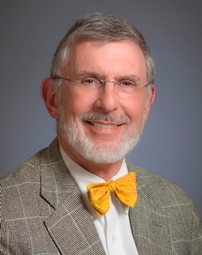
Dean Kumpuris 2014Dean Kumpuris will receive the Governor’s Arts Award for Arts Community Development in early 2016.  The Arkansas Arts Council announced today the recipients for next year’s awards.

Kumpuris is being honored for his three decades of work to improve the cultural and civic life of Little Rock. In particular, he has focused much of his work on the revitalization of downtown, the development of the River Market, and expansion of Riverfront Park.

Through his vision and efforts to place public art downtown, in less than 10 years, nearly 100 sculptures have been installed in the Vogel Schwartz Sculpture Garden, as well as in parks along the Arkansas River and throughout Little Rock. He created the annual fundraiser, Sculpture at the River Market Show and Sale, which attracts thousands of visitors to Little Rock each year and features hundreds of sculptures from internationally recognized artists.

He is a gastroenterologist and has served on the Little Rock City Board of Directors since 1995.  He is also the Chairman of the UALR Board of Visitors and a past member of the Advertising and Promotion Commission.

Little Rock Look Back: Mayor C. P. Bertrand

Bertra1On November 23, 1808, future Mayor Charles P. Bertrand was born in New York.  He was the son of Pierre and Eliza Wilson Bertrand; his father died in 1809 in an uprising in Haiti and his mother eventually remarried.  With her new husband, Dr. Matthew Cunningham, she and the family moved to Little Rock in 1820.

After apprenticing with family friend William Woodruff at the Arkansas Gazette, Bertrand opened the Arkansas Advocate newspaper.  He later studied law under Robert Crittenden and entered the legal profession.

In 1835-1836, he served as State Treasurer for the Arkansas Territory, and in 1836 as secretary for the first constitutional convention. He was a member of the Arkansas House of Representatives from 1840-1841 and 1844-1849.

Bertrand followed in his stepfather’s footsteps and became Mayor of Little Rock.  (Dr. Cunningham had been the first Little Rock Mayor in 1831.)  He was in office from January 1855 through January 1857, serving two one-year terms.  He later served on the City Council and filled in as acting mayor. (Another influence on his upbringing was studying under future Mayor Jesse Brown who taught at the first school in Little Rock.)

Bertrand, as acting mayor, was involved in the negotiations of the surrender of Little Rock to federal troops in 1863.  He also later corresponded with President Lincoln on behalf of Little Rock citizens.

Though a staunch Confederate, his good will toward the Union soldiers and federal officials is credited with helping to save Little Rock from the destruction which befell many other Southern cities.  He is also credited with delaying the start of the Civil War.  Prior to the attack on Fort Sumner, members of the Arkansas Militia were planning to attack the Federal Arsenal at Little Rock during the absence of Governor Rector.  This would have been viewed as an act of war.  Bertrand was able to dissuade them from the attack.  Had he been unsuccessful, the Civil War would have likely started in Arkansas instead of South Carolina.

He had put his considerable fortune into Confederate money during the war. At the Civil War’s conclusion, the family was financially ruined. Though they had vast land holdings, those would be sold off in parcels to pay for taxes.

Bertrand died August 27, 1865, shortly after the conclusion of the Civil War.  He, like his mother, step-father, and several other relatives, is buried in Mt. Holly Cemetery.

Little Rock Look Back: Remembering JFK

JFK LROn November 22, 1963, President John Fitzgerald Kennedy was felled by an assassin’s bullet in Dallas.  A mere seven weeks earlier he had delighted crowds in Little Rock and at Greers Ferry.

Little Rock Mayor Byron Morse issued a proclamation declaring November 25, 1963, an official day of mourning in Little Rock.  On December 2, 1963, the Little Rock City Board passed a resolution mourning the loss of President Kennedy and expressing their support for his successor President Johnson.

While he had made remarks to open the State Fair on that day in October, the President was actually in the state to speak at the dedication of the Greers Ferry Dam. He agreed to make that appearance as a part of a negotiation with Congressman Wilbur Mills as they were deadlocked over changes to the tax code.  He had previously visited Little Rock in 1957 when he came to the state to address the Arkansas Bar Association meeting in Hot Springs.  In his speeches, he went into detail praising the six members of Arkansas’ congressional delegation – each of whom held powerful leadership positions and committee chairmanships.

On the day after the President was killed, the Arkansas Gazette ran quotes from several Arkansas leaders, still shocked and in profound mourning.  Senator J. William Fulbright called the killing “a tragedy beyond words.”  Senator John L. McClellan noted he was “shocked beyond expression.”  Congressman Mills declared he was ‘too shaken and stunned to say much at this time.”  Congressman Oren Harris confessed he “could not adequately express” his feelings, while Congressman J. W. Trimble called it “very, very tragic” and Congressman E. C. Gathings termed it “a calamity.”

John Fitzgerald Kennedy was born on May 29, 1917, the second of nine children. Groomed for leadership by his father Joe and mother Rose, he was thrust even more into the path of political greatness following the World War II death of his elder brother Joe Jr.  A war hero himself, following his leadership after the attack of PT-109, he was first elected to Congress from Massachusetts in 1946. He would be re-elected in 1948 and 1950.  In 1952, he challenged incumbent Senator Henry Cabot Lodge and beat him.  He was re-elected to the Senate in 1958.


Following the oldest President (at the time), the young Kennedy administration seemed to captivate the country.  During his 1000 days in office, Kennedy faced many challenges both foreign (Bay of Pigs, Cuba missile crisis, start of Vietnam) and domestic (civil rights, organized crime). His ambitious “New Frontier” focused on education, additional services to rural areas and medical care for the elderly.  He also focused on getting the US to the moon.

Together with Franklin Roosevelt and Ronald Reagan, JFK embodied not only his generation but the mood of the country.  And his quotes resonate today including:

My fellow Americans, ask not what your country can do for you, ask what you can do for your country.

Let every nation know, whether it wishes us well or ill, that we shall pay any price, bear any burden, meet any hardship, support any friend, oppose any foe to assure the survival and the success of liberty.

Ich bin ein Berliner