Little Rock Look Back: Skip’s Game Day

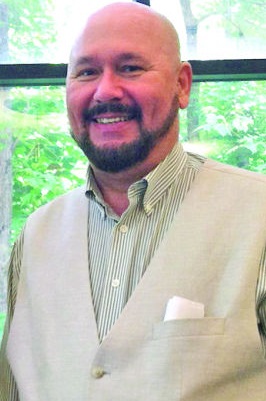
SkipTen years ago today was known simply as “Game Day” for a group of people.  The chief one was Skip Rutherford.

Overseeing the planning for the Clinton Presidential Center and the events surrounding it had been the focus of James L. “Skip” Rutherford for many years. A FOB for decades, he had stayed in Little Rock when so many went to Washington DC in 1993.

He oversaw the planning for the Clinton Library and led the Clinton Foundation.  No detail was too small or insignificant for him to consider. For months leading to the opening he led meetings to help restaurants, hotels, and attractions understand the scope of the opening.

Together with Dean Kumpuris and Bruce Moore on behalf of the City of Little Rock, he reviewed plans for the Clinton Presidential Park and the streets and neighborhoods around the Clinton Presidential Center.

He used his connections with the business community in Little Rock and throughout the state to discuss the importance of a Presidential Library regardless of one’s personal political affiliations.  He withstood critics who second-guessed everything from the cost, the design, the location, the purpose, and even the anticipated tourism and economic impacts.

Finally the big day had come.  If the weather was not ideal, that was almost inconsequential. It was still the culmination of more than seven years hard work.

However, the opening of the Clinton Presidential Center was not the end of the task. It merely was the move from one phase to another. A few years later, Skip’s role would change as he would leave the Foundation and become the second Dean of the Clinton School of Public Service.

Starting the Clinton School – A Look Back at Its First Decade

Clinton-School-of-Public-Service-LogoTo commemorate the tenth anniversary of the Clinton School’s inception, the Clinton School for Public Service will host a panel discussion on the founding of the school.

The first school in the nation to offer a Master of Public Service (MPS) degree, the University of Arkansas Clinton School of Public Service gives students the knowledge and experience to further their careers in the areas of nonprofit, governmental, volunteer or private sector service.  This panel discussion will take a look at the impact of Clinton School students public service projects, ranging from local work in Arkansas communities, to international projects on all of the world’s six inhabited continents.

The panel members include the founding Dean and former U.S. Senator David Pryor, Clinton School staff member Dianne Kelly, founding Associate Dean Dr. Tom Bruce, and Pat Torvestad, who led much of the school’s early planning effort for the University of Arkansas System.

The panel will take a look at the early planning efforts of the school, which opened in 2004.

The program will take place at noon today at Sturgis Hall, which Dean Pryor would lovingly call the “little red school house.”

Ernest Green leads event tonight at Clinton School commemorating 100 years since Daisy Bates was born

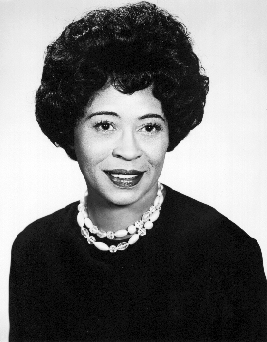
bates daisyDaisy Bates was an American civil rights activist, publisher, journalist, and lecturer who played a leading role in the Little Rock Integration Crisis of 1957. Daisy Bates would be 100 years old on November 11th. To mark the milestone the Clinton School of Public Service is hosting a celebration of Mrs. Bates featuring Ernest Green.

Daisy Lee Gatson Bates and her husband were important figures in the African American community in the capital city of Little Rock.  Realizing her intense involvement and dedication to education and school integration, Daisy was the chosen agent after nine black students were selected to attend and integrate a Little Rock High School.  Bates guided and advised the nine students, known as the Little Rock Nine, when they enrolled in 1957 at Little Rock Central High School. President Clinton presented the Little Rock Nine with the Congressional Gold Medal and spoke at the 40th anniversary of the desegregation while he was in office.  He returned as a speaker for the 50th anniversary and opening of the new museum and historical site in 2007.

Ernest ‘Ernie’ Green was one of the nine African-American students who integrated Central High School in Little Rock and the first of the nine to graduate.  Green is the managing director of public finance for Lehman Brothers in Washington, D.C., has served as the Assistant Secretary of Labor for Employment and Training during President Carter’s administration, Chairman of the African Development Foundation under President Clinton, and Secretary of Education, Richard W. Riley, appointed him Chairman of the Historically Black Colleges and Universities Capital Financing Advisory Board.

The event will take place at 6pm tonight at the Clinton School.

*Reserve your seats by emailing publicprograms@clintonschool.uasys.edu or calling 501-683-5239.

Noon today – Grammy winner Sharon Isbin speaks at Clinton School; performs with ASO this weekend

isbin_sony_soho_11This weekend, Grammy winning guitarist Sharon Isbin will be performing with the Arkansas Symphony Orchestra.  Prior to those performances, she is speaking today at noon at the Clinton School.

Isbin is a Grammy Award-winning classical guitarist and the founder of the Guitar department at the Juilliard School in New York City. She is the author of “Classical Guitar Answer Book” and the director of the guitar department at the Aspen Music Festival. She is also the winner of the Guitar Player magazine’s Best Classical Guitarist award, First Prize winner of the Toronto Guitar 75 competition, and has received numerous other awards. Isbin has appeared as a soloist with over 170 orchestras and has commissioned more concerti than any other guitarist.

She is a multi-Grammy Award-winning artist and has performed for the memorial tribute at Ground Zero, was featured on the soundtrack of Martin Scorsese’s film “The Departed,” and has performed at the White House by invitation of President Obama and the First Lady. Isbin will speak and perform with the Arkansas Symphony Orchestra

Today at noon Clinton School features 30 Years of Main Street Arkansas with Patrice Frey

Main Street ArkThis year marks the 30th anniversary of Main Street Arkansas being created.  To mark that, the Clinton School of Public Service is hosting Patrice Frey.

She is the first President and CEO of the National Main Street Center. The National Main Street Center, Inc. is an extension of the 33-year-old Main Street program of the National Trust for Historic Preservation, which uses historic preservation as a tool for economic development in downtown and neighborhood commercial districts. More than 2,000 communities have participated in the Main Street program since its inception, leading to more than 235,000 building rehabilitation projects and the creation of nearly 475,000 jobs in those cities and towns.

Since 1984, Main Street Arkansas has been a leading advocate for downtown revitalization providing resources, education and professional assistance to spark life into Arkansas’s traditional commercial areas. Since that time, Main Street Arkansas cities have yielded a net gain of 3,907 jobs, 1,151 new businesses and 1,066 business expansions and relocations into downtown. A total of $145,650,659 in investment has financed 3,272 facade renovations, rehabilitations and new construction projects. The Main Street cities have seen 844 public improvement projects valued at $25,193,767 and 545,536 volunteer hours on Main Street matters.  Main Street Arkansas is a division of the Arkansas Historic Preservation Program, an agency of the Department of Arkansas Heritage.

Patrice Frey is President and CEO of the National Main Street Center, where she oversees the Center’s work, offering technical assistance, research, advocacy, and education and training opportunities for Main Street’s network of approximately 1,100 communities. Based in Chicago, Illinois, the National Main Street Center is a subsidiary of the National Trust for Historic Preservation, and has participated in the renewal of more than 2,000 older commercial districts during its 30-year history. Before joining the National Main Street Center in May 2013, Patrice serviced as the Director of Sustainability at the National Trust for Historic Preservation, where she oversaw the National Trust’s efforts to promote the reuse and greening of older and historic buildings, including research and policy development work through the Seattle-based Preservation Green Lab.

George Washington Gardened Here – Mount Vernon Horticulturalist speaks at Clinton School tonight

mount vernon nortonTonight at 6pm at Sturgis Hall, Dean Norton, the director of horticulture at Mount Vernon, will give a presentation.

For more than 150 years, people have studied, researched, and dug the earth for clues helping to make the home of George Washington one of the most accurately restored 18th century estates in America. The beauty, the use, and the importance of Mount Vernon’s gardens and landscape will be discussed, as well as preservation over the years with a focus on the most recently restored pleasure garden. Norton’s presentation is an informative and entertaining look at the gardening world of George Washington.

A book signing will follow.

The director of horticulture at Mount Vernon since 1980, Norton calls upon a full-time paid staff of twenty-three and a few volunteers to manage both the fifty-acre parcel open to the public and 450 acres of field and forest. He also supervises the green house and the estate’s livestock operations.

Noon today, the Clinton School and Butler Center’s Legacies & Lunch present Justice Troy Poteete, executive director of the National Trail of Tears Association

PoteeteToday at noon, the Clinton School Speaker Series and the Butler Center’s Legacies & Lunch jointly present a program.  Justice Troy Poteete, executive director of the National Trail of Tears Association will speak at the Ron Robinson Theater.

Troy Poteete was appointed to the Cherokee Nation Supreme Court by Chief Chad Smith in 2007 and is the executive director of the National Trail of Tears Association, an organization he helped found. Justice Poteete also founded the Historical Society in Webbers Falls, Okla., served as executive director of the Cherokee Nation Historical Society, and was a delegate to the Cherokee Nation Constitutional Convention. In 2000, Justice Poteete was appointed executive director of the Arkansas Riverbed Authority, a tribal entity jointly created by the Chickasaw, Choctaw, and Cherokee Nations to administer their interests in the 96-mile section of the Arkansas River between Muskogee, Okla. and Fort Smith, Ark.

The Trail of Tears was actually several trails.  Little Rock is one of the only cities (if not the only city) that members of all six relocated tribes passed through.  Little Rock’s emerging merchant class benefited from the relocation efforts as the Federal government paid for goods and services in Little Rock.