Ark Arts Council announces 2013 Fellowship Recipients

Arkansas_Arts_Council_logo_2Last week, the Arkansas Arts Council announced the recipients of its Individual Artist Fellowship awards. The artists will be recognized at a reception from 5:30-7:30 p.m., Sunday, Oct. 6, at the Arkansas Arts Center in Little Rock. The reception is open to the public. Space is limited and reservations are required. RSVP by calling (501) 324-9766.

The Arkansas Arts Council awarded nine artist fellowships in the amount of $4,000 each. Fellowships are awarded annually to artists in Arkansas in recognition of their individual artistic abilities. These fellowships enable artists to set aside time for creating their art and improving their skills. Three artistic disciplines are selected each year as categories for the awards.

The three categories for this year are Literary Arts: Playwriting; Performing Arts: Directing of Narrative and Documentary Films; and Visual Arts: Creating Contemporary and Traditional Crafts.

The fellowship recipients were selected by a jury of out-of-state professional artists, writers, performers and art administrators.

Literary Arts: Playwriting

Kelley Smith Pruitt, Little Rock – In a Year’s Time

Clinnesha D. Sibley, Fayetteville – Tell Martha Not to Moan

Werner Trieschmann, Little Rock – Disfarmer


Performing Arts: Directing of Narrative and Documentary Films

Joshua H. Miller, Little Rock – Pillow

Mark Thiedeman, Little Rock – Last Summer

Nathan Willis, Little Rock – “The Van”


Visual Arts: Creating Contemporary and Traditional Crafts

Ed Pennebaker, Osage – blown glass, stone and metal work

Timothy LaTourette, Fayetteville – wood, lighting and printmaking

Adam Posnak, West Fork – functional ceramic with stark black, white and red imagery


The Arkansas Arts Council is an agency of the Department of Arkansas Heritage.
Sandwich in History Friday at Emmett W. Jenkins House

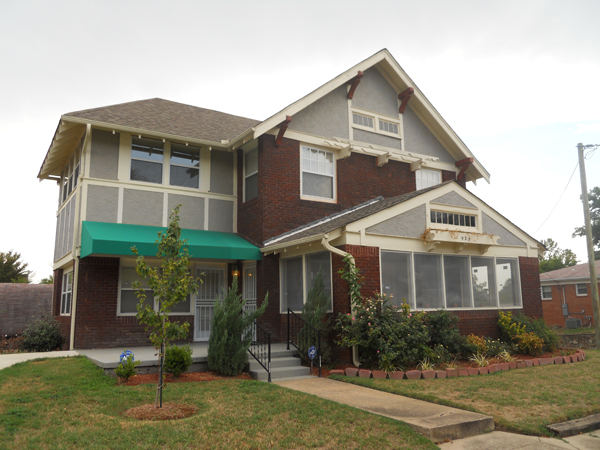
Emmett W. Jenkins House (photo courtesy of Arkansas Historic Preservation Program)

Emmett W. Jenkins House (photo courtesy of Arkansas Historic Preservation Program)

On Friday, August 2 at 12 noon, the Arkansas Historic Preservation Program’s monthly “Sandwiching in History” program will visit the Emmett W. Jenkins house.

Located at 923 W. 24th St. in the Governor’s Mansion Historic District, the Emmett W. Jenkins House was built about 1920.  It was constructed in the Craftsman style with exposed rafter tails, a front porch supported by square, brick columns, and mixed exterior materials.

The house was initially occupied by Emmett W. Jenkins, a contractor, and his wife, Sallie M. Jenkins. The home sustained considerable damage during the 1999 tornado that swept through downtown Little Rock. It was rehabilitated in 2009 and now serves as headquarters for the Ivy Foundation of Little Rock, which financially supports the community through the Beta Pi Omega Chapter of Alpha Kappa Alpha Sorority.

The “Sandwiching in History” program is a series of tours that seeks to familiarize people who live and work in central Arkansas with the historic structures and sites around us. The tours take place on Fridays at noon, last less than an hour, and participants are encouraged to bring their lunches so that they can eat while listening to a brief lecture about the property and its history before proceeding on a short tour. A representative from the property is encouraged to attend also and address the group.

The tours are organized by the Arkansas Historic Preservation Program, an agency of the Department of Arkansas Heritage. All tours are free and open to the public.
Sandwiching in History: Villa Marre

villamarreToday at 12 noon, the Arkansas Historic Preservation Program’s monthly “Sandwiching in History” program will visit the Villa Marre.

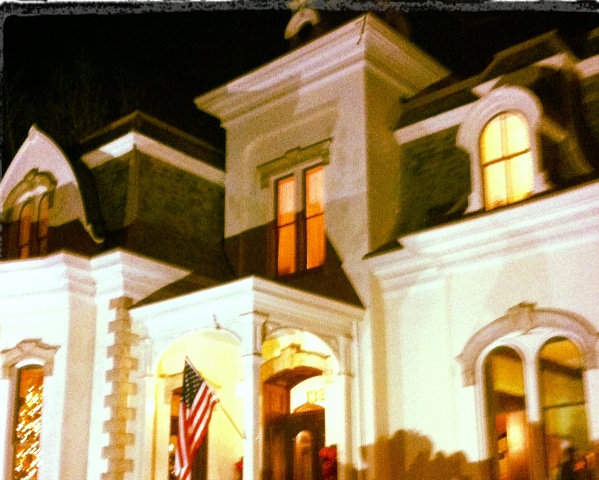
The Villa Marre is located at 1321 Scott Street. The Second Empire-style Villa Marre was built in 1881 by Italian immigrant and Little Rock saloonkeeper Angelo Marre, who also served on the Little Rock City Council.

The distinctive home features a mansard roof covered in patterned slate, a central tower topped by wrought-iron cresting, and hood molding above the doors and windows. Marre died in 1889, and his widow, Jennie, remained in the house until about 1900. Arkansas Governor Jeff Davis rented the house for a few years, and in 1905, the home was purchased by E. B. Kinsworthy, former state senator and attorney general of Arkansas.

It is probably most famous today for being the outdoor exterior of Sugarbakers design firm in the CBS sitcom “Designing Women.”  For several years, it was the home of the Quapaw Quarter Association. It later returned to a private residence.  Currently it is a rentable venue for weddings and other events.

The “Sandwiching In History” program is a series of tours that seeks to familiarize people who live and work in central Arkansas with the historic structures and sites around us. The tours take place on Fridays at noon, last less than an hour, and participants are encouraged to bring their lunches so that they can eat while listening to a brief lecture about the property and its history before proceeding on a short tour. A representative from the property is encouraged to attend also and address the group.

The tours are organized by the Arkansas Historic Preservation Program, an agency of the Department of Arkansas Heritage. All tours are free and open to the public.
 

Brown Bag Lecture at Old State House today

OSH logoThe Old State House Museum, an agency of the Department of Arkansas Heritage, is hosting a brown bag lecture at noon today entitled Eternal Separations: The Civil War Letters of the Witten Family.

The American Civil War is often referred to as a conflict of brother against brother, but there is a dearth of primary documentation that details the impact on families actually torn apart owing to the struggle.

The Witten family of Saline County, Arkansas, provides an understanding of the divided loyalties of a non-slave owning, yeoman farm family during the Civil War. Approximately 150 surviving letters of the family detail the emotions and events that ripped apart this family, even affecting relatives from east Tennessee to Oregon during the conflict.

Though the war exacted a heavy toll on the family, the efforts of the Wittens to maintain contact with family across military lines provides a glimpse of the ties that would not be severed.

Speaker Anthony Rushing is a teacher of history in Bryant. He initiated the forming of Saline County history organizations including the David O. Dodd Camp of Sons of Confederate Veterans and the Saline County History and Heritage Society. Rushing is currently working on editing and publishing the Civil War letters of the Witten family.

Participants are welcome to bring a sack lunch; soft drinks and water are provided. Admission is free.

Special activities at Old State House today

OSH logoSaturday is a great time to see the museum and do activities with your family. The Old State House Museum has a full schedule of activities planned throughout the day.:

10:00—Make a paper doll to take home.

11:00—Play Victorian lawn games and enjoy the summer weather.

1:00—Learn about the archeology of the Old State House Museum

2:00— Play Faro, a popular Victorian card game

3:00—Play Victorian lawn games and enjoy the summer weather.

4:00—Play graces, a popular 19th century game on the front lawn of the Old State House Museum

The Old State House Museum hours are from 9 a.m. to 5 p.m. Monday through Saturday, and 1 p.m. to 5 p.m. on Sunday.

The Old State House Museum is the oldest standing state capitol building west of the Mississippi River. Construction on the building began in 1833 and was declared complete in 1842. In 1911, the state government moved out and the building underwent a succession of uses.  Finally, in 1947, the Old State House became a museum by acts of the Arkansas legislature.

The Old State House Museum is a museum of the Department of Arkansas Heritage and shares the goal of all seven Department of Arkansas Heritage agencies, that of preserving and enhancing the heritage of the state of Arkansas.

May 16 Architeaser: Mosaic Templars Cultural Center

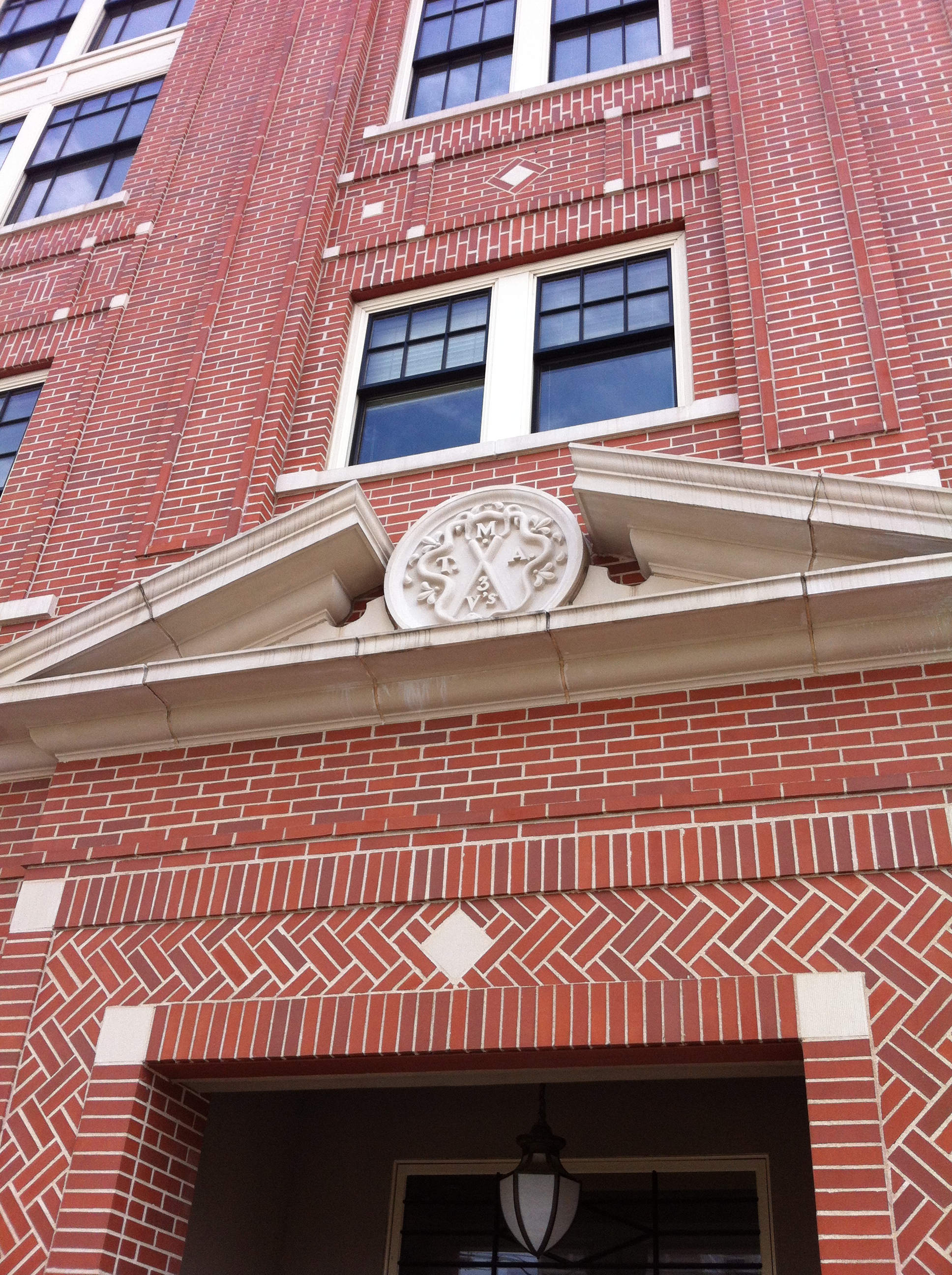
IMG_5421As part of Arkansas Heritage Month, today’s Architeaser focuses on the cornice over the entrance to the Mosaic Templars Cultural Center.

The Mosaic Templars Cultural Center began as a dream by community leaders who had grown up attending events at the Mosaic Templars of American National Grand Temple. This had been a centerpiece of African American life not just for Little Rock but for the mid-south.

In 1992, the building was slated for demolition so that a fast-food restaurant could be built on the lot. In late 1993, the City of Little Rock purchased the building for $110,000  to save it from demolition as organizers were raising funds for the restoration.  In 2001, the City transferred ownership to the State of Arkansas for the establishment of the Mosaic Templars Cultural Center.

Originally, the Center planned to restore the 1913 Mosaic Templars of America National Grand Temple, but the original building was destroyed by fire in March 2005. The new 35,000 square feet interior is a state-of-the-art museum complex with exhibits, classroom, staff offices, and an Auditorium that seats 400 people. The façade of the new structure is a facsimile of the 1913 building complete with the Annex building façade, which burned in 1984.

The cornice which is featured today is a copy of the original cornice.  The original cornice, as well as the cornerstone, are some of the few things which survived the 2005 fire.  The original cornice is on display.

A museum of the Department of Arkansas Heritage, the Mosaic Templars Cultural Center is dedicated to collecting, preserving, interpreting, and celebrating African American history, culture and community in Arkansas from 1870 to the present, and informs and educates the public about black achievements – especially in business, politics and the arts.

Through special events, education programs, ongoing research and exhibits such as the Arkansas Black Hall of Fame, the museum celebrates Arkansas’s African American heritage. Tours of the museum provide a detailed look at the history of African Americans in Little Rock and Arkansas.


May 14 Architeaser

towerNot only is the Catlett-Prien Tower Building a great example of the International school of architecture, it is also home to the Department of Arkansas Heritage and several of its agencies, including the Arkansas Historic Preservation Program.  Because of this, it is today’s Architeaser feature (as part of Arkansas Heritage Month).  It is also home to the non-profit Historic Preservation Alliance of Arkansas.

The Tower Building was designed by Dallas architect Harold A. Berry in collaboration with Little Rock architect Frank Eugene Withrow. The Tower Building was Withrow’s first big project.  The building was the brainchild of future Arkansas Governor Winthrop Rockefeller.

Construction of the Tower Building began in 1958 and finished in 1960 for a cost of $4 million.  At 18 stories, it would be Little Rock’s tallest building from 1960 until 1968 when the Union Bank Building was completed.