Little Rock Look Back: City Park becomes MacArthur Park

GOn March 9, 1942, Little Rock’s first public park was renamed by the Little Rock City Council.  By a vote of fourteen ayes, zero nays and four absent, the alderman approved Ordinance 6,388 which renamed the park in honor of General Douglas MacArthur. 

The text of the ordinance says that “it is fitting and proper that the bravery and glorious deeds of General Douglas MacArthur, a native son of Little Rock, should be commemorated.”  This was passed a few months after the United States’ entry into World War II. 

Though he was already a well-established military figure, most of the MacArthur legend during the war would take place after this naming. 

The park land had originally served as a horse racetrack in the early days of Little Rock.  By 1836, the federal government purchased the land for construction of a military arsenal.  The flagship building, the Arsenal Tower building, is the only remaining structure from that time period.  

The land served as a military outpost until 1892.  On April 23, 1892, a land swap took place where in the City of Little Rock was given the property with the stipulation that it would be “forever exclusively devoted to the uses and purposes of a public park.” (Never mind that the federal government took part of the land back for the construction of the Wilbur Mills Freeway.)  

In return for giving the City this land, the federal government took possession of land on the north side of the Arkansas River (then part of Little Rock) – that 1,000 acres became Fort Logan H. Roots. The park opened on July 4, 1893, with the name Arsenal Park. Since it was the City’s first and only park at the time, residents started referring to it as City Park. In time, the designation Arsenal Park fell from use.  In fact, it is referred to as City Park exclusively and officially in City documents throughout the first 42 years of the 20th Century. 

The action of the City Council in March 1942, was accompanied by petitions encouraging the action which were submitted by the Arkansas Authors and Composers Society, the Arkansas Engineers Club and the Pulaski County Republican Central Committee.  

City records do not indicate if anyone registered opposition to the name change. It would be another decade before General MacArthur would return to the site of his birth, a place he had not visited since his infancy.MacPark ordinance

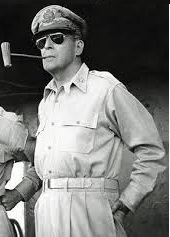
Little Rock Look Back: General Douglas MacArthur

MacArthurOn January 26, 1880, Douglas MacArthur was born in the Arsenal Building while his father was stationed at the Little Rock Barracks.  Though he left Arkansas a few weeks later when his father was transferred, he returned to his birthplace on March 23, 1952. On that day he was greeted by crowds welcoming one of the USA’s most famous military figures.

Though Gen. MacArthur spent only a few weeks in Little Rock, he was baptized at Christ Episcopal Church.  The location of the baptism remains a mystery today because the church was meeting in temporary locations due to the first structure having been lost to a fire.

When the General returned to Little Rock in 1952, he did pay a brief visit to Christ Church.  He also spoke at the Foster Bandshell in the park which bore his name.  He was one of three presidential candidates to speak at the Foster Bandshell in 1952, the others were the eventual Democratic and Republican nominees Adlai Stevenson and Dwight Eisenhower.

When General MacArthur died, he was granted a state funeral.  He was one of the few non-Presidents to have been given this honor.

Today, the MacArthur Museum of Arkansas Military History is located in the Arsenal building.  It was created to interpret our state’s military heritage from its territorial period to the present.  Located in the historic Tower Building of the Little Rock Arsenal–the birthplace of General Douglas MacArthur–the museum preserves the contributions of Arkansas men and women who served in the armed forces.  Exhibits feature artifacts, photographs, weapons, documents, uniforms and other military items that vividly portray Arkansas’s military history at home and abroad.

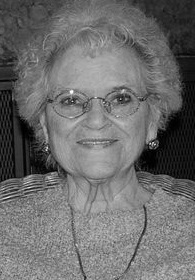
LR Cultural Touchstone: Joa Stafford-Humphrey

JoaJoa Stafford-Humphrey loved music and poetry.  But her most lasting cultural contribution is the creation of the MacArthur Museum of Arkansas Military History.

She had admired General MacArthur for many years.  In the 1980s, while serving on the Board of the Museum of Science and History, her interest heightened.  The museum (now known as the Museum of Discovery) was at the time located in the Arsenal Building in MacArthur Park. It was in this building that the General had been born.

Later, when the museum was planning to relocate to the River Market district, Joa asked City leaders about the future plans for the building. When there were not any definite plans, she informed them that the building should house a museum about MacArthur and also the state’s military history.  She succeeded in lobbying the Future-Little Rock planning process to include this as plans for the soon-to-be vacant building.

In 1994, the MacArthur Military History Museum commission was established, and Joa was appointed as a founding member.  She led the commission for several years.  Over the years, she lobbied for funds and artifacts as well as recruited other volunteers.  Eventually, the City hired a full-time museum director Stephan McAteer.  The project received a setback in January 1999 when a tornado damaged the building.  However, on May 19, 2001, Joa’s dream became a reality as the new museum opened its doors.

While the museum was important to her, it was not her only interest.  She was active in the Geyer Springs neighborhood and Southwest Little Rock activities. Joa was also known for her New Year’s Day open houses which would attract political leaders as well as her neighbors.

Joa died in July 2013.


LR Cultural Touchstone: Mrs. H. H. Foster

Foster BandshellElizabeth Wallin Foster, known better as Mrs. H. H. Foster, became very active in Little Rock’s music scene when she and her husband arrived from Wisconsin in 1901.  She was a driving force of the Little Rock Music Festival which took place annually during the 1910s.

Though at the time she had been unable to exercise her vote, since this was prior to the passage of the 19th Amendment, Mrs. Foster was not afraid to exercise her voice and address the City Council to work for the City to support cultural life.  Mrs. Foster was very involved with the National Federation of Music Clubs serving in leadership positions and establishing an Arkansas affiliate.  She also organized the Little Rock Festival Chorus (during World War I) and the Little Rock Song Leaders (after the war).

Mrs. Foster appeared before the City Council in June 1926 to speak about the need for entertainment in City Park.  The matter was referred to the Council’s Parks Committee.  The following year the City Council appropriated money for construction of a Bandshell in City Park.  The City Park Bandshell was located in the southwestern corner of the park nearly in line with 13th Street.  The structure was positioned at a diagonal so that the music would be projected out toward the park and away from neighboring houses.  The City agreed to pay $1,500 toward the erection of the structure.  The stipulation was that the members of the Federation of Music Clubs would raise the remaining money.

Mrs. Foster purportedly donated one third of the cost of the bandshell. From 1928 through 1958 the bandshell would be the site of a variety of outdoor events including concerts and speeches.  Three 1952 presidential candidates spoke at the bandshell: Little Rock native General Douglas MacArthur (City Park had been renamed in his honor ten years earlier), General Dwight D. Eisenhower and Adlai Stevenson.  Following Mrs. Foster’s death in 1929, the bandshell was renamed in her memory by the City Council.

The bandshell was torn down in the early 1960s.  Today, the Foster Pavilion in MacArthur Park is named in her memory.

LR Cultural Touchstone: Bernie Babcock

BabcockBernie_fLittle Rock’s rich cultural history has been influenced by many outstanding men and women.  This October, during Arts & Humanities Month 2014, the Culture Vulture is looking at 31 outstanding women who have shaped cultural life in Little Rock…and beyond.

Julia Burnelle “Bernie” Smade Babcock was an author and museum founder.  Born in April 1868 in Ohio, she moved with her family to Arkansas as a child.  Marrying and starting a family, she also continued to write, which had been a passion since she was younger.  When her husband died, leaving her with five children, she starting writing for money. She published several temperance novels and later wrote for the Arkansas Democrat.  She also published a magazine and a poetry anthology.  She later became recognized as an expert on Abraham Lincoln and wrote several books about him, as well as other historical figures.

In 1927, after professional curmudgeon H. L. Mencken wrote derisively of Arkansas, she decided to start a museum. The Museum of Natural History and Antiquities was first located in a Main Street storefront.  In 1929, she “gave the City of Little Rock a Christmas present” by giving the museum to the city.  It was relocated to the unfinished third floor of City Hall, with her as its employee.  In 1933, as New Deal programs were ramping up, the space was needed for WPA offices, and the museum was shuttered. Many of the museum’s artifacts were lost during this time.    She became folklore editor for the Federal Writers’ Project in 1935.

In 1941, she and businessman Fred Allsopp convinced the City of Little Rock to reopen the museum (then known as the Museum of Natural History) by locating it in the old Arsenal Building in City Park.  She lived in the basement of the building.  She was involved in the efforts to rename City Park in honor of Douglas MacArthur (who had been born there) and welcomed him when he came to Little Rock in 1952.  Retiring from the museum in 1953, she donated some items and billed the City $800 for others. That money was her retirement pension at age 85.

Moving to Petit Jean Mountain, she wrote, painted and published poetry.  She died in June 1962 at age 94.  She is buried in Little Rock’s Oakland Cemetery.

After more name changes and a relocation, her museum is now known as the Museum of Discovery and is an anchor in the River Market district.

Armed Forces Day – Visit the MacArthur Museum of Arkansas Military History

macmusToday is Armed Forces Day.  It is a good day to visit Little Rock’s museum devoted to Arkansas’ military heritage.  Located in the historic Arsenal Tower in MacArthur Park, the MacArthur Museum of Arkansas Military History honors the Arkansans who have served in the armed forces.  Exhibits feature artifacts, photographs, weapons, documents, uniforms and other military items that vividly portray Arkansas’s military history at home and abroad.

The exhibits include:

  • From Turbulence to Tranquility: The Little Rock Arsenal
  • Capital In Crisis and Celebration: Little Rock and the Civil War
  • Alger Cadet Gun
  • Camden Expedition
  • David Owen Dodd
  • Through the Camera’s Eye: The Allison Collection of World War II Photographs
  • By the President in the Name of Congress: Arkansas’ Medal of Honor Recipients
  • Conflict and Crisis: The MacArthur- Truman Controversy
  • Duty, Honor and Country: General Douglas MacArthur
  • The Sun Never Sets on the Mighty Jeep: The Jeep During World War II
  • War and Remembrance: The 1911 United Confederate Veterans Reunion
  • First Call – American Posters of World War I
  • Undaunted Courage, Proven Loyalty: Japanese American Soldiers in World War II
  • Vietnam, America’s Conflict

The MacArthur Museum of Arkansas Military History is a museum of the City of Little Rock.  It is led by executive director Stephan McAteer who works with the MacArthur Military History Museum Commission.  The museum is open Tuesday through Friday from 9am to 4pm, Saturday from 10am to 4pm and Sunday from 1pm to 4pm.

Little Rock Look Back: General MacArthur Returns to Little Rock

MacArthur and Mayor Remmel

General MacArthur and Mayor Remmel

On Sunday, March 23, 1952, General Douglas MacArthur made his only post-infancy visit to Little Rock. He had previously been scheduled to visit Mississippi, and Little Rock Mayor Pratt Remmel had persuaded him to add a visit to Little Rock to the agenda. The fact that Little Rock now had a Republican mayor had apparently piqued the General’s interest.

General MacArthur, accompanied by his wife and son as well as several journalists and members of his military retinue, arrived at Little Rock Airport at 10:40 am. He was met by a delegation of civic leaders including Mayor Remmel. Alderman James Griffey made welcoming remarks on behalf of the city. Then the General and Mayor boarded an open car and led a motorcade from the airport to downtown.

The motorcade’s destination was Christ Episcopal Church at Capitol and Scott streets. It was at this church that MacArthur had been baptized as an infant. The delegation was greeted by the Episcopal Bishop R. Bland Mitchell, Rector J. Hodge Alves, and Rector Emeritus W. P. Witsell. (While he had been Rector, Dr. Witsell had garnered national attention by issuing an Easter blessing to Gen. MacArthur as he had been evacuating the Philippines at the height of World War II.) In order to gain admittance to the church that morning, church members and guests had to have tickets.

Following the worship service, the General and his party went to three events in the park named in his honor. The first was a tour of the Museum of Natural History (now the Museum of Discovery and located in the River Market; the current tenant of the building is the MacArthur Museum of Arkansas Military History), which was located in the building in which the General had been born. After the tour, he spoke at a dedication of a small rose garden adjacent to the museum. It was sponsored by the Little Rock City Beautiful Commission and the Garden Clubs of Greater Little Rock.

General MacArthur addressing several thousand in MacArthur Park.

General MacArthur addressing several thousand in MacArthur Park.

Though every stop of the General’s visit had featured crowds, the largest was at the third location in MacArthur Park. A crowd of several thousand greeted the General as he spoke from the Foster Bandshell in the park’s southwest corner. Chamber of Commerce president Richard C. Butler (brother-in-law of Mayor Remmel) was the master of ceremonies. Following an invocation by Methodist Bishop Paul Martin, the only other speaker was the General. In his remarks he spoke of his Southern heritage and of his appreciation for the support of the citizens of Little Rock over the years.

Several gifts were bestowed upon the MacArthurs at the ceremony. The City of Little Rock presented Mrs. MacArthur with an engraved silver serving tray.

Following the events in MacArthur Park, the family retired for a brief respite to the Hotel Marion. They then attended a luncheon buffet in their honor at the home of Howard and Elsie Stebbins on Edgehill Road. The General and Mrs. MacArthur circulated through the house greeting guests and then eschewed a special table in favor of balancing their plates on their laps and sitting in wingback chairs. Meanwhile Arthur MacArthur stayed upstairs and discussed stamp collecting and other hobbies with the Stebbins’ two teenage sons.

Following the luncheon, the MacArthur party went back to the airport and by 4:00pm, the plane was in the air.

Though this visit was coming at the end of a whirlwind of activities, by all accounts, the General and Mrs. MacArthur were very gracious and accommodating. The General was being mentioned as a potential GOP candidate for President, but purposefully steered clear of any political comments in his remarks. He and Mrs. MacArthur dutifully posed for photos not only for the media but also for amateur photographers. At lunch, the General even asked a Gazette photographer to take a photo of him with his Little Rock Police motorcycle escorts so that they could have a souvenir of the visit.