Little Rock Look Back: Robinson Auditorium hits construction milestone in 1939

Many months behind schedule, it was 77 years ago today (December 8, 1939) that the construction of the Joseph Taylor Robinson Memorial Auditorium was declared “substantially finished.”

On December 8, 1939, the work of the general contractor was complete. The building’s utilities were all fully connected as the steam line and electric transformer were hooked up. While the work of the general contractor was through, there was still much work to be done.

Though there were still unfinished portions of the structure, the exterior was complete and finished surfaces had been installed on the interior. Until the building was officially turned over to the City, the federal Public Works Administration still had to give approval for any uses of the building.Mayor J. V. Satterfield, Jr. told the press that he wasn’t sure when the City would formally accept the building. The connection of the utilities had used up the remaining funds, so there was uncertainty as to when the final tasks would be completed.

When it was built, Robinson Auditorium was the first municipal auditorium in the south central United States to be air conditioned. However, the air conditioning unit was not sufficient to cool both the music hall and the convention hall at the same time. In warm weather months concurrent events would not be able to take place on the two levels.

RobinsoNovember: Emily Miller

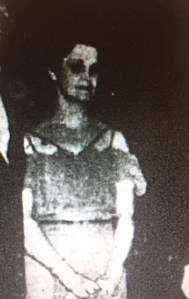
emilyFrom January 1940 until December 1971, Emily Miller served on the Robinson Auditorium Commission.  She was the longest serving member of that body and had one of the longest tenures of any person on any City of Little Rock commission.  In keeping with the times, she was always referred to publicly as Mrs. Grady Miller. Probably the only time she was ever listed in a newspaper as Emily Sturges Miller was her obituary in 1993.

Born in Ohio in 1903, she studied at Smith College in Massachusetts. In 1925, she visited Washington DC for the presidential inauguration of Calvin Coolidge. While there she met Grady Miller, who was the brother-in-law of Senator Joseph T. Robinson.  After marrying Mr. Miller, she moved to Arkansas and made it her home for the next seven decades.

Throughout the 1930s and 1940s, she was active in the PTA, Junior League of Little Rock, and Colonial Dames.  Mrs. Miller was also active in Second Presbyterian Church.  As her two children became older, she and her husband traveled extensively.

Because she was related to Senator Robinson’s widow, Mayor J. V. Satterfield asked Mrs. Miller to serve on the Auditorium Commission.  She was subsequently reappointed every time her term came up.  For the 1940 ribbon cutting, Mrs. Miller joined her sister-in-law and Mayor Satterfield on the stage.  They were the only participants.  (It had been Mrs. Miller who informed Mrs. Robinson of her husband’s death.  Mr. Miller had called Mrs. Miller, who was visiting family in Ohio at the time, to inform her.  She then called her sister-in-law to extend her sympathies, not realizing that no one had yet informed Mrs. Robinson who was in Little Rock preparing for a trip.)

Several decades later as a Sunday School teacher in her late 60s, Mrs. Miller was not in favor of the musical HAIR being performed at Robinson.  When a federal judge ruled that it had to be allowed, Mrs. Miller was the only member of the Auditorium Commission who would speak to the press. Her response is one of the Culture Vulture’s favorite statements ever made to a member of the media.  “Oh dear,” was her only reply. She refused further elaboration.  While the Commission was wrong in opposing the show, the fact that none of her fellow commissioners (all men) would speak to the press, shows a lot of moxie on her behalf.

Little Rock Look Back: Adams Field Dedicated in 1941

adams-field-first-terminalOn November 11, 1941, Adams Field was dedicated in Little Rock.  The ceremony marked the official opening of the airport’s first administration building.  It also marked the official naming of the building in memory of George Geyer Adams.

Adams was captain of the 154th Observation Squadron of the Arkansas National Guard. He also served on the Little Rock City Council from 1927 to 1937.  During that time he helped develop what would become Little Rock’s airport from an airfield first planned in 1929 for military planes to what would become Little Rock’s municipal airport.

Adams left the City Council in April 1937.  Five months later, he was killed in a freak accident when a propeller assembly exploded and sent the propeller careening toward him.

Adams’ family was present at the ceremony on November 11, 1941.  The fact that it was on Armistice Day was no accident.  Little did few realize that US would be plunged into a second world war just a few weeks later.

Top executives from American Airlines came to Little Rock to participate in the festivities.  Others coming to town included members of Arkansas’ congressional delegation.  New Mayor Charles Moyer shared credit for the building with former Mayor J. V. Satterfield who had led the project for most of the time.  (Satterfield would later be the first chairman of the Airport Commission in 1951.) Hundreds turned out for the ceremony.  While they were in town, the congressional delegation and American Airlines executives made the most of interest in them and spoke to various civic clubs and banquets.  They extolled the virtues of airflight and the aircraft industry.

On a personal note:  the terminal building was built by E. J. Carter, a great uncle of the Culture Vulture.


RobinsoNovember: Ribbon Cuttings at Robinson Center

j-v-and-ewilda

In this ARKANSAS GAZETTE photo, Mayor Satterfield looks on as Mrs. Robinson cuts the ribbon to open Robinson Auditorium.

Today (Thursday, November 10) at 10am, the ribbon will be cut on the newly restored Robinson Center.  It seems like a good chance to look back at two prior ribbon cuttings for the building.

The original ribbon cutting was supposed to be outside on the evening of Friday, February 16, 1940.  It was moved indoors due to rain and cold temperatures.  The ribbon was originally to be stretched across the front columns, but instead was stretched across the front curtain.  The white satin ribbon stood out against the royal blue velvet curtains.

Four people participated in the ribbon cutting:  Little Rock Mayor J. V. Satterfield, Mrs. Ewilda Robinson – widow of Senator Robinson, Mrs. Emily Miller – sister-in-law of Senator Robinson and a member of the auditorium commission, and a D. Hodson Lewis of the Little Rock Chamber of Commerce.  Mr. Lewis emceed the brief program, which was was broadcast live on a Little Rock radio station.  It consisted of Mr. Lewis introducing Mayor Satterfield, Mrs. Robinson and Mrs. Miller.  Mrs. Robinson chose not to make remarks.  Mayor Satterfield spoke briefly (a whopping twenty-nine words).  Then Mrs. Robinson cut the ribbon.  It took a couple of tries for her to get the scissors through the fabric on the ribbon.

Following that the building was officially opened.

In the late 1960s, City leaders started making plans for a renovation and expansion of Robinson Auditorium into a convention center.  In September 1973, a second ribbon cutting was held to celebrate the opening of the renovated space.  That ribbon was bright red and stretched from Ashley Street along Markham, wrapped into the side doors, and then back outside across the front of the building.  At the ceremony, Advertising and Promotion Commission Chairman Warren “Bud” Baldwin joked that they were having the longest ribbon and the shortest ceremony.

While the ribbon may have been long, the ceremony was not short.  Well, perhaps by ribbon cutting standards it was short, but it was certainly longer than the 1940 edition.  Among those participating in the ribbon cutting were Governor Dale Bumpers, Little Rock Mayor Bill Walters, and Miss Little Rock Risa McLemore.  The ribbon was cut by Miss McLemore and Ken Johnson of the Central States Shrine Association.  Over 14,000 Shriners were the first large convention in the new space.

RobinsoNovember: Grady Manning

h-grady-manningIn 1938, the first Auditorium Commission was appointed to oversee the administration of Robinson Auditorium.  At the time, it was anticipated that the auditorium would be ready to open by no later than September 1939.  (Actually, the building was originally supposed to have been opened by June 1938 in order to fulfill a funding request.)

The first chairman of the Auditorium Commission was H. Grady Manning.  He was founder and president of Southwest Hotels, which included the Hotel Marion, Ben McGehee, Albert Pike, and Lafayette Hotels in Little Rock as well as the Arlington and Majestic Hotels in Hot Springs.

Manning was a native of Scott County. He moved to Fort Smith to attend a business college. To help defray expenses, he started working at the hotel in which he was staying. Enjoying this, he decided to make hotels his career.  Manning then moved to Hot Springs and worked at the Eastman Hotel before moving to Niagara Falls to work at the Queen Royal Hotel.  He returned to Arkansas in 1917 and became the assistant manager at the Hotel Marion.  In 1919, he became the manager of the Basin Park Hotel in Eureka Springs before moving to Fort Smith and managing the Goldman Hotel.

In the 1920s, he founded Southwest Hotels, Inc. which then started building and acquiring existing properties.  He and his wife, Ruth, resided in the Hotel Marion.  His daughter, Joy, grew up at the hotel.  With the proximity of his hotels to the forthcoming auditorium and his understanding of the convention business, Manning was a natural fit to lead the new auditorium commission.  As construction woes delayed the opening of the building, Manning struggled to keep the commission together.  The commission, by state statute, was not charged to oversee a construction project, but instead to administer a functioning building.

On Labor Day, 1939, Manning and his wife were enjoying the day at Lake Hamilton with some friends.  The boat they were in capsized, and Manning drowned at the age of 47.  The City was in mourning.  A City Council resolution was passed to memorialize his contributions.  In addition to being signed by Mayor J. V. Satterfield, it was signed by three members of the City Council–Aldermen E. W. Gibb, S. Major Dent, and Charles Davis.

Later in September, the remaining four members of the Auditorium Commission resigned. Since they had no building to manage and no leader, they decided it was best to disband.  Mayor Satterfield declined to name their replacements until the building got closer to opening.

A few years after his death, the Ben McGehee was renamed the Grady Manning Hotel.  That hotel, and the Hotel Marion were imploded in February 1980 to make way for the Statehouse Convention Center and the Excelsior Hotel.

RobinsoNovember: Mayor J. V. Satterfield Jr.

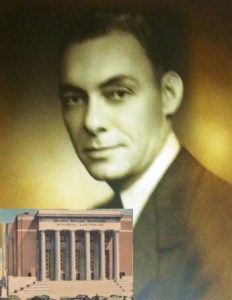
Satterfield AuditUpon taking office as mayor in April 1939, J. V. Satterfield felt he was getting a handle on Little Rock’s precarious financial situation. He would soon discover that it was more unstable than he had imagined.  Included in this was Robinson Auditorium, currently under construction across the street from his office in City Hall.  Mayor Satterfield disclosed that he had voted against the auditorium in 1937 because he felt the finances were not sufficient. But as the mayor, he promised to open the building.

By the summer of 1939, it was becoming apparent that there would not sufficient money to finish the construction.  Even with the issuance of the final round of approved bonds (which had been held back as a reserve), there would not be enough money.  The Mayor and Harvey Couch made plans to go to Washington DC to try to get more money from the federal government.  Mr. Couch was a personal friend of President Roosevelt as well as head of Arkansas Power & Light.  The pair made the trip but returned with no additional money.

At the same time, the Auditorium Commission, which had been appointed by Mayor Overman to oversee the governance of the building, resigned as a group. They said they had been appointed to administer a building, not a construction site. Since it was uncertain as to when the building would open, they stepped down.

Mayor Satterfield was able to negotiate a series of deals to get the necessary work completed for construction of the building to be completed. Part of it involved issuing another round of bonds after the building had been officially opened to finish furnishing the building as well as complete the landscaping.  In January 1940, with a new opening date becoming a stronger possibility, the mayor appointed a new Auditorium Commission.

At the same time, regular events started to take place in the lower level exhibition hall.  There had been a few in November and December, but with a lack of utilities and ongoing construction upstairs in the music hall, those were curtailed.

On February 16, 1940, Joseph Taylor Robinson Memorial Auditorium officially opened. Mayor Satterfield was joined onstage for the ribbon cutting with Senator Robinson’s widow and her sister-in-law, who was a member of the Auditorium Commission.

In April 1940, Little Rock voters approved the final round of bonds which allowed for the building to be finished.

After only two years in office, Mayor Satterfield chose not to seek another term. He left City Hall in April 1941 with finances in order and a new municipal auditorium across the street.

Arkansas Heritage Month – LR Mayor Satterfield oversees opening of Robinson Auditorium

Satterfield AuditUpon taking office as mayor in April 1939, J. V. Satterfield felt he was getting a handle on Little Rock’s precarious financial situation. He would soon discover that it was more unstable than he had imagined.  Included in this was Robinson Auditorium, currently under construction across the street from his office in City Hall.  Mayor Satterfield disclosed that he had voted against the auditorium in 1937 because he felt the finances were not sufficient. But as the mayor, he promised to open the building.

By the summer of 1939, it was becoming apparent that there would not sufficient money to finish the construction.  Even with the issuance of the final round of approved bonds (which had been held back as a reserve), there would not be enough money.  The Mayor and Harvey Couch made plans to go to Washington DC to try to get more money from the federal government.  Mr. Couch was a personal friend of President Roosevelt as well as head of Arkansas Power & Light.  The pair made the trip but returned with no additional money.

At the same time, the Auditorium Commission, which had been appointed by Mayor Overman to oversee the governance of the building, resigned as a group. They said they had been appointed to administer a building, not a construction site. Since it was uncertain as to when the building would open, they stepped down.

Mayor Satterfield was able to negotiate a series of deals to get the necessary work completed for construction of the building to be completed. Part of it involved issuing another round of bonds after the building had been officially opened to finish furnishing the building as well as complete the landscaping.  In January 1940, with a new opening date becoming a stronger possibility, the mayor appointed a new Auditorium Commission.

At the same time, regular events started to take place in the lower level exhibition hall.  There had been a few in November and December, but with a lack of utilities and ongoing construction upstairs in the music hall, those were curtailed.

On February 16, 1940, Joseph Taylor Robinson Memorial Auditorium officially opened. Mayor Satterfield was joined onstage for the ribbon cutting with Senator Robinson’s widow and her sister-in-law, who was a member of the Auditorium Commission.

In April 1940, Little Rock voters approved the final round of bonds which allowed for the building to be finished.

After only two years in office, Mayor Satterfield chose not to seek another term. He left City Hall in April 1941 with finances in order and a new municipal auditorium across the street.