
Little Rock Look Back: Opening of Robinson Auditorium

robinson-auditorium-by-scott-carterOn February 16, 1940, after three years of planning and construction including several delays due to lack of funding, the Joseph Taylor Robinson Memorial Auditorium officially opened. It was a cold, rainy night, but those in attendance did not care.  (The concept of a municipal auditorium for Little Rock had first been raised in 1904, so this evening was truly a long time in the works.)

Searchlights painting arcs in the sky greeted attendees. They were borrowed from the Arkansas National Guard. Newspaper accounts noted that only a few of the men who attended were in tuxedos, most were simply in suits. The work to get the building opened had been so harried, that it was discovered there was not an Arkansas flag to fly in front of the building. Mayor Satterfield found one at the last minute courtesy of the Arkansas Department of the Spanish War Veterans.

The weather delayed arrivals, so the program started fifteen minutes late. Following a performance of Sibelius’ Finlandia by the fledgling Arkansas State Symphony Orchestra, Mayor J. V. Satterfield, Ewilda Robinson (the Senator’s widow), Emily Miller (the Senator’s sister-in-law and a member of the Auditorium Commission) and D. Hodson Lewis of the Chamber of Commerce participated in a brief ribbon cutting ceremony. Mrs Robinson cut the ribbon on her second attempt (once again proving that nothing connected with getting the building open was easy).

The ceremony was originally set to be outside of the building but was moved indoors due to the inclement weather. The ribbon cutting took place on the stage with the ribbon stretched out in front of the curtain. The opening remarks were broadcast on radio station KGHI.

Mr. Lewis, Mrs. Miller and Mayor Satterfield look on as Mrs. Robinson cuts the ribbon

Mr. Lewis, Mrs. Miller and Mayor Satterfield look on as Mrs. Robinson cuts the ribbon


Though he had previously discussed how he had voted against the auditorium in 1937 before entering public life, the mayor’s remarks that evening were appropriately gracious, statesmanlike and a testament to the effort he had invested to get it open upon becoming mayor. “We hope you have a very pleasant evening and hope further that it will be the first in a long series which you will enjoy in this, your auditorium.”

Tickets for the event, advertised as being tax exempt, were at four different pricing levels: $2.50, $2.00, $1.50 and $1.00.

The estimated attendance was 1700. Following the ribbon cutting, the main performance took place. The headliner for the grand opening was the San Francisco Opera Ballet accompanied by the new Arkansas State Symphony Orchestra (not related to the current Arkansas Symphony Orchestra). The featured soloist with the ballet was Zoe Dell Lantis who was billed as “The Most Photographed Miss at the San Francisco World’s Fair.”

Auditorium Commission chairman E. E. Beaumont, a local banker, noted that while event planners knew the evening of ballet and classical music would not appeal to everyone, it was intended to show the wide range of offerings that would be suitable in the new space.  Earlier in the week, children’s theatre performances had been offered to school groups through the auspices of the Junior League of Little Rock.

At the same time that the gala was going on upstairs in the music hall, a high school basketball double-header was taking place in the downstairs convention hall. North Little Rock lost to Beebe in the first game, while the Little Rock High School Tigers upset Pine Bluff in the marquee game.

Women’s History Month – Janet Jones, first female chair of Little Rock Chamber

Janet Jones served as the 1998 Chair of the Little Rock Regional Chamber.  She was the first woman to lead the organization in its history (which started in 1866).
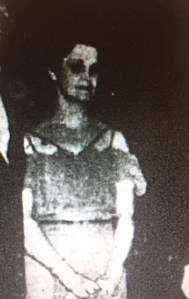
She began selling real estate in 1974 and formed the company which bears her name in 1980.  In addition to continuing to be a realtor, she has remained active in civic affairs.  She is a past Chairman of the Federal Reserve Board of the Little Rock Branch.

She has also served on various community boards throughout the years, including CARTI, UA Little Rock, YMCA, Big Brothers/Big Sisters of Central Arkansas, Fifty for the Future, and Youth Home. She was named Business Executive of the Year by Arkansas Business, Sustainer of the Year by The Junior League of Little Rock, ranked in the Top 100 Women in Arkansas, and Rotary Club of Little Rock Business & Professional Leader of the Year Award.

RobinsoNovember: Emily Miller

emilyFrom January 1940 until December 1971, Emily Miller served on the Robinson Auditorium Commission.  She was the longest serving member of that body and had one of the longest tenures of any person on any City of Little Rock commission.  In keeping with the times, she was always referred to publicly as Mrs. Grady Miller. Probably the only time she was ever listed in a newspaper as Emily Sturges Miller was her obituary in 1993.
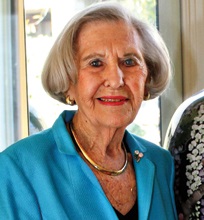
Born in Ohio in 1903, she studied at Smith College in Massachusetts. In 1925, she visited Washington DC for the presidential inauguration of Calvin Coolidge. While there she met Grady Miller, who was the brother-in-law of Senator Joseph T. Robinson.  After marrying Mr. Miller, she moved to Arkansas and made it her home for the next seven decades.

Throughout the 1930s and 1940s, she was active in the PTA, Junior League of Little Rock, and Colonial Dames.  Mrs. Miller was also active in Second Presbyterian Church.  As her two children became older, she and her husband traveled extensively.

Because she was related to Senator Robinson’s widow, Mayor J. V. Satterfield asked Mrs. Miller to serve on the Auditorium Commission.  She was subsequently reappointed every time her term came up.  For the 1940 ribbon cutting, Mrs. Miller joined her sister-in-law and Mayor Satterfield on the stage.  They were the only participants.  (It had been Mrs. Miller who informed Mrs. Robinson of her husband’s death.  Mr. Miller had called Mrs. Miller, who was visiting family in Ohio at the time, to inform her.  She then called her sister-in-law to extend her sympathies, not realizing that no one had yet informed Mrs. Robinson who was in Little Rock preparing for a trip.)

Several decades later as a Sunday School teacher in her late 60s, Mrs. Miller was not in favor of the musical HAIR being performed at Robinson.  When a federal judge ruled that it had to be allowed, Mrs. Miller was the only member of the Auditorium Commission who would speak to the press. Her response is one of the Culture Vulture’s favorite statements ever made to a member of the media.  “Oh dear,” was her only reply. She refused further elaboration.  While the Commission was wrong in opposing the show, the fact that none of her fellow commissioners (all men) would speak to the press, shows a lot of moxie on her behalf.

RobinsoNovember: Mayor R. E. Overman

Overman AuditR. E. Overman assumed the office of Little Rock mayor in April 1935. Around that time, a new wave of New Deal programs were filtering down from Washington DC to cities.  It can be said of Mayor Overman that he did not meet a New Deal program he did not like.  From rebuilding the sewer system, to creating a public water utility, to constructing of structures for the Museum of Fine Arts, Little Rock Zoo, and Boyle Park, Mayor Overman signed the City up for program after program.

While the programs were all worthwhile, and in some cases absolute necessities, Mayor Overman did not seem to consider how these massive projects running concurrently would impact the City finances.  In November 1935, he submitted a proposal to the Public Works Administration for the construction of a new municipal auditorium to be located at the northeast corner of the intersection of Scott Street and Capitol Avenue. It would have taken up three/quarters of that block and wrapped around the Women’s City Club building (now the Junior League of Little Rock headquarters).  Because of other projects in the works, he did not pursue any further action on the auditorium project at the time.

In November 1936, Mayor Overman asked the City Council to place three bond issues on a special election ballot for January 1937, one of which was a municipal auditorium. Though a location had previously been identified in 1935, at this point in time supporters made a concerted effort to disclose that no location had been selected.  After the election was called, there was a concerted effort by supporters of the three separate bond issues to collaborate.  Voters overwhelmingly approved all three issues, and Little Rock’s journey to a municipal auditorium at last was underway. Perhaps.

Over the summer, architects and lawyers were selected. In the autumn, a consultant was hired to help with the selection for the site.  The month of October was consumed with City Council battles over the auditorium site.  Mayor Overman favored a location at Markham and Spring Streets (now site of the Cromwell Building and the Bankruptcy Courthouse). Because the Federal Government owned half the site and did not want to sell it, that location was deemed not feasible – though that did not stop Mayor Overman and others from repeatedly citing it as their first choice.  The only person who favored the location at Markham and Broadway did not have a vote: Planning Commission Chair J. N. Heiskell. Though he had no vote, he had the twin bully pulpits of Planning Commission and the Arkansas Gazette. As other sites fell by the wayside, he kept advocating for it.  Finally, the City Council approved of Heiskell’s choice, and the auditorium had a site.

The groundbreaking had to take place by January 1, 1938, or the money would be rescinded. After finalizing a location, planning could get underway.  With a week to spare, the ground was broken on December 24, 1937.  Mrs. Joseph T. Robinson, widow of the recently deceased US Senator from Arkansas, joined Mayor Overman in the groundbreaking. This ceremony was the first mention of the building being named in memory of the fallen senator, who had died in the summer of 1937.

Construction progressed throughout 1938 and into 1939.  Because of the precarious state of the City’s finances, Mayor Overman lost the support of the business community.  In November 1938, he lost his bid for the Democratic nomination for Mayor and was denied a third two-year term.  He left office in April 1939.

Arkansas Heritage Month – LR Mayor Overman and a municipal auditorium

Overman AuditR. E. Overman assumed the office of Little Rock mayor in April 1935. Around that time, a new wave of New Deal programs were filtering down from Washington DC to cities.  It can be said of Mayor Overman that he did not meet a New Deal program he did not like.  From rebuilding the sewer system, to creating a public water utility, to constructing of structures for the Museum of Fine Arts, Little Rock Zoo, and Boyle Park, Mayor Overman signed the City up for program after program.

While the programs were all worthwhile, and in some cases absolute necessities, Mayor Overman did not seem to consider how these massive projects running concurrently would impact the City finances.  In November 1935, he submitted a proposal to the Public Works Administration for the construction of a new municipal auditorium to be located at the northeast corner of the intersection of Scott Street and Capitol Avenue. It would have taken up three/quarters of that block and wrapped around the Women’s City Club building (now the Junior League of Little Rock headquarters).  Because of other projects in the works, he did not pursue any further action on the auditorium project at the time.

In November 1936, Mayor Overman asked the City Council to place three bond issues on a special election ballot for January 1937, one of which was a municipal auditorium. Though a location had previously been identified in 1935, at this point in time supporters made a concerted effort to disclose that no location had been selected.  After the election was called, there was a concerted effort by supporters of the three separate bond issues to collaborate.  Voters overwhelmingly approved all three issues, and Little Rock’s journey to a municipal auditorium at last was underway. Perhaps.

Over the summer, architects and lawyers were selected. In the autumn, a consultant was hired to help with the selection for the site.  The month of October was consumed with City Council battles over the auditorium site.  Mayor Overman favored a location at Markham and Spring Streets (now site of the Cromwell Building and the Bankruptcy Courthouse). Because the Federal Government owned half the site and did not want to sell it, that location was deemed not feasible – though that did not stop Mayor Overman and others from repeatedly citing it as their first choice.  The only person who favored the location at Markham and Broadway did not have a vote: Planning Commission Chair J. N. Heiskell. Though he had no vote, he had the twin bully pulpits of Planning Commission and the Arkansas Gazette. As other sites fell by the wayside, he kept advocating for it.  Finally, the City Council approved of Heiskell’s choice, and the auditorium had a site.

The groundbreaking had to take place by January 1, 1938, or the money would be rescinded. After finalizing a location, planning could get underway.  With a week to spare, the ground was broken on December 24, 1937.  Mrs. Joseph T. Robinson, widow of the recently deceased US Senator from Arkansas, joined Mayor Overman in the groundbreaking. This ceremony was the first mention of the building being named in memory of the fallen senator, who had died in the summer of 1937.

Construction progressed throughout 1938 and into 1939.  Because of the precarious state of the City’s finances, Mayor Overman lost the support of the business community.  In November 1938, he lost his bid for the Democratic nomination for Mayor and was denied a third two-year term.  He left office in April 1939.

Arkansas Heritage Month – Jeane Hamilton

Photo taken for SOIREE

Photo taken for SOIREE

Happy Mother’s Day.  Today as part of Arkansas Heritage Month, we salute Jeane Hamilton — the “mother” of the Arkansas Arts Center.  In 2007, she was awarded the Arkansas Arts Council’s Lifetime Achievement Governor’s Arts Award.

Arriving in Little Rock a young wife in 1952, she immediately set about to become involved in her new community as she and her husband James set up a household.  In the mid-1950s, the Junior League of Little Rock tapped her to chair the initiative to create a new art museum for Little Rock.  The two decades old Museum of Fine Arts was threadbare through years of neglect and unfocused programming and collecting.

Hamilton, along with Junior League President Carrie Remmel Dickinson and Vice President Martha McHaney, approached Winthrop Rockefeller (then a relatively new resident) to lead the fundraising effort for the new museum.  He agreed on a few conditions: one was that a base amount had to be raised in Little Rock first, and second that the museum would be for the entire State of Arkansas and not just Little Rock.

Hamilton and her colleagues set about to raise the funds. They raised $645,000 at the same time Little Rock’s business climate was stymied by the aftereffects of the Central High crisis.

Now a lifetime honorary member of the Arkansas Arts Center Board, Hamilton has spent much of her life working on Arkansas Arts Center projects since that visit in 1959.  She has served on the Board, chaired committees, chaired special events, served hot dogs, helped kids paint and danced the night away at countless fundraisers.  She was on the committee which hired Townsend Wolfe as executive director and chief curator.  Jeane has led art tours for the Arts Center to a number of countries over the years.

When she is not at the Arts Center, she is often seen at the Rep, the Symphony or any number of other cultural institutions.  While she enjoys seeing old friends at these events, she also loves to see a room full of strangers – because that means that new people have become engaged in the cultural life of Little Rock.

For Poetry Month – Epilogue

Since April is Poetry Month, here is a poem written by the Culture Vulture.  It was inspired by visits to the Old State House Museum and Women’s City Club buildings before they were renovated.

Epilogue

scratched oak floors
plaster peeling off of the walls
banisters smoothed by time’s sandpaper
the chandelier–Arachne’s loom
dank, dusty, musty odors permeate from
the drapes hanging
like Babylon’s gardens
the ballroom is lifeless.

But, stop and listen

Laughter
Strains of music
The rustle of taffeta and satin as
Women practice Terpsichore’s art
Whirling and swirling around with
Men in white tie and tails.
The clinking of glasses
To toast triumphs…and future hopes.

All of these are as much a part of the room as

scratched oak floors
plaster peeling off of the walls
banisters smoothed by time’s sandpaper….