
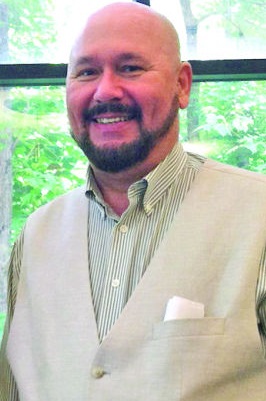
Noon today, the Clinton School and Butler Center’s Legacies & Lunch present Justice Troy Poteete, executive director of the National Trail of Tears Association

PoteeteToday at noon, the Clinton School Speaker Series and the Butler Center’s Legacies & Lunch jointly present a program.  Justice Troy Poteete, executive director of the National Trail of Tears Association will speak at the Ron Robinson Theater.

Troy Poteete was appointed to the Cherokee Nation Supreme Court by Chief Chad Smith in 2007 and is the executive director of the National Trail of Tears Association, an organization he helped found. Justice Poteete also founded the Historical Society in Webbers Falls, Okla., served as executive director of the Cherokee Nation Historical Society, and was a delegate to the Cherokee Nation Constitutional Convention. In 2000, Justice Poteete was appointed executive director of the Arkansas Riverbed Authority, a tribal entity jointly created by the Chickasaw, Choctaw, and Cherokee Nations to administer their interests in the 96-mile section of the Arkansas River between Muskogee, Okla. and Fort Smith, Ark.

The Trail of Tears was actually several trails.  Little Rock is one of the only cities (if not the only city) that members of all six relocated tribes passed through.  Little Rock’s emerging merchant class benefited from the relocation efforts as the Federal government paid for goods and services in Little Rock.

On the First of October learn about the First woman elected to the U.S. Senate (Hint: she is from Arkansas)

legaciesArkansas’s Hattie Caraway, the first woman elected to serve in the U.S. Senate, is the topic of Dr. Nancy Hendricks’ talk at Legacies & Lunch, the Butler Center’s monthly history lecture, on Wednesday, October 1, at noon in the Main Library’s Darragh Center. Copies of Hendricks’ book, Hattie Caraway: An Arkansas Legacy, will be available for sale; Hendricks will sign books after her talk.

Nancy Hendricks is the noted Hattie Caraway scholar and award-winning writer of the book Senator Hattie Caraway: An Arkansas Legacy and the play Miz Caraway and the Kingfish. She has previously been featured at the Arkansas Literary Festival.

Hattie Caraway served in the U.S. Senate from December 9, 1931 – January 3, 1945. She was appointed to as a placeholder following the death of her husband, Senator Thaddeus Caraway.  In early 1932, she was supported in her bid to be elected to complete the remainder of this term.  However, it was expected she would not seek election in November 1932 for a full term. She did, shocking the Democratic Party establishment in Arkansas.  She won that term due in part to the campaigning of populist hero Senator Huey Long of Louisiana.  In 1938, she was challenged in her bid for re-election by Rep. John L. McClellan.  She defeated him (though he would go on to win the other Senate seat in the future and serve until his death in the 1970s).  In 1944, she lost her bid for a third term to J. William Fulbright.

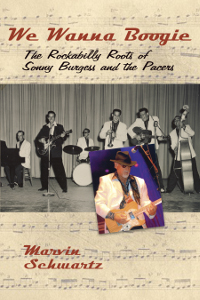
“We Wanna Boogie” at Legacies & Lunch Today

we_wanna_boogieRockabilly great Sonny Burgess, of Newport, Arkansas, and his band the Legendary Pacers are the topic of We Wanna Boogie, a new release from Butler Center Books by Marvin Schwartz, who will speak at Legacies & Lunch, the Butler Center’s monthly lecture series, on Wednesday, September 3, at noon in the Main Library’s Darragh Center, 100 Rock Street. Books will be available for purchase; Schwartz, Burgess, and band members Jim Aldridge, Fred Douglas, Bobby Crafford, and Kern Kennedy will sign copies after the talk.

In We Wanna Boogie, Burgess and his band members tell of their original recordings for Sun Records in the 1950s and their shows with Elvis Presley, Johnny Cash, Jerry Lee Lewis, and others. Burgess, whose music evolved in the Silver Moon and other clubs around the Arkansas delta, has influenced rock and roll music internationally and has led the contemporary rockabilly revival in the U.S. and overseas. The book also tells the history of a once prominent and high spirited delta community of extensive agricultural wealth. Newport was home to numerous music clubs, which often housed both performances by national artists and illicit back-room gambling.

Legacies & Lunch is free, open to the public, and sponsored in part by the Arkansas Humanities Council. Attendees may bring a sack lunch; drinks and dessert are provided. For more information, contact 501-918-3033.

Charlotte Schexnayder Brings Salt to Legacies & Lunch

legaciesschexnayderCharlotte Tillar Schexnayder has been called a “salty old editor,” and she is indeed worth her salt. She will be interviewed about her life and work in the Arkansas Delta by David Stricklin, manager of the Butler Center for Arkansas Studies, at Legacies & Lunch on Wednesday, April 2, at noon in the Main Library’s Darragh Center, 100 Rock Street.

Schexnayder has been an influential voice in the life and politics of the Delta, a member of the Arkansas House of Representatives, and a pioneer among women in the professions of politics and journalism. She and her husband, Melvin, owned the Dumas Clarion newspaper for many years. Schexnayder has served as president of every professional journalism organization she has joined, including the National Federation of Press Women and the National Newspaper Association, and she was the first female president of the Dumas Chamber of Commerce.

Copies of her memoir, Salty Old Editor, published by Butler Center Books in 2012, will be available for sale at the program or may be purchased from River Market Books & Gifts, 120 River Market Avenue, or online at http://www.uapress.com. Schexnayder will sign books after her program.

Legacies & Lunch is free, open to the public, and supported in part by the Arkansas Humanities Council. Programs are held from noon-1 p.m. on the first Wednesday of each month. Attendees are invited to bring a sack lunch; drinks and dessert are provided. For more information, contact 918-3033.

Legacies & Lunch: Lessons from an Old School

legaciesThis month, the Butler Center’s Legacies & Lunch series not only looks at a chapter in Arkansas history, but it explores the challenges of researching and writing history.
Grace Blagdon and David Ware will discuss the Brinkley Academy, a major part of African American educational history in Arkansas. Blagdon, whose father was the school’s principal, will share what she has learned from surviving students. Ware, historian of the Arkansas State Capitol, will touch on the challenges he and Blagdon faced in creating an exhibit, Old School: Remembering the Brinkley Academy, from the school’s few remaining historical materials.
Legacies & Lunch is free, open to the public, and supported in part by the Arkansas Humanities Council.
This month, Legacies & Lunch moves to a new location.  With the opening of the new CALS Ron Robinson Theater in the Arcade Building, the program will take place there.  It is easily accessible from the Main Library’s parking lot. Attendees are invited to bring a sack lunch; drinks and dessert will be provided.

The program is held from noon-1 p.m. on the first Wednesday of each month.

The Butler Center for Arkansas Studies is a department of the Central Arkansas Library System (CALS). It was founded in 1997 to promote the study and appreciation of Arkansas history and culture.

Legacies & Lunch Looks at Slavery in Arkansas

legaciesSlave resistance in Arkansas is the topic of Legacies & Lunch in January. Kelly Houston Jones, a Ph.D. candidate at the University of Arkansas, will present “A Rough, Saucy Set of Hands to Manage,” a discussion of her research on slavery in Arkansas.

This work was the lead essay in the Spring 2012 issue of Arkansas Historical Quarterly. Making extensive use of legal documents and carefully reading oral histories, Jones sought “to recover the slave point of view in examining explicit resistance.” She concludes that “slaves’ resistance in Arkansas seems to have had more to do with making their lives a little easier than with a continuing, self conscious effort to undermine the slave regime.”

Legacies & Lunch is free, open to the public, and supported in part by the Arkansas Humanities Council. The program is held from noon-1 p.m. on the first Wednesday of each month in the Main Library’s Darragh Center. Attendees are invited to bring a sack lunch; drinks and dessert will be provided.

The Butler Center for Arkansas Studies is a department of the Central Arkansas Library System (CALS). It was founded in 1997 to promote the study and appreciation of Arkansas history and culture. The Butler Center’s research collections, art galleries, and offices are located in the Arkansas Studies Institute building at 401 President Clinton Ave. on the campus of the CALS Main Library.

For more information, call 918-3086.

The Memphis Sound is topic of September Legacies & Lunch today at noon

cals_int_sponsor_butlerCivil rights, the cold war, and the transformation of the plantation economy. It is in light of these historical topics that Jeannie Whayne, University of Arkansas history professor, will frame her talk, “The Memphis Sound and Northeastern Arkansas in the 1950s and 1960s,” at Legacies & Lunch, a free monthly program hosted by the Butler Center for Arkansas Studies, on Wednesday, September 4, at noon in the Main Library’s Darragh Center, 100 Rock Street.

whayne-j-12Whayne will talk about growing up in northeast Arkansas and picking up Memphis radio and television broadcasts. She will address this experience in the context of regional and world events. One example is Sputnik Monroe, a Memphis wrestler who seemed to personify the Russian menace but in fact supported civil rights by promoting matches between black and white wrestlers at a time when the sport was highly segregated.

Legacies & Lunch is free, open to the public, and supported in part by the Arkansas Humanities Council. The program is held from noon – 1 p.m. on the first Wednesday of each month in the Main Library’s Darragh Center. Attendees are invited to bring a sack lunch; drinks and dessert will be provided.

The Butler Center for Arkansas Studies is a department of the Central Arkansas Library System (CALS). It was founded in 1997 to promote the study and appreciation of Arkansas history and culture. The Butler Center’s research collections, art galleries, and offices are located in the Arkansas Studies Institute building at 401 President Clinton Ave. on the campus of the CALS Main Library.

For more information, call 918-3086.