Little Rock Look Back: City Park becomes MacArthur Park

GOn March 9, 1942, Little Rock’s first public park was renamed by the Little Rock City Council.  By a vote of fourteen ayes, zero nays and four absent, the alderman approved Ordinance 6,388 which renamed the park in honor of General Douglas MacArthur. 

The text of the ordinance says that “it is fitting and proper that the bravery and glorious deeds of General Douglas MacArthur, a native son of Little Rock, should be commemorated.”  This was passed a few months after the United States’ entry into World War II. 

Though he was already a well-established military figure, most of the MacArthur legend during the war would take place after this naming. 

The park land had originally served as a horse racetrack in the early days of Little Rock.  By 1836, the federal government purchased the land for construction of a military arsenal.  The flagship building, the Arsenal Tower building, is the only remaining structure from that time period.  

The land served as a military outpost until 1892.  On April 23, 1892, a land swap took place where in the City of Little Rock was given the property with the stipulation that it would be “forever exclusively devoted to the uses and purposes of a public park.” (Never mind that the federal government took part of the land back for the construction of the Wilbur Mills Freeway.)  

In return for giving the City this land, the federal government took possession of land on the north side of the Arkansas River (then part of Little Rock) – that 1,000 acres became Fort Logan H. Roots. The park opened on July 4, 1893, with the name Arsenal Park. Since it was the City’s first and only park at the time, residents started referring to it as City Park. In time, the designation Arsenal Park fell from use.  In fact, it is referred to as City Park exclusively and officially in City documents throughout the first 42 years of the 20th Century. 

The action of the City Council in March 1942, was accompanied by petitions encouraging the action which were submitted by the Arkansas Authors and Composers Society, the Arkansas Engineers Club and the Pulaski County Republican Central Committee.  

City records do not indicate if anyone registered opposition to the name change. It would be another decade before General MacArthur would return to the site of his birth, a place he had not visited since his infancy.MacPark ordinance

Little Rock Look Back: John Herndon Hollis – Acting Mayor of Little Rock in 1908

John Herndon HollisOn February 5, 1870, future Little Rock alderman and acting mayor John Herndon Hollis was born shortly before his family moved to what is now Cleveland County. His parents were originally from Georgia and came from prosperous and longtime families there.

The Hollis family came to Arkansas after the Civil War and settled in Union County. A portion of that county was carved off and became Dorsey County (named after a Republican US Senator from Arkansas) but was renamed Cleveland County after Grover Cleveland was elected President. Cleveland was the first Democrat to be elected President in over 20 years. This name change also reflected the political shift in Arkansas from the Reconstruction-led Republican politics to the Democratic Party politics which would dominate for the next century.

John Herndon Hollis was one of six children, and the only one with a middle name. Herndon had been his mother’s maiden name. As one of his brothers described their childhood in Cleveland County, “they all went to country schools in their home neighborhood, worked hard on the farm in the summertime, and were inside their little Methodist Church every time the doors were open.”

Around 1900, Hollis and his new wife Malinda M. “Linda” Taliaferro Hollis (formerly of Rison) moved to Little Rock.  Together the couple had six children. In Little Rock, Hollis worked in the banking industry. For years he worked for People’s Building and Loan Association.

Hollis was first elected to the Little Rock City Council in April 1904. He would serve as one of the Aldermen from the city’s Fourth Ward until April 1918.  This was on the western border of Little Rock at the time. The family lived at 1510 S. Schiller, which is one block east of Central High, though at the time neither the school nor its predecessor (West End Park) existed.  From 1907 until 1913 he also served on the Little Rock School Board.

In April 1908, at the first City Council meeting in the new City Hall, Mayor W. E. Lenon announced his resignation. Because the resignation was effective immediately, there was a vacancy in the office of mayor.  Hollis was selected by his colleagues to serve as acting mayor until a successor could be elected. So from April 1908 through June 1908, Hollis was the City’s chief political and executive leader.

Though he was never formally mayor (and did not resign his position as alderman), since 1908, Hollis’ name has appeared on the list of mayors of Little Rock. The reason seems to be as a sign of respect since there was a vacancy.

There previously had been acting mayors when the mayor would be absent on business or due to illness. But in those instances, the mayor had not resigned. This is the only instance in Little Rock history when a mayor resigned immediately with no successor in place. So John Herndon Hollis holds a unique role in Little Rock history.

Hollis’ wife died in 1920.  He later married Ann Jewell of Little Rock (who was a distant cousin of his first wife). They were married until his death on October 23, 1941.  Ann Hollis lived in Little Rock until her death in 1980.  The Hollis family is entombed in the mausoleum at Mount Holly Cemetery.

Little Rock Look Back: City Park renamed for MacArthur

GOn March 9, 1942, Little Rock’s first public park was renamed by the Little Rock City Council.  By a vote of fourteen ayes, zero nays and four absent, the alderman approved ordinance 6388 which renamed the park in honor of General Douglas MacArthur.

The text of the ordinance says that “it is fitting and proper that the bravery and glorious deeds of General Douglas MacArthur, a native son of Little Rock, should be commemorated.”  This was passed a few months after the United States’ entry into World War II. Though he was already a well-established military figure, most of the MacArthur legend during the war would take place after this naming.

The park land had originally served as a horse racetrack in the early days of Little Rock.  By 1836, the federal government purchased the land for construction of a military arsenal.  The flagship building, the Arsenal Tower building, is the only remaining structure from that time period.  The land served as a military outpost until 1892.  On April 23, 1892, a land swap took place where in the City of Little Rock was given the property with the stipulation that it would be “forever exclusively devoted to the uses and purposes of a public park.” (Never mind that the federal government took part of the land back for the construction of the Wilbur Mills Freeway.)  In return for giving the City this land, the federal government took possession of land on the north side of the Arkansas River (then part of Little Rock) – that 1,000 acres became Fort Logan H. Roots.

The park opened on July 4, 1893, with the name Arsenal Park. Since it was the City’s first and only park at the time, residents started referring to it as City Park. In time, the designation Arsenal Park fell from use.  In fact, it is referred to as City Park exclusively and officially in City documents throughout the first 42 years of the 20th Century.

The action of the City Council in March 1942, was accompanied by petitions encouraging the action which were submitted by the Arkansas Authors and Composers Society, the Arkansas Engineers Club and the Pulaski County Republican Central Committee.  City records do not indicate if anyone registered opposition to the name change.

It would be another decade before General MacArthur would return to the site of his birth, a place he had not visited since his infancy.

MacPark ordinance

Little Rock Look Back: John Herndon Hollis

John Herndon HollisOn February 5, 1870, future Little Rock alderman and acting mayor John Herndon Hollis was born shortly before his family moved to what is now Cleveland County. His parents were originally from Georgia and came from prosperous and longtime families there.

The Hollis family came to Arkansas after the Civil War and settled in Union County. A portion of that county was carved off and became Dorsey County (named after a Republican US Senator from Arkansas) but was renamed Cleveland County after Grover Cleveland was elected President. Cleveland was the first Democrat to be elected President in over 20 years. This name change also reflected the political shift in Arkansas from the Reconstruction-led Republican politics to the Democratic Party politics which would dominate for the next century.

John Herndon Hollis was one of six children, and the only one with a middle name. Herndon had been his mother’s maiden name. As one of his brothers described their childhood in Cleveland County, “they all went to country schools in their home neighborhood, worked hard on the farm in the summertime, and were inside their little Methodist Church every time the doors were open.”

Around 1900, Hollis and his new wife Malinda M. “Linda” Taliaferro Hollis (formerly of Rison) moved to Little Rock.  Together the couple had six children. In Little Rock, Hollis worked in the banking industry. For years he worked for People’s Building and Loan Association.

Hollis was first elected to the Little Rock City Council in April 1904. He would serve as one of the Aldermen from the city’s Fourth Ward until April 1918.  This was on the western border of Little Rock at the time. The family lived at 1510 S. Schiller, which is one block east of Central High, though at the time neither the school nor its predecessor (West End Park) existed.

In April 1908, at the first City Council meeting in the new City Hall, Mayor W. E. Lenon announced his resignation. Because the resignation was effective immediately, there was a vacancy in the office of mayor.  Hollis was selected by his colleagues to serve as acting mayor until a successor could be elected. So from April 1908 through June 1908, Hollis was the City’s chief political and executive leader.

Though he was never formally mayor (and did not resign his position as alderman), since 1908, Hollis’ name has appeared on the list of mayors of Little Rock. The reason seems to be as a sign of respect since there was a vacancy.

There previously had been acting mayors when the mayor would be absent on business or due to illness. But in those instances, the mayor had not resigned. This is the only instance in Little Rock history when a mayor resigned immediately with no successor in place. So John Herndon Hollis holds a unique role in Little Rock history.

Hollis’ wife died in 1920.  He later married Ann Jewell of Little Rock (who was a distant cousin of his first wife). They were married until his death on October 23, 1941.  Ann Hollis lived in Little Rock until her death in 1980.  The Hollis family is entombed in the mausoleum at Mount Holly Cemetery.

Sandwiching in History: Villa Marre

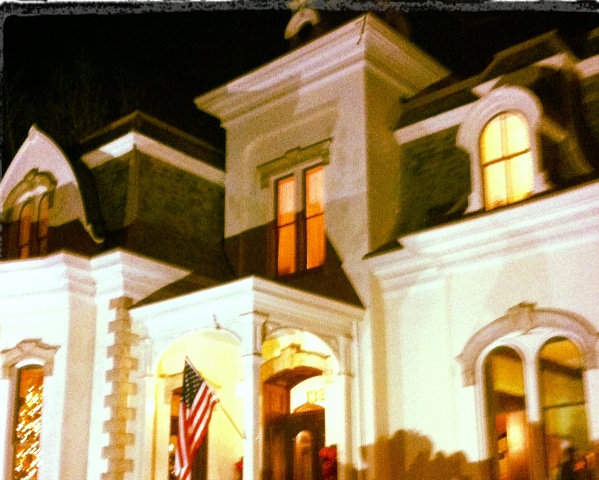
villamarreToday at 12 noon, the Arkansas Historic Preservation Program’s monthly “Sandwiching in History” program will visit the Villa Marre.

The Villa Marre is located at 1321 Scott Street. The Second Empire-style Villa Marre was built in 1881 by Italian immigrant and Little Rock saloonkeeper Angelo Marre, who also served on the Little Rock City Council.

The distinctive home features a mansard roof covered in patterned slate, a central tower topped by wrought-iron cresting, and hood molding above the doors and windows. Marre died in 1889, and his widow, Jennie, remained in the house until about 1900. Arkansas Governor Jeff Davis rented the house for a few years, and in 1905, the home was purchased by E. B. Kinsworthy, former state senator and attorney general of Arkansas.

It is probably most famous today for being the outdoor exterior of Sugarbakers design firm in the CBS sitcom “Designing Women.”  For several years, it was the home of the Quapaw Quarter Association. It later returned to a private residence.  Currently it is a rentable venue for weddings and other events.

The “Sandwiching In History” program is a series of tours that seeks to familiarize people who live and work in central Arkansas with the historic structures and sites around us. The tours take place on Fridays at noon, last less than an hour, and participants are encouraged to bring their lunches so that they can eat while listening to a brief lecture about the property and its history before proceeding on a short tour. A representative from the property is encouraged to attend also and address the group.

The tours are organized by the Arkansas Historic Preservation Program, an agency of the Department of Arkansas Heritage. All tours are free and open to the public.


Little Rock Look Back: First Council Meeting in Little Rock

TowncouncilplaqueOn this date, January 16, 1832, the very first Town Council meeting took place in Little Rock.  It was held at the home of Dr. Matthew Cunningham, Little Rock’s first Mayor. (Prior to the establishment of a City Hall, the Mayor was responsible for hosting the Council meetings.)

Dr. Cunningham owned several properties in Little Rock.  His home was situated on a block at  the southwest intersection of Markham and what is now 3rd Street.  Currently Bennett’s Military Supply anchors that corner in the Fulk building.  The block also includes the Mann on Main project, which is comprised of the buildings originally constructed for the Gus Blass Department store.

Little Rock was chartered as a town in 1831 and elections were subsequently held.  Dr. Cunningham outpolled Rev. W. W. Stevenson to become the first Mayor.

Joining Mayor Cunningham at the first meeting were the original four Town Council members – Charles Caldwell, Benjamin Clemens, David Holt and John McLain.

In 1931 a plaque, as part of Little Rock’s Centennial, a plaque was erected to note the first meeting.  The plaque erroneously implies that the first meeting was in 1831. This mistake is understandable since the first election was in 1831.  The plaque also refers to the body as the City Council.  It was, in fact, the Town Council.  There would not be a City Council until 1835 when Little Rock was elevated to City status.

(Incidentally, the plaque is not the only incorrect date regarding City meeting places.  The date stone above the entrance to City Hall reads 1907. Though construction of the building was largely finished in 1907, City offices did not move in until 1908. The building was not officially dedicated until April 1908.  When the plaque was installed it was probably due to wishful thinking.)