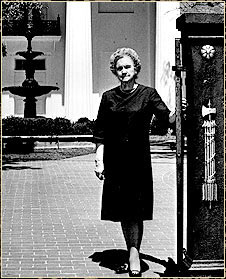
Women’s History Month – Louise Loughborough, first female Little Rock Planning Commissioner

louise_loughborough_fLouise Loughborough was the first woman to serve on the Little Rock Planning Commission.  Not only was the she first woman to serve on this body, she was the first to serve on any City commission other than the Board of Censors or Library Board.  Born Louisa Watkins Wright in Little Rock 1881, her ancestors included many early Arkansas leaders including Little Rock Mayor David Fulton.

In 1935, Loughborough was appointed to the Little Rock Planning Commission, and it was in this role that she first heard about the plan to condemn the half-block of houses that she had grown up admiring on Cumberland and East Third streets. Although the neighborhood had fallen on hard times, becoming a red-light district and slum, Loughborough feared the loss of several historic structures, including the Hinderliter House, the oldest building in Little Rock and thought to be Arkansas’s last territorial capitol. She mobilized a group of civic leaders to save these buildings. She enlisted the aid of prominent architect Max Mayer and coined the term “town of three capitols” to try to capture the imagination of potential supporters, grouping the “Territorial Capitol” with the Old State House and the State Capitol.

The Arkansas Territorial Restoration opened on July 19, 1941. The project was the first Arkansas agency committed to both the restoration of structures and the interpretation of their history, and it served as a model and inspiration for historic preservation in the state. Around the same time, she was a moving force behind the creation of a museum at the Old State House as well.  Today both Historic Arkansas Museum (as the Territorial Restoration is now known) and the Old State House Museum are agencies of the Department of Arkansas Heritage.

As founding Chairman of the Arkansas Territorial Restoration Commission, Louise Loughborough provided daily direction for the museum house complex through the first twenty years of its existence. She died in Little Rock on December 10, 1962 and was buried at Mount Holly Cemetery.

New HAM exhibit looks at 75 Years of the museum

75thbannerHistoric Arkansas Museum, a museum of the Department of Arkansas Heritage, will host a free opening reception for the museum’s 75th anniversary exhibit A Diamond in the Rough: 75 Years of Historic Arkansas Museum during 2nd Friday Art Night from 5 to 8 pm. The reception will feature a vintage cocktail from 1941, the year the museum was founded, live music by the Delta Brass Combo and a unique 75th anniversary Living History performance featuring portrayals of museum founder Louise Loughborough, as she campaigns the historic structures that are now preserved on the museum grounds, as well as Senator Ed Dillon and Governor Bailey. Refreshments will be available, including the vintage cocktail Millionaire No. 1 which was popular in 1941 – the year Historic Arkansas Museum was founded.

A Diamond in the Rough: 75 Years of Historic Arkansas Museum

Experience 75 years of Historic Arkansas Museum, beginning with the ambitious Louise Watkins Loughborough whose one-woman campaign succeeded in the founding of the museum in 1941. The museum, now a gem of Arkansas history and culture, began as a diamond in the rough; a half-block of dilapidated historic homes—the last remnant of Little Rock’s oldest neighborhood. Loughborough’s passion and vision saved these historic structures and the subsequent contributions of architects and preservationists such as Max Mayer, Ed Cromwell, Parker Westbrook and others succeeded in making Historic Arkansas Museum the historic landmark and vibrant cultural institution it is today.

The anniversary exhibit is a celebration of the museum’s commitment to preserving and exhibiting objects and artworks that illuminate Arkansas’s rich and varied cultural heritage. Learn more about the contributions of pioneering community leaders, reflect on milestones in the museum’s development over 75 years and see many of the most important pieces from the museum’s permanent collection. This exhibit continues in the Horace C. Cabe Gallery through February 2017.

Currently on exhibit:

Historic Arkansas Museum is open 9 a.m. – 5 p.m. Monday through Saturday, 1 – 5 p.m. on Sunday. Admission to the galleries and parking are free; admission to the historic grounds is $2.50 for adults, $1 for children under 18, $1.50 for senior citizens. The Historic Arkansas Museum Store is open 10 a.m. – 4:30 p.m. Monday through Saturday, 1 – 4 p.m. on Sunday.

Historic Arkansas Museum is an agency of the Department of Arkansas Heritage, which was created in 1975 to preserve and enhance the heritage of the state of Arkansas. Other agencies of the department are Delta Cultural Center in Helena, Arkansas Arts Council, Arkansas Natural Heritage Commission, Arkansas Historic Preservation Program, Mosaic Templars Cultural Center and Old State House Museum.

Free field trip programs to Historic Arkansas Museum for any Arkansas school in 2016, funded by Bill Worthen Future of History Fund

Historic Arkansas Museum is celebrating its 75th diamond anniversary by offering free educational field trip programs to any school in Arkansas that comes to the museum in 2016. This project will be funded by the Bill Worthen Future of History Fund which is dedicated to inspiring the next generation of Arkansas history lovers.

Historic Arkansas Museum provides a variety of engaging and interactive field trip programs throughout the year in addition to popular annual programs such as the Spring and Fall School Fairs and the Before Freedom program in February during Black History Month.

Educators can begin the reservation process by submitting a field trip request form.  To learn more about participating in this program, educators are invited to contact the museum’s director of education, Joleen Linson or call 501-324-9351.

Each year schoolchildren from around the state come to the museum and experience history first hand. Some churn butter—with amazement, as they learn that butter doesn’t come from the grocery store. Others imagine themselves as early Arkansans, travelling west and deciding what to bring with them, in our Packing to Go program. Students leave knowing more about their own history and they leave inspired.

Museum History

What is now a showcase for Arkansas’s history, art and heritage began as a diamond in the rough—a half-block of dilapidated historic structures. Thanks to the efforts of pioneering preservationist Louise Loughborough the museum opened on July 19, 1941, as the Arkansas Territorial Capitol Restoration. Click here to watch the museum’s 75th Anniversary film produced by Cranford Co.

Following Loughborough’s foundational leadership, prominent architect Ed Cromwell led the museum through an era of growth that made the museum an anchor of a once declining downtown Little Rock. In 1972, the museum hired its first professional staff and Bill Worthen was hired as the first executive director, a title he has held for more than 40 years. Worthen made his first goal gaining museum accreditation— a complicated and rigorous process that he and museum staff pursued for nine years, achieving accreditation from the American Alliance of Museums in 1981 making the museum the first accredited history museum in Arkansas.

Worthen also developed and expanded the log house farmstead on museum grounds that has been central to education programs and he led the museum through its most profound expansion which culminated in the 2001 opening of the Museum Center, a project which doubled the size of the previous visitor reception space with 10,000 square feet of exhibits, a theater, a hands-on history classroom, an entrance atrium with views of the historic grounds and other amenities. Other developments under Worthen’s leadership include but are not limited to: development of the ongoing #ArkansasMade research project, the museum’s popular Living History Program, Giving Voice dedicated to those enslaved on what is now museum property, the growth of popular events such as the Christmas Frolic, Territorial Fair, Frontier Fourth of July and 2nd Friday Art Night exhibit openings, and the museum’s achievement of Smithsonian Affiliate status which made possible the opening of the Smithsonian partnership exhibit, “We Walk in Two Worlds: The Caddo, Osage and Quapaw in Arkansas.”

Countless visitors have witnessed Bill Worthen’s passion for Arkansas history and even more across the world have been impacted by his scholarly research and publications, often in partnership with deputy director and chief curator Swannee Bennett, on the subjects of Arkansas-made material culture, the Arkansas Traveler, the Bowie knife and more. As Worthen plans his retirement for the end of 2016, the Bill Worthen Future of History Fund seeks to pass on his passion for Arkansas history to future generations for decades to come.

Memory Share

The museum is seeking stories and memories from visitors as a part of the 75th anniversary celebration. Everyone is invited to share their memories and stories of their experiences at the museum by emailing Chris Hancock, tagging Historic Arkansas Museum on Facebook, or tagging @HistoricArk on Instagram and Twitter with the hashtag #HAM75.

Currently on exhibit:

Historic Arkansas Museum is open 9 a.m. – 5 p.m. Monday through Saturday, 1 – 5 p.m. on Sunday. Admission to the galleries and parking are free; admission to the historic grounds is $2.50 for adults, $1 for children under 18, $1.50 for senior citizens. The Historic Arkansas Museum Store is open 10 a.m. – 4:30 p.m. Monday through Saturday, 1 – 4 p.m. on Sunday.

Historic Arkansas Museum is an agency of the Department of Arkansas Heritage, which was created in 1975 to preserve and enhance the heritage of the state of Arkansas. Other agencies of the department are Delta Cultural Center in Helena, Arkansas Arts Council, Arkansas Natural Heritage Commission, Arkansas Historic Preservation Program, Mosaic Templars Cultural Center and Old State House Museum.


Today at noon – Bill Worthen discusses Historic Arkansas Museum for Butler Center Legacies & Lunch

Bill-Worthen_K0A4687-webAt Legacies & Lunch, Bill Worthen, director of the Historic Arkansas Museum, will discuss the museum’s history, placing emphasis on Louise Loughborough, founder of the museum, and Ed Cromwell, who led the museum after Loughborough’s death.

Worthen, a Little Rock native, is a graduate of Hall High School and Washington University, St. Louis. After teaching high school in Pine Bluff for three years, Worthen became director of what was then known as the Arkansas Territorial Restoration in 1972. In 1981, the organization became the first history museum in Arkansas to be accredited by the American Association of Museums. The museum was renamed the Historic Arkansas Museum in 2001 to reflect its expanded facility and mission. Worthen’s current research interests are the bowie knife, sometimes called the Arkansas toothpick, and the Arkansas Traveler, in its many forms.

Legacies & Lunch is free, open to the public, and supported in part by the Arkansas Humanities Council. Programs are held from noon-1 p.m. on the first Wednesday of each month. Attendees are invited to bring a sack lunch; drinks and dessert are provided. For more information, contact 918-3033.

LR Cultural Touchstone: Louise Loughborough

louise_loughborough_fLouise Loughborough could be called the mother of historic preservation and history museums in Arkansas.

Born Louisa Watkins Wright in Little Rock 1881, her ancestors included many early Arkansas leaders. At age 21 she married attorney J. Fairfax Loughborough.  She became active in several organizations including the Little Rock Garden Club, Colonial Dames and Mount Vernon Ladies Association.

Her involvement in historic structures in Little Rock began when the Little Rock Garden Club sought to improve the appearance of the War Memorial Building (now known as the Old State House Museum) in 1928. The grounds were littered with signs and monuments, and the roof of the Greek Revival building sported figurative statues of Law, Justice, and Mercy, which had been installed above the pediment after being salvaged from the Arkansas exhibit at the Philadelphia Centennial of 1876. To take the façade of the edifice back to its original 1830s appearance, Loughborough had the statues removed—without the permission of the War Memorial Commission, which had legal authority over the building.

In 1935, Loughborough was appointed to the Little Rock Planning Commission, and it was in this role that she first heard about the plan to condemn the half-block of houses that she had grown up admiring on Cumberland and East Third streets. Although the neighborhood had fallen on hard times, becoming a red-light district and slum, Loughborough feared the loss of several historic structures, including the Hinderliter House, the oldest building in Little Rock and thought to be Arkansas’s last territorial capitol. She mobilized a group of civic leaders to save these buildings. She enlisted the aid of prominent architect Max Mayer and coined the term “town of three capitols” to try to capture the imagination of potential supporters, grouping the “Territorial Capitol” with the Old State House and the State Capitol.

In 1938, Loughborough secured a commitment from Floyd Sharp of the federal WPA to help with the project, on the condition that the houses be owned by a governmental entity. She persuaded the Arkansas General Assembly to create and support, with general revenues, the Arkansas Territorial Capitol Restoration Commission (Act 388 of 1939). This satisfied Sharp’s condition, and the WPA provided labor and material for the new historic house museum. A private fundraising campaign brought in the remaining monetary support necessary for the completion of the project.

The Arkansas Territorial Restoration opened on July 19, 1941. The project was the first Arkansas agency committed to both the restoration of structures and the interpretation of their history, and it served as a model and inspiration for historic preservation in the state. Around the same time, she was a moving force behind the creation of a museum at the Old State House as well.  Today both Historic Arkansas Museum (as the Territorial Restoration is now known) and the Old State House Museum are agencies of the Department of Arkansas Heritage.

As founding Chairman of the Arkansas Territorial Restoration Commission, Louise Loughborough provided daily direction for the museum house complex through the first twenty years of its existence, yielding her authority to architect Edwin B. Cromwell only as her health began to fail. She died in Little Rock on December 10, 1962 and was buried at Mount Holly Cemetery.

LR Cultural Touchstone: Agnes Loewer

Photo from Arkansas History Commission

Photo from Arkansas History Commission

Agnes McDaniel Loewer was a driving force and the first curator of the Old State House Museum.

Born June 26, 1893, in Searcy, she moved to Little Rock with her family in 1900.  After turning 18, she began her business career working for the Underwood Typewriter Company, Mayor Charles Taylor, and the Little Rock YWCA.  In 1919, at age 26, she married Charles F.W. Loewer.

Throughout the years, Agnes McDaniel Loewer was active in numerous civic organizations, devoting her business and organizational skill to a great many causes. She served as secretary, treasurer, and president of various organizations, and filled leadership roles in accomplishing goals and missions. Loewer was a member of the Arkansas Federation of Women’s Clubs, the Business and Professional Women’s City Club, the Women’s Division of the State Fair, the Arkansas Conference of Welfare Legislation, the National Youth Association, the Canteen Corps of the American Red Cross, and the Arkansas Federation of Garden Clubs, among others.
Around 1939 Loewer and Louise Loughborough lobbied daily in the halls of the State Capitol for the preservation of the Old State House. Successful in this endeavor, Loewer was appointed a member of the Arkansas Commemorative Commission of 1947, which was formed that year to oversee the restoration of the Old State House and create a future museum of Arkansas history. She served as secretary to the commission, a position that later evolved into director.
When the restoration was completed, Loewer was hired as the first curator of the Old State House, beginning July 1951.  Utilizing a small paid staff and an army of well-instructed volunteers, she oversaw the museum.  Throughout her curatorship, she promoted the Old State House as a historic shrine and tourist attraction, and continued to battle threats to its preservation.

Her interest in history extended beyond the Old State House, she was a member of the Quapaw Quarter Association, Arkansas State Historical Society, Pulaski County Historical Society, and Arkansas Landmarks.

In March 1972, she retired at age 78, after 21 years as curator.  Among the honors she received were a commendation from the Arkansas Legislative Council in 1971 for her public service; a certificate of appreciation from the Arkansas Parks, Recreation and Travel Commission in 1974; and an award from the National Trust for Historic Preservation in 1974, presented by former first lady Lady Bird Johnson.
Loewer died on September 18, 1975 and is buried in Roselawn Memorial Park.