Little Rock Look Back: LR Voters Overwhelmingly Support Arts+History

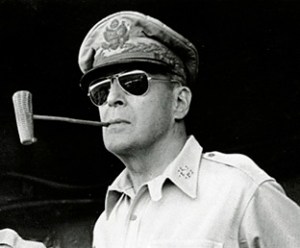
On Tuesday, February 9, 2016, Little Rock overwhelmingly approved the Arts+History initiative which funded expansion and enhancements to the Arkansas Arts Center, MacArthur Museum of Arkansas Military History, and MacArthur Park.

There were 7,989 votes cast in the special election.  This was 6.61% of the electorate.  Of those, 6,733 or 84.28% voted for the proposal.

In 2018, the MacArthur Museum of Arkansas Military History was closed for several months for a renovation, which was financed by these bonds.  It reopened in September.  The Arkansas Arts Center unveiled plans in February 2018 for its expansion.  It is preparing to start construction later in 2019. As part of that, Arts Center programming will continue in a variety of locations including Central Arkansas Library System branches.

Rock the Oscars 2019: Gregory Peck

In August 1977, Oscar winner Gregory Peck appeared in Little Rock for the premiere of the film MacARTHUR.  He played the general who had been born in Little Rock but who spent most of his life downplaying (or even denying) that fact.

MacArthur was brought to the screen by Universal Pictures.  It was their attempt to capitalize on the success of the movie Patton, including sharing some of the same members of the production team.

Told entirely in flashback, it starred Peck as the fabled World War II general who was born in Little Rock. It focuses primarily on events in 1942 during the war, his dismissal by Truman in 1952, and his famous address to West Point in 1962.

Peck initially did not care for the subject or the script, but eventually stated that he grew to admire the challenges MacArthur faced.  Peck later called it one of his favorites roles, if not one of his favorite movies.

Producer Frank McCarthy, who worked on both Patton and MacArthur once said of Patton and MacArthur: “Both were complex men but General MacArthur was complex on a much broader scale. Patton had no ambition except to be a soldier and to command a field army. He was strictly command.”

Most of the film was shot on the backlot at the movie studio, which impacted the quality of the film.  The production budget simply would not allow for overseas location filming.

The premiere was a fundraiser for the Museum of Science and History (now the Museum of Discovery).  At the time it was located in the Arsenal Building, in which MacArthur had been born.  Since 1999, that has been home to the MacArthur Museum of Arkansas Military History.  Since MacArthur only spent a few hours in Little Rock as an adult, it is possible that Peck spent more time in the building than the General did.

The evening of August 5, 1977, started with an exclusive reception for 100 people with Gregory and Veronique Peck.  The movie itself was shown at the Cinema 150, where its general run would start on Saturday, August 6.  Following the film, a reception and silent auction brought people back to the museum.  Tickets ran $250 a person for all events, $100 a person for the film and post-show reception, and $25 for the movie.  It sold out.

Governor and Mrs. David Pryor escorted the Pecks into the theatre.  Former Governor (and World War II hero) Sid McMath introduced Mr. Peck to the crowd.  He extolled the virtues of Peck and MacArthur.  (It is interesting that he should admire MacArthur so much, since the General and President Truman had a well-publicized tiff, and McMath and Truman had enjoyed a warm relationship.)  Little Rock City Director Jim Dailey presented Peck with a Key to the City.

MacArthur did not lead to an Oscar nomination for Peck (though he did earn a Golden Globe nomination for the role).  But the actor had enjoyed four nominations prior to his win for To Kill a Mockingbird.  He also received the Jean Hersholt Humanitarian Award from the Academy.  He served as president of the Academy for several years.

Little Rock Look Back: Birth of a General

On January 26, 1880, Douglas MacArthur was born in the Arsenal Building while his father was stationed at the Little Rock Barracks.  Though he left Arkansas a few weeks later when his father was transferred, he returned to his birthplace on March 23, 1952. On that day he was greeted by crowds welcoming one of the USA’s most famous military figures.
Though Gen. MacArthur spent only a few weeks in Little Rock, he was baptized at Christ Episcopal Church.  The location of the baptism remains a mystery today because the church was meeting in temporary locations due to the first structure having been lost to a fire.

When the General returned to Little Rock in 1952, he did pay a brief visit to Christ Church.  He also spoke at the Foster Bandshell in the park which bore his name.

When General MacArthur died, he was granted a state funeral.  He was one of the few non-Presidents to have been given this honor.

Today, the MacArthur Museum of Arkansas Military History is located in the Arsenal building.  It was created to interpret our state’s military heritage from its territorial period to the present.

Located in the historic Tower Building of the Little Rock Arsenal–the birthplace of General Douglas MacArthur–the museum preserves the contributions of Arkansas men and women who served in the armed forces.

Exhibits feature artifacts, photographs, weapons, documents, uniforms and other military items that vividly portray Arkansas’s military history at home and abroad.

Little Rock Look Back: Tornado lays waste to parts of Little Rock on January 21, 1999

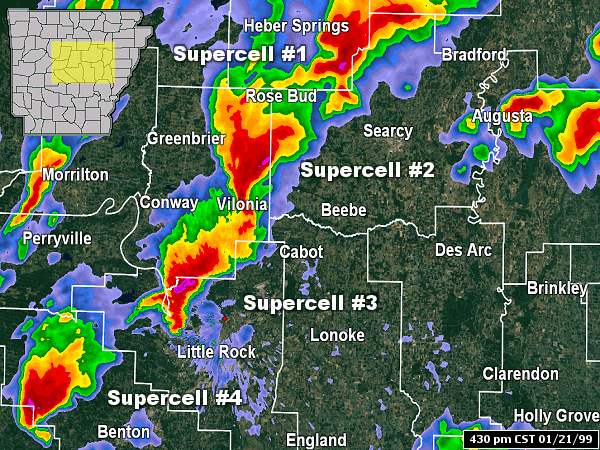
Image result for january 1999 tornado little rockIn their 5pm and 6pm forecasts, Little Rock TV station meteorologists had warned of the potential for severe weather on the evening of January 21, 1999.

But no one seemed prepared for what happened.

A tornado cut through a huge swath of Little Rock stretching from the southwest portion of the city up through the Quapaw Quarter and beyond.  At least four people died in Pulaski County and over 150 houses were destroyed.

A Harvest Foods collapsed trapping people inside the store as storms pummeled survivors with rain and wind.  Stories were ripped off buildings. Sides of houses were peeled back.  Cars and trees were tossed about as if they were made of papier mache.

While not short-changing all of the devastation throughout the city – and there was a great deal – there were several cultural institutions and historic sites which were hit by this system.

  • A portion of the roof of Daisy Bates’ home was ripped off. Some of her books and papers were sucked up by the wind and scattered throughout the storm’s path.
  • The Governor’s Mansion sustained damage in addition to losing power and phones.
  • The original Fire Station 2 in MacArthur Park, then still serving as a museum storage facility, lost a portion of its roof and sustained water damage
  • The Arsenal Building, in the process of being prepared to become the MacArthur Museum of Arkansas Military History, lost a portion of its roof.  The storm’s impact also set off the sprinkler system in the building causing flooding throughout the interior of the building.
  • The Arkansas Arts Center sustained minor damage. The museum was hosting a reception that night for the opening of an exhibit. Many trees in MacArthur Park fell that evening, including several on cars of patrons present for the party.

It would take months and years for the areas hit by this storm to be rebuilt and recover.

The Museum of Discovery – which would have been impacted by the tornado if it had not relocated to the River Market District two years earlier – has an exhibit which allows persons to relive this night.  Tornado Alley Theater provides a riveting seven-minute experience for museum visitors as they relive the tornado that devastated the Governor’s Mansion district area of downtown Little Rock in January 1999. Hear the stories of people who survived the storm and see TV footage of the event as broadcast on THV 11 that fateful evening.

18 Cultural Events from 2018 – Reopening of MacArthur Museum of Arkansas Military History

After several months of renovations to the building, the MacArthur Museum of Arkansas Military History reopened on September 29.

The museum closed in March 2018 for five months of extensive structural work.  The $1.5 million renovation for the 178-year old structure included both interior and exterior upgrades.  The first phase of the project, which began last December, involved renovation to the north and south porches and was partially funded by a Historic Preservation Restoration Grant from the Department of Arkansas Heritage. The interior renovation includes upgrades to the heating and cooling systems, installation of new lighting, and repainting of interior gallery spaces.

Funding for the renovations came from proceeds of a hotel tax which was approved by Little Rock voters in February 2016.

The MacArthur Museum of Arkansas Military History was created to interpret our state’s military heritage from its territorial period to the present. It is a program of the City of Little Rock’s Department of Parks and Recreation.

Located in the historic Tower Building of the Little Rock Arsenal–the birthplace of General Douglas MacArthur–the museum preserves the contributions of Arkansas men and women who served in the armed forces.  Exhibits feature artifacts, photographs, weapons, documents, uniforms and other military items that vividly portray Arkansas’s military history at home and abroad.

In conjunction with the reopening, there will be a belated 125th birthday party for MacArthur Park. (The park actually opened on July 4, 1893.)  Originally known as Arsenal Park, it became known as City Park shortly thereafter. In 1942, it was renamed in honor of Gen. Douglas MacArthur, who was born there. At the time he was commanding US troops in the Pacific Theatre of Operations during World War II.

At ten that day, Vice Mayor Kathy Webb and other officials cut the ribbon to officially reopen the facility.


Little Rock Look Back: 1936 groundbreaking of Museum of Fine Arts

On January 3, 1936, the ground was broken for the Museum of Fine Arts building in City Park.  The facility would face Ninth Street and be to the west of the Arsenal Tower Building.   That building was the one remaining structure of more than 30 which had populated the grounds when it was a federal military establishment.
Excavation for the building uncovered the foundation for another structure.  New footings for the Museum would be poured into the old footings.

The cornerstone would be laid in October 1936, and the building would open in October 1937.  The building would serve as the museum’s home until the new construction for the new Arkansas Arts Center began in 1961. That construction would enclose the original Museum of Fine Arts.  By that time, the City had long renamed the park in honor of General Douglas MacArthur, who was born there when it had been a military installation.

Subsequent additions to the Arkansas Arts Center over the decades have further expanded the museum’s footprint.  After the 2000 expansion, the original 1937 facade was featured prominently in a gallery, giving it more visibility than since 1963. With the Arkansas Arts Center again slated for renovation and expansion, the original 1937 facade will be maintained and re-exposed as an entrance to the building.

But it all began on January 3, 1936.

18 Cultural Events from 2018 – Death of Cliff Fannin Baker

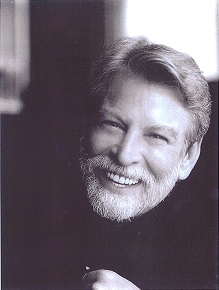
On September 6, 2018, Arkansas Rep founder Cliff Fannin Baker died after suffering a brain aneurism a week earlier in New York.

Patrons and actors from the Rep’s earliest days up to the current effort to reopen the Rep were in shock by the news. From the time the news about his hospitalization was announced on September 2, friends and fans alike came together to share their thoughts, love, prayers, bright lights, etc. in a wish for his recovery.

A memorial service was held in October at the Rep. It featured remarks from longtime colleagues as well as music by Vivian Morrison (accompanied by composer Michael Rice) in a song from PAGEANT and members of the cast of SISTER ACT, the last show Cliff directed at Arkansas Rep.

Cliff founded the Rep in 1976 and led it until 1999. He oversaw it as it went from a small group of actors in an abandoned church into a professional theatre. After retiring from the Rep, he would come back every season or so to direct a production.

Below are excerpts from what I wrote about Cliff upon the news of his death.

Cliff Baker willed Arkansas Rep into existence.  He had a merry band of players to join him.  But in the end, it was his vision, his determination, his blood, his sweat, and his tears that made the dream a reality.

[In 1976], the Arkansas Rep was born in an abandoned church space adjacent to MacArthur Park.  Operating for the first few years as a true repertory company, the same core cadre acted, sold tickets, built sets, and cleaned the building. What Cliff was creating in Little Rock was rare at the time.  Professional theatre did not exist in cities of its size.

He had the ability to make people feel connected, to make you feel you were the most important person in the room.  It was that gift that made him a good director, actor, producer, and fundraiser.

….Alas, just as the Rep is on the cusp of a new phase, Cliff won’t be there to direct.  But Cliff WILL be there.  He will always be a part of the Rep. It is more than him, but it is very much him…  Cliff Fannin Baker was a Pied Piper, and we were all glad to follow along.