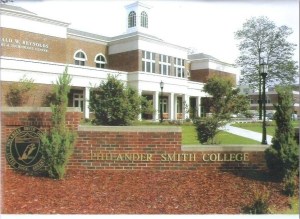
Black History Month Spotlight – Philander Smith College

reynoldslibraryphilandersmithThe new Arkansas Civil Rights History Audio Tour was launched in November 2015. Produced by the City of Little Rock and the University of Arkansas at Little Rock allows the many places and stories of the City’s Civil Rights history to come to life an interactive tour.  This month, during Black History Month, the Culture Vulture looks at some of the stops on this tour which focus on African American history.

Philander Smith College is Little Rock’s oldest historically black educational institution. It was established in 1877 as Walden Seminary, by the African Methodist Episcopal Church to educate ministers. Its name changed after an endowment in 1882 by the widow of Illinois philanthropist Philander Smith. Wesley Chapel has always been associated with the college’s activities. The enslaved William Wallace Andrews founded Wesley in 1854 on land donated by his owner, U.S. Senator Chester Ashley. In 1864, parishioners celebrated their freedom with a “Parade of Emancipation.”

Pastors at Wesley included Rev. J. C. Crenchaw, president of the Little Rock NAACP, and Rev. Negail Riley, leader of the Black United Fund. In the 1960’s, Philander Smith students participated in “sit-ins” at downtown lunch counters.

Noted alumni include Dr. Joycelyn Elders, former U.S. surgeon general; professional athletes Elijah Pitts of the Green Bay Packers; Hubert “Geese” Ausbie of the Harlem Globetrotters; and Milton Pitts Crenchaw, a Tuskeegee Airman; James Hal Cone, a pioneer of black liberation theology; Lottie Shackelford, former Mayor of Little Rock; Al Bell, founder of Stax Records and former president of Motown Records; and Stephanie Flowers, Arkansas State Senator.

The app, funded by a generous grant from the Arkansas Humanities Council, was a collaboration among UALR’s Institute on Race and Ethnicity, the City of Little Rock, the Mayor’s Tourism Commission, and KUAR, UALR’s public radio station, with assistance from the Little Rock Convention and Visitors Bureau

Little Rock Look Back: Rev. Dr. Martin Luther King, Jr.

Ernest Green, Dr. King and Daisy Bates share a relaxed moment -- which was probably rare for the three in 1958

Ernest Green, Dr. King and Daisy Bates share a relaxed moment — which was probably rare for the three in 1958

Today is the Martin Luther King Jr. Holiday.  It is an apt time to think about Dr. King and Little Rock.  A friend of L. C. and Daisy Bates, he attended the 1958 Central High School graduation to witness Ernest Green receiving a diploma. Each senior only received eight tickets to the ceremony at Quigley Stadium. Dr. King was in the state to address the Arkansas AM&N (now UAPB) graduation.

His attendance was briefly mentioned in the local press, but there was no media photo of him at the ceremony.  The Little Rock School District limited the press to one Democrat and one Gazette photographer. Other press were limited to the press box.

Ernest Green has a photo of him with Daisy Bates and Dr. King (pictured on this entry).

In 1968, when Dr. King was assassinated, Little Rock did not see the unrest that many cities did.  Part of that was probably due to quick action by Governor Winthrop Rockefeller. The Governor released a statement fairly quickly expressing his sorrow at the tragedy and calling for a day of mourning. He also made the State Capitol available for the NAACP to have a public memorial, as well as worked with a group of ministers to host an interdenominational service.

Little Rock Mayor Martin Borchert issued a statement as well:

We in Little Rock are disturbed about the incident in Memphis. We are disturbed regardless of where it had happened.  Killing is not the Christian solution to any of our problems today.

In Little Rock, we feel we have come a long way in 10 years toward solving some of our problems of living and working together regardless of race, creed or color.

The city Board of Directors in Little Rock has pledged itself toward continuing efforts to make Little Rock a better place in which to live and work for all our citizens.

We feel the efforts of all thus far have proved we can live in harmony in Little Rock and are confident such an incident as has happened will not occur in Little Rock.  We will continue our most earnest efforts toward the full needs of our citizens.

The day after Dr. King was assassinated, a group of Philander Smith College students undertook a spontaneous walk to the nearby State Capitol, sang “We Shall Overcome” and then walked back to the campus.  President Ernest T. Dixon, Jr., of the college then hosted a 90 minute prayer service in the Wesley Chapel on the campus.

On the Sunday following Dr. King’s assassination, some churches featured messages about Dr. King.  As it was part of Holy Week, the Catholic Bishop for the Diocese of Little Rock had instructed all priests to include messages about Dr. King in their homilies. Some protestant ministers did as well. The Arkansas Gazette noted that Dr. Dale Cowling of Second Baptist Church downtown (who had received many threats because of his pro-integration stance in 1957) had preached about Dr. King and his legacy that morning.

Later that day, Governor Rockefeller participated in a public memorial service on the front steps of the State Capitol. The crowd, which started at 1,000 and grew to 3,000 before it was over, was racially mixed. At the conclusion of the ceremony, Governor and Mrs. Rockefeller joined hands with African American ministers and sang “We Shall Overcome.”

That evening, Trinity Episcopal Cathedral was the site of an interdenominational service which featured Methodist Bishop Rev. Paul V. Galloway, Catholic Bishop Most Rev. Albert L. Fletcher, Episcopal Bishop Rt. Rev. Robert R. Brown, Rabbi E. E. Palnick of Temple B’Nai Israel, Gov. Rockefeller, Philander Smith President Dixon, and Rufus King Young of Bethel AME Church.

Earlier in the day, Mayor Borchert stated:

We are gathered this afternoon to memorialize and pay tribute to a great American….To achieve equality of opportunity for all will require men of compassion and understanding on the one hand and men of reason and desire on the other.

Mayor Borchert pledged City resources to strive for equality.

Another Little Rock Mayor, Sharon Priest, participated in a ceremony 24 years after Dr. King’s assassination to rename High Street for Dr. King in January 1992.  The name change had been approved in March 1991 to take effect in January 1992 in conjunction with activities celebrating Dr. King’s life.  At the ceremony, Daisy Bates and Annie Abrams joined with other civil rights leaders and city officials to commemorate the name change.

2015 In Memoriam – Milton Crenchaw

1515 Crenchaw

In these final days of 2015, we pause to look back at 15 who influenced Little Rock’s cultural scene who left us in 2015.

Milton Pitts Crenchaw, was one of the first in the country to be trained by the federal government as a civilian licensed pilot. While an instructor at the Tuskegee Institute, he trained hundreds of cadet pilots and started the aviation program at Philander Smith College.

Crenchaw graduated from  Dunbar High School and attended Dunbar Junior College before enrolling at the Tuskegee Institute in 1939.  After the bombing of Pearl Harbor on December 7, 1941, his focus shifted from living the life of a normal college student to flying in the Civilian Pilot Training Program (CPTP), sponsored by the Army Air Corps, and becoming a flight instructor.

Early in his career, Crenchaw worked as a civilian pilot training officer contracted by the military. Crenshaw instructed scores of pilots and cadets, including Judge Robert Decatur, Charles Flowers, Lieutenant Colonel Charles (Chuck) Dryden, Earl V. Stallcups, and fellow Arkansan Woodrow Crockett.  Crenchaw returned to Little Rock and taught aviation at Philander Smith from 1947 to 1953. He was also employed by the Central Flying Service and worked as a crop-duster in the central Arkansas and Delta regions.

Then he served as a flight instructor at several airbases from 1953 until 1972.   In 1972, with over 10,000 hours on record logged in the air, Crenchaw was signed on as an equal employment opportunity officer with the Department of Defense and as a race relations officer at Fort Stewart in Georgia until 1983.

Crenchaw was inducted into the Arkansas Aviation Hall of Fame in 1998. Nine years later, he was inducted into the Arkansas Black Hall of Fame.  He was also honored by Governor Mike Beebe in 2007 and the City of Little Rock in 2012.   On March 29, 2007, Crenchaw, along with the other members of the Tuskegee Airmen, was awarded the Congressional Gold Medal by President George W. Bush in Washington DC.

2015 In Memoriam – Ozell Sutton

1515 Sutton

In these final days of 2015, we pause to look back at 15 who influenced Little Rock’s cultural scene who left us in 2015.

Ozell Sutton was a writer and eyewitness to history, while making some of his own too.

Born in Gould, he moved with his family to Little Rock and graduate from Dunbar High School and Philander Smith College. In 1950, he became the Arkansas Democrat‘s first African American reporter.

He was at Central High when the Little a Rock Nine integrated, marched with Dr Martin Luther King Jr. in Washington in 1963 and was with Dr King when he was assassinated in 1968.

He served as an aide to Gov. Winthrop Rockefeller from 1968 to 1970. From 1972 to 2003 he work for the U.S. Department of Justice Community Relations Service in Atlanta. In that capacity he was often on the forefront in efforts to diffuse racially tense situations.

In 1962, he received an honorary doctorate from Philander Smith in recognition of his political activism in the civil rights movement. He was awarded the Distinguished Service Award by the Department of Justice in 1994.  He also was awarded the Medallion of Freedom by the National Association for the Advancement of Colored People (NAACP).

In 2012, he was presented with the Congressional Gold Medal in recognition for his being one of the first African Americans to serve in the Marine Corps. His book “From Yonder to Here:” A Memoir of Dr. Ozell Sutton was published in 2009.  In 2013, he was honored by inclusion on the Arkansas Civil Rights Heritage This designation came for his work in 1963 to desegregate downtown Little Rock’s businesses.

Ozell Sutton was inducted into the Arkansas Black Hall of Fame in 2001.

Pop Up in the Rock today from 11am to 5pm along West 9th from Broadway

Create Little Rock, the young professionals organization of the Little Rock Regional Chamber of Commerce, and studioMAIN, a collective of design professionals, developers, and contractors, are excited to share developments in the 2015 PopUp in the Rock planning.
This year, PopUp West Ninth will take place Saturday, October 24 from 11am until 5pm. It will span from the Mosaic Templars Cultural Center (MTCC) at Ninth and Broadway to the Dreamland Ballroom at Ninth and State and across the State Street overpass to the campus of Philander Smith. The project will feature a meandering street with the intention of slowing traffic creating a more pedestrian friendly environment, a children’s corner, street musicians and performers, Dreamland Ballroom tours and a PopUp Goodfellas barber shop.

Local food trucks, vendors and entertainment have also been secured including Solfood Catering and Brown Sugar Bake Shop, local food trucks Loblolly, The Beast, Southern Gourmasian, Banana Leaf, Blackhound BBQ, Katmandu Momo as well as the Lost Forty beer garden.  There will be PopUp shopping featuring Mimi Mwafrika designs and Tribal Collections. Great local musicians such as Lucious Spiller and the Arkansas Baptist Choir among several others will perform throughout the day.

PopUp in the Rock began generating community feedback for PopUp West Ninth at the 2014 Juneteenth Celebration of Freedom hosted by Mosaic Templars Cultural Center, Arkansas’s museum of African American history and culture.  Once known as “The Line,” Ninth Street was a bustling east-west thoroughfare with a trolley line. It was a bustling community with a thriving urban fabric of mixed-use development that was largely black-owned.

Booker T. Washington spoke at Ninth and Broadway in 1913. Miles Davis, Ella Fitzgerald, Louis Armstrong and others performed at the Dreamland Ballroom and other jazz clubs along Ninth. Daisy and L.C. Bates operated their Arkansas State Press there, and, from the present location of MTCC, the Mosaic Templars operated a politically and financially influential headquarters. The campus of Philander Smith once spanned north to West Ninth before Interstate 630 divided the district. One goal of PopUp West Ninth is to encourage pedestrian and bicycle traffic between Philander Smith and West Ninth Street via the South State Street overpass, thereby bridging the gap that originally tore apart the neighborhood. Utilizing community feedback and knowledge of the deep historical roots of West Ninth, PopUp in the Rock hopes to demonstrate the district’s potential for an equally vibrant future.


Creative Class of 2015: Sericia Cole

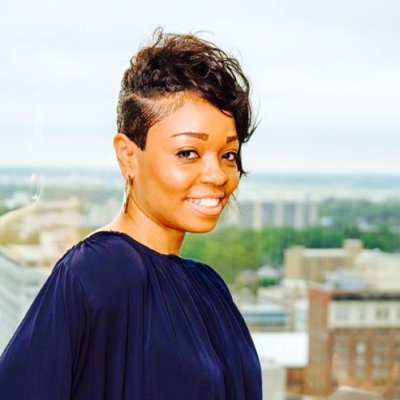
sericiaSericia Cole has quietly and quickly transformed the Mosaic Templars Cultural Center.  She was named interim director in July 2012 and permanently took the post in November of that year.  Since then, she has expanded programming and outreach efforts of the museum.

Under her leadership, Mosaic Templars has started lunchtime lecture series and has expanded its exhibition schedule.  She has also worked to ensure that special events take place year-round at the museum.  In addition to exhibits on a variety of aspects of African American history in Arkansas, the museum is the permanent home of the Arkansas Black Hall of Fame.

A Little Rock native and UALR graduate, she has previously worked for Governor Mike Beebe, Philander Smith College, Wildwood Park for the Arts, and KATV.


Little Rock Look Back: Mayor Lottie Shackelford

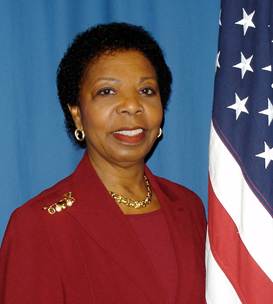
Mayor Lottie_ShackelfordOn April 30, 1941, future Little Rock Mayor Lottie Shackelford was born. Throughout her career in public service she has been a trailblazer.

Active in community activities and politics, she ran for the City Board in 1974 and lost.  But she was appointed to the Little Rock City Board in September 1978 to fill a vacancy.  This made her the first African American woman to serve on he City Board, and indeed on any governing board for the City (during Reconstruction, there were at least three African Americans on the City Council, but they were all men.) She was subsequently elected to a full-term on the City Board in 1980 winning 55% of the vote over three male candidates.

She was subsequently re-elected in 1984 (unopposed) and in 1988 (with 60% of the vote).

In January 1987, Shackelford became the first female mayor of Little Rock when she was chosen by her colleagues on the City Board to serve in that position. She was Mayor until December 1988.

From 1982 until 1992, she served as Executive Director of the Arkansas Regional Minority Purchasing Council.  She left that position to serve as Deputy Campaign Manager of Clinton for President.  She subsequently served on the Clinton/Gore transition team. She later served on the Overseas Private Investment Corporation from 1993 to 2003. She was the first African American to be in that position.

A graduate of Philander Smith College, she has also studied at the Arkansas Institute of Politics at Hendrix College and the Kennedy School of Government at Harvard University.

Mayor Shackelford has also served on numerous boards including the Little Rock Airport Commission, Philander Smith College, Chapman Funds (Maryland) and Medicis Pharmaceutical Corporation (Arizona).  She has been the longest serving Vice-Chair of the Democratic National Committee.

Mayor Shackelford was in the first class of inductees for the Arkansas Black Hall of Fame.