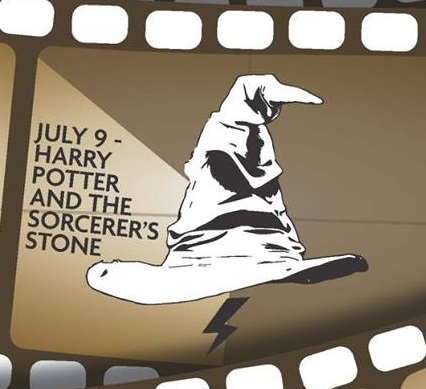
HARRY POTTER AND THE SORCERER’S STONE tonight at Movies in the Park

MitP10 HarryPotterA magical summer evening is certainly in store with Harry Potter and the Sorcerer’s Stone. 

Chris Columbus directed this 2001 movie, which kicked off what proved to be a successful film franchise, replicating the success of the books.

Daniel Radcliffe, Rupert Grint, and Emma Watson play the central trio of youngsters. Richard Harris, Maggie Smith, Alan Rickman, Robbie Coltrane, Fiona Shaw, Richard Griffiths, John Hurt and Julie Walters are some of the esteemed British actors who play adult roles in the movie.

Now in its 10th season, Movies in the Park is a free outdoor film series at the First Security Amphitheater in Riverfront Park.  The move starts at dark (around 8:30).

Movies in the Park has grown to a season of eight films per year, on average, reaching audiences of up to 4,000 people. It’s a staple event in Central Arkansas. Communities from across the state, and the country, have reached out for guidance as they have tried to implement similar programs in the own communities.

Since 2008, the Little Rock Convention & Visitors Bureau has been managing Movies in the Park.

Little Rock Look Back: New City Hall approved

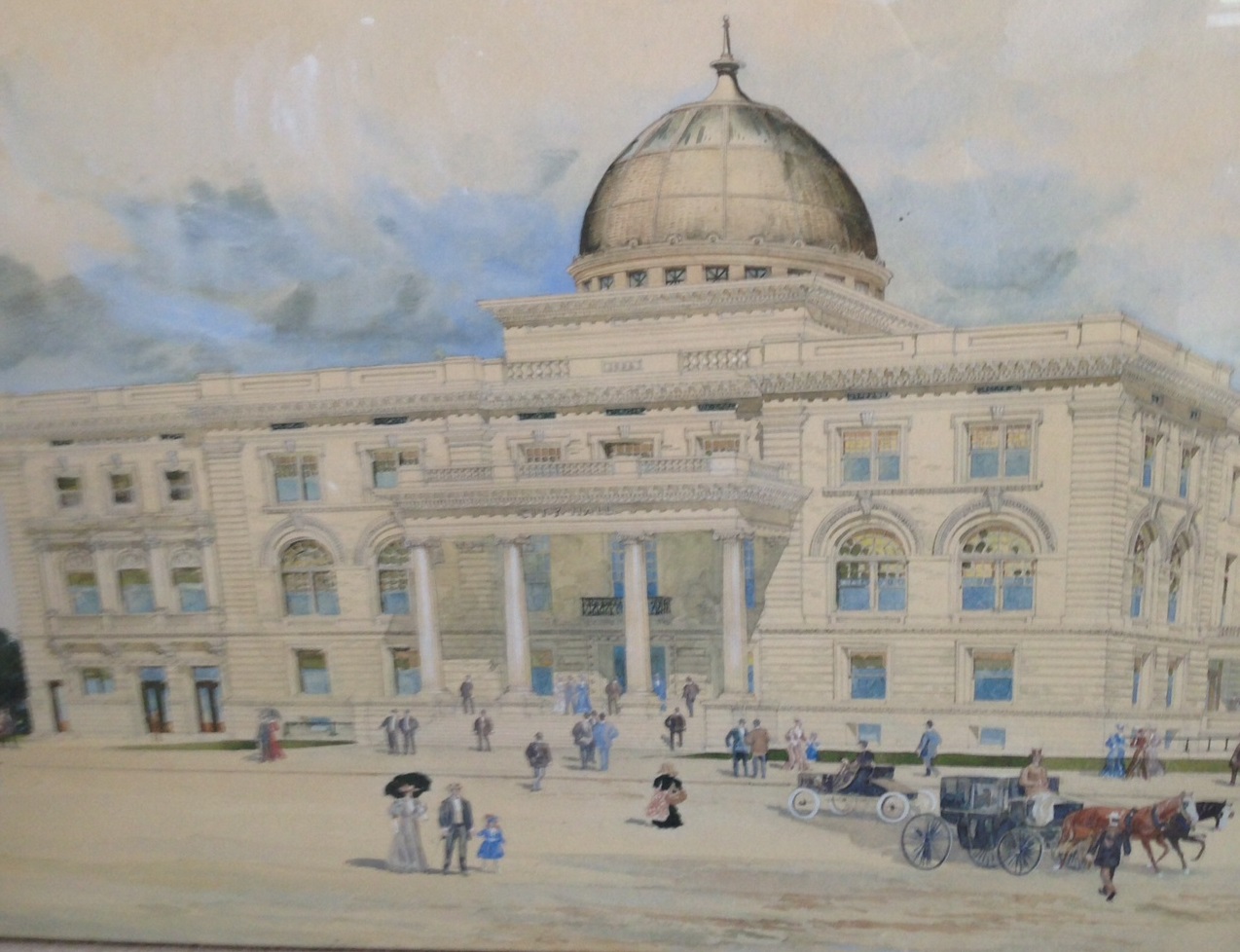
1906 City Hall watercolor

Watercolor of Charles Thompson’s original plan for a Little Rock City Hall complex

On July 9, 1906, the Little Rock City Council approved Resolution 281 and Ordinance 1,295. These actions approved the plans for a new City Hall complex to be constructed on land at the northwest corner of Markham and Broadway Streets.  A few days later, the contract was awarded for the construction of the new building.

Mayor Warren E. Lenon had first called for a new city hall complex in his annual address in April 1904. He repeated his request in April 1905.   The City Council took up Mayor Lenon’s quest for a new city hall in December of 1905.  The Council appropriated money for the purchase of land for a city hall, jail and auditorium.

In response to this, the Arkansas Gazette daily newspaper ran a story featuring the viewpoints of a few civic leaders weighing in on the need for a new city hall complex which would also include a new jail and a city auditorium.  Two of the respondents, L. B. Leigh and P. Raleigh, stressed the need for paved streets and better sewers instead of a new city hall and auditorium.

The other three businessmen interviewed were more favorable to Mayor Lenon’s proposal.  Morris M. Cohn, a former Little Rock City Attorney, stated “I do not think we can make a better investment than in a fine city hall and auditorium.”  (Mr. Cohn, though an M. M. Cohn, was not related the M. M. Cohn who was the namesake for the longtime Little Rock department store.) County Judge William Marmaduke Kavanaugh offered his satisfaction with the action of the City Council on that matter.  R. E. Walt, a banker, opined that he thought $150,000 was not enough; he suggested $200,000 should be spent.

Later that month the Gazette reported that a site had been selected for the city hall and auditorium complex.  The proposed location was most of a city block located at the corner of Markham and Broadway Streets.  Mayor Lenon was vague as to the details of the deal because negotiations were still underway with the property owners

As 1906 dawned, Mayor Lenon and other city leaders continued to take steps to build the new city hall and auditorium.  They invited three local architects to make presentations for the chance to design the new complex.  The three were Charles L. Thompson, Frank W. Gibb and George R. Mann.  Mr. Thompson was chosen to receive the assignment.

On February 5, 1906, Mayor Lenon announced the creation of a special committee to work on the planning for a future city hall complex.  This committee consisted of Aldermen Louis Walther, A. B. Poe, L. N. Whitcomb, Christopher Ledwidge, and John A. Adams.

Mayor Lenon further stated that the new city hall complex and several private developments would “put us in that march of progress with which nothing can prevent us from having a 100,000 population in a few years.”

The saga to get the building built was just starting.

Philip Mann extends contract with Arkansas Symphony Orchestra

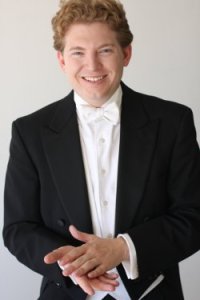
philipmannThe Arkansas Symphony Orchestra announces a three-year extension of Philip Mann’s tenure as Music Director. Mann first took to the podium as ASO Music Director at Robinson Center Music Hall on October 2, 2010.

ASO Board Chair Dr. Richard Wheeler said, “It gives me great pleasure to announce that Philip Mann, Music Director and Conductor of the ASO, has signed a three-year extension of his contract. Because of his artistic leadership, the orchestra has never sounded better and the range of music that this talented group performs is impressive. The Board enthusiastically sought this extension because of Philip’s outstanding artistic leadership and contributions to the musical growth of the organization. Now we can rest assured that his leadership will continue into the future.”

Regarded by the BBC as a “talent to watch out for, who conveys a mature command of his forces,” Mann will continue his Music Director duties by conducting up to 15 weeks of concerts including the Stella Boyle Smith Masterworks and ACXIOM Pops Live! performances, Children’s Concerts, and run-out performances throughout the state.

“Arkansas has become our beloved home, and making music with the fantastic musicians of the Arkansas Symphony Orchestra has been a tremendous joy.  We share a common passion in music, and I look forward to continuing this warm and inspiring relationship.  I am proud of what we have accomplished together with the support of our board and administration both artistically and in the community, and am eager to build upon our shared success,” says Philip Mann, Music Director of the ASO.

The series of Intimate Neighborhood Concerts (I.N.C.), increased partnerships with other arts organizations in Central Arkansas, and an improved patron experience through a reconfigured staging of the orchestra, are all thanks to Mann’s vision. According to Christina Littlejohn, ASO Executive Director, “Mann’s work over the last five years towards ASO’s mission to connect, enrich, inspire, and advance Arkansas through the power of music along with his enthusiasm both on and off of the podium is significant. I look forward to his continued momentum during the next three years.”

During the 2009-2010 season, the orchestra’s music director search process used musician and audience surveys collected after each candidate’s performance. Mann was unanimously selected by an eleven member search committee including ASO musicians, board members, and executive director. Mr. Mann’s appointment was also unanimously approved by the orchestra’s Board of Directors.
About Philip Mann

Hailed by the BBC as a “talent to watch out for, who conveys a mature command of his forces,” American conductor Philip Mann is quickly gaining a worldwide reputation as an “expressively graceful yet passionate” artist with a range spanning opera, symphonic repertoire, new music, and experimental collaborations.  Beginning his third season as Music Director of the Arkansas Symphony Orchestra, both previous years shattered attendance records and were accompanied by unprecedented artistic growth, new energy, and financial health.  Formerly as the San Diego Symphony’s Associate Conductor, he conducted hundreds of performances of Jacobs Subscription Masterworks, Symphony Exposed, family, young people’s concerts, Kinder Konzert, pops, and other special programs and projects.  As an American Conducting Fellow, the San Diego Union Tribune raved, “Mann was masterful… a skilled musical architect, designing and executing a beautifully paced interpretation, which seemed to spring from somewhere deep within the music rather than superimposed upon it.”

As winner of the Vienna Philharmonic’s Karajan Fellowship at the Salzburg Festival, Mann has relationships with orchestras and operas worldwide: including the Cleveland Orchestra, l’Orchestre symphonique de Québec, Indianapolis Symphony Orchestra, Georgian State Opera, and the National Symphony of Cyprus. His recent Beethoven 9 was described as “Titanic” and his Canadian debut with the OSQ was dubbed by Le Soleil as a “Tour de Force,” and led to an immediate reengagement in 2013.  Other upcoming engagements include the Grand Rapids Symphony, New Mexico Philharmonic,Little Orchestra Society of NY, and the Georgian State Opera. Previously, the music director of the Oxford City Opera and Oxford Pro Musica Chamber Orchestra, he has also held conducting positions with the Music in the Mountains Festival and Indianapolis Symphony. Mann has worked with leading artists such as Joshua Bell, Sharon Isbin, Dmitri Alexeev, Midori, Marvin Hamlisch and given premiers of major composers including John Corigliano, Jennifer Higdon, Michael Torke, Lucas Richman, and many others.   He maintains a lively schedule as a guest conductor having conducted at New York’s Avery Fischer Hall and London’s Barbican Center.

Elected a Rhodes Scholar, Mann studied and taught at Oxford, and has served as assistant conductor to Franz Welser-Möst, Simon Rattle, Leonard Slatkin, Jaime Laredo, Mario Venzago, Bramwell Tovey, Pinchas Zukerman, and many others. At Oxford, he won the annual competition to become principal conductor of the Oxford University Philharmonia.  Under his leadership, the Philharmonia’s performances and tours received international press and acclaim.   Mann studied with Alan Hazeldine of London’s Guildhall School of Music and Drama, Colin Metters at the Royal Academy of Music, and Marios Papadopolous of the Oxford Philomusica.  He worked with Leonard Slatkin and the National Symphony Orchestra at the Kennedy Center’s National Conducting Institute and Michael Tilson Thomas at the New World Symphony.  Mentorship with Esa-Pekka Salonen and Jorma Panula followed at the Los Angeles Philharmonic’s Conducting Masterclasses, and Robert Spano with the Atlanta Symphony Orchestra’s international Mozart Requiem masterclass for the League of American Orchestras annual conference.   He has also worked under Imre Pallo, David Effron, John Poole, and Thomas Baldner at Indiana University where he was appointed visiting lecturer in orchestral conducting, and worked as assistant conductor at the IU Opera Theater.  Additional studies came under the Bolshoi Theater’s music director, Alexander Vedernikov at the Moscow State Conservatory, Gustav Meir, Kenneth Keisler, and with Pulitzer Prize winning composer Robert Ward.  He is the recipient of numerous awards including commendations from several cities, and the state of California.


Arkansas Symphony Orchestra

The Arkansas Symphony Orchestra celebrates its 49th season in 2014-2015, under the leadership of Music Director Philip Mann. ASO is the resident orchestra of Robinson Center Music Hall, and performs more than sixty concerts each year for more than 165,000 people through its Stella Boyle Smith Masterworks Series, ACXIOM Pops LIVE! Series, River Rhapsodies Chamber Music Series, and numerous concerts performed around the state of Arkansas, in addition to serving central Arkansas through numerous community outreach programs and bringing live symphonic music education to over 26,000 school children and over 200 schools.

Graham Gordy discusses the film and TV industry at Old State House Brown Bag lecture today at 12 noon

Photo by Nancy Nolan

Photo by Nancy Nolan

The Old State House offers regular noontime lectures on a variety of topics.  These “Brown Bag Lectures” take place at 12 noon.  The next one is today.

Graham Gordy, the award-winning Arkansan writer, will discuss how the film and television industry have changed after the Recession.

Gordy’s discussion is in conjunction with the Old State House’s “Lights! Camera! Arkansas!” exhibit which is currently on display.  It focuses on connections between Arkansas and Hollywood.

Gordy’s credits include include the current series “Rectify” the upcoming movie Quarry as well as the films War Eagle, Arkansas and The Love Guru.  As an actor, he has appeared in “Rectify,” My Dog Skip and The Last Ride.  As a youth, he also appeared on various stages in Central Arkansas.

Monday Mayan Medallion Mystery at Museum of Discovery

MayanDuring the summer, the Museum of Discovery is open on Mondays.  One of their exhibits is Mystery of the Mayan Medallion.

In this immersive exhibit, visitors are transported to Palenque, Mexico, where an archaeological team has mysteriously disappeared from a dig site while investigating rumors of a priceless jade medallion. They will follow the clues the team left behind to locate the precious medallion while avoiding the dangers lurking in the ruins.

 In the exhibit, visitors will:

  • Translate glyphs
  • Discover which rainforest animals are poisonous
  • Learn how the Mayans recorded dates
  • Take rubbings from a sarcophagus
  • Interpret a “battle” mural.

Exhibit components include archeology, biology and astro-mathematic field stations, an observatory and a tomb area that yield clues to the medallion’s whereabouts.

 “Mystery of the Mayan Medallion has been popular everywhere it’s been experienced, and we know museum visitors young and old alike will enjoy engaging with the many components of the exhibit,” said Kelley Bass, CEO of the Museum of Discovery. “It is a fun mix of science, history and intrigue.”

 Mystery of the Mayan Medallion will remain at the Museum of Discovery through September 12.

Summer Hours of Operation: Monday – Saturday: 9 am – 5 pm; Sunday: 1-5 pm

Admission: $10 adults; $8 ages 1-12; free under 1; members free

Little Rock Look Back: Haco Boyd, LR’s 58th Mayor

BoydOn July 6, 1902, future Little Rock Mayor Haco O. Boyd was born in Leslie, Arkansas.  At the age of four, his family moved to Little Rock; he graduated from the Little Rock public schools.  He attended and graduated from Hendrix College.

In World War II, he was in the Army Air Corps.  He was a very decorated soldier earning two Purple Hearts, a Legion of Merit, and a Bronze star among other designations from the United States.  He also received high military honors from numerous European governments.  Boyd would remain in the Air National Guard and retired with the rank of Colonel in 1964.

As a businessman, he was a founder of Rebsamen Ford and then state manager of Benjamin Moore for Arkansas.  In 1952, he joined Union Life Insurance.  Throughout his career, he received most any recognition and honor and designation that the field of life insurance offered.

In November 1968, he won a three-candidate race for the Little Rock City Board of Directors. One of the candidates he defeated was former (and future) Director and Mayor Byron Morse.  In January 1969, he was selected to serve as Mayor of Little Rock.

Later in 1969, Mayor Boyd and 70 others were on an Eastern Airlines plane headed for a life insurance convention in  Nassau, departing from Miami.  A passenger hijacked it and the plane was diverted to Cuba.   The next morning the passengers were returned to Miami and then sent to Nassau without incident. Once the media found out that one of the passengers was the Mayor of Little Rock, he was interviewed by numerous newspapers.

In other civic involvement, Boyd served on the Little Rock Airport Commission, including a term as chair.  He was also honored for his involvement with the Boy Scouts of America and Easter Seals.

In September 1923, Boyd married Mary Josephine “Polly” Goodrum.  They were married until her death in February 1977.  Haco Boyd died on March 27, 1988.  The couple are buried at Roselawn Cemetery.  They had two children and four grandchildren.

Little Rock Look Back: Buddy Benafield, LR’s 66th Mayor

BenafieldFuture Little Rock Mayor James Weldon “Buddy” Benafield was born on July 5, 1927 in Coy, Arkansas.  As a child he spent part of his time chopping cotton.  He graduated from England High School and then served in the U.S. Navy.  Following his stint in the military, he enrolled in Arkansas State Teachers College (now the University of Central Arkansas).

After college he returned to England.  From 1967 to 1974 he served as Mayor of England.  While in England, he also worked to establish a hospital there. While he was Mayor, Benafield also served as a legislative aide to Governor Dale Bumpers.

After moving to Little Rock, Benafield served as legislative aide to Governor Frank White.  He had been a donor to former Governor Bill Clinton, who had been defeated by White. Though a staunch Democrat, he remarked to the media at the time that he had been a friend of White’s and never declined a Governor’s request for help.

Long active in Democratic politics, he had served as Secretary of the State Democratic Party.  (One of his daughters, Dawne Benafield Vandiver has carried on the family tradition serving in several leadership positions in the State Democratic Party.  Most recently she was Executive Director of the party.)

In January 1982, Benafield was appointed to fill a vacancy on the Little Rock City Board of Directors. He ran for election to a full term in November 1982 and was reelected in November 1986.  From January 1983 to December 1984, Benafield served as Mayor of Little Rock.

After leaving the Little Rock City Board in January 1991, he has remained engaged in civic matters.  He served a term on the Arkansas Highway and Transportation Commission.  He was first appointed in January 1993 by Gov. Jim Guy Tucker to fill out the remainder of Rodney Slater’s term. Slater had resigned to to take a job in the Clinton Administration in Washington DC.  In 1995, he was reappointed, this time to a full ten year term.  This was only the second time a member of the Highway Commission had been reappointed.

He continues to be involved in farming and a variety of business ventures and has maintained his interest in politics.