Little Rock Look Back: W. W. Stevenson, Little Rock’s 2nd Mayor

LR sealOn this date in 1797, future Little Rock Mayor William Wilson “W. W.” Stevenson was born in South Carolina.

In 1811, he came to Arkansas when his family settled in Batesville.  An ordained Presbyterian minister, he married Ruana Trimble in 1821 and had two children.  After she died, he married Maria Tongray Watkins in 1831 and had two more children.

In 1831, he ran for Mayor in the first election for the office but was defeated by Dr. Matthew Cunningham.  The next year he ran to succeed Cunningham and was elected.  After leaving the Mayor’s office on December 31, 1833, he continued public service.  He was State Commissioner for Public Buildings in 1839.

In 1849, he delivered the funeral oration at the ceremony for Hon. Ambrose H. Sevier.  Later that year, he was hired as a geologist for the Little Rock and California Association which was created to take advantage of the gold rush.  He and his two oldest sons moved to California and never returned to Arkansas. He died in 1888.

No photograph or painting of Mayor Stevenson is known to exist.

Sold on CLYBOURNE PARK – expanded

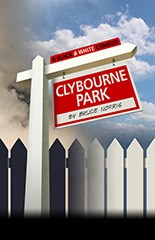
ClybourneClybourne Park, Bruce Norris’ Pulitzer and Tony winning play, is about race and place. But it is not a pedantic treatise meant to induce guilt. Through its humor and honesty it examines prejudice, property value, and protection of principles. The prejudice on display is not just racial, but also extends to gender, class, disability and sexual identity. The characters are alternately clinging to a past as well as trying to bury it. If this sounds like heavy stuff, it is. But it is presented in such a way, that it does not seem weighty or oppressive.

The action of Clybourne Park takes place in the unseen house that was the crux of Lorraine Hansberry’s A Raisin in the Sun. The conceit of Norris’ play is that fifty years separate the first act from the second one. Though played by the same actors, the characters are different in the two acts. Neither the playwright nor Cliff Fannin Baker, the director, hit the audience over the head with the connections the second act characters have to the first act or to the Hansberry play. They let things emerge organically. The people in this play are rarely who they seem to be. Allegiances shift throughout each act as layers are peeled back on the characters and their motivations.

It is cliché to say, but this play is truly an ensemble piece. As such, Norris (an erstwhile actor himself who once was directed by Baker) has provided each actor with moments to shine in both acts. When given these moments, the actors seized them. In quieter moments, the members of the ensemble exhibited wonderful performances as well without stealing focus from their fellow actors.

Shaleah Adkisson is marvelous both as a long-suffering maid and wife in the first act and a neighborhood activist in the second act. Her voice can drip honey and cut like a knife at the same time. Katie Cunningham plays an expectant mother in both acts. In the first act her character is deaf, while in the second act her character can hear perfectly (but may wish there things she didn’t hear). Shifting from prim to relaxed in the two acts, Cunningham creates two distinct characterizations on stage.

LeeAnne Hutchison’s first act housewife is appropriately daffy and warm. In the second act, she transforms herself into a self-absorbed, calculating professional by use of a different voice, demeanor and posture. As Hutchinson’s husband in the first act Robert Ierardi portrays a man wrestling with emotions and changing times while trying his best to continue to provide for and protect his wife. His interaction with Hutchison during the opening of the first act captured the dichotomy of comfort and confrontation found in long-married couples.

Ryan Barry’s harried priest in the first act is doing his best to be helpful and remain calm in the midst of a sea of turmoil. In the second act he is a bemused, detached attorney trying to facilitate conversation between opposing parties. Though the reactions are different, in both acts his character is pushed to a brink long after other characters have been. In many ways, he is a barometer for the audience. Lawrence Evans has little stage time in the first act but creates a memorable character as a husband just trying to be helpful. In the second act Evans has more opportunity to shine as a neighborhood resident working to preserve his community, and perhaps understand his wife as much as he is trying to understand some strangers.

In the first act, Jason O’Connell plays Karl, a character who appeared in A Raisin in the Sun. While not trying to justify his racist actions, this play fleshes out Karl. O’Connell’s characterization is not a broad villain, but it does not try to make excuses for his beliefs. He also handles some physical comedy in a manner that is both humorous but also completely in character. In the second act, O’Connell’s character is more naïve on some levels as he is confronting aspects of himself and his wife (played by Cunningham) that had never been considered.

Rounding out the cast is David Tennal, an alum of the Rep’s Summer Musical Theatre Intensive, in a small but pivotal role at the end of the play. It is always nice to see students who came up through the Rep’s SMTI program hold their own on mainstage productions. It was nice to see Rep veterans Adkisson (Avenue Q), Evans (Fences) and O’Connell (All My Sons, Sherlock Holmes, Frost/Nixon) return and create memorable characters. Based on their performances in this play, hopefully Cunningham, Ierardi, Hutchison and Barry will be back in the future.

The seamless direction provided by Baker well-serves the actors and Norris’ masterful script. It is obvious that in rehearsal Baker created an atmosphere of trust and collaboration among the acting company. Together he and the actors have mined the play for its much needed humor. But they did not settle for cheap laughs. The play uses laughter to relieve tension. But it does not shy away from making the audience or the characters onstage uncomfortable. Baker and his cast know when to let the feelings of unease simmer. In Baker’s hands, the play never seems pious but it does show the challenges of building and maintaining a community when often well-meaning people have competing perspectives.

While the acting ensemble could have undoubtedly sold the play performing in street clothes in a bare stage, luckily they did not have to. The physical design supported the play. Mike Nichols’ set is in many ways another character in the play. He has created a pre-war two story house. While the play is set in a fictional Chicago neighborhood, the actions in the play could easily take place in any mid- to large-sized American city over the past half century. In the first act, Nichols’ house is the epitome of the emerging middle class. The second act shows the same house after years of neglect. With only a few physical changes, the difference is stark.

Yslan Hicks’ costumes ably showcase not only the different time periods but also the different stations in life of the characters. Through exacting details, her costumes enable the characters to look like they have stepped out of magazine photos from the two eras. Yael Lubetzky’s subtle lighting adds atmosphere to the play. The early morning shadows cast in the final moments of the play were particularly memorable. As sound designer, Allan Branson not only set the mood with music but had the unenviable task of ensuring that numerous actors talking over each other throughout the play could still be heard. Lynda J. Kwallek has a knack for finding props which tell the audience about the characters and their stations in life more than spoken words can do.

Whether we know it or not (or are willing to admit it) Clybourne Park is all our story. There are times we each feel like an outsider, a protector, a denier, a fighter, a detached observer, a victim or a peacemaker. The play offers no easy answers or pat conclusions. In fact it’s one message seems to be that unless we continue to have these messy conversations we will never move forward.

We must respect each other and see value in each other. But we must not be afraid to engage each other in meaningful and often complicated dialogue. If that doesn’t happen, sectors of the community will continue to move back and forth sliding past each other like some sort of societal amoebas without respecting differences.

A final note, some of the language in Clybourne Park is harsh. There are words said on the stage that could definitely offend theatregoers. But the use is not gratuitous. It is to highlight how words do matter, but also ideas. Audience members should not let their distaste for those words detract from their play-going experience. Kudos to Rep Producing Artistic Director Bob Hupp for choosing this play for Little Rock audiences.

Little Rock audiences need to pay a visit to Clybourne Park. It runs only through February 9. For those who want to laugh and think, this is one property not to be missed.

Due to a cut and paste error, an earlier version of this review inadvertently omitted a section on Robert Ierardi’s performance. This review has also been edited because the author of it is constantly tweaking his writing.

Starchitects, Prizes and the Changing Face of Architecture lecture tonight

ThorneTonight at 6pm at the Arkansas Arts Center, Martha Thorne will present a lecture entitled “Starchitects, Prizes and the Changing Face of Architecture.”

Martha Thorne served as an Associate Curator of the Department of Architecture at the Art Institute of Chicago from 1996 to 2005, the year she left to assume the directorship of the Pritzker Architecture Prize, headquartered in Madrid, Spain.

Established in 1979 by Jay and Cindy Pritzker and underwritten by the Hyatt Foundation, the award was conceived as a meaningful prize that would stimulate public awareness and inspire greater creativity within the profession of architecture. Recipients of the annual award, often called the “Nobel of architecture”, are selected by an international jury committed to the art of architecture and its social responsibility. Each year’s winner receives a $100,000 grant and a bronze medallion.

Lord Peter Palumbo of England, a developer and art collector, is the current jury chair. Toyo Ito of Japan, selected (by a jury of seven which included Thorne) as the 2013 Pritzker laureate, was presented his award by Tom Pritzker, Jay Pritzker’s son.

Supporters of the Architecture and Design Network include the Central Arkansas Chapter of the American Institute of Architects, UA Fay Jones School of Architecture and the Arkansas Arts Center. ADN lectures are free and open to the public.

ASO River Rhapsodies: Dvorak’s Piano Trio No 3 in F minor

ASO_revTuesday night (January 28) at 7pm, the Arkansas Symphony Orchestra’s next concert of the Parker Lexus River Rhapsodies Chamber Music Series will features duos of ASO Musicians. The concert will be held at the Clinton Presidential Center.

The program is an intimate showcase of the ASO’s musicians. Tonight’s program features Dvořák’s Piano Trio.

General Admission tickets for River Rhapsodies concerts are $23, and Student tickets are available for $10. Tickets can be purchased online at www.ArkansasSymphony.org, over the phone at (501) 666-1761 or at the door.

The program will include:

Mahler – Piano Quartet in A minor
Berg – Lyric Suite
Dvořák – Piano Trio No. 3 in F minor

The Arkansas Symphony Orchestra celebrates its 48th season in 2013-2014.  Under the leadership of Music Director Philip Mann, the ASO performs more than thirty concerts each year for more than 42,000 people through its Stella Boyle Smith Masterworks Series, ACXIOM Pops LIVE! Series and River Rhapsodies Chamber Series, in addition to serving central Arkansas through numerous community outreach programs and bringing live symphonic music education to over 24,000 school children and over 200 schools.

Little Rock Look Back: Voters Approve Robinson Auditorim

10.+citylittlerock-2On January 26, 1937, Little Rock voters went to the polls to vote on three different municipal bond issues.  One of them was the construction of a municipal auditorium.

The bonds for the auditorium would be $468,000 in general obligation bonds which would be paid off between 1940 and 1971. This was toward a total cost of $760,000 for the entire project.

The official campaign for the auditorium was sponsored by the Little Rock Forward Committee which was led by W. H. Williams. In campaign advertisements it showed the value of conventions in New York City which was estimated at $100 per convention attendee. Little Rock organizers were estimating a $10 a day expenditure by visitors, which the committee stressed was very conservative. The campaign committee emphasized the importance of acting at that time due to the federal government money involved.

Various committees and organizations endorsed the auditorium project including the Little Rock Chamber of Commerce, Little Rock Federation of Women’s Clubs, and the Young Business Men’s Association.

The thrust of the campaign focused on the economic benefit to Little Rock as well as the fact that the auditorium would be for all citizens. This message was picked up in editorials by both the Democrat and Gazette. In editorials on January 23 and 25, the Democrat opined that the benefits of the auditorium would be distributed among all classes of the citizenry. The next day, both papers ran editorials which touted the economic boon an auditorium would bring through conventions and meetings.

The Democrat’s approach broke down the current value of conventions to Little Rock with, what it termed, the city’s “existing inadequate” facilities. The paper emphasized a conservative estimate of what the added value to Little Rock’s economy would be with the new auditorium.

In expressing support for the auditorium the Gazette stressed the values for local, statewide and national groups. “An auditorium would provide a more convenient and better adapted community center for all kinds of local gathering,” and continued that it would make Little Rock “the logical meeting place for state conventions of every sort.” In discussing the value of state, regional and national meetings the paper stressed that the outside money spent by convention attendees has an impact beyond stores, hotels and restaurants.

Both papers also echoed the importance of the federal government financing to make this possible. The Democrat noted that the Public Works Administration grant and federal low cost loan made this an ideal time.


On January 26, 1937, Little Rock voters approved the auditorium bond by a vote of 1,518 to 519. It passed in each of the city’s 23 precincts. Little Rock Mayor R. E. Overman expressed his pleasure at the outcome of the vote and extended his thanks to the voters.

After the election, a Gazette editorial commented on the low turnout for the special election by commenting that the weather had been nice and there were no other barriers to voting. The editorial writer opined that those not voting in the election must not have been opposed to the endeavor.

Little Rock Look Back: Gen. Douglas MacArthur

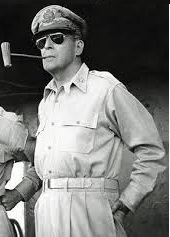
MacArthurOn January 26, 1880, Douglas MacArthur was born in the Arsenal Building while his father was stationed at the Little Rock Barracks.  Though he left Arkansas a few weeks later when his father was transferred, he returned to his birthplace on March 23, 1952. On that day he was greeted by crowds welcoming one of the USA’s most famous military figures.

Though Gen. MacArthur spent only a few weeks in Little Rock, he was baptized at Christ Episcopal Church.  The location of the baptism remains a mystery today because the church was meeting in temporary locations due to the first structure having been lost to a fire.

When the General returned to Little Rock in 1952, he did pay a brief visit to Christ Church.  He also spoke at the Foster Bandshell in the park which bore his name.  He was one of three presidential candidates to speak at the Foster Bandshell in 1952, the others were the eventual Democratic and Republican nominees Adlai Stevenson and Dwight Eisenhower.

When General MacArthur died, he was granted a state funeral.  He was one of the few non-Presidents to have been given this honor.

Today, the MacArthur Museum of Arkansas Military History is located in the Arsenal building.  It was created to interpret our state’s military heritage from its territorial period to the present.

Located in the historic Tower Building of the Little Rock Arsenal–the birthplace of General Douglas MacArthur–the museum preserves the contributions of Arkansas men and women who served in the armed forces.

Exhibits feature artifacts, photographs, weapons, documents, uniforms and other military items that vividly portray Arkansas’s military history at home and abroad.

Bohemian Rhapsody as Arkansas Symphony celebrates Brahms, Dvorak

aso_2-colorThe Arkansas Symphony Orchestra kicks of 2014 with concerts this weekend at Robinson Center Music Hall.  Bohemian Rhapsody celebrating the works of Brahams and Dvorak, will take place at 8pm this evening and 3pm tomorrow afternoon.  The musicians will be led by ASO music director Philip Mann.

Many refer to Dvorak as the greatest Bohemian composer, and he headlines our festive occasion with a selection of his most entertaining and enchanting works. His Slavonic Dances showcase a wonderful juxtaposition of propulsive dance rhythms and sweeping lyricism. The result is a volatile concoction of explosive energy and affecting emotion.

Dvorak’s Scherzo Capriccioso adds another rousing and stylish work known to increase the heart-rate for musician and listener alike.

Pianist sensation and Brahms champion Norman Krieger makes his ASO return following his triumphant Brahms Concerto No. 1, with the exquisite 2nd. A towering and daunting work in the virtuosic demands it places on the pianist, it is beloved by audiences for is beauty, amiable disposition, and charming effervescence.

Fans of romantic symphonic or pianistic works won’t want to miss this perfect combination, and one of Brahms’ greatest works.

    Brahms Concerto for Piano No. 2 in B-flat Major, Op. 83
    Dvořák Slavonic Dances, Op. 46/72
    Dvořák Scherzo capriccioso, Op. 66


A native of Los Angeles, Norman Krieger is one of the most acclaimed pianists of his generation, highly regarded as an artist of depth, sensitivity and virtuosic flair.

Norman Krieger regularly appears with the major orchestras of North America, among them the New York, Los Angeles, Buffalo, Dayton and Hamilton Philharmonics, the Minnesota Orchestra, the Boston Pops Orchestra and the Baltimore, California, Chicago, Cincinnati, Florida, Hartford, Honolulu, Kansas City, Milwaukee, National, New Mexico, North Carolina, Oregon, Pittsburgh, Richmond, Saint Louis, San Antonio, San Diego and Syracuse Symphony Orchestras.