Tonight’s Oxford American Local Live at South on Main – Marcella & Her Lovers

llsom marcellaTonight at 7:30pm at South on Main, join the Oxford American magazine for this week’s Local Live concert.  This week it features Marcella & Her Lovers! As always, Local Live is free and open to the public. To guarantee a table/seat for this popular series, call ahead at (501) 244-9660. Local Live is made possible by the generous sponsorship of the Ben and Jane Hunt Meade.

Whether arcing the curve of the highest golden high, or lighting the depth of the lowest blue low, the music and voice of Marcella Simien and her Lovers can take you there, to that magic spot where time slows down, worry and concern retreat, and everybody feels fine, primed and ready for an unforgettable time.

Like savoring the flavors in a dish made by a master chef, one detects in Simien’s music subtle yet devastating touches of the Memphis and Muscle Shoals sounds infused with the fingerprint of her Creole ancestors—that now laughing, now sighing Zydeco accordion and exhortations shouted in Creole French.

Throughout, Simien’s voice, an instrument fierce and galloping with dignified pleading, floats above the music’s cradled melee like a night star, fondly reminding us of a mysterious past while at once exciting us with the romance of the uncertain future.

An eclectic mixture of the dark magic of Louisiana swamps and the angelic grind of Memphis soul, Marcella’s repertoire spans Stax classics to wall-of-sound pop unforgettables.

Learn more at: marcellaandherlovers.com

Little Rock Look Back: City Council approves 1935 auditorium plan

An August 25, 1935, rendering in the ARKANSAS GAZETTE of the proposed Little Rock auditorium at Capitol and Scott Streets.

An August 25, 1935, rendering in the ARKANSAS GAZETTE of the proposed Little Rock auditorium at Capitol and Scott Streets.

On August 26, 1935, the City of Little Rock took its first significant step in a decade for the creation of a City auditorium..  Under the leadership of Mayor R. E. Overman, the City Council approved authorization for the City to apply for $1,000,000 from the Federal Emergency Administration of Public Works (PWA) for the construction of an auditorium.  The PWA had issued a September 16, 1935, deadline for applications to be received as it sought to spend $4.8 billion in construction projects.

The auditorium plan was announced on Saturday, August 24, 1935.  Much preparation had already been undertaken before the project was publicly unveiled.  Private presentations hhad taken place, a team of architects had been chosen (Eugene Stern and the firm of Wittenberg & Delony), and a location had been selected.

The auditorium complex was slated for a block bounded by Capitol, Scott, Fourth and Cumberland Streets.  The Women’s City Club building on that block would remain with the new structure being built to wrap around two sides of the existing structure. The site was chosen because it was one block east of the Main Street business corridor and near existing meeting locations such as the Boys Club, Albert Pike Hotel, Albert Pike Masonic Lodge and several churches.

As planned by the architects, this structure’s front façade would have run the length of the Capitol Avenue side of the block.  The building was proposed to be constructed of concrete, stone and steel.  It would have a large hall with a proscenium stage and seating capacity of 4,000 with overflow of an additional 500.  The adjoining exhibition hall could seat 3,500 people.  The plan called for 150 cars to be parked in the building, and an additional 100 cars to be parked on a surface lot on the site.

Following an August 26 closed door meeting to discuss the project from which members of the public and press were excluded, in open session the City Council voted to pursue the funding for the million dollar auditorium.  If approved by the PWA, the funds would be provided in grants and loans, to be paid by over a 35 year period.

The auditorium proposal was filed with the PWA in Washington in September 1935.  Throughout the next several months, Mayor Overman and the city were engaged in a series of conversations and negotiations with the PWA for the expansion of both the water system and the sewer system. This diverted attention from pursuing the auditorium immediately.  This specific auditorium project stalled.  But because the plan had been filed by the September 16 deadline, it allowed the City to make use of PWA funds a few years later which would lead to the construction of Robinson Auditorium.


RSVP today for August 29 Lights! Camera! Arkansas! FREE seminar at Old State House Museum

LCA_topThis Saturday, the Old State House Museum will host a FREE seminar to explore Arkansas’s connection with the film and television industry.  It will take place from 9am to 2:30pm on August 29.

Activities will include a screening of the 2001 Academy-award winning Best Live Action Short Film “The Accountant.” Speakers including Robert Cochran, Suzanne McCray, Ben Fry, Stephen Koch and Philip Martin will discuss topics including women in film, Broncho Billy Anderson, music in Arkansas and Arkansas in the rise of regional Southern cinema.

“It gives a great sense of state pride knowing how incredibly important Arkansas has been to the film industry from a historical, technical and social standpoint,” said Suzanne McCray, one of the seminar’s presenters. “From the very first cowboy in film to the great up-and-coming actors and directors of today, Arkansas has made its case as a relevant and essential part of film and television.”

OSH logoSimilarly, presenter Bob Cochran said that his talk about a common film character-type is a perfect analogy for Arkansas. “There’s a standard trope of Hollywood films, the outsider — the character who the audience doesn’t expect anything from,” Cochran said. “However, by the end of the film this outsider reveals unexpected qualities and potential. That’s a wonderful analogy for the film industry in the state of Arkansas.”

An RSVP to the free event is required, and reservations can be made by emailing georganne@arkansasheritage.org or calling (501) 324-9685 today to reserve a place. The seminar is programming in support of the “Lights! Camera! Arkansas!” exhibit at the Old State House Museum, which will be on display until January 25, 2016.

The Old State House Museum is an agency of the Department of Arkansas Heritage.

Sculpture Vulture: National Dog Day

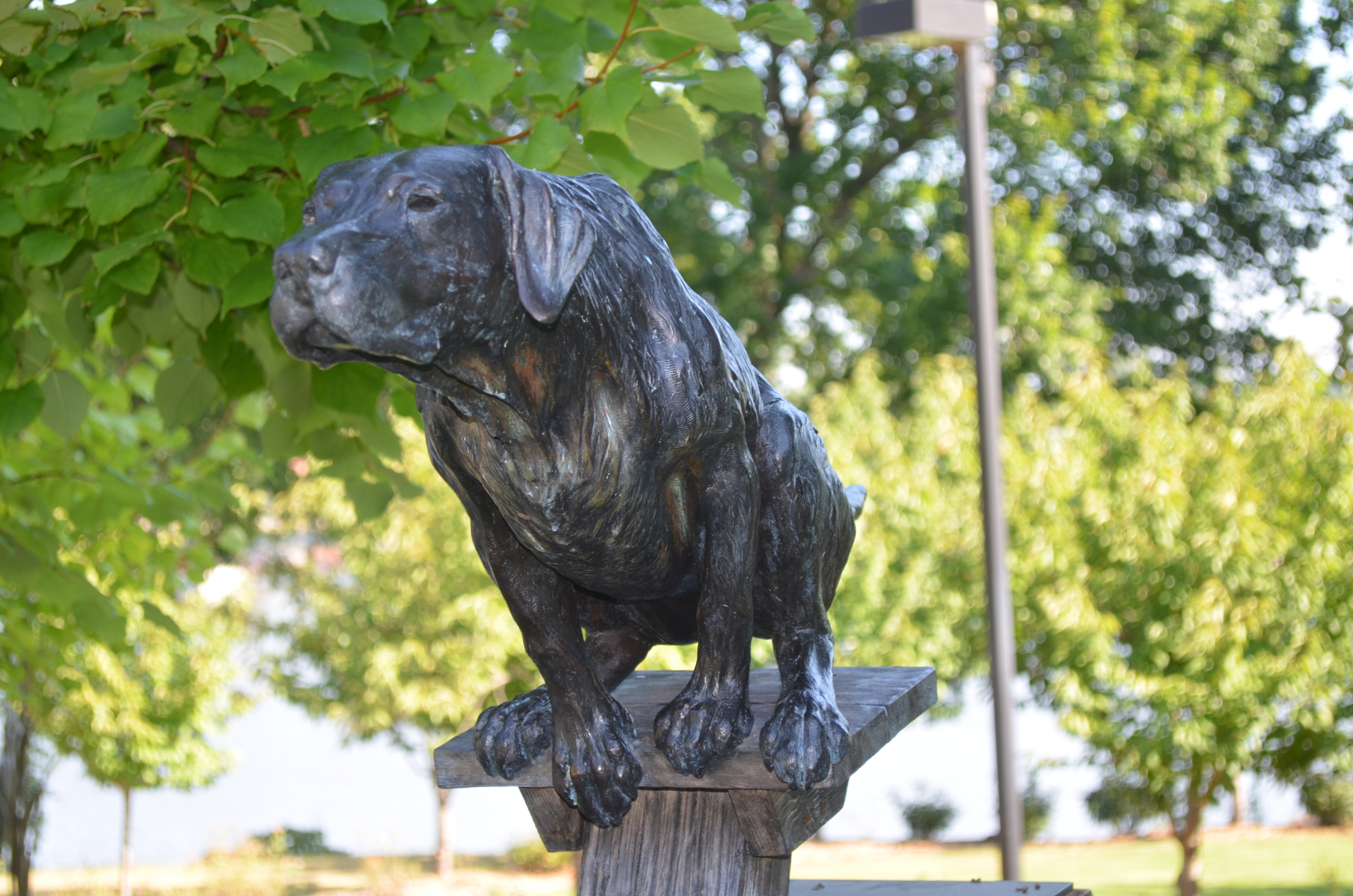
Today is National Dog Day. In celebration of that, today we shine the spotlight on two canine sculptures in the Vogel Schwartz Sculpture Garden.

DSC_0710First is Dan Glanz’s Boris.  Commissioned in 2010 and unveiled in 2011, this is a likeness of Boris Kumpuris, the dog and companion of Mary and Dr. Dean Kumpuris.

Glanz captures the friendly and inquisitive nature of Boris in this work, which can be found in the Vogel Schwarz sculpture garden. Most weekends Boris can be seen with Dean as the two walk through Riverfront Park and the River Market. Boris explores and inspects the park along with Dean. Each year during the Sculpture at the River Market show, Boris visits with Dean and meets all the sculptors.

The sculpture was donated by longtime Kumpuris family friend Margaret Clark. She and her late husband Bill were two of the earliest supporters of sculpture along the Arkansas River. They donated another piece in honor of their grandchildren. A sculpture in memory of Bill was unveiled last year and stands in the wetlands park which bears his name.

DSC_0713
A few yards from Boris is Ken Newman’s Forever Ready.  It depicts a hunting dog waiting but poised to spring into action.  The sculpture was donated by the Sculpture at the River Market committee in 2009.

Dr. Clea Hupp to lead UALR History Department

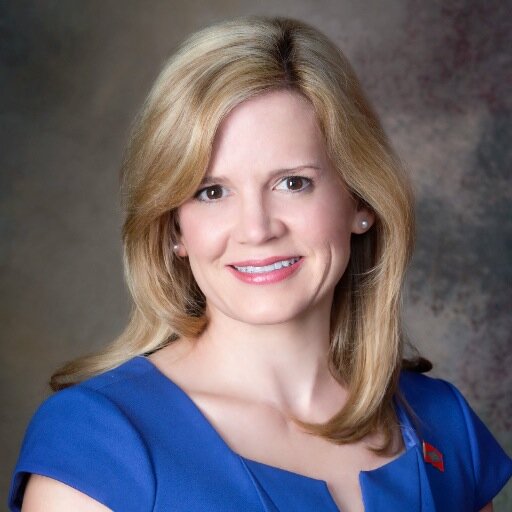
C-HuppDr. Clea Hupp has been named as the new Chair of the UALR History Department.

Clea E. Hupp is an Associate Professor of History. She joined the UALR History Department in 2006 and received her Ph.D. at the University of Arkansas, Fayetteville in 2004.

Clea Hupp specializes in the history of the Modern Middle East and U.S. – Middle Eastern relations. Dr. Hupp received grants from numerous institutions including the John F. Kennedy Foundation, the Lyndon Johnson Foundation, the Society for Historians of American Foreign Relations, and the American Center of Oriental Research. Her latest book was recently published from I. B. Tauris and is entitled “The United States and Jordan: Middle East Diplomacy during the Cold War.” She has traveled extensively in the Middle East and she speaks both Arabic and French.

She has made numerous presentations both in Arkansas and throughout the US on Middle East relations.  In addition to her book, her publications include:

“Strike at Samu: Covert Diplomacy and Shifting Alliances Prior to the Six Day War,” Diplomatic History January,2008.

“Supporting the Brave Young King: The Suez Crisis and Eisenhower’s New Approach to Jordan, 1953-1958” in Reassessing Suez 2008.

“Balancing Act: Jordan and the United States during the Johnson Administration,” Canadian Journal of History 2006.

Dr. Hupp serves on the Board of Directors of Ballet Arkansas. She is also an active supporter of many arts organizations in Little Rock.

Nativity Scenes from the Americas on exhibit at UALR

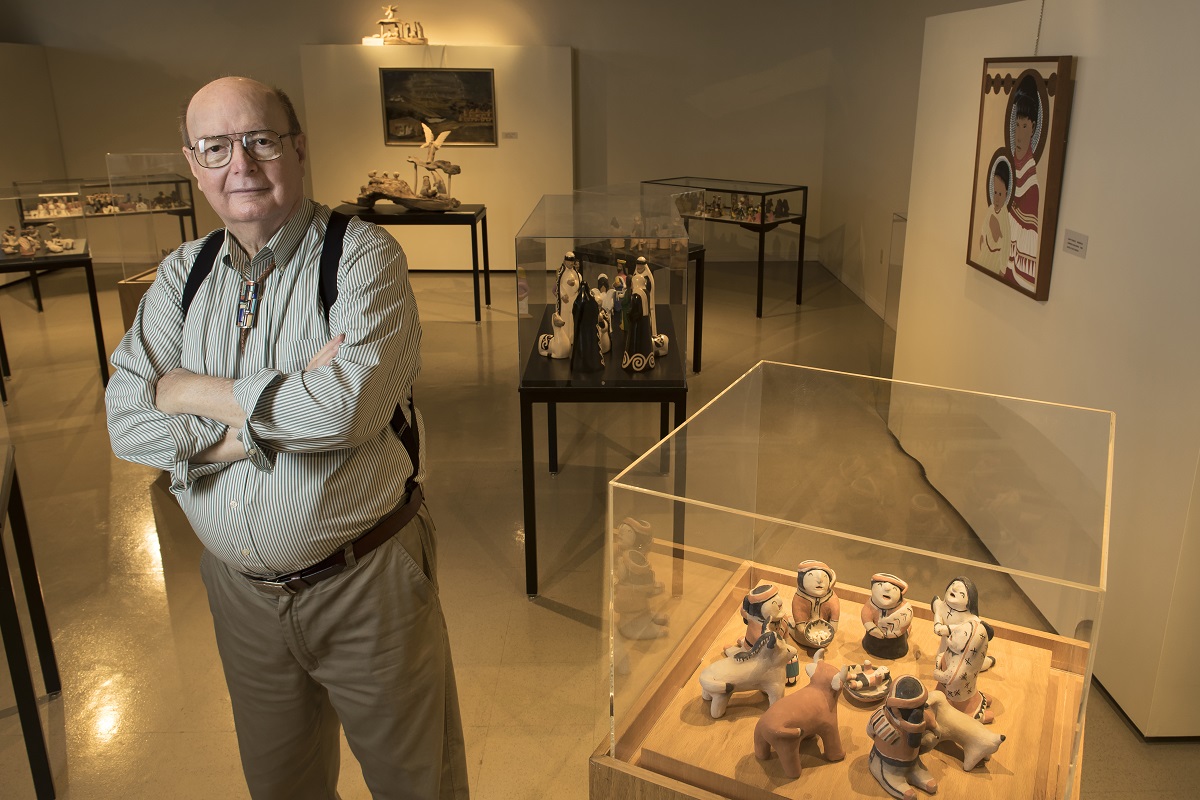
Dr. Bill Wiggins at UALR's Sequoyah National Research Center on Wednesday, August 5, 2015.

Dr. Bill Wiggins at UALR’s Sequoyah National Research Center on Wednesday, August 5, 2015.

Christmas is four months from today – yet you can see a variety of Nativity scenes at UALR.

Dr. J.W. “Bill” Wiggins took a different route with his Nativity scene collection. Essentially, if he ran across something native-arts related that he liked during his travels, he bought it.

“As I started to collect Nativities, it quickly became a folk art collection,” Wiggins said.

Figures and paintings Wiggins accumulated during the past four decades found a home in his “Nativities from the Americas” exhibit, available for viewing 8 a.m. to 5 p.m. weekdays through Oct. 9 at the University of Arkansas at Little Rock Sequoyah National Research Center.

The exhibit features about 45 Nativity scenes, mainly crafted by Native American, Mexican and South American artists, although there also are some from other parts of the world.

Wiggins is fascinated with how different cultures view Christianity and the story of the birth of Jesus Christ. Most of the artists represented in his collection incorporate their culture into the imagery.

That means, for example, visitors might see a buffalo or an eagle among the Nativity animals in some displays, and they’ll have a chance to view the figures presented in different mediums — from wood to clay, to even mud.

Wiggins said the Nativity collection is one of his most popular and most-requested exhibits. It was last on display in 2011, and Wiggins’ collection has grown since then.

One of the reasons for the exhibit’s popularity is that so many families decorate with Nativity sets of their own, Wiggins said, and the exhibit lets people see different interpretations of that venerated tradition.

Visitors to Wiggins’ exhibit shouldn’t expect to find Nativity scenes similar to those that annually line department store shelves. His collection features unique artistic perspectives such as a display that uses characters from other American holidays to symbolically represent the birth in Bethlehem.

Wiggins enjoys meeting the artists as he adds to his collection, and he tries not to miss an opportunity to discuss the displays with guests.

“I’m always interested in people’s reaction,” Wiggins said. “And what they see and what they don’t see is interesting.”

The Sequoyah National Research Center is home to one of the largest collections of Native American expression in the world. Its mission is to acquire and preserve the written and visual ideas of Native North Americans.

For more information, visit its website: http://ualr.edu/sequoyah/

Historian Dr. John Kirk is new director of UALR Institute on Race and Ethnicity

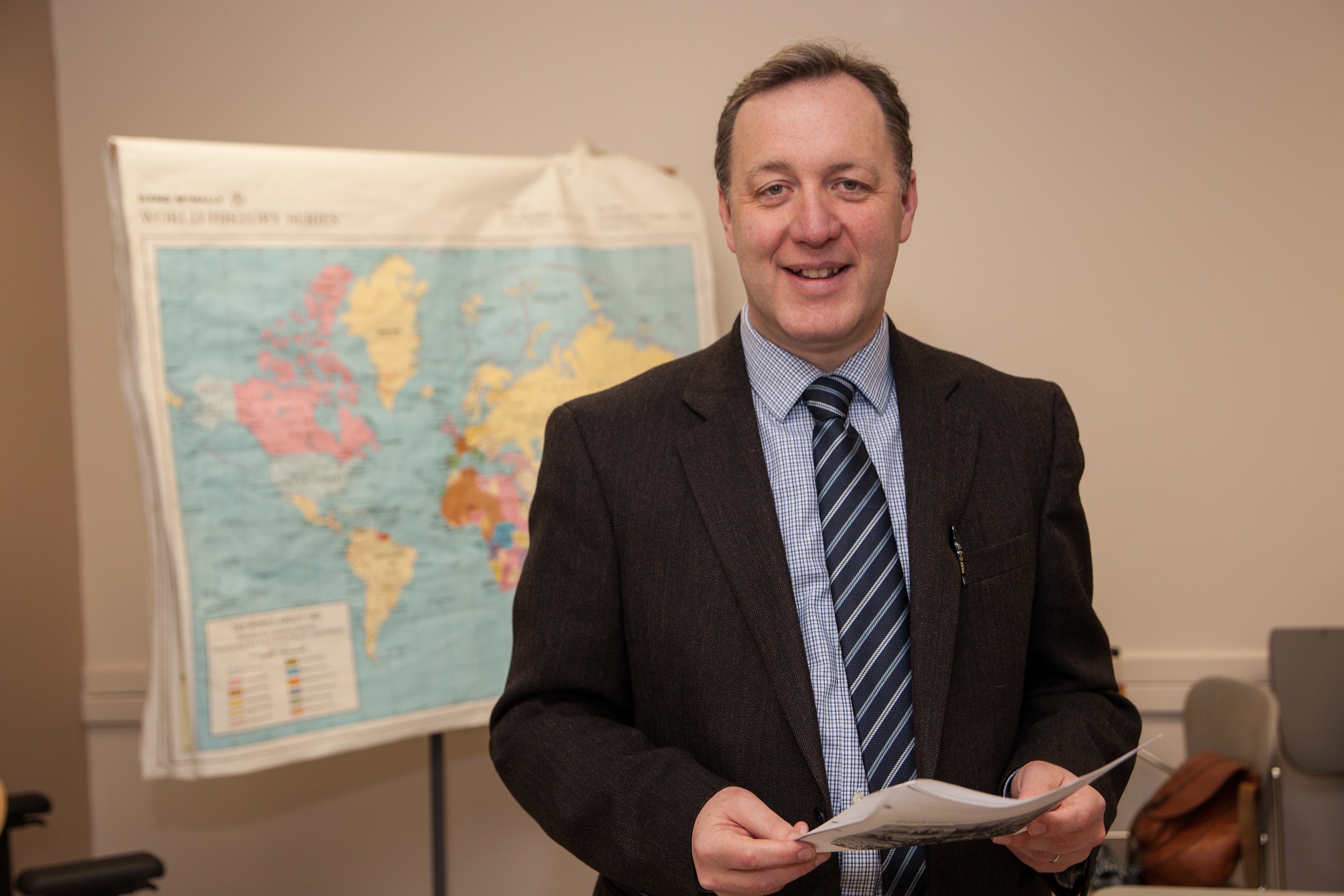
JohnKirk_history1aDr. John A. Kirk has been named the new director of the University of Arkansas at Little Rock’s Institute on Race and Ethnicity.  A native of Great Britain, he has garnered international acclaim for his research and writings on race and the civil rights movement — with a particular focus on Little Rock.

Kirk has been a member of the Chancellor’s Committee on Race and Ethnicity since he arrived at the university more than five years ago and has been involved with the institute since its inception about four years ago.

“I have a deep personal and professional commitment to the pursuit of racial and ethnic justice, and I think that should be the primary reason anyone takes on the job of director of UALR’s Institute on Race and Ethnicity — it is at the very heart of what the institute does,” Kirk said.

Kirk plans to connect with and engage as many students, faculty, and community members as possible in achieving the goals of the institute, which include:

  • Raising awareness of race and ethnicity issues
  • Providing research-based information and policy recommendations
  • Building bridges and seeking reconciliation through interracial and interethnic dialogue
  • Engaging students
  • Serving as a clearinghouse for on- and off-campus initiatives related to race and ethnicity
  • Holding UALR accountable for becoming a more diverse and multi-ethnic community.

For the past 25 years, Kirk has researched and written about issues of race and ethnicity in the United States, especially in Little Rock and Arkansas. He’s the author of numerous books, including “Race and Ethnicity in Arkansas: New Perspectives,” “Martin Luther King, Jr. and the Civil Rights Movement,” and “Beyond Little Rock: The Origins and Legacies of the Central High Crisis.” He also recently partnered with the BBC on its Martin Luther King Jr. web display that serves as an information resource for an international audience.

In announcing Kirk’s appointment, UALR Chancellor Joel E. Anderson noted the professor’s knowledge and passion for civil rights-related topics were ideal fits for the institute’s leadership role.

“It is a rare opportunity to work with someone who grew up in Great Britain but whose knowledge of Arkansas civil rights history is probably greater than anyone else’s in Arkansas or the United States,” Anderson said.  “Dr. John Kirk is a well-known resource in our community for his expertise on the many ways race has shaped our city and state. I am confident that under his leadership the UALR Institute on Race and Ethnicity will continue to grow in influence and will help shape a better future for the people of Arkansas.”

Kirk replaces Dr. Michael R. Twyman, who resigned in July to take a position at the Indiana Black Expo organization.

With Kirk’s new director responsibilities, he will remain the Donaghey Distinguished Professor of History  but no longer will serve as the UALR History Department chair.

“I am excited by the challenges and opportunities that the director’s job brings with it,” Kirk said. “I particularly look forward to getting to know more about and working with students, faculty, and community members who are learning, teaching, researching and serving on issues of race and ethnicity.”