2nd Friday Art Night at the CALS Butler Center

2FAN logo Font sm2The second Friday of 2016 means it is time for the first 2nd Friday Art Night of the year.

Another participating location is the CALS Butler Center Galleries located inside the Arkansas Studies Institute building. They are open tonight from 5pm to 8pm.

Little Rock Box by Gary Cawood

Gene Hatfield: Outside the Lines
On view through Saturday, January 30

Earth Work: Photographs by Gary Cawood
On view through Saturday, February 27
Arkansas Pastel Society National Exhibition
On view through Saturday, February 27
Photographic Arts: African American Studio Photography from the Joshua & Mary Swift Collection
On view through Saturday, March 26
Featured artist: Tom Flynn
Tom Flynn is a metal sculptor who creates artwork using reclaimed metals.
Featured musician: Tommy Priakos
Tommy, a keyboardist based in Little Rock, will perform music in the galleries.
 
Second Friday Art Night is a free, monthly opportunity to visit downtown Little Rock’s galleries, museums, and businesses after hours.

Several other downtown museums and galleries participate in 2nd Friday Art Night.

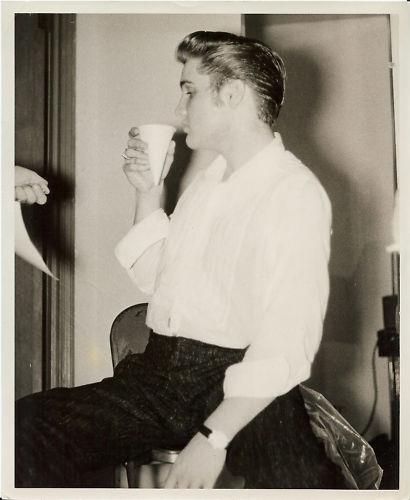
On 1/8, celebrating 81 Years of Elvis Presley

Photo by Wayne Cranford

Photo by Wayne Cranford

Eighty-0ne years ago today, Elvis Presley was born in Tupelo, Mississippi.  He would, of course, grow up to become a cultural phenomenon.

Elvis performed in Little Rock throughout his career.  In April 1972, he played at Barton Coliseum (with tickets on the arena floor going for a whopping $10!).  In the 1950s, he played three at Robinson Auditorium. His first appearance was as his career was just starting to take off. The final appearance on that stage, a mere 15 months later, was when he had become a national icon.

His first appearance at Robinson was on February 20, 1955.  Billed as the “WSM Grand Ole Opry” show, Elvis Presley was third on the bill behind the Duke of Paducah and Mother Maybelle and the Carter Sisters as he began week long tour of Arkansas and Louisiana.  On this date there were a pair of shows, at 3:00 and 8:15 p.m., at Robinson Auditorium. Tickets were 75-cents in advance, $1.00 at the box office and 50-cents for kids. It is believed that Gladys and Vernon Presley attended this performance, invited by Elvis who wanted to introduce them to the Colonel. Gladys was a big fan of the Duke of Paducah. Elvis Presley, Scotty Moore, and Bill Black receive $350 for these two shows instead of their usual $200 per day.  In August 1955, he returned and played Robinson as part of the All-Star Jamboree.

His third and final appearance at Robinson Auditorium was on May 16, 1956.  This time, the Auditorium was packed. The tickets were $1.50 in advance at Walgreens and $2.00 at the box office.  The ads featured 8 great acts in “his” variety show which consisted of the Jordonaires; Rick and Emil Flaim and their orchestra; vocalists Frankie Conners and Jackie Little and comedian-magician Phil Maraquin. A second show was added to accommodate the ticket demand.

About 30 minutes late, due to a missed flight, Elvis appeared on stage in a purple blazer and started singing “Heartbreak Hotel.”  The crowd rushed the stage. Little Rock police officers were able to control them eventually and get the teenagers back to their seats.  While the crowd was impressed, the police officers were less so.  One of the patrolmen told the Arkansas Gazette reporter: “I wouldn’t know him if I saw him. And I wouldn’t be here unless I was being paid.”

2nd Friday Art Night at Historic Arkansas Museum

PhillipRexHuddlestonThe second Friday of 2016 means it is time for the first 2nd Friday Art Night of the year.

Historic Arkansas Museum hosts a free evening of art, history and live music by Phillip Rex Huddleston!  It runs from 5pm to 8pm.

The evening offers a chance to explore two small exhibitions in the museum’s First Floor Hall, including: Maps of Arkansas (1822 – 1856) and Niloak Art Pottery Figurines (produced in Benton, Arkansas, 1909 – 1946).

Maps of Arkansas – This collection of historic maps of Arkansas, a gift of Parker Westbrook, illustrates the evolution of Arkansas from the Territorial Era through early statehood including the division and addition of many counties and a doubling of Arkansas’s population between 1840 and 1850. The maps are engravings on paper and skillfully hand-colored.

Parker Westbrook (1926 – 2015) is widely acknowledged as the “father” of historic preservation in Arkansas. He received many accolades in the field of preservation, was a museum commissioner for more than 30 years and served as chair for a time. Parker’s contributions to Historic Arkansas Museum include securing log structures for the museum farmstead, teaching us how to lay split-rail fencing, donating an array of historic objects to the museum’s collection and contributing many bottles of his famous muscadine wine to the live auction of our biennial fundraiser.

Niloak Art Pottery Figurines – Niloak is a line of American art pottery produced in Benton, Arkansas, from 1909 until 1946. Although best known for their distinctive mission swirl pottery, Niloak also began producing a castware line called Hywood Art Pottery in the 1930s. The capricious figurines in this display represent the expansive variety of cast pieces produced by the company. The name Niloak is Kaolin spelled backward. Kaolin is a type of fine-grade clay found in Benton, AR. This collection was generously donated to the museum’s permanent collection by former Arkansas congressman Vic Snyder.

Several other downtown museums and galleries participate in 2nd Friday Art Night.

Historic Arkansas Museum is an agency of the Department of Arkansas Heritage.

Bob Hupp to leave Arkansas Rep for Syracuse Stage

Arkansas Repertory Theatre announced today the resignation of producing artisticdirector Robert Hupp. Hupp is currently in his seventeenth season as the leader of Arkansas’ largest non-profit theatre company. Hupp’s resignation is effective with the conclusion of his current contract which expires at the end of June 2016. At that time, Hupp will assume his new position as artistic director of Syracuse Stage in Syracuse, New York.
“It’s been an honor to steward The Rep for these past seventeen years,” Hupp said. “I am especially grateful to the kind and generous patrons of central Arkansas who make creating theatre here fun and rewarding. Little Rock has been a tremendous place to raise a family, and a wonderful place to call home. I’ve been extremely lucky to work with such a dedicated Board of Directors and a multi-talented Rep staff. Arkansas Rep’s future is very bright, and I look forward to being a fan for years to come.”
During his tenure in Little Rock, Hupp has overseen continued growth and development at The Rep. Since he assumed the producing artistic director’s position in 1999, the theatre has tripled its budget (currently at $4 million annually), increased contributed income by 100%, completed a successful capital campaign, and broadened the company’s artistic and economic base through co-productions with other nonprofit theatres and partnerships with institutions of higher education and community organizations.  Under Hupp’s leadership, the theatre and actor housing apartments underwent a complete renovation in 2011. The Rep also renovated a new downtown scenic construction facility and recently opened The Annex, a black box theatre and education space, in Main Street’s Creative Corridor.
Hupp’s artistic stewardship at The Rep has been marked by seasons that reflect the great diversity of the theatrical canon. Shakespeare and American classics join new and contemporary works, and seasons always include musicals or plays with music. The current season contains the regional theatre premiere of The Bridges of Madison County, a new adaptation of The Little Mermaid, as well as a new comedy, Windfall, directed by Seinfeld’s Jason Alexander.  The theatre also recently produced a new musical, Because of Winn Dixie, by Duncan Sheik and Nell Benjamin.  Hupp has directed 28 productions while at The Rep, including The Grapes of Wrath, God’s Man in Texas, Les Miserables, August: Osage County, and all of The Rep’s recent Shakespearean productions.
In addition to his duties at The Rep, Hupp has shown a strong commitment to serving the central Arkansas community. He has served on numerous civic committees in Little Rock, including Little Rock’s Arts and Culture Commission, the Advisory Board of the ACANSA Arts Festival, and Vision Little Rock. He has collaborated with the Arkansas Symphony Orchestra, Wildwood Park for the Arts, and the Arkansas Arts Center. He is the 2013 recipient of the Governor’s Arts Award (Individual Artist) and the 2014 Argenta Community Theatre (ACT) Patron of the Year Award. In 2012, he was named “Nonprofit Executive of the Year” at the Arkansas Business of the Year Awards, and also received the Arkansas Public Relations Society of Arkansas (PRSA) Diamond Award. Hupp has also been a panelist and on-site evaluator for the National Endowment for the Arts and has served in various capacities for the Theatre Communications Group, including a term as vice president of the Board of Directors. Hupp has taught and directed at several Arkansas colleges and universities, including Hendrix College, University of Central Arkansas, and University of Arkansas at Little Rock where he also served as the Interim Chair of the Department of Theatre in 2005.
The Rep Board of Directors expressed its gratitude to Hupp for his distinguished tenure.
“For nearly two decades, The Rep has been fortunate to have one of the country’s premier producing artistic directors at the helm,” Board President Catherine Hughes said. “While we celebrate Bob and wish him well in his new venture, we will sorely miss his energetic and intelligent leadership. He has played an integral part in the life of our community, and his departure will create a void which will be difficult to fill. On behalf of the Board and the community at large, I offer Bob our deepest gratitude for creating Broadway-quality theatre on our local stage.”
Hupp is only the second executive to lead The Rep in its 40-year history. Rep Founder Cliff Fanin Baker stepped down in 1999.
A search committee is being formed as The Rep’s Board of Directors launches an immediate national search for Hupp’s successor. Before departing, Hupp will plan The Rep’s 2016-17 Season.


Free field trip programs to Historic Arkansas Museum for any Arkansas school in 2016, funded by Bill Worthen Future of History Fund

Historic Arkansas Museum is celebrating its 75th diamond anniversary by offering free educational field trip programs to any school in Arkansas that comes to the museum in 2016. This project will be funded by the Bill Worthen Future of History Fund which is dedicated to inspiring the next generation of Arkansas history lovers.
Historic Arkansas Museum provides a variety of engaging and interactive field trip programs throughout the year in addition to popular annual programs such as the Spring and Fall School Fairs and the Before Freedom program in February during Black History Month.

Educators can begin the reservation process by submitting a field trip request form.  To learn more about participating in this program, educators are invited to contact the museum’s director of education, Joleen Linson or call 501-324-9351.

Each year schoolchildren from around the state come to the museum and experience history first hand. Some churn butter—with amazement, as they learn that butter doesn’t come from the grocery store. Others imagine themselves as early Arkansans, travelling west and deciding what to bring with them, in our Packing to Go program. Students leave knowing more about their own history and they leave inspired.

Museum History

What is now a showcase for Arkansas’s history, art and heritage began as a diamond in the rough—a half-block of dilapidated historic structures. Thanks to the efforts of pioneering preservationist Louise Loughborough the museum opened on July 19, 1941, as the Arkansas Territorial Capitol Restoration. Click here to watch the museum’s 75th Anniversary film produced by Cranford Co.

Following Loughborough’s foundational leadership, prominent architect Ed Cromwell led the museum through an era of growth that made the museum an anchor of a once declining downtown Little Rock. In 1972, the museum hired its first professional staff and Bill Worthen was hired as the first executive director, a title he has held for more than 40 years. Worthen made his first goal gaining museum accreditation— a complicated and rigorous process that he and museum staff pursued for nine years, achieving accreditation from the American Alliance of Museums in 1981 making the museum the first accredited history museum in Arkansas.

Worthen also developed and expanded the log house farmstead on museum grounds that has been central to education programs and he led the museum through its most profound expansion which culminated in the 2001 opening of the Museum Center, a project which doubled the size of the previous visitor reception space with 10,000 square feet of exhibits, a theater, a hands-on history classroom, an entrance atrium with views of the historic grounds and other amenities. Other developments under Worthen’s leadership include but are not limited to: development of the ongoing #ArkansasMade research project, the museum’s popular Living History Program, Giving Voice dedicated to those enslaved on what is now museum property, the growth of popular events such as the Christmas Frolic, Territorial Fair, Frontier Fourth of July and 2nd Friday Art Night exhibit openings, and the museum’s achievement of Smithsonian Affiliate status which made possible the opening of the Smithsonian partnership exhibit, “We Walk in Two Worlds: The Caddo, Osage and Quapaw in Arkansas.”

Countless visitors have witnessed Bill Worthen’s passion for Arkansas history and even more across the world have been impacted by his scholarly research and publications, often in partnership with deputy director and chief curator Swannee Bennett, on the subjects of Arkansas-made material culture, the Arkansas Traveler, the Bowie knife and more. As Worthen plans his retirement for the end of 2016, the Bill Worthen Future of History Fund seeks to pass on his passion for Arkansas history to future generations for decades to come.

Memory Share

The museum is seeking stories and memories from visitors as a part of the 75th anniversary celebration. Everyone is invited to share their memories and stories of their experiences at the museum by emailing Chris Hancock, tagging Historic Arkansas Museum on Facebook, or tagging @HistoricArk on Instagram and Twitter with the hashtag #HAM75.

Currently on exhibit:

Historic Arkansas Museum is open 9 a.m. – 5 p.m. Monday through Saturday, 1 – 5 p.m. on Sunday. Admission to the galleries and parking are free; admission to the historic grounds is $2.50 for adults, $1 for children under 18, $1.50 for senior citizens. The Historic Arkansas Museum Store is open 10 a.m. – 4:30 p.m. Monday through Saturday, 1 – 4 p.m. on Sunday.

Historic Arkansas Museum is an agency of the Department of Arkansas Heritage, which was created in 1975 to preserve and enhance the heritage of the state of Arkansas. Other agencies of the department are Delta Cultural Center in Helena, Arkansas Arts Council, Arkansas Natural Heritage Commission, Arkansas Historic Preservation Program, Mosaic Templars Cultural Center and Old State House Museum.


Documentary on David O. Dodd and play about him to be shown at MacArthur Museum tonight

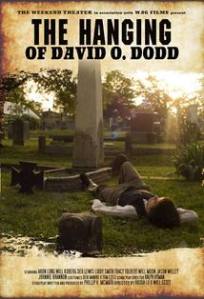
Hanging of DODTonight, January 7, at 6:30 pm, the MacArthur Museum of Arkansas Military History will host a screening of the film The Hanging of David O. Dodd.

The 2015 documentary The Hanging of David O. Dodd tells the story of 17 yr old confederate spy David Dodd who is remembered as a martyr of the confederacy. In cooperation with the Weekend Theater, a play written for the stage by playwright Phillip H. McMath. The film blends the two and looks at how he is remembered 150 years after his death.

The movie was directed by Xuixa Lu and Will Scott.  The cast features Johnnie Brannon, Will Koberg, Jason Willey, Alan Rackley, Michael Pere, Hannah Lackoff, Tracy Tolbert, Jeff Lewellen, Aron Long, William Moon, Ryan Hoyle, Jerry Rice and Libby Smith.

The event is free and open to the public.

Little Rock Look Back: Mayor John Gould Fletcher

IMG_4006Future Little Rock Mayor John Gould Fletcher was born on this date in 1831. The son of Henry Lewis and Mary Lindsey Fletcher, he later served as a Captain in the Capital Guards during the Civil War. One of his fellow soldiers was Peter Hotze.

Following the war, he and Hotze began a general merchandise store in Little Rock. They were so successful that they eventually dropped the retail trade and dealt only in cotton. Peter Hotze had his office in New York, while Fletcher supervised company operations in Little Rock. In 1878 Fletcher married Miss Adolphine Krause, sister-in-law of Hotze.

John Gould Fletcher was elected Mayor of Little Rock from 1875 to 1881. He was the first Mayor under Arkansas’ new constitution which returned all executive powers to the office of the Mayor (they had been split under a reconstruction constitution). Following his service as Mayor, he served one term as Pulaski County Sheriff. Mayor Fletcher also later served as president of the German National Bank in Little Rock.

Mayor and Mrs. Fletcher had five children, three of whom lived into adulthood. Their son was future Pulitzer Prize winning poet John Gould Fletcher (neither father nor son used the Sr. or Jr. designation). Their two daughters who lived to adulthood were Adolphine Fletcher Terry (whose husband David served in Congress) and Mary Fletcher Drennan.

In 1889, Mayor Fletcher purchased the Pike House in downtown Little Rock. The structure later became known as the Pike-Fletcher-Terry House. It was from this house that Adolphine Fletcher Terry organized the Women’s Emergency Committee which worked to reopen the Little Rock public schools during the 1958-1959 school year.

In the 1960s, sisters Adolphine Fletcher Terry and Mary Fletcher Drennan deeded the house to the City of Little Rock for use by the Arkansas Arts Center. For several decades it served as home to the Arts Center’s contemporary craft collection. It now is used for special events and exhibitions.

Mayor Fletcher died in 1906 and is buried in Mount Holly Cemetery along with various members of his family. His grandson William Terry (son of Adolphine Fletcher Terry) and members of his family still reside in Little Rock.