Governor’s Arts Awards presented today

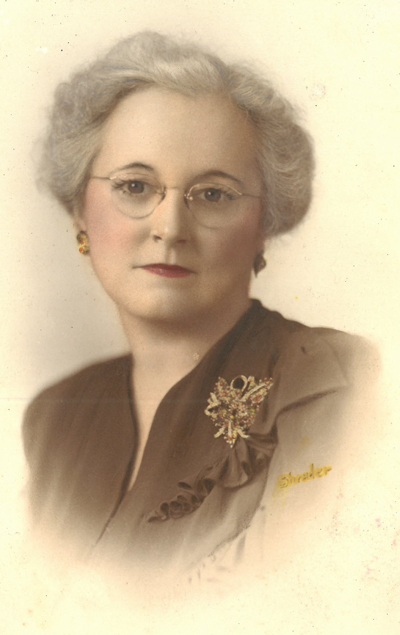
Arts Community Development recipient Dean Kumpuris

Arts Community Development recipient Dean Kumpuris

The Arkansas Arts Council will present the 2016 Governor’s Arts Awards today at the Arkansas Governor’s Mansion. Sponsored annually by the Arkansas Arts Council, the Governor’s Arts Awards recognize individuals and corporations for outstanding contributions to the arts in Arkansas.

The recipients were nominated by the public and then selected by an independent panel of arts professionals from around the state. Each recipient will be honored at a ceremony in the spring and will receive an original work of art created by Arkansas artist Kelly Edwards.

Lifetime Achievement Award
Suzanne Vining Kunkel, Little Rock

Arts Community Development Award
Dr. Dean Kumpuris, Little Rock

Arts in Education Award
The Arts & Science Center for Southeast Arkansas, Pine Bluff

Corporate Sponsorship of the Arts Award
Deltic Timber, El Dorado

Folklife Award
Sonny Burgess and The Legendary Pacers, Newport

Individual Artist Award
RB McGrath, Jacksonville

Patron Award
Dr. Thomas A. Bruce, Little Rock

Judges Recognition Award
Theresa Timmons-Shamberger, Maumelle

The selection committee members included Mildred Franco, Arkansas Arts Council board, Pine Bluff; Ed Clifford, The Jones Center, Bentonville; Aj Smith, University of Arkansas at Little Rock; Chris James, The Roots Art Connection, North Little Rock; and Cathy Cunningham, Southern Bancorp Community Partners, Helena.
Brown Bag at Old State House today at noon – COURAGE, PROMINENCE, THEN OBSCURITY: THE LIFE OF EDWARD ALLEN FULTON

OSH Brown BagToday (March 10) at noon, Blake Wintory presents the Old State House’s March Brown Bag program on the life of Edward Allen Fulton.
Fulton was an African American leader, politician and newspaper editor in Arkansas during Reconstruction and subsequent years. Born a slave in Kentucky in 1833, Fulton spent his youth as a slave in Missouri before escaping and joining the abolitionist movement in Chicago. During the Civil War he worked as a recruiter for U.S. Colored Troops and arrived in post-war Arkansas in 1866.

In 1870 Drew County elected him to the Arkansas General Assembly as a Republican. Fulton sided with Joseph Brooks’ “Brindletail” or Reform Republicans and often clashed with the Regular Republicans, including Governor Powell Clayton. Throughout his career he championed the rights of African Americans and even led several Drew County families to western Iowa at the height of the Exoduster migration. Despite a colorful life that included an assassination attempt, Fulton died in relative obscurity in St. Louis in 1906.

Blake Wintory received his Ph.D. from the University of Arkansas in 2005. He is the on-site director at the 1859 Lakeport Plantation, an Arkansas State University Heritage Site in Chicot County. He serves on the board of Preserve Arkansas and the Friends of the Arkansas History Commission. In 2015 he published his first book, Images of Chicot County, and has published articles on Arkansas history in the Arkansas Historical Quarterly, the Arkansas Review, and the Encyclopedia of Arkansas History & Culture.

Sessions at South on Main continues tonight with Bijoux

BijouxThis is the second month of Sessions at South on Main! This month the series is curated by DGold. Daniel Gold, aka DGold, is a radio personality, a podcaster, a music documentarian and former publisher of a music magazine – Honest Tunes. He’s traveled the US following music, and has always made it his priority to share good tunes with others.

For his second show, DGold has invited Bijoux. Well-known to Rock City, Bijoux has graced the South on Main stage more than a few times. Gold says, “Her nickname is the Royal Dopeness, and she’s smashing, a smashing singer that has had numerous packed houses before.”

The show begins at 8:30 PM, and there is a $10 cover charge. Please call (501) 244-9660 to reserve your table for this show.

ABOUT BIJOUX
Bijoux—a native of Little Rock – is a sultry soul singer adept in various styles. The daughter of West African parents, Bijoux grew up in a household exposed to differing genres of music including folk, classic rock and roll, makossa, country, and R&B. Her jovial spirit, endearing vocals, vibrant entertaining, and musical versatility make her concerts engaging and fun.

LR Women’s History Month – Ruth May Wassell Gibb

Ruth-May-Wassell-GibbOn August 27, 1944, Ruth May Wassell shattered a bottle on the hull of a new ship and christened it the U.S.S. Little Rock.  Mrs. Wassell, whose husband was Little Rock alderman Sam Wassell, had been designated as the official sponsor for the City of Little Rock by Mayor Charles Moyer.

Ruth May Wassell was more than the wife of a local political leader.  The daughter of Dr. and Mrs. Wiley Singleton May, she moved from Gurdon to Little Rock with her family and graduated from Little Rock High School. She later graduated from Henderson-Brown College and received a law degree from the University of Arkansas.  In 1932, she was admitted to the Arkansas Bar and later was admitted to practice before the Arkansas Supreme Court, one of the first women to receive this designation.

Mrs. Wassell was active in business, serving as president of the Arkansas Lumber Company  and owner of a citrus farm in Texas.  She was also active in civic affairs through involvement with the Arkansas Democratic Women, Boys Club and Second Presbyterian Church.  From 1947 until 1951 she was First Lady of Little Rock when Sam Wassell was elected as Mayor.

Following the December 1954 death of Mayor Wassell, she subsequently married E. W. “Bud” Gibb.  She died in 1964.

On International Women’s Day, see the Dorthea Lange’s America at the Arkansas Arts Center

Today is International Women’s Day. The Arkansas Arts Center currently features several exhibitions celebrating women artists.  One of them is Dorthea Lange’s America.  It is on display through May 8.

Dorothea Lange, American (Hoboken, NJ, 1895 – 1965, San Francisco, CA), Migrant Mother, Nipomo, California, 1936, gelatin silver print, Private Collection, © Dorothea Lange/Oakland Museum of California

Migrant Mother strikes the heart. Dorothea Lange’s iconic image of the Great Depression forces us to confront the humanity and strength of one woman struggling to get her family through the privations they face when there is no money. Dorothea Lange’s America brings together many of the photographer’s images made as she traveled across America during the 1930s documenting the suffering of unemployed or terribly underpaid agricultural workers and their families. Lange took these photographs as part of the photography program connected to the Farm Security Administration, a federal agency formed under the New Deal to assist poor farmers with loans and other programs.

Lange and her fellow FSA photographers recorded the lives of people coping with the dust bowl, bank and business failures, and the loss of their jobs and homes. We see the hopelessness of hungry men in breadlines and the shattered, abandoned cabin of a tenant farmer in the Mississippi Delta. But Americans did not give up. We also see the determination of men doing the grueling work of cutting lettuce for a pittance a day. And there is the radiant smile of an Arkansas mother who went to California to make a new start with her husband and eleven children. Such powerful images helped government agencies and representatives to understand the urgency of helping suffering Americans who had no other place to turn. 80 years later, these black and white documents of American endurance have not lost their impact.

Dorothea Lange’s America includes photographs made by Lange and her FSA colleagues, including Walker Evans, Ben Shahn, and Marion Post Wolcott. Depression-era photographs from photographers outside the FSA give a wider understand of the time. Here are striking visions by Mike Disfarmer, who worked as a portrait photographer in Heber Springs, Arkansas; and documentary images made from Oklahoma to Alabama by photographic artists including Lewis Hine, Doris Ulmann, and Willard Van Dyke. The exhibition continues with photographs Dorothea Lange made in the same spirit after the FSA was disbanded in 1943.

The Arkansas Arts Council seeking applications for Individual Artist Fellowships

aaclogo_vertical_colorThe Arkansas Arts Council is accepting applications for its Individual Artist Fellowships. The deadline to apply is April 15, 2016.

The Individual Artist Fellowships annually recognize individual artistic ability and creative excellence to encourage the continuing artistic development of the selected recipients. To be eligible for a fellowship, an artist must be at least 25 years old and must have been an Arkansas resident for at least one year at the time of application.

Individual Artist Fellowships are unconditional, non-matching awards made directly to individual artists. Awarded annually, these fellowships recognize the artistic creative excellence of the recipient’s work and enable the selected artists to devote more time and energy to creating their art and mastering their craft. Funding categories change each year.

Up to nine Individual Artist Fellowships worth $4,000 each will be awarded to artists in the following categories:

  • Literary Arts – Poetry
  • Performing Arts – Music Composition (Folk/Gospel/Jazz/Pop)
  • Visual Arts – Painting (Paintings may include work on canvas, panel, or board, but not on paper.)

Click HERE to download an application, or contact the Arkansas Arts Council at (501) 324-9766. For more information, call Robin McClea at (501) 324-9348 or e-mail robinm@arkansasheritage.org.

The Arkansas Arts Council is an agency of the Department of Arkansas Heritage.

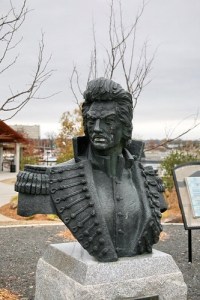
Little Rock Look Back: Count Casimir Pulaski

On March 6, 1745, Casimir Pulaski was born in Poland. A Polish nobleman and military commander he has been called a “father of the American cavalry.”

Born in Warsaw, he followed in his father’s footsteps he became involved in the military and the revolutionary affairs in Poland. Pulaski was one of the leading military commanders for the Bar Confederation and fought against Russian domination of Poland. When this uprising failed, he was driven into exile.

Following a recommendation by Benjamin Franklin, Pulaski emigrated to North America to help in the cause of the American Revolutionary War. He distinguished himself throughout the revolution, most notably when he saved the life of George Washington.

Pulaski became a general in the Continental Army, created the Pulaski Cavalry Legion and reformed the American cavalry as a whole. At the Battle of Savannah, while leading a daring charge against British forces, he was gravely wounded, and died shortly thereafter.

Pulaski is one of only eight people to be awarded honorary United States citizenship. He never married and had no descendants.

Arkansas is one of several states to have a county named in honor of Count Pulaski.  Pulaski County was Arkansas’s fifth county, formed on December 15, 1818.