Black History Month – Jackie Wilson and Robinson Center

jackie-wilson-9533886-1-402On February 5, 1960, Jackie Wilson headlined a concert at Robinson Auditorium.  With a four-octave range and boundless energy, he was nicknamed “Mr. Excitement.”

Wilson was born in Michigan and grew up alternating between time in church choir and street gangs.  After dropping out of high school, he boxed some before starting to sing professionally.  After singing in groups such as the Dominoes, he embarked on a solo career in the late 1950s.  By the time he played Robinson Auditorium, his song “Lonely Teardrops” had sold over one million copies and been number one on the R&B charts.

It was around this time that Wilson struck up a friendship with Elvis Presley. They were each impressed with the other’s musical ability and stage presence.  Reportedly Elvis referred to himself as “the white Jackie Wilson.”

Throughout his career his hit songs included “Night,” “You Better Know It,” “Doggin’ Around,” and “(Your Love Keeps Lifting Me) Higher and Higher.”

Wilson had a heart attack and collapsed on stage in New Jersey during a concert in September 1975. He slipped into a coma. After a brief recovery in 1976, he slipped back into a semi-comatose state. He remained in that condition until his death from pneumonia in 1984.

Super Bowl Sunday: Little Rock Police Copper Bowl at Quigley Stadium

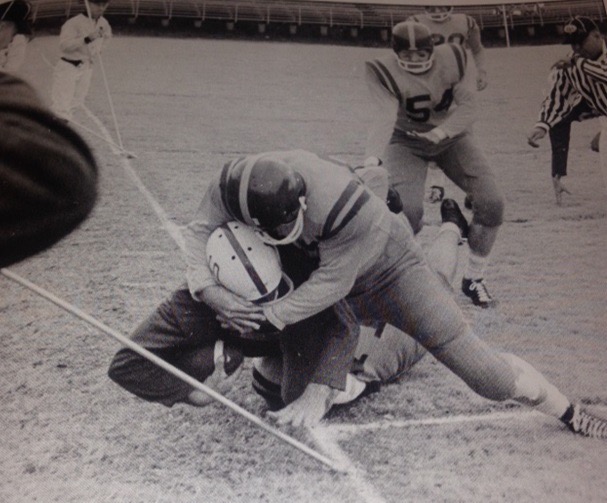
A Little Rock police officer tackles a NLR player in one of the Copper Bowls.


Today is Super Bowl Sunday, so it seems to be a good time to remember the five year series of football games in Little Rock known as the Copper Bowl.

From December 1959 through December 1963, the Little Rock Police Department played the North Little Rock Police Department in a series of football games.  The Copper Bowl games were fundraisers to help the LRPD provide food and presents for needy families during the Christmas season.

The agreement was that the teams would play for five years. The team with the most wins would permanently receive the Copper Bowl trophy.  The LRPD was outfitted with uniforms from Little Rock University and Louisiana State University (thanks to the efforts of Sgt. Harold Zook).  The games were played at Quigley Stadium.

Before the final game on December 1, 1963, the series was tied at 2-2.  The LRPD team won the game and permanently captured the trophy.  Over the five year period several thousand dollars were raised.

Little Rock Look Back: John Herndon Hollis

John Herndon HollisOn February 5, 1870, future Little Rock alderman and acting mayor John Herndon Hollis was born shortly before his family moved to what is now Cleveland County. His parents were originally from Georgia and came from prosperous and longtime families there.

The Hollis family came to Arkansas after the Civil War and settled in Union County. A portion of that county was carved off and became Dorsey County (named after a Republican US Senator from Arkansas) but was renamed Cleveland County after Grover Cleveland was elected President. Cleveland was the first Democrat to be elected President in over 20 years. This name change also reflected the political shift in Arkansas from the Reconstruction-led Republican politics to the Democratic Party politics which would dominate for the next century.

John Herndon Hollis was one of six children, and the only one with a middle name. Herndon had been his mother’s maiden name. As one of his brothers described their childhood in Cleveland County, “they all went to country schools in their home neighborhood, worked hard on the farm in the summertime, and were inside their little Methodist Church every time the doors were open.”

Around 1900, Hollis and his new wife Malinda M. “Linda” Taliaferro Hollis (formerly of Rison) moved to Little Rock.  Together the couple had six children. In Little Rock, Hollis worked in the banking industry. For years he worked for People’s Building and Loan Association.

Hollis was first elected to the Little Rock City Council in April 1904. He would serve as one of the Aldermen from the city’s Fourth Ward until April 1918.  This was on the western border of Little Rock at the time. The family lived at 1510 S. Schiller, which is one block east of Central High, though at the time neither the school nor its predecessor (West End Park) existed.  From 1907 until 1913 he also served on the Little Rock School Board.

In April 1908, at the first City Council meeting in the new City Hall, Mayor W. E. Lenon announced his resignation. Because the resignation was effective immediately, there was a vacancy in the office of mayor.  Hollis was selected by his colleagues to serve as acting mayor until a successor could be elected. So from April 1908 through June 1908, Hollis was the City’s chief political and executive leader.

Though he was never formally mayor (and did not resign his position as alderman), since 1908, Hollis’ name has appeared on the list of mayors of Little Rock. The reason seems to be as a sign of respect since there was a vacancy.

There previously had been acting mayors when the mayor would be absent on business or due to illness. But in those instances, the mayor had not resigned. This is the only instance in Little Rock history when a mayor resigned immediately with no successor in place. So John Herndon Hollis holds a unique role in Little Rock history.

Hollis’ wife died in 1920.  He later married Ann Jewell of Little Rock (who was a distant cousin of his first wife). They were married until his death on October 23, 1941.  Ann Hollis lived in Little Rock until her death in 1980.  The Hollis family is entombed in the mausoleum at Mount Holly Cemetery.

Both of John Herndon Hollis’ wives are distant cousins of the Culture Vulture, so he is particularly fond of John Herndon Hollis.

Black History Month – Louis Armstrong and Robinson Center

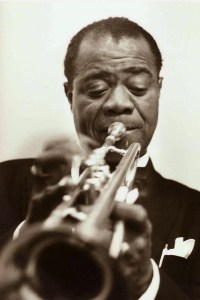
louis-armstrong3Louis Armstrong played Robinson Auditorium several times during his career.  He also played other venues in Little Rock.

As the Civil Rights movement started taking hold in the mid-1950s, many African American entertainers were vocal in their support.  Armstrong stayed silent.  Until, that is, September 17, 1957.  That night, in Grand Forks, North Dakota, he blasted President Dwight Eisenhower for his lack of action to make Governor Orval Faubus obey the law.  This was in an interview conducted by a 21 year old University of North Dakota journalism student named Larry Lubenow.

Journalist David Margolick wrote about the incident in The New York Times in September 2007 in conjunction with the 50th anniversary of the integration of Little Rock Central High School.  He recounted how the story, written for the Grand Forks Herald, was picked up all over the country.  The entire Margolick piece can be read here.  Margolick tells that when Armstrong was given the chance to back off the comments, he asserted that he meant all of it.

On September 24, 1957, the night that the 101st Airborne was being mobilized to come into Little Rock, Armstrong sent Eisenhower a telegram again criticizing him for lack of action.  He used colorful language which sarcastically spoofed the “Uncle Tom” moniker which some of his critics had bestowed when they felt he was not doing enough for Civil Rights.  The Eisenhower Presidential Library has a copy of that telegram.  The incident between Satchmo and Ike was the basis for two different plays: Terry Teachout’s Satchmo at the Waldorf and Ishmael Reed’s The C Above C Above High C.

Armstrong would again play a part in Little Rock’s Civil Rights history.  In September 1966, he played the first major concert in Robinson Auditorium that was before a fully integrated audience.  Since the early 1960s, there had been a few sporadic concerts which had been before integrated audiences. But the policy of the Auditorium Commission remained that the building was to be segregated.  Following the approval of the 1964 Civil Rights Act, public facilities had to be integrated. Louis Armstrong played before a full house at Robinson Auditorium that night.  With Orval Faubus still Arkansas’ governor, Armstrong was not too interested in staying in Little Rock very long. He left town quickly after the concert was concluded.

Black History Month – Danny Glover and Robinson Center

danny-glover-new-headshot-2010On Saturday, February 3, 2001, actor Danny Glover narrated Aaron Copland’s “Lincoln Portrait” with the Arkansas Symphony Orchestra at Robinson Center.

The Culture Vulture had the privilege of spending part of the day with Mr. Glover while he was here in Little Rock. (At Mr. Glover’s request for good Soul Food, they went to Kitchen Express. When the parking lot was still full at 2:45 on a Saturday afternoon, Mr. Glover remarked “That’s a good sign.”  He enjoyed the food so much, he apparently went back the next day before leaving town.) They also discussed college and NBA basketball and went by the UA Little Rock campus where then-Lakers star Derek Fisher had played his college ball.

While Danny Glover may well be best-known for his role in the Lethal Weapon movies, his distinguished acting career has taken him to Broadway and Off-Broadway, motion picture screens and TV.  He is also well-known for his political and social activism. He is not afraid to speak his mind, and to make donations to causes in which he is a believer.

As he concludes his fourth decade of acting, Glover shows no signs of slowing down – nor does he appear to be softening his stance on social issues.

Black History Month – William Grant Still and Robinson Center

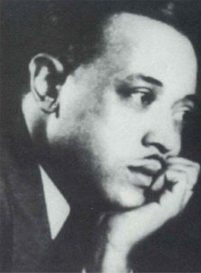
bhm StillDr. William Grant Still was a legend in his own lifetime.  Dr. Still, who wrote more than 150 compositions ranging from operas to arrangements of folk themes, is best known as a pioneer. He was the first African-American in the United States to have a symphonic composition performed by a major orchestra. He was the first to conduct a major symphony orchestra in the US; the first to conduct a major symphony in the south; first to conduct a white radio orchestra in New York City; first to have an opera produced by a major company. Dr. Still was also the first African-American to have an opera televised over a national network

Dr. Still was born May 11, 1895 in Woodville, Mississippi to parents who were teachers and musicians. When Dr. Still was only a few months old, his father died and his mother took him to Little Rock. Inspired by RCA Red Seal operatic recordings, his musical education began with violin lessons.

After his studies at Wilberforce University and the Oberlin Conservatory of Music, he played in orchestras and orchestrated for various employers including the great W. C. Handy. For several years he arranged and conducted the “Deep River Hour” over CBS and WOR.

In the 1920’s, Still made his first appearances as a serious composer in New York. Several fellowships and commissions followed. In 1994, his “Festive Overture” captured the Jubilee prize of the Cincinnati Symphony orchestra. In 1953, he won a Freedoms Foundation Award for “To You, America!” which honored West Point’s Sesquicentennial Celebration. In 1961, he received honors for this orchestral work, “The Peaceful Land”. Dr. Still also received numerous honorary degrees from various colleges and universities, as well as various awards and a citation from Arkansas Governor Dale Bumpers in 1972.

In 1939, Dr. Still married journalist and concert pianist Verna Avery, who became his principal collaborator. They remained together until Dr. Still’s death in 1978.  In a proclamation marking the centennial of Dr. Still’s birth, President Bill Clinton praised the composer for creating “works of such beauty and passion that they pierced the artificial barriers of race, nationality and time.”

In 1995, Dr. Still was posthumously inducted into the Arkansas Black Hall of Fame.  In 2016, the new ballroom at Robinson Center was named in his memory.

Little Rock Look Back: The Public Library Opens

carnegieOn February 2, 1910, the Little Rock Public Library officially opened its doors.  There had been an open house the night before, but this was the first day of acquiring a library card and checking out books.

Various private libraries had existed sporadically in Little Rock throughout the 19th Century.  In November 1900, a Little Rock School District committee made the first inquiry into the the creation of a Carnegie Library in Little Rock.  Over the next several years, numerous entreaties were made, but funding for the City’s portion was an obstacle.  On December 17, 1906, the Little Rock City Council passed an ordinance to move forward with building, furnishing and equipping a library.  Finally, in February 1908, the City approved acceptance of $88,100 from Andrew Carnegie.  The building would be designed by Edward Tilton, who designed Carnegie libraries, working with local architect Charles Thompson.

Mary Maud Pugsley was hired as the first librarian for Little Rock in May 1909. She began her duties on September 15, 1909, in order to get ready for the opening of the library at the southwest corner of 7th and Louisiana Streets.

On February 2, 1910, formal circulation of books began.  J. N. Heiskell was issued library card number 1.  He was secretary of the Library’s Board of Trustees and had long been an advocate for a public library in Little Rock.  He had often used his bully pulpit as editor of the Arkansas Gazette to advocate for a public library since arriving in Little Rock in 1902.  (Years later — he lived until 1972 — he received a replica of the library card made out of gold.)

That first day of operation, 500 people had applied for library cards. The application process required one to be a Little Rock property owner or to have a property owner sign the application.

Within the first year of operation, 2.5% of Little Rock’s population of 45,951 had applied for a library card.

For more on the history of the transformation of the Little Rock Public Library into the Central Arkansas Library System, read Shirley Schuette and Nathania Sawyer’s From Carnegie to Cyberspace — 100 Years at the Central Arkansas Library System, published by Butler Center Books.