
Little Rock Look Back: William Grant Still

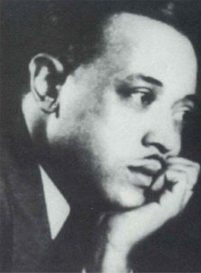
Long known as the Dean of African American composers, Dr. William Grant Still was a legend in his own lifetime.

Dr. Still, who wrote more than 150 compositions ranging from operas to arrangements of folk themes, is best known as a pioneer. He was the first African-American in the United States to have a symphonic composition performed by a major orchestra. He was the first to conduct a major symphony orchestra in the US; the first to conduct a major symphony in the south; first to conduct a white radio orchestra in New York City; first to have an opera produced by a major company. Dr. Still was also the first African-American to have an opera televised over a national network

Dr. Still was born May 11, 1895 in Woodville, Mississippi to parents who were teachers and musicians. When Dr. Still was only a few months old, his father died and his mother took him to Little Rock. Inspired by RCA Red Seal operatic recordings, his musical education began with violin lessons.  He graduated from Gibbs High School in Little Rock.

After his studies at Wilberforce University and the Oberlin Conservatory of Music, he played in orchestras and orchestrated for various employers including the great W. C. Handy. For several years he arranged and conducted the “Deep River Hour” over CBS and WOR.  He also played in the orchestra for the 1921 musical Shuffle Along, which was the first Broadway musical to feature an all African-American cast and writing team.

In the 1920’s, Still made his first appearances as a serious composer in New York. Several fellowships and commissions followed. In 1994, his “Festive Overture” captured the Jubilee prize of the Cincinnati Symphony orchestra. In 1953, he won a Freedoms Foundation Award for “To You, America!” which honored West Point’s Sesquicentennial Celebration. In 1961, he received honors for this orchestral work, “The Peaceful Land”. Dr. Still also received numerous honorary degrees from various colleges and universities, as well as various awards and a citation from Arkansas Governor Dale Bumpers in 1972.

In 1939, Dr. Still married journalist and concert pianist Verna Avery, who became his principal collaborator. They remained together until Dr. Still’s death in 1978.  In a proclamation marking the centennial of Dr. Still’s birth, President Bill Clinton praised the composer for creating “works of such beauty and passion that they pierced the artificial barriers of race, nationality and time.”

In 1995, Dr. Still was posthumously inducted into the Arkansas Black Hall of Fame.  In 2016, the ballroom at Robinson Center was named in his honor.  Earlier this month, Opera in the Rock performed Still’s opera Troubled Island.

2018 Lineup for MOVIES IN THE PARK Announced

Superheroes, teenagers, princesses, and a bunny are just some of the characters who will be visiting Little Rock’s FirstSecurity Amphitheatre in 2018 for Movies in the Park.

Movies in the Park is a free outdoor movie series in Little Rock’s River Market. The mission of Movies in the Park is help foster a sense of community and enjoyment in downtown Little Rock by bringing people together to enjoy a movie in a unique setting
along the scenic banks of the Arkansas River.

June 6 – Wonder Woman (PG-13) Sponsored by Clinton School of Public Service

June 13 –  Zootopia (PG) 

June 20 –  School of Rock (PG-13) 

June 27 – Sixteen Candles (PG)

July 11 – Star Wars the Force Awakens (PG-13) Sponsored by SCM Architects

July 18 – Night at the Museum: Secret of the Tomb (PG) 

July 25 – Beauty and the Beast (PG) (2017) 

Movies in the Park is a free outdoor film series shown at First Security Amphitheatre in Riverfront Park. Movies start at dark. (This being summer that means sometime between 8pm and 8:30pm.)

Guests are welcome to bring picnics but please no glass containers and pick up afterwards. Alcohol is allowed during the movie, but guests remain subject to all local, state and federal laws and ordinances. Uniformed security is on site for everyone’s safety.

$644,600 from NEA is going to the Arkansas Arts Council

In pursuit of its commitment to advance the creative capacity of people and communities across the nation, the National Endowment for the Arts announces its second round of funding for FY 2018.

This funding round includes annual partnerships with state, jurisdictional, and regional arts agencies as well as the categories of Art Works, Creativity Connects, Our Town, and Research: Art Works.

One of the grantees was the Arkansas Arts Council which will receive $644,600.  This will support arts programs, services, and activities associated with carrying out the Arkansas Arts Council’s NEA-approved strategic plan.  The Arts Council is an agency of the Department of Arkansas Heritage.

There were a total number of six (6) grants to entities in Arkansas.  These grants are worth $814,600.  As noted yesterday in a post, one of the grantees was the Arkansas Arts Center.

Earlier this year, the NEA announced its first round of grants which included $10,00 for the Arkansas Repertory Theatre to support production of The Call; $12,500 to the Arkansas Symphony Orchestra to support the Canvas Festival, which combined visual arts and the performance of live symphonic music; $10,000 to the Chamber Music Society of Little Rock to support a series of chamber music performances and related educational programming; and $25,000 to the Oxford American to support the publication and promotion of the magazine.

Dr. Jane Chu, who is the Chairman of the NEA, has announced she will be stepping down on June 4, 2018, at the conclusion of her four year term.  A graduate of Arkadelphia High School and Ouachita Baptist University, she has visited Little Rock during her tenure at the helm of the NEA.

$50,000 grant from the NEA goes to Arkansas Arts Center

National Endowment for the Arts Chairman (and former Arkansas resident) Jane Chu has approved more than $80 million in grants as part of the NEA’s second major funding announcement for fiscal year 2018. Included in this announcement is an Art Works grant of $50,000 to the Arkansas Arts Center to support the conservation of art works by John Marin.
The Art Works category is the NEA’s largest funding category and supports projects that focus on the creation of art that meets the highest standards of excellence, public engagement with diverse and excellent art, lifelong learning in the arts, and/or the strengthening of communities through the arts.

“The variety and quality of these projects speaks to the wealth of creativity and diversity in our country,” said NEA Chairman Jane Chu. “Through the work of organizations such as the Arkansas Arts Center in Little Rock, NEA funding invests in local communities, helping people celebrate the arts wherever they are.”

The Arkansas Arts Center’s 290-work collection is the second largest repository of John Marin works in the world. The collection was donated to the Arts Center by the artist’s daughter-in-law, Norma Marin, in 2013. Beginning with his 1909 debut exhibition of watercolors at Alfred Stieglitz’s 291 Gallery in New York, until his death in 1953, Marin was a major force among the cutting-edge modern artists in America. The artist was best known for his lively, idiosyncratic watercolors, etchings and oil paintings of the disparate worlds of gritty New York City and coastal Maine.

“We are incredibly grateful for this support from the NEA,” said Todd Herman, Arkansas Arts Center Executive Director. “This grant will allow us to continue to preserve this spectacular collection of works by iconic American modernist John Marin for future generations.”

Repertorium Praeter Theatrum

It was two weeks ago yesterday that the Arkansas Rep announced suspension of operations.  It was a week ago yesterday that the Rally at the Rep was held which raised money and community spirit for the Rep.
Supporters of the Rep have made a good start in donating over $113,000 towards the goal of $750,000.  The John & Robyn Horn and Windgate Charitable Foundations have generously extended matching grants to make donated dollars stretch even further.  It does not mean the money woes are eliminated. It just means there is a clearer pathway to reaching the goal.

Yesterday was the final day of employment at the Rep for many folks.  These are good people.  Some grew up here. Others came here to work.  All became a part of Arkansas in addition to becoming part of the Arkansas Rep.

A few staff members remain.  Even when operations are in suspension, there are still tasks to accomplish.

And excitingly the Rep’s Education Department is continuing its summer programming under the leadership of Anna Kimmell.  From June 18 through August 3, there will be a series of age-based sessions for kids ranging in age from kindergarten up to 2018 high school graduates.

The education programming illustrates a key reason the Rep is important.  Yes, the final two-week program is geared toward high school kids and offers a conservatory-style training. It is a wonderful opportunity for those who think they might be interested in pursuing a career in the performing arts.

But a key aspect of all the sessions is the use of the performing arts as forms of self-expression.  Even if the students never set foot on stage again, they have learned confidence. They have learned arts appreciation. They have learned to respect themselves and others.

This is what theatre does. This is what the arts do.

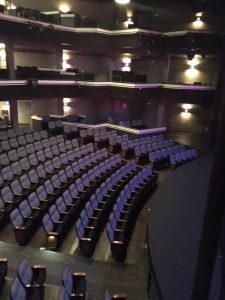
Last weekend, I was in the Rep’s auditorium for the Ballet Arkansas performance.  After it was over, I unexpectedly found myself lingering in the space.  I then realized why.  I wanted to soak in the atmosphere of the room.  So I went up to the lower balcony and walked around.  I snapped the photos which accompany this entry.

I hope I am back in the space for a performance in the coming months.  But I realized it could be even longer in the future.  So I relished the chance to wander around.  And wonder about the future.

In the coming weeks, key supporters of the Rep will be working out a vision for the future of the institution.  Many tough discussions will be had. Many difficult decisions will be made. What will the future look like? Only St. Genesius probably knows. And as the patron saint of actors and comedians, he is not yet telling.

It is said (though it is likely apocryphal) that the Roman Senator Cato the Elder ended each of his speeches with “Ceterum censeo Carthaginem delendam esse” or some variation. Meaning, of course, Carthage must be destroyed.

Since learning that fact from my mother sometime in elementary school (that’s what happens when your mother is a world history teacher), I have been fascinated by Latin phrases.   (When I grow up, I want to be Jed Bartlet who can spout the proper Latin phrase at the right time.)

I especially like the idea of a battle cry in Latin.  It somehow seems more forceful.

So I end this entry, and plan on ending future entries about the Rep with the Latin for “Save the Repertory Theatre” (sorry, Arkansas does not translate well into Latin.)

Repertorium Praeter Theatrum

Little Rock Look Back: Mayoral Races without Incumbents

The announcement by Little Rock’s 72nd Mayor, Mark Stodola, that he will not seek a fourth term in 2018, sent the Little Rock Culture Vulture thinking about past mayoral races in Little Rock history.

Election records in the 1800s are spotty at best, so this discussion focuses on those who have run for Mayor once the current City Hall opened in April 1908.

The November 2018 election will be only the sixth mayoral election since 1908 without an incumbent or former mayor on the ballot.  (Assuming that none of Little Rock’s living seven former mayors choose to run.)

The most recent election without a current or former mayor was in 2006, when Jim Dailey had announced he would not seek another term. It was at that election that former City Attorney Mark Stodola, faced off against two former City Directors (Barbara Graves and Jesse Mason) and former State Senator Bill Walker.

From 1908 through 1957, Little Rock elections were partisan in nature.  In most instances, if one won the Democratic Primary, one was assured of being mayor.  Looking back at municipal general election results (where there was usually only token opposition at best) in those decades does not give a true picture to the spirited nature of races for City Hall.

The first election since 1908 without an incumbent or former mayor was in 1911. Charles Taylor ran as a reforming outsider and won an open seat for mayor.  He would serve until 1919. That year, former alderman Ben Brickhouse won the open seat.

R. E. Overman was elected to his first term as mayor in 1935, after incumbent mayor Horace Knowlton did  not seek a third term.  After returning to City Hall in 1941 and being re-elected, Mayor Moyer retired a second time in 1945. In that election, Dan Sprick was elected mayor.  That would be the final election in Little Rock without an incumbent or former mayor until 2006.

From 1957 until 1994, the mayor was chosen every two years by members of the City Board of Directors from among their membership.  The last person to be selected in that manner, Jim Dailey, won city-wide election to the mayoral position in 1994 and served until 2006.

Here is a history of all the mayor races since 1908:

1908 Special – Incumbent acting mayor John Herndon Hollis did not seek election to full term.  Former Mayor W. R. Duley elected
1909 – Mayor Duley re-elected
1911 – Charles Taylor elected after Mayor Duley forgoes seeking another term.
1913 – Mayor Taylor re-elected
1915 – Mayor Taylor re-elected
1917 – Mayor Taylor re-elected
1919 – Ben D. Brickhouse elected after Mayor Taylor forgoes seeking another term.
1921 – Mayor Brickhouse re-elected
1923 – Mayor Brickhouse re-elected
1925 – Mayor Brickhouse loses Democratic Primary to County Judge Charles Moyer, who wins the general election.
1927 – Mayor Moyer re-elected
1929 – Mayor Moyer loses Democratic Primary to City Attorney Pat L. Robinson, who wins the general election.
1931 – Mayor Robinson loses Democratic Primary to Horace Knowlton, who wins the general election.
1933 – Mayor Knowlton re-elected
1935 – R. E. Overman elected after Mayor Knowlton forgoes another term.
1937 – Mayor Overman re-elected
1939 – J. V. Satterfield defeats Mayor Overman in the Democratic Primary. He subsequently wins general election.
1941 – Former mayor Moyer returns to City Hall after Mayor Satterfield opts to retire after one term.
1943 – Mayor Moyer is re-elected
1945 – Dan Sprick is elected after Mayor Moyer forgoes another term.
1947 – Sam Wassell defeats Mayor Sprick in the Democratic Primary, subsequently wins general election.
1949 – Mayor Wassell is re-elected
1951 – Republican Pratt Remmel defeats Democratic incumbent Sam Wassell in the general election to become mayor.
1953 – Mayor Remmel is re-elected.
1955 – Democratic nominee Woodrow Mann defeats GOP incumbent Mayor Remmel in the general election to become mayor.
1956 – Voters switch to City Manager form of government, partially in response to actions by Mayor Mann’s administration.  Mayor Mann leaves office in November 1957.

1957 to 1994 – City Manager form with mayor selected from among membership

1994 – Mayor Jim Dailey wins election as Little Rock’s first popularly elected mayor since 1957.  He had previously been selected mayor by his city board colleagues.
1998 – Mayor Dailey is re-elected
2002 – Mayor Dailey is re-elected
2006 – Mark Stodola is elected mayor after Mayor Dailey forgoes another term.
2010 – Mayor Stodola is re-elected
2014 – Mayor Stodola is re-elected
2018 – Mayor Stodola announces he will not seek another term.

Little Rock Look Back: STOP announced to end Teacher Purge

Following the success of meetings at Forest Park Elementary and the Little Rock Chamber of Commerce, as well as other school, PTA, and civic meetings, the effort was underway to recall the three segregationist members of the Little Rock School Board.

On May 7, 1959, at Brier’s Restaurant, a group of young civic leaders gathered as they often did. This time, their conversation focused on how to capitalize on the momentum mounting in the desire to recall the three segregationist School Board members.  Attorneys Edward Lester, Robert Shults, and Maurice Mitchell were present as well as Gene Fretz, a Gazette editor.  It was he who came up with the acronym STOP – Stop This Outrageous Purge.

That afternoon, the group reconvened at the Grady Manning Hotel.  This time joined by esteemed attorney Will Mitchell.  Among the other men who were instrumental in getting STOP started were attorney Henry Woods, attorney W. P. Hamilton Jr., and banker B. Finley Vinson.  As chair of the Chamber of Commerce, Grainger Williams had been a vocal supporter of the efforts to reopen the school.  His leadership was, no doubt, instrumental in the Chamber’s quick and vocal support for the fired LRSD personnel.

Dr. Drew Agar was chosen to be the chair of STOP.  The father of three children at Forest Park Elementary School, he was vice president of the Forest Park PTA.  It was he who had presided over the successful Forest Park PTA meeting which saw several hundred parents oppose the firing and endorse the recall of the three segregationist members. (Dr. Agar had to use some fancy footing to get the items added to the agenda at the last minute, but with creative parliamentary maneuvering, he succeeded.)

On May 8, 1959, STOP was publicly announced.  The event took place at Union National Bank.  Approximately 179 men were in attendance.  Those present were asked to contribute or solicit $100.  (In time, approximately $36,000 would be raised.)

In addition to Dr. Agar serving as chair, Maurice Mitchell served as finance chair, Will Mitchell and Henry Woods were political strategists behind the campaign.  Many other men stepped up.  Dr. Agar announced at the May 8 meeting that a STOP office would open in room 1010 of the Pyramid Life building on May 9.  It was to be open between 9am and 5pm to accept donations and to to collect recall petitions.

At the meeting standing ovations were given to R. A. Lile, a former member of the Little Rock School Board, and Everett Tucker, Ted Lamb and Russell Matson, current members.  (Remember, this was back in the day when standing ovations were few and far between.)

Because most of the STOP members were younger, and second-tier business executives, the leadership of Will Mitchell and the chamber’s leadership by Grainger Williams was crucial in giving not only sage advice, but adding gravitas.

In the coming weeks, STOP would work closely with the Women’s Emergency Committee. The WEC had studied voter registration lists. They would put this skill to use as potential voters were identified as “Saints,” “Sinners,” or “Savables.”  The two groups, working hand in hand behind the scenes, had their work cut out for them.

When the issue about reopening the schools had been put to the voters the previous autumn, Little Rock voters had overwhelmingly approved keeping the schools closed.  There were many factors which had led to it – confusing ballot title, short campaign time, belief that the schools would reopen soon, etc.  But even though there were some key factors in favor of STOP and the WEC this time, nothing could be taken for granted.