Little Rock Look Back: Gordon Neill Peay

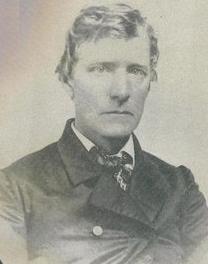
Mayor PeayOn December 12, 1819, future Little Rock Mayor Gordon Neill Peay was born.  The Peay family arrived in Arkansas from Kentucky in 1825.  They quickly became one of Little Rock’s leading families.

Mayor Peay’s father, Nicholas Peay served on the Little Rock Board of Trustees (which existed before the town was incorporated) and later served on the City Council and was acting mayor. It is Nicholas Peay’s Egg Nog recipe which inspired the Historic Arkansas Museum Nog Off!

Godon N. Peay served as mayor of Little Rock from 1859 to 1861.  During the Civil War, Peay served as Captain and later Colonel of the Capital Guard.  He later received a pardon from the federal government.  In the days leading up to the Civil War and during it, Mayor Peay was one of a select group of civic leaders who corresponded with President Lincoln and other Union leaders. It has been said that this conciliatory tone is a reason that Little Rock fared better during Federal occupation and Reconstruction than did many other Confederate cities.

The Peay family owned the Peay Hotel, Little Rock’s first hotel, and were also co-founders of what became Worthen Bank.  They were also a founding family of Christ Episcopal Church. Mayor Peay later served as Pulaski County Chancery Clerk.

He died on December 14, 1876, and is buried at Mount Holly Cemetery along with many members of his family.  A nephew of his, Ashley Peay, served on the City Council in the 1920s.  Mayor Peay’s great-grandson Joseph Barber Hurst, Sr. served on the Little Rock City Board of Directors from 1967-1971. One of Mr. Hurst’s sons, Howard, was born on Mayor Peay’s birthday.

Little Rock Look Back: Mayoral Primary of 1944

Following his second stint as mayor, Charles Moyer decided to not seek a fifth term leading Little Rock.  It set the stage for the December 1944 Democratic primary.  Alderman Sam Wassell and former Alderman Dan Sprick faced off in a particularly nasty race.  As World War II was drawing to a close, there were charges leveled which questioned patriotism. With both men having service on the Little Rock City Council, there were also plenty of past votes on both sides which could become fodder for campaigns.

The election was on December 5, 1944. Sprick received 3,923 votes and Wassell 3,805. A few days later, Wassell filed suit claiming that there were people who voted who were not on the poll tax rolls and another group of voters who did not live in the ward in which they voted. Sprick countersued making the same charges against Wassell.

The case was heard in Pulaski County Circuit Court in February 1945.  It eventually ended up at the Arkansas Supreme Court, which remanded it back to the lower court. On March 26, 1945, Wassell dropped his case. This was only eight (8) days before the municipal general election.

Two years later, Wassell would challenge Sprick in the primary and be triumphant. Wassell would serve from 1947 until 1951.  Sprick would later return to politics and serve a decade in the Arkansas State Senate.

Little Rock Look Back: First Ballet Arkansas production of THE NUTCRACKER

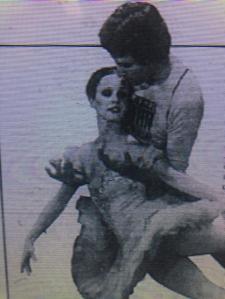
Burton and Tuzer

One of the sure signs of the Christmas season is the return of The Nutcracker to ballet companies across America.  Though the Little Rock Civic Ballet had first presented this ballet in 1968, by the mid-1970s, it was no longer performing the complete ballet.

In 1978, the Little Rock Civic Ballet was reorganized and re-christened Ballet Arkansas.  That first year, it did not perform The Nutcracker.  But on December 11, 1979, the tradition returned as Ballet Arkansas presented its first production of The Nutcracker.  It was once again at Robinson Center Music Hall.

The production was directed and choreographed by Lorraine Cranford, Ballet Arkansas’ Artistic Director.  The music was provided by musicians from the Arkansas Symphony Orchestra under the baton of guest conductor David Schimmell.  This was the first time in several years that the ballet had been accompanied by the ASO.

The guest artists were Anne Burton and Tanju Tuzer, both from Dallas.  The local dancers including David Twillie, Mirana, Peggy Howard, Carol Campbell, Jeffrey Stuart, Haven Cooper, Buddy Harris, Chris Clarke and Jeff Johns.

Tickets were $3.00 for the matinee. Evening performances ranged from $5 to $10 a person.

Little Rock Look Back: LR voters overwhelming support bid to Restore Robinson in 2013

On Tuesday, Dec. 10, 2013, voters of Little Rock overwhelmingly chose to renovate the historic Joseph Taylor Robinson Memorial Auditorium.

By a vote of 5,183 For and 1,800 Against, Little Rock citizens approved a plan to use a portion of the city’s existing 2 percent restaurant and hotel tax to repay bonds for a renovation of Robinson Center.  The campaign was chaired by businessman Charles Stewart, restaurateur Capi Peck and former LR Mayor Jim Dailey.

Robinson has long been a landmark in central Arkansas. Construction of the Joseph T. Robinson Memorial Auditorium began in 1938 (after a December 1937 groundbreaking under a deadline) and officially opened February 1940. The structure was a PWA (Public Works Administration) project, and is an excellent example of the Art Deco style architecture of the time. The building was added to the National Register of Historic Places in 2007.

The facility is owned by the City of Little Rock and managed by the Little Rock Convention & Visitors Bureau.

The 1940 structure suffered from a wide array of deficiencies, including stage loading and unloading, stage size, acoustical insufficiency, dressing room access and inadequate wing space within the performance hall. Also, structural, mechanical and electrical issues, public circulation and outdated conference center spaces existed within the facility.

Knowing the center is in need of major upgrades if the facility is to continue to serve central Arkansas into the future, the Little Rock Advertising and Promotion Commission (LRA&P) empanelled a Robinson Center Concept Team in October 2011. The group was tasked with evaluating all aspects of the existing facility, researching user needs, proposing conceptual solutions and estimating the cost and construction schedule of the proposed additions and renovations. The concept team was led by Mike Steelman of SCM Architects, PLLC, and included representatives from WD&D Architects, Shuler Shook Theatre Planners, Jaffe-Holden Acoustical Consultants, TME Inc. Mechanical and Electrical Engineers, ECI Inc. Structural Engineers, McClelland Consulting Engineers Inc. Civil Engineers, East Harding Construction, HVS Consulting and Hunt Construction Group.

Additionally, stakeholder and tenant organizations representing the Arkansas Symphony Orchestra, Celebrity Attractions of Tulsa, Oklahoma and the Double Tree Hotel participated in the planning. The concept team findings were presented publicly on June 5, 2012.

On January 17, 2013 the LRA&P announced the selection of Polk Stanley Wilcox Architects, partnered with Ennead Architects, as the architectural and design team for the future renovations. On March 28, 2013 CDI Contractors LLC, partnered with Hunt Construction Group, were selected by LRA&P as the general contractors and construction managers.

On September 23, 2013 the final schematic renderings and cost estimates were presented publicly. The schematic plans depict major interior upgrades within the performance hall including additional volume to create a two-balcony setup, increased lobby space, acoustical improvements, theatrical upgrades, loading dock expansion, a larger stage area, and new dressing room facilities. Additionally, an enhanced modern ballroom and small conference center was unveiled. New technology, mechanical systems, and outdoor plaza spaces were included in the presentation.

Construction would begin on July 1, 2014.  It reopened on schedule and on budget on November 10, 2016.

Jewish Federation honors Capi Peck, including for her work with Operation Song

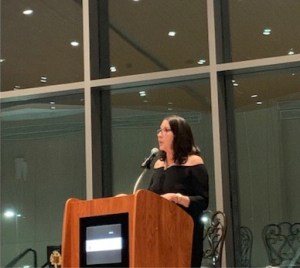
On December 8, Capi Peck was the Grand Honoree at the Jewish Federation of Arkansas’ Bridging Worlds: The 15th Annual Jane B. Mendel Tikkun Olam Awards.  Among the reasons she was cited was her work with Operation Song.
The awards are named in memory of Jane B. Mendel who was active in many education and social issues throughout her lifetime as well as Arkansas’ Jewish community.  Tikkun Olam is Hebrew for Repairing the World.

Operation Song is a program to create an opportunity to transform service related issues, injuries and illnesses into a structured, musical outlet as an enhancement of traditional therapies and/or treatments.  Founded in 2012 and based in Nashville TN, it has produced over 600 songs with veterans of World Ward II up to service members in active duty.

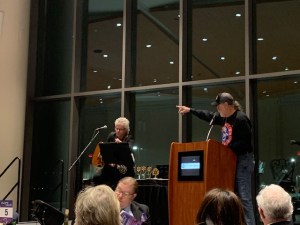
Goodman and Dean with Operation Song

It pairs award winning composers and lyricists with the veterans. Earlier this year, Capi brought the program to Little Rock for a workshop which lead to a concert being performed of the songs which had been written during the workshop.

Two songs written by Operation Song based on Little Rock veterans’ experiences were performed at the awards program last night by Steve Dean and Don Goodman with Operation Song. “The Journey” told the tale of Derek Mumford’s childhood in Britain and subsequent evacuation to the US during World War II, while “Classified Top Secret” captured Gene Weinstein’s experiences working on classified missions during the war.

Congratulations to Capi, and thank you for introducing Operation Song to Little Rock!

Little Rock Look Back: Robinson Auditorium achieves a construction milestone

Many months behind schedule, it was 79 years ago today (December 8, 1939) that the construction of the Joseph Taylor Robinson Memorial Auditorium was declared “substantially finished.”

On December 8, 1939, the work of the general contractor was complete. The building’s utilities were all fully connected as the steam line and electric transformer were hooked up. While the work of the general contractor was through, there was still much work to be done.

Though there were still unfinished portions of the structure, the exterior was complete and finished surfaces had been installed on the interior. Until the building was officially turned over to the City, the federal Public Works Administration still had to give approval for any uses of the building.Mayor J. V. Satterfield, Jr. told the press that he wasn’t sure when the City would formally accept the building. The connection of the utilities had used up the remaining funds, so there was uncertainty as to when the final tasks would be completed.

When it was built, Robinson Auditorium was the first municipal auditorium in the south central United States to be air conditioned. However, the air conditioning unit was not sufficient to cool both the music hall and the convention hall at the same time. In warm weather months concurrent events would not be able to take place on the two levels.

Happy Birthday to Diego Rivera

Today is the birthday of Diego Rivera.  He is one of the Culture Vulture favorite artists, so any excuse to discuss him and his relationship with the Rockefeller family is greatly appreciated.

One of Rivera’s masterpieces is 1914’s Portrait of Two Women which is part of the permanent collection of the Arkansas Arts Center. The official name is Dos Mujeres.  It is a portrait of Angelina Beloff and Maria Dolores Bastian.  The former was Rivera’s first wife.

This oil on canvas stands six and a half feet tall and five and a half feet wide.

Influenced by cubists such as Picasso, Rivera adopted fracturing of form, use of multiple perspective points, and flattening of the picture plane.  Yet his take on this style of painting is distinctive.  He uses brighter colors and a larger scale than many early cubist pictures. Rivera also features highly textured surfaces executed in a variety of techniques.

The painting was a gift to the Arkansas Arts Center by Abby Rockefeller Mauzé, sister of Arkansas Governor Winthrop Rockefeller.  At the 1963 opening of the Arkansas Arts Center, James Rorimer, the director of the Metropolitan Museum of Art, remarked several times to Arts Center trustee Jeane Hamilton that the Met should have that piece. Jeane politely smiled as she remarked, “But we have it.”

Of all her brothers, Abby was closest to Winthrop. The other brothers, at best ignored, and at worst, antagonized the two.  Given the complicated relationship of Rivera with members of the Rockefeller family, it is not surprising that if Abby were to have purchased this piece, she would donate it to a facility with close ties to Winthrop.

(Though the Rockefeller brothers had Rivera’s mural at Rockefeller Center destroyed, he maintained a cordial relationship with their mother Abby Aldrich Rockefeller — well as cordial as an anti-social Communist could be with the doyenne of capitalist NYC Society.)

Diego’s third (and fourth) wife Frida Kahlo will be the feature of an upcoming exhibit at the Arkansas Arts Center.